
Torta della Nonna (Italian Custard Tart)
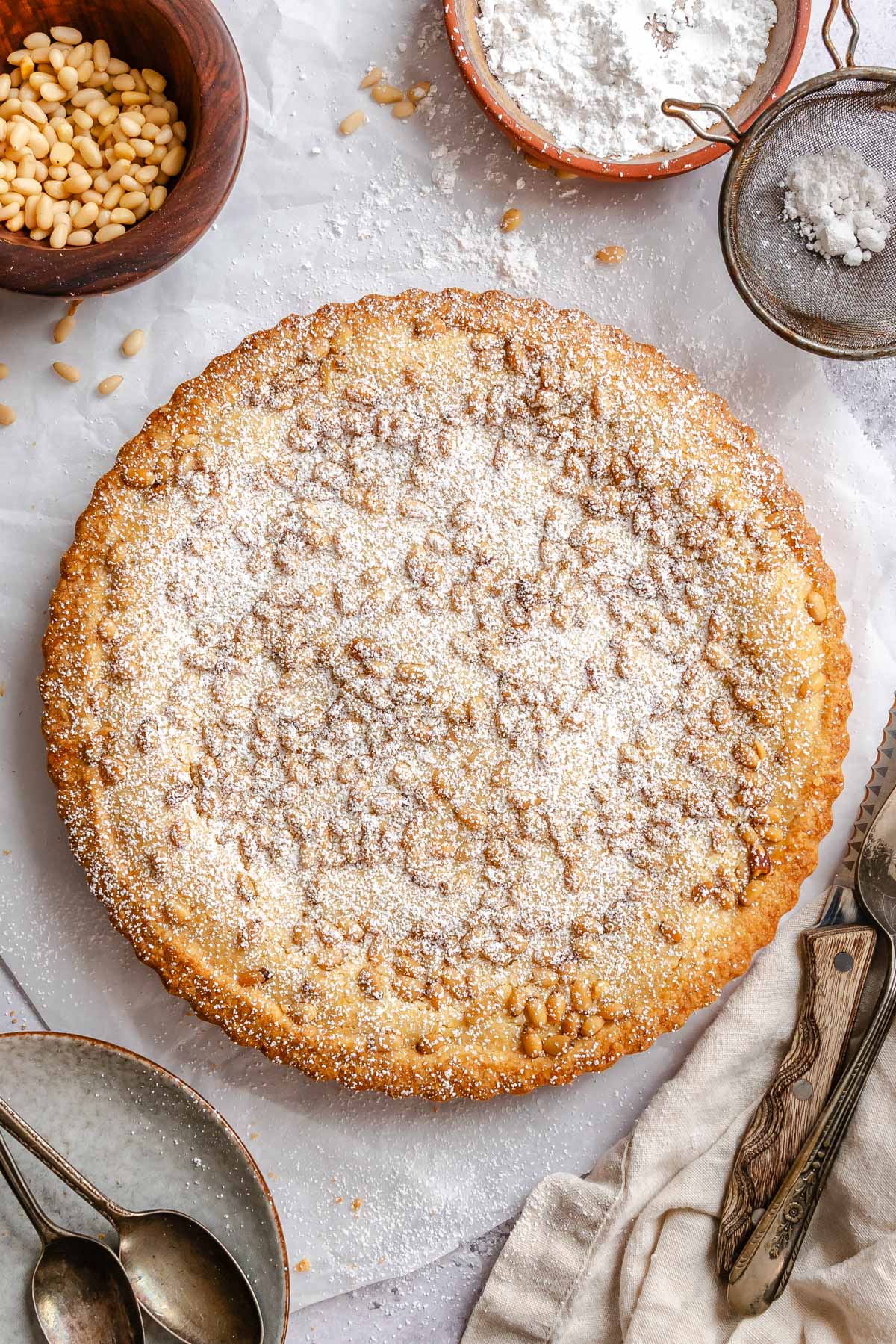
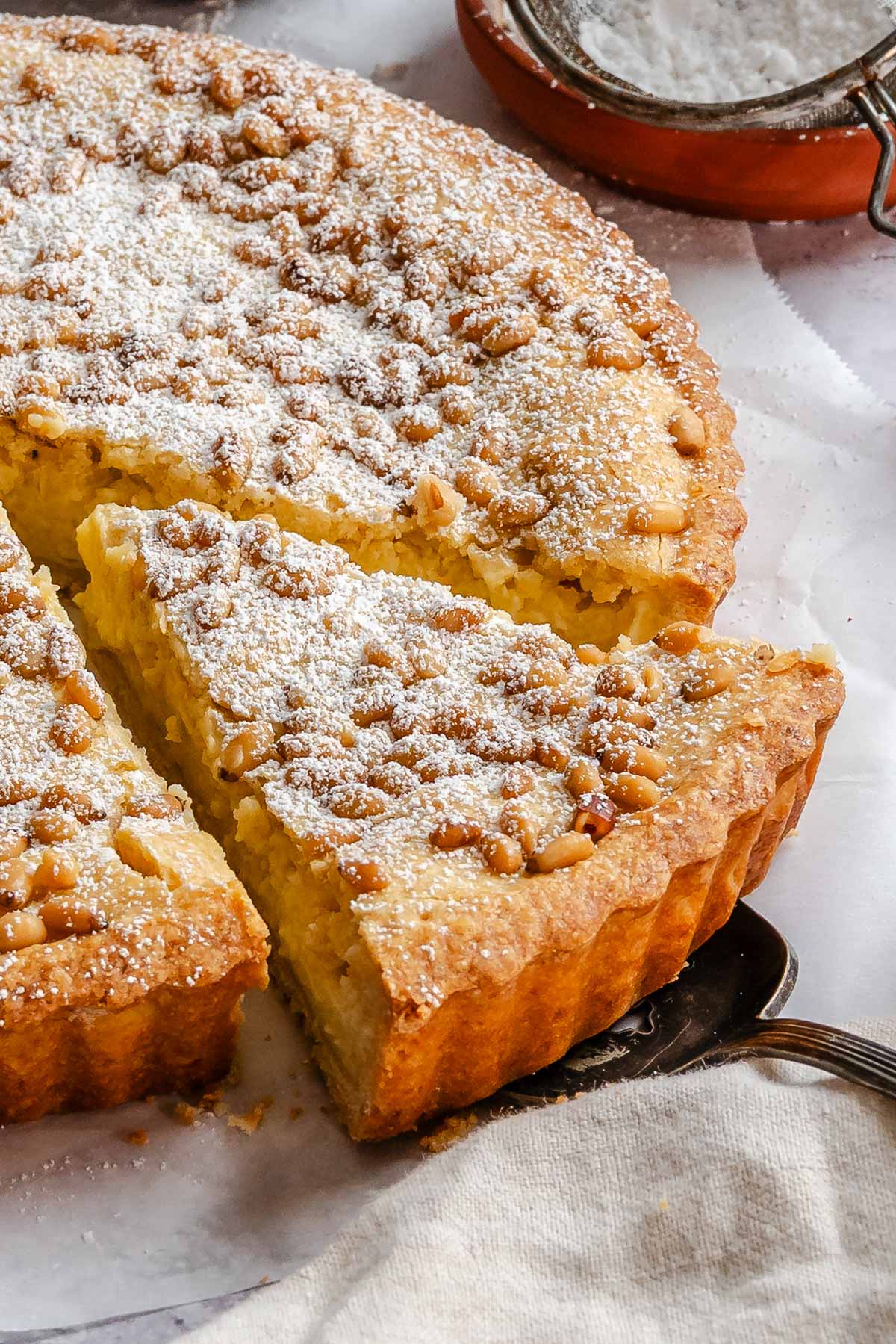
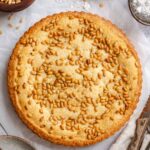
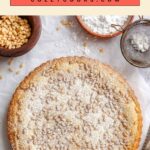
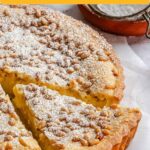
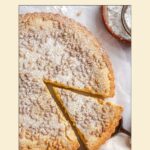
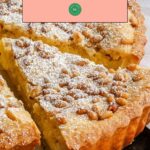
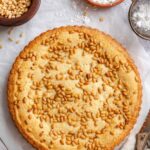
This classic torta della nonna recipe is an Italian custard tart made with a silky pastry cream baked between two layers of tender pasta frolla and topped with buttery pine nuts. A few simple techniques ensure the custard sets properly and the bottom crust bakes up golden and crisp. It's a delicious and festive Italian dessert that's perfect for Christmas, Thanksgiving, and Easter!
This post may contain affiliate links.
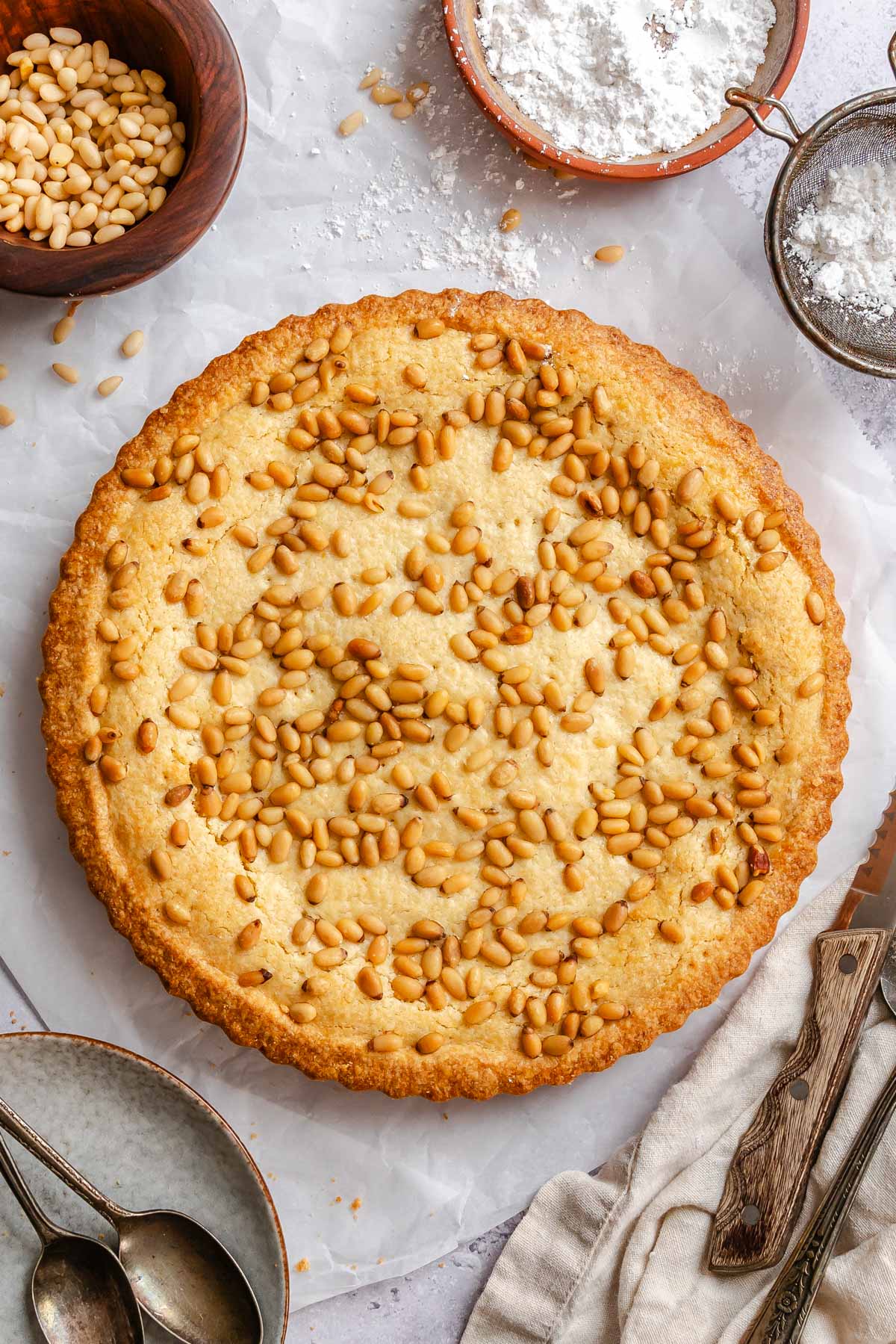
Why This Torta della Nonna Recipe Works
- A double crust ensures every slice has the perfect ratio of crisp pastry to creamy filling.
- Cold ingredients and a brief chill before baking keep the pasta frolla crust tender and crumbly.
- Egg yolks make the pastry cream rich and creamy, while cornstarch provides enough structure for clean slices.
- Thoroughly chilling the pastry cream prevents it from softening the dough and makes the crust easier to seal.
- Soaking the pine nuts slows browning and prevents them from burning before the tart is finished.
- The dough and pastry cream can be prepared up to 2 days ahead, and the baked tart keeps for up to 3 days in the refrigerator.
What Is Torta della Nonna?
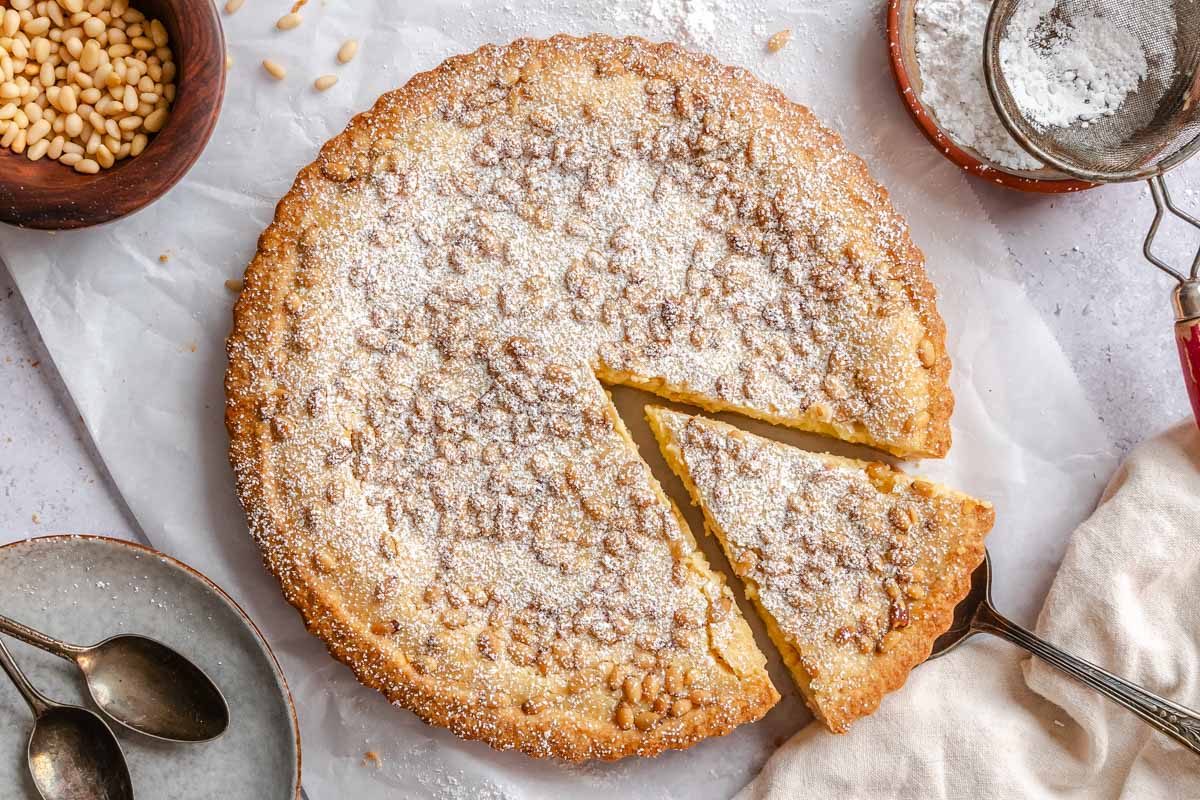
The name of this recipe translates to "grandmother's cake." It's a classic Tuscan dessert with a crumbly pasta frolla crust, a smooth pastry cream filling, and a topping of buttery toasted pine nuts. Despite its name, it's more like a custard pie or tart than a cake.
Like many Italian pies and crostate, torta della nonna can be made with either a single or double crust. For my version, I use both a top and bottom crust because I love the contrast of the crunchy, crumbly crust next to the smooth lemon pastry cream.
This dough recipe is made slightly differently from my other recipe for traditional Italian pasta frolla dough. This one uses only egg and no water to make it softer and more crumbly.
The custard is lightly scented with a hint of lemon and vanilla to give it flavor without overpowering. It's also made with five egg yolks to give it a silky richness and pale golden hue.
Cornstarch helps firm up the filling so it doesn't ooze out when sliced. It's just enough to make the torta sliceable without being too stiff.
You'll have leftover egg whites from making the pastry cream and crust, but there's no need to waste them! Save them to make homemade savoiardi or Italian almond cookies.
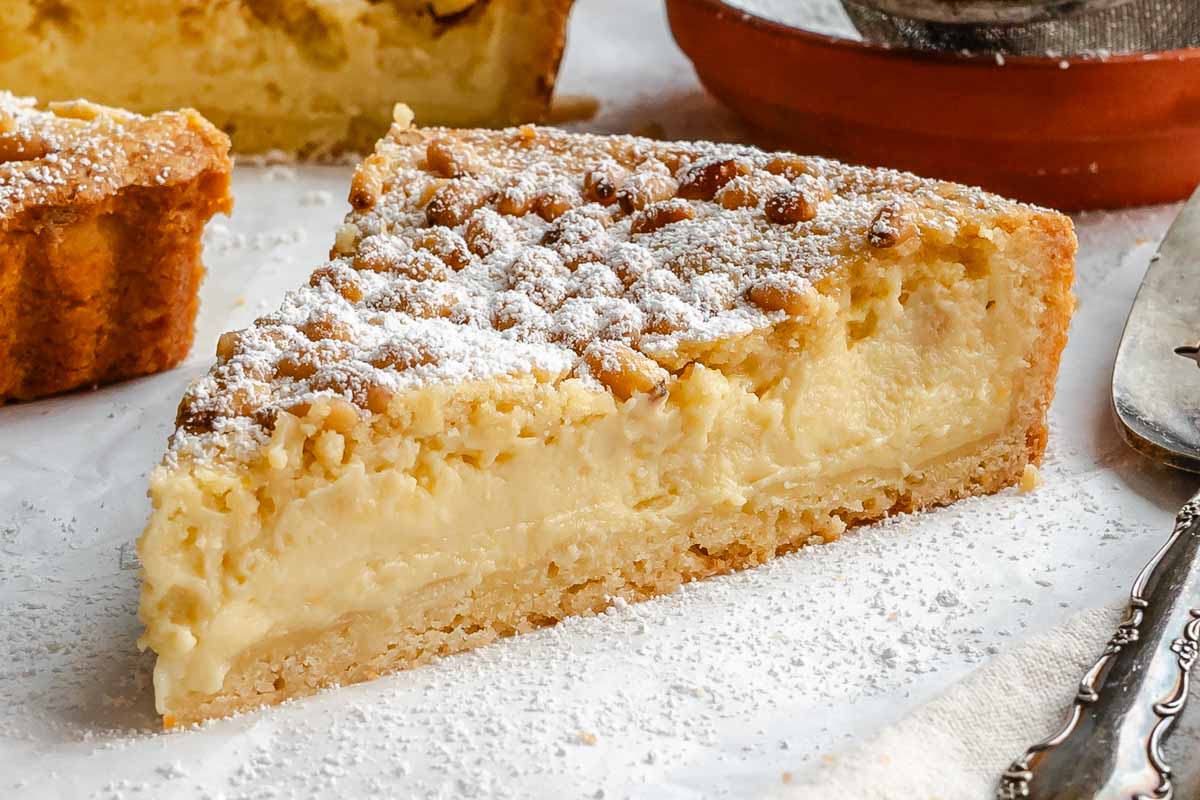
How to Keep the Pastry Cream Smooth and Creamy
The key is to temper the yolks gradually with the hot milk while whisking constantly so they cook without scrambling.
Once the mixture thickens and starts bubbling, cook the pastry cream for one full minute to ensure it reaches the right consistency.
Press plastic wrap directly against the surface of the cream to prevent a skin from forming as it chills. Otherwise, the thickened skin will make the cream lumpy after mixing.
If your cream does become lumpy or grainy for whatever reason, use an immersion blender to blend it until smooth. For added insurance, you can also pass it through a fine mesh sieve to really make sure the cream is totally lump-free.
Why Soak Pine Nuts Before Baking?
Soaking the pine nuts first ensures they don't brown too quickly or burn before the tart is finished baking.
Add them to a bowl of tap water and let sit for at least 10 minutes before draining well and adding them to the tart. Leave them slightly wet to help them adhere to the dough.
This recipe takes some time to prepare, but it's well worth the effort. It's a wonderful make-ahead dessert for holidays and special occasions or to end any great Italian meal. It's traditionally served at Easter, but it makes an amazing addition to Thanksgiving, Christmas, and New Year's Eve.
Want more recipes for Italian tarts and cakes? Try this fudgy flourless chocolate almond cake, a rustic apple crostata, or my classic, creamy Italian ricotta pie.
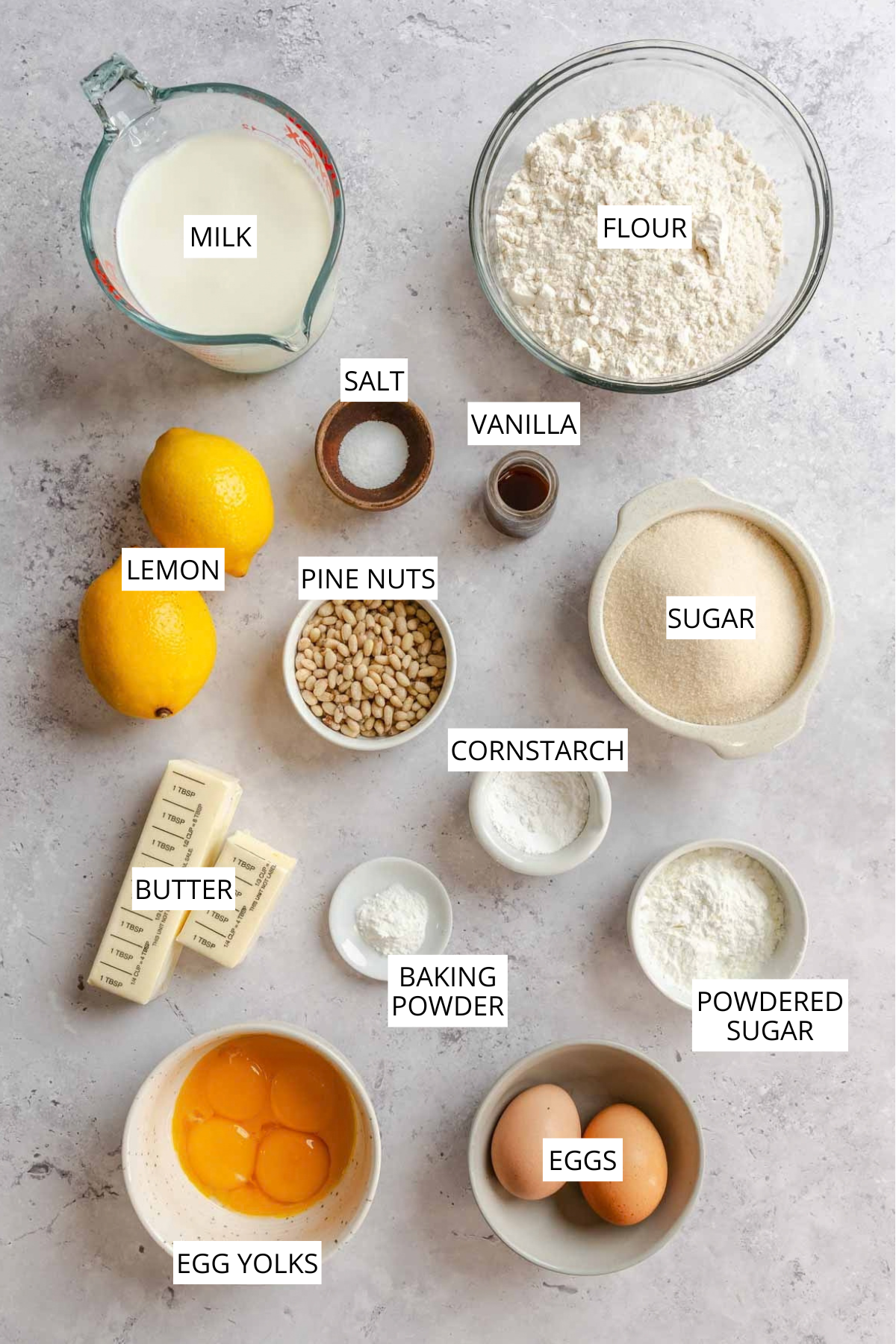
Ingredients for Italian Grandmother's Cake
Milk - Whole milk produces a rich and silky filling. Do not substitute low-fat milk or alternative milks.
Lemon - I used the peel of one large lemon, removed in wide strips with as little white pith as possible. Use a Meyer lemon for a softer, more interesting lemon flavor.
Egg - Only egg yolks are used to make the creamiest custard. Use your extra egg whites to make meringues, homemade ladyfinger cookies, or Sicilian almond cookies.
Flour - All-purpose flour works best. It forms a stable base and provides just enough structure while still keeping a tender, crumbly crust.
Butter - Use a good-quality European butter for the flakiest texture and most pronounced buttery flavor.
Pine nuts - Use Mediterranean pine nuts if you can find them; they're the best quality. Chinese pine nuts are more common, but they're generally considered lower quality. Mediterranean pine nuts are usually long and thin while Chinese pine nuts are short and fat, though they can vary. Still, either one will work for this recipe.
Vanilla - Use a good-quality vanilla extract to aromatize the custard or make your own homemade vanilla extract.
*Find the full ingredient list in the recipe card below!
Helpful Equipment
- Peeler
- Whisk
- Medium saucepan
- Silicone spatula or wooden spoon
- Plastic wrap
- Food processor
- Oven
- Rolling pin
- Bench scraper
- 9-inch tart pan
- Pastry brush
- Baking sheet
- Wire rack
How to Make Torta della Nonna
Make the Filling
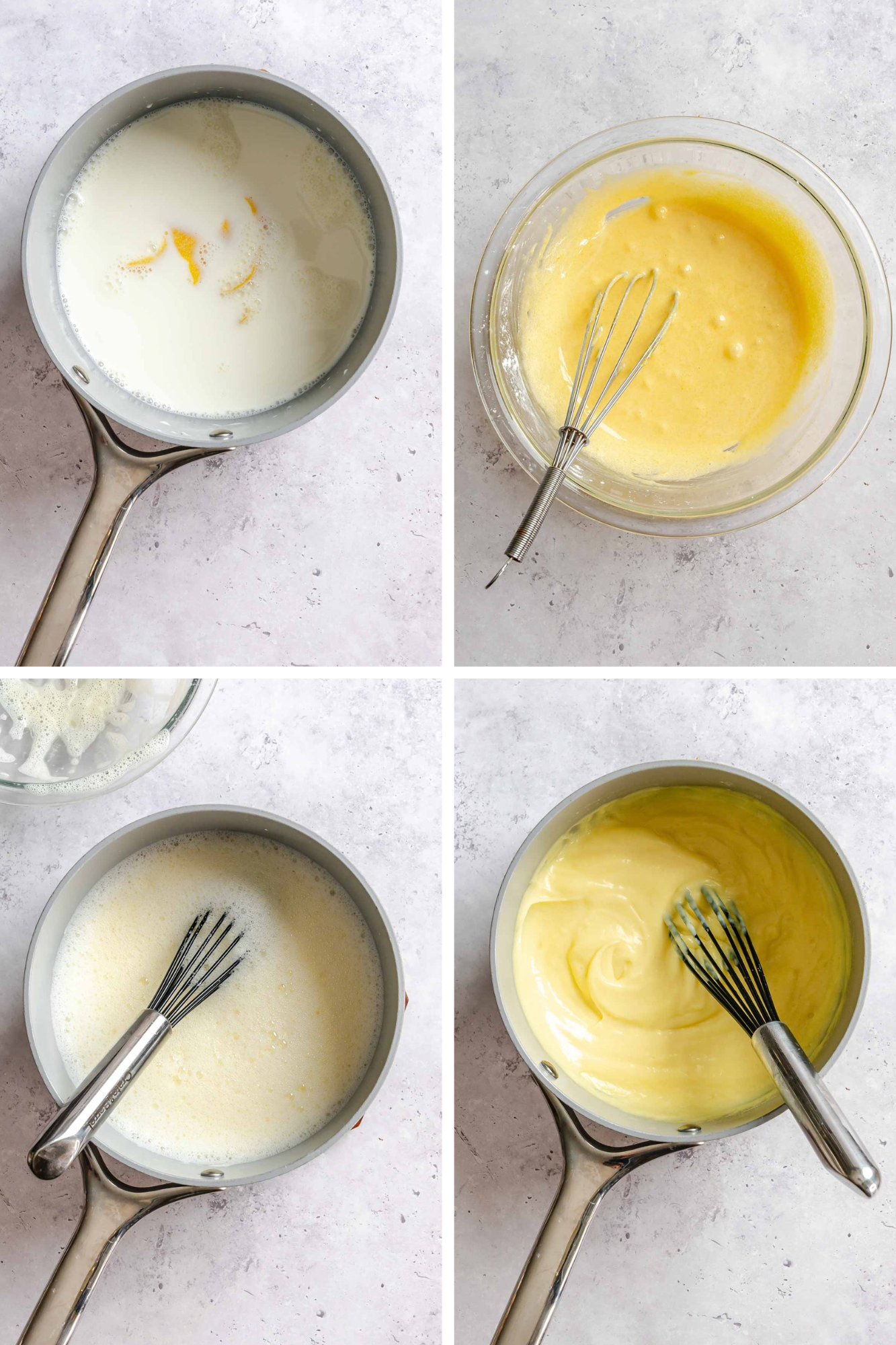
- Combine the milk and lemon peel in a medium saucepan. Heat over medium heat until steaming bubbles begin to form around the edges. Remove from the heat, cover, and let steep for 15 minutes.
- Whisk the egg yolks, sugar, cornstarch, and salt in a medium bowl until completely smooth.
- Remove the lemon peel from the milk, then return to medium heat until steaming. Slowly and carefully pour about half of the hot milk into the yolk mixture while whisking constantly, then pour everything back into the saucepan.
- While whisking constantly, cook over medium-low heat until the pastry cream becomes thick and begins to bubble. Be sure to scrape the edges of the pan so nothing sticks or curdles. Continue cooking for 1 minute.
- Remove from the heat, then whisk in the vanilla. Transfer the pastry cream to a shallow bowl, then cover with plastic wrap pressed directly against the surface. Refrigerate until completely cold, at least 2 hours.
Pro Tip: To make sure your pastry cream is super smooth, use an immersion blender to process it in the saucepan before cooling.
Make the Crust
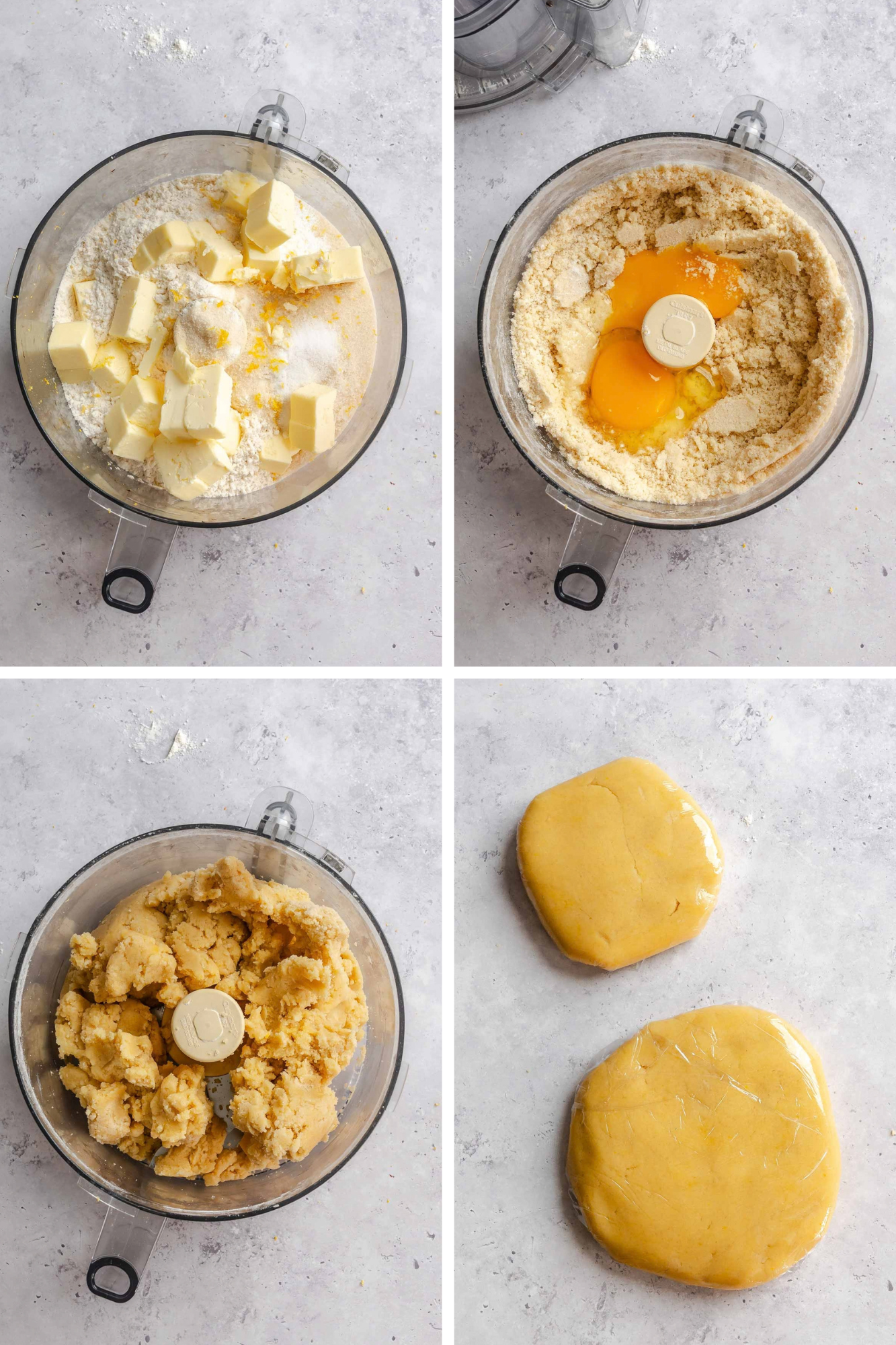
- Add the flour, sugar, salt, baking powder, cold butter, and lemon zest to the bowl of a food processor. Pulse until the butter is finely incorporated and the mixture resembles coarse sand without any large pieces of butter remaining.
Pro Tip: Before mixing everything together in the food processor, rub the sugar and lemon zest together with your fingertips for a couple of minutes to bring out the lemon's essential oils.
- Add the whole egg and egg yolk, then pulse until the dough forms moist clumps and holds together when pressed between your fingers. Stop pulsing before the dough comes together into a ball.
- Transfer the dough to a work surface and gently press it together. Divide it into two portions, with approximately two-thirds for the bottom crust and one-third for the top.
- Form each into a disc, wrap tightly and refrigerate until firm, at least 1 hour.
Assemble and Bake
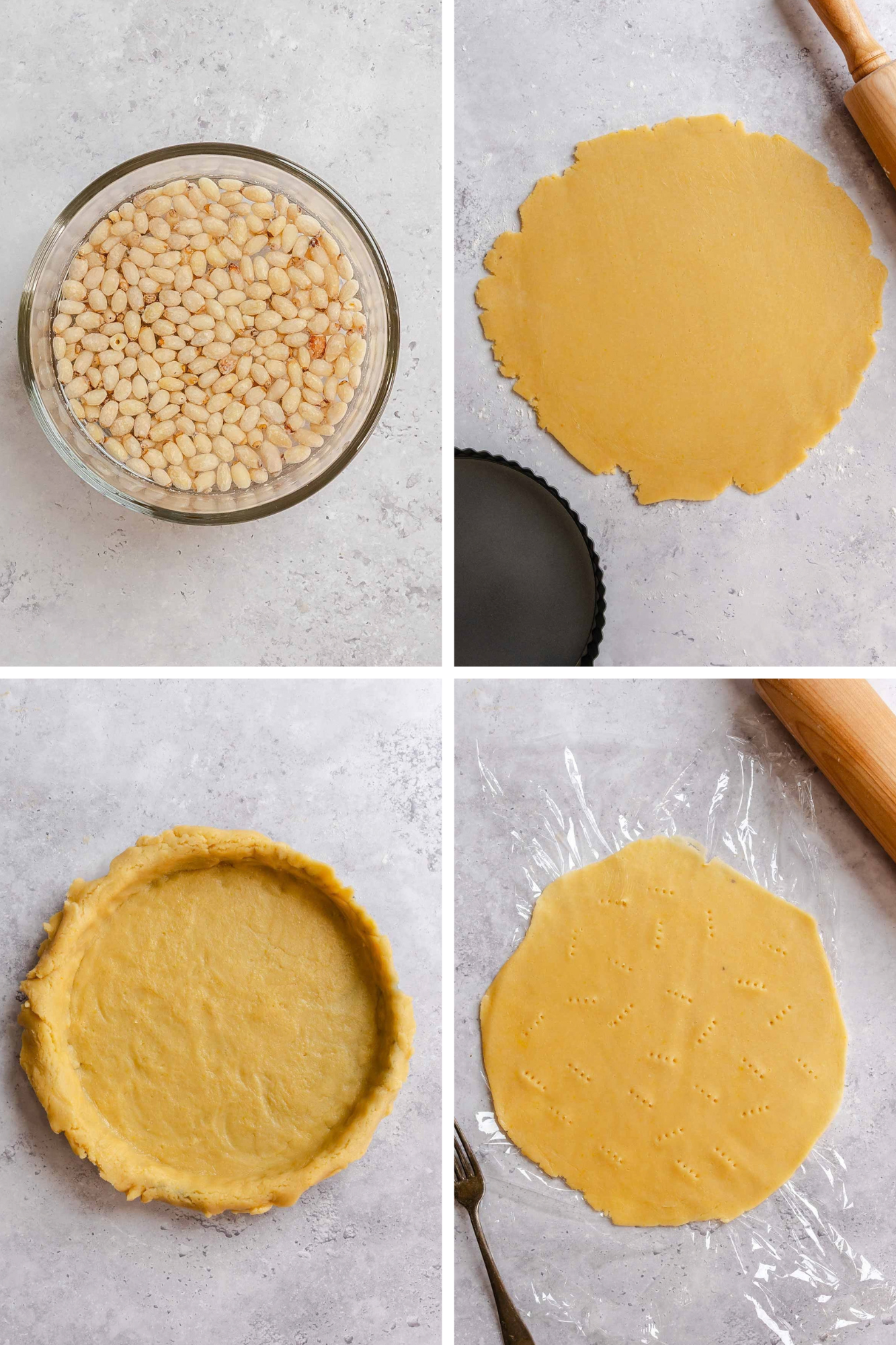
- Preheat the oven to 350°F.
- Place the pine nuts in a small bowl, cover with cold water and soak for at least 10 minutes.
- Roll the larger portion of dough on a lightly floured surface into a 12-inch circle about ⅛ inch thick. Transfer it to a 9-inch tart pan with a removable bottom and gently press it into the bottom and corners without stretching. Leave a small amount of excess dough extending above the rim. Refrigerate while rolling the top crust.
- Roll the smaller portion of dough into a 10-inch circle about ⅛ inch thick. Prick the top in several places with a fork.
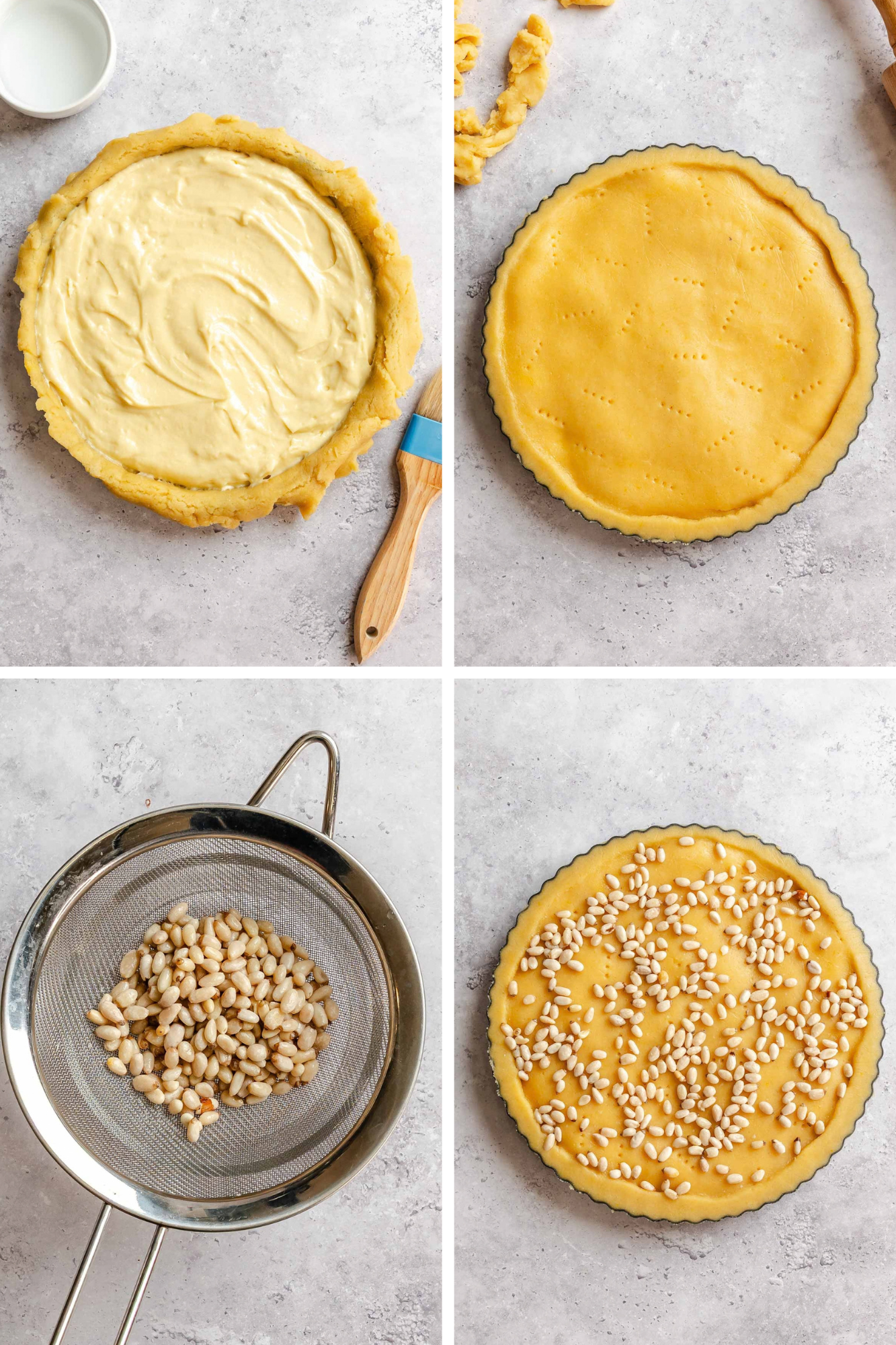
- Whisk the cold pastry cream briefly to restore its smooth consistency. Spoon it into the bottom crust and spread it into an even layer.
Pro Tip: For extra lemony flavor and a little bit of acidity, whisk two tablespoons of lemon juice into the cold pastry cream until smooth, then spoon into the crust.
- Lightly brush the exposed edge of the bottom crust with water. Place the smaller circle of dough over the pastry cream. Press the two crusts together around the rim to seal, then roll a rolling pin over the top of the pan to remove the excess dough.
- Drain the pine nuts thoroughly, leaving them slightly damp. Scatter them over the pastry and press very gently so they adhere.
- Refrigerate the assembled tart until the pastry is firm, about 20 minutes.
- Place the tart on a baking sheet, then place in the oven. Bake until the pastry is evenly golden, the bottom crust is cooked through, and the pine nuts are lightly toasted, about 50-60 minutes. Loosely cover the surface with foil if the pine nuts begin getting too dark.
- Transfer the tart to a wire rack and let it cool completely in the pan, at least 2 hours. Refrigerate for another 1-2 hours for the cleanest slices.
- Remove the tart from the pan and dust generously with powdered sugar immediately before serving.
Tips for the Best Torta della Nonna
- Make sure all of your ingredients are cold when making the dough. Refrigerate it in between steps if it starts getting warm at any point.
- If the dough remains powdery and will not hold when firmly squeezed, add 1 teaspoon of the reserved egg white and pulse briefly. Add more only if absolutely necessary.
- The pastry cream must be completely cold before assembling the tart. Warm cream will soften the butter in the dough and make the crust difficult to seal.
- Drain the pine nuts well, but do not dry them. The moisture slows their browning and helps them adhere to the crust.
- It's helpful to chill the entire raw tart before baking to prevent shrinking and achieve the best texture.
- For a creamier texture, let the tart come to room temperature before serving.
What to Serve with Italian Custard Pie
This classic Italian dessert is fantastic on its own, but it's even better with a cloud of this luscious mascarpone whipped cream on top.
Serve it with a nice cup of espresso, coffee, tea, or a big glass of milk. For something more interesting, try a refreshing homemade coffee granita or a classic Italian affogato.
Make Ahead and Storage
Both the pastry cream and dough can be prepared up to 2 days in advance and refrigerated separately. Assemble the tart just before baking to prevent the dough from getting soggy. Once baked, you can store the tart covered in the refrigerator for up to 3 days. Wait to add the powdered sugar until shortly before serving.
FAQs
Yes. Since pastry cream contains eggs and milk, which spoil quickly at room temperature, it's best stored in the refrigerator for up to 3 days.
No. Since this recipe works with a bottom and top crust, the dough is assembled with the filling and baked together without needing to par-bake first.
The pastry cream and dough can each be prepared up to 2 days in advance and refrigerated separately before assembling and baking. You can also make the entire tart ahead, let it cool, and store it in the refrigerator for up to 3 days until ready to serve. The tart is at its best within the first day or two after baking.


Did you LOVE this recipe? Please leave a star ⭐️ rating and comment and tag your creations @ColeyCooks on Instagram!
Want to Save This Recipe?
Enter your email & I'll send it to your inbox along with my best Thanksgiving ideas and tips.
By submitting this form, you consent to receive emails from Coley Cooks.
Double Crust Torta della Nonna Recipe
Ingredients
Filling
- 2 ½ cups whole milk
- peel of 1 large lemon removed in wide strips with as little white pith as possible
- 5 egg yolks large
- ½ cup granulated sugar
- ¼ cup cornstarch
- ⅛ teaspoon kosher salt
- 1 ½ teaspoons vanilla extract
Crust
- 2 ½ cups all-purpose flour
- ⅔ cup granulated sugar
- ½ teaspoon kosher salt
- ½ teaspoon baking powder
- ¾ cup unsalted butter 1 ½ sticks, cold and cut into cubes
- zest of 1 lemon finely grated
- 1 egg large
- 1 egg yolk large size, reserve egg white incase needed *see note
Assembly
- ⅓ cup pine nuts
- powdered sugar for dusting
Instructions
Make the Filling
- Combine the milk and lemon peel in a medium saucepan. Heat over medium heat until steaming bubbles begin to form around the edges. Remove from the heat, cover, and let steep for 15 minutes.2 ½ cups whole milk, peel of 1 large lemon
- Whisk the egg yolks, sugar, cornstarch, and salt in a medium bowl until completely smooth.5 egg yolks, ½ cup granulated sugar, ¼ cup cornstarch, ⅛ teaspoon kosher salt
- Remove the lemon peel from the milk, then return to medium heat until steaming. Slowly and carefully pour about half of the hot milk into the yolk mixture while whisking constantly, then pour everything back into the saucepan.
- While whisking constantly, cook over medium-low heat until the pastry cream becomes thick and begins to bubble. Be sure to scrape the edges of the pan so nothing sticks or curdles. Continue cooking for 1 minute.
- Remove from the heat, then whisk in the vanilla. Transfer the pastry cream to a shallow bowl, then cover with plastic wrap pressed directly against the surface. Refrigerate until completely cold, at least 2 hours.1 ½ teaspoons vanilla extract
Make the Crust
- Add the flour, sugar, salt, baking powder, cold butter, and lemon zest to the bowl of a food processor. Pulse until the butter is finely incorporated and the mixture resembles coarse sand without any large pieces of butter remaining.2 ½ cups all-purpose flour, ⅔ cup granulated sugar, ½ teaspoon kosher salt, ½ teaspoon baking powder, ¾ cup unsalted butter, zest of 1 lemon
- Add the whole egg and egg yolk, then pulse until the dough forms moist clumps and holds together when pressed between your fingers. Stop pulsing before the dough comes together into a ball.1 egg, 1 egg yolk
- Transfer the dough to a work surface and gently press it together. Divide it into two portions, with approximately two-thirds for the bottom crust and one-third for the top.
- Form each into a disc, wrap tightly and refrigerate until firm, at least 1 hour.
Assemble and Bake
- Preheat the oven to 350°F.
- Place the pine nuts in a small bowl, cover with cold water and soak for at least 10 minutes.⅓ cup pine nuts
- Roll the larger portion of dough on a lightly floured surface into a 12-inch circle about ⅛ inch thick. Transfer it to a 9-inch tart pan with a removable bottom and gently press it into the bottom and corners without stretching. Leave a small amount of excess dough extending above the rim. Refrigerate while rolling the top crust.
- Roll the smaller portion of dough into a 10-inch circle about ⅛ inch thick. Prick the top in several places with a fork.
- Whisk the cold pastry cream briefly to restore its smooth consistency. Spoon it into the bottom crust and spread it into an even layer.
- Lightly brush the exposed edge of the bottom crust with water. Place the smaller circle of dough over the pastry cream. Press the two crusts together around the rim to seal, then roll a rolling pin over the top of the pan to remove the excess dough.
- Drain the pine nuts thoroughly, leaving them slightly damp. Scatter them over the pastry and press very gently so they adhere.
- Refrigerate the assembled tart until the pastry is firm, about 20 minutes.
- Place the tart on a baking sheet, then place in the oven. Bake until the pastry is evenly golden, the bottom crust is cooked through, and the pine nuts are lightly toasted, about 50-60 minutes. Loosely cover the surface with foil if the pine nuts begin getting too dark.
- Transfer the tart to a wire rack and let it cool completely in the pan, at least 2 hours. Refrigerate for another 1-2 hours for the cleanest slices.
- Remove the tart from the pan and dust generously with powdered sugar immediately before serving.powdered sugar
Notes
- Make sure all of your ingredients are cold when making the dough. Refrigerate it in between steps if it starts getting warm at any point.
- Before mixing everything together in the food processor, rub the sugar and lemon zest together with your fingertips for a couple of minutes to bring out the lemon's essential oils.
- If the dough remains powdery and will not hold when firmly squeezed, add 1 teaspoon of the reserved egg white and pulse briefly. Add more only if absolutely necessary.
- To make sure your pastry cream is super smooth, use an immersion blender to process it in the saucepan before cooling.
- For extra lemony flavor and a little bit of acidity, whisk two tablespoons of lemon juice into the cold pastry cream until smooth, then spoon into the crust.
- The pastry cream must be completely cold before assembling the tart. Warm cream will soften the butter in the dough and make the crust difficult to seal.
- Drain the pine nuts well, but do not dry them. The moisture slows their browning and helps them adhere to the crust.
- It's helpful to chill the entire raw tart before baking to prevent shrinking and achieve the best texture.
- For a creamier texture, let the tart come to room temperature before serving.

can you make this recipe without using cornstarch as the thickener, eg potato starch or tapioca starch or flour ?
I recommend using flour as a substitute, however I haven't tested it so I can't confirm how it will behave after baking. You may need slightly more flour than corn starch and will need to cook it a few minutes longer to properly thicken and cook out the raw flour taste.