
Roasted Turkey Breast with Herb Butter (Dry Brined)
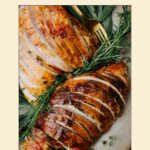
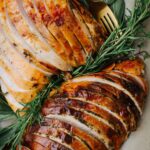
This dry brined turkey breast recipe is the easiest way to get juicy, perfectly seasoned meat and shatteringly crisp, crackly skin without the mess and hassle of a wet brine. Herb butter adds rich flavor, while simple prep and a few crucial tips take the guesswork out of roasting for evenly cooked meat. It's much easier than cooking a whole turkey but still every bit as special for a smaller Thanksgiving dinner!
This post may contain affiliate links.
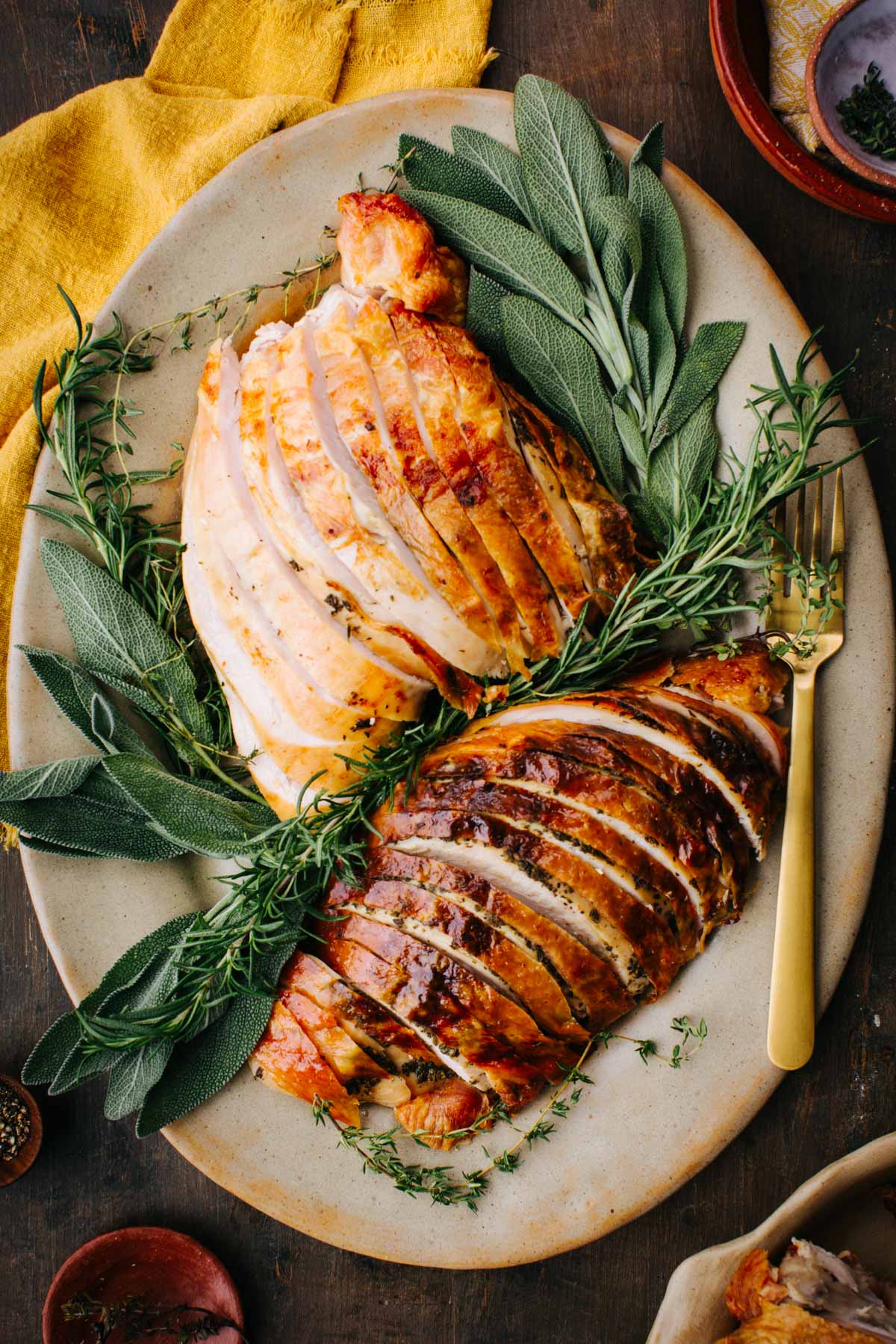
Why This Dry Brined Turkey Breast Recipe Works
- A turkey breast is easier to handle than a whole bird and just the right size for smaller gatherings.
- Dry brining seasons the meat and dries the exterior for juicy turkey with extra crispy skin, minus the hassle of a messy wet brine.
- Herb butter under the skin adds moisture, richness, and extra flavor directly to the meat.
- Starting at a low oven temperature cooks the breast gently, then higher heat at the end browns and crisps the skin.
- Using a thermometer and accounting for carryover cooking removes the guesswork and results in perfectly cooked meat every time.
Some Thanksgivings call for a whole 15-pound turkey, but other years a whole bird is just too much. Roasting a turkey breast is far more practical for smaller gatherings or families who prefer white meat over dark. It's also great for adding a little bit of extra meat to the table when one whole bird isn't enough.
Breast vs. Whole Bird for Thanksgiving
A turkey breast allows you to cook all of the meat perfectly without having to worry about the dark meat being undercooked or the white meat being overcooked. It takes a lot of the guesswork and hassle out of the meal, which is always helpful but especially on Thanksgiving.
Bone-In vs. Boneless Turkey Breast
Boneless turkey breasts cook faster and are easier to carve, but they dry out more easily. With bone-in turkey breasts, the bones insulate the meat as it roasts, so it cooks more gently and stays juicier for longer. Plus, bone-in breasts usually come with the skin fully intact and the bones add extra flavor.
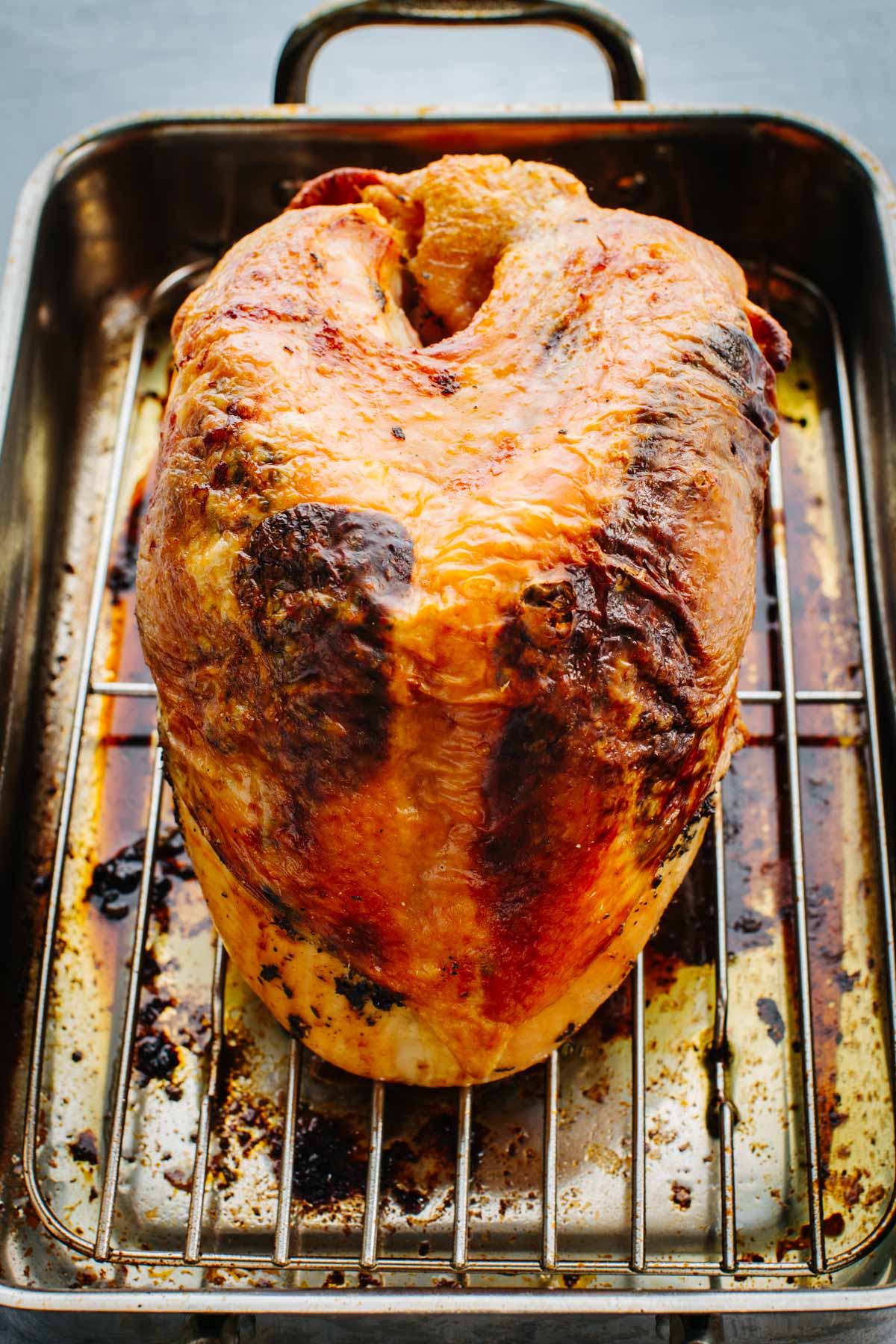
Dry Brining vs. Wet Brining
I always prefer doing a dry brine rather than a wet brine when it comes to Thanksgiving turkey. Not only does it keep the meat moist and well seasoned, but unlike a wet brine, it also helps the skin get nice and crispy.
It's also less messy and easier to pull off than a wet brine. You don't need to find a giant tub or bag to hold everything, and there's no risk of turkey brine leaking all over your fridge.
A great dry-brined turkey starts at the grocery store. Choose a high-quality, bone-in turkey breast weighing anywhere from 5-8 pounds, and make sure it hasn't been seasoned or treated in any way.
If your turkey breast is frozen, be sure to budget time for both thawing and brining. A frozen turkey breast can take 2-3 days or more to thaw in the refrigerator, and the dry brine will need an additional 12-24 hours.
To dry brine your turkey, all you need to do is rub it all over with salt. Use your fingers to carefully separate the skin from the breast meat and do your best to evenly distribute the salt.
How Much Salt to Use for a Dry Brined Turkey Breast
Use approximately 3 grams of salt per pound of turkey. Weighing your salt with a scale is the most accurate option because different salts vary significantly.
Refrigerate the dry-brined turkey uncovered to dry the surface. This is what will help you achieve the tastiest, crispiest skin possible!
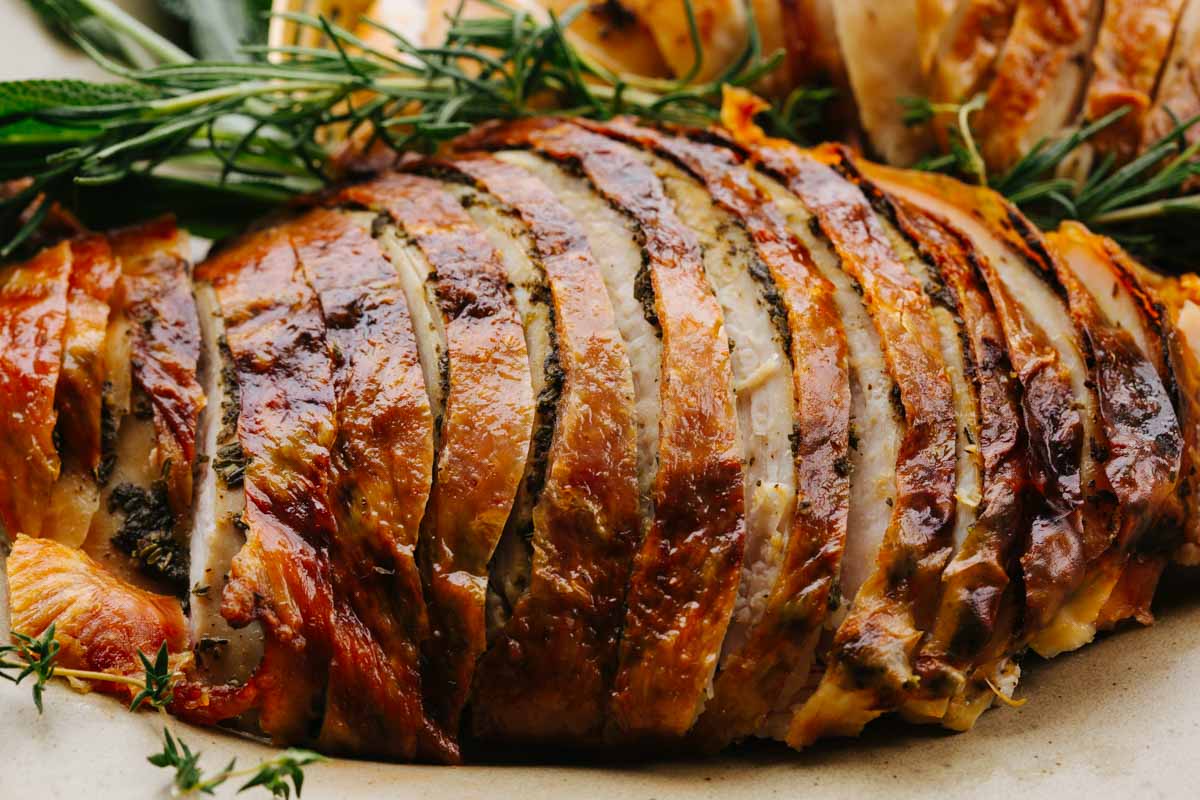
How Long to Dry Brine a Turkey Breast
Brine for a minimum of 12 hours so the salt can permeate, but no more than 24 hours or else it will start to cure the meat.
Let the bird come to room temperature for at least 45 minutes before roasting, then rub herb butter underneath the skin to add moisture and even more flavor. Do not baste, which repeatedly wets the skin and will ruin its chances of getting crispy.
A whole bone-in breast is thick in the center, so high heat can overcook the exterior before the deepest meat is done. Begin roasting at a lower temperature for an hour, then increase it for the remainder of the cooking time.
The time will ultimately depend on the size and shape of your turkey breast, so using a good-quality instant-read thermometer is crucial.
The USDA recommends that turkey reach 165°F, but I find it dries out if you wait until that temperature to pull it from the oven. I like to remove it at 155°F and let the carryover cooking bring it up to 165°F as it rests.
Be sure to insert the thermometer into the thickest part of the breast without touching bone and check both sides before removing it from the oven.
It's also very important to rest the meat for at least 20-30 minutes before carving to allow the juices to redistribute.
Want more Thanksgiving main dish ideas? Try this mouthwatering roasted turkey recipe, foolproof whole roasted chicken, or perfect oven roasted whole beef tenderloin.
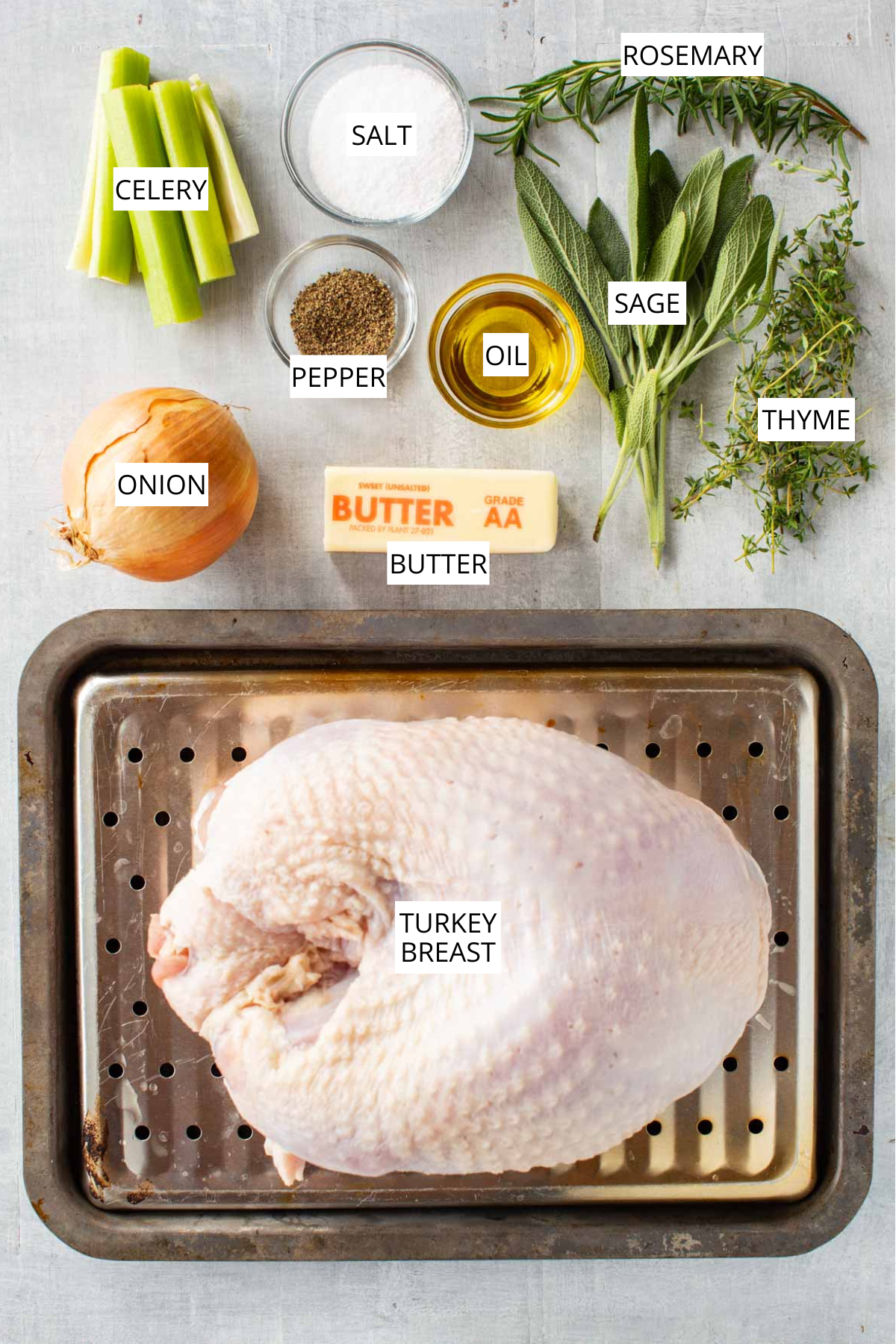
Ingredients for Dry Brined Turkey with Herb Butter
Turkey breast - Go for a good-quality, unseasoned, bone-in turkey breast, anywhere from 5-8 pounds. Avoid turkey that's pre-brined, self-basting, or enhanced with a salt solution.
Salt - I use Diamond Crystal Kosher salt, but you can use any salt variety. Make sure you weigh the salt if using a different type to avoid oversalting.
Butter - Use good-quality unsalted butter that's been softened so it's easy to rub underneath the skin without breaking it.
Herbs - Fresh herbs are best here. I used a mix of sage, thyme, and rosemary.
*Find the full ingredient list in the recipe card below!
Helpful Equipment
- Paper towels
- Wire rack
- Rimmed baking sheet
- Shallow roasting pan
- Instant-read thermometer
How to Dry Brine a Turkey Breast
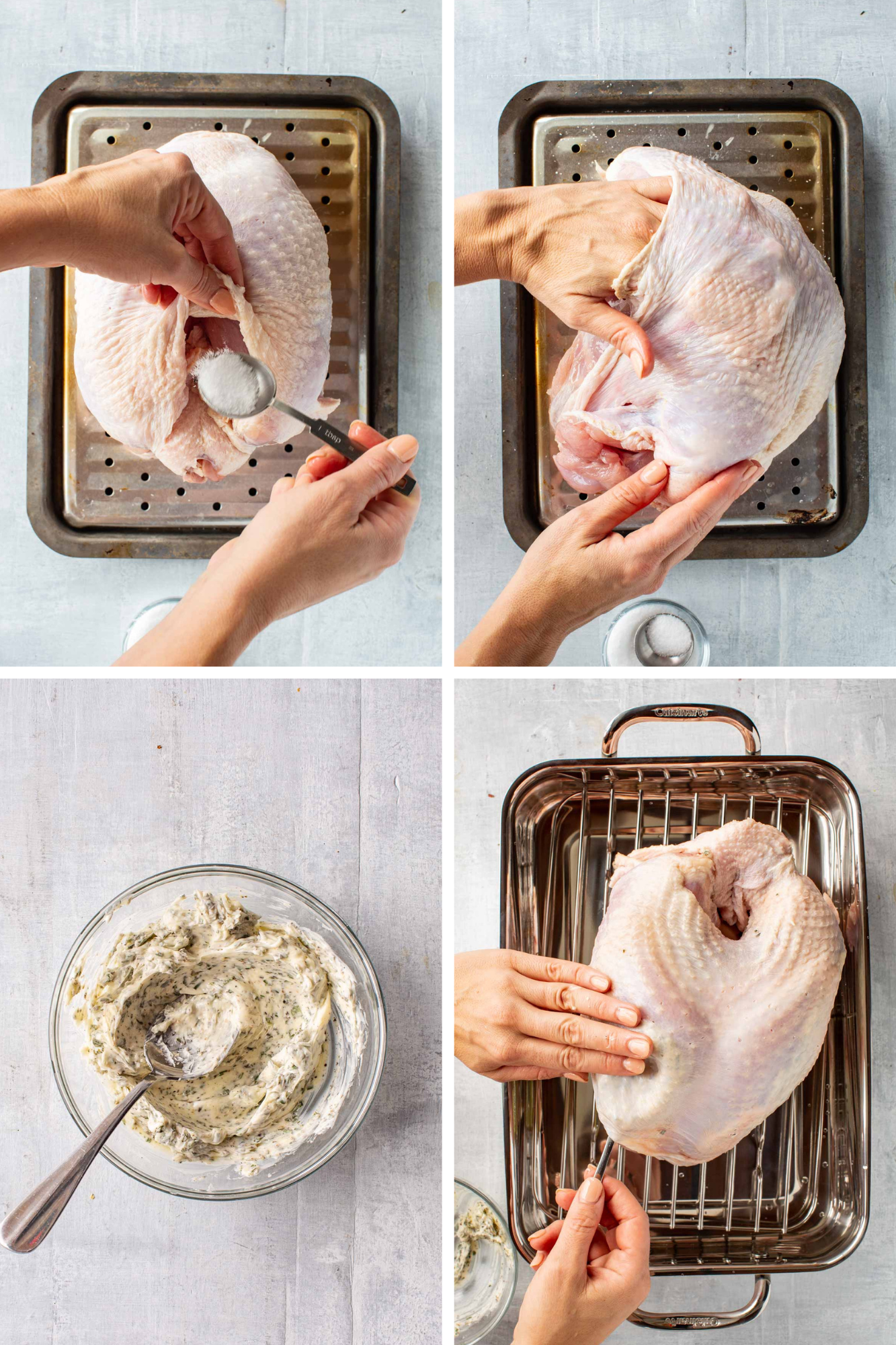
- Pat the turkey breast very dry with paper towels. Carefully loosen the skin from the breast meat with your fingers, taking care not to tear it. Sprinkle some of the salt evenly over the meat underneath the skin, then season the skin, underside and cavity with the remaining salt. Rub until the salt is evenly distributed, especially under the skin.
- Place the turkey breast on a wire rack set over a rimmed sheet pan and refrigerate uncovered for at least 12, but no more than 24 hours.
Pro Tip: Do not rinse the turkey after dry brining. You'll be ruining the work of drying out the skin by introducing moisture and it will not get crispy.
How to Roast a Bone-In Turkey Breast Without Drying It Out
- Remove the turkey from the refrigerator about 45 minutes to an hour before roasting. Position a rack in the lower third of the oven and preheat to 325°F.
- Combine the softened butter, sage, thyme, rosemary, and black pepper in a small bowl.
- Carefully loosen the skin again and spread the herb butter evenly over the breast meat underneath the skin. Smooth the skin back into place and make sure the butter is evenly distributed throughout.
Pro Tip: You're looking to place the butter underneath the skin for flavor, richness and moisture, not on top. Adding butter on top can cause the skin to brown too fast since it has a low smoke point and the herbs could burn. The outer layer should only have oil.
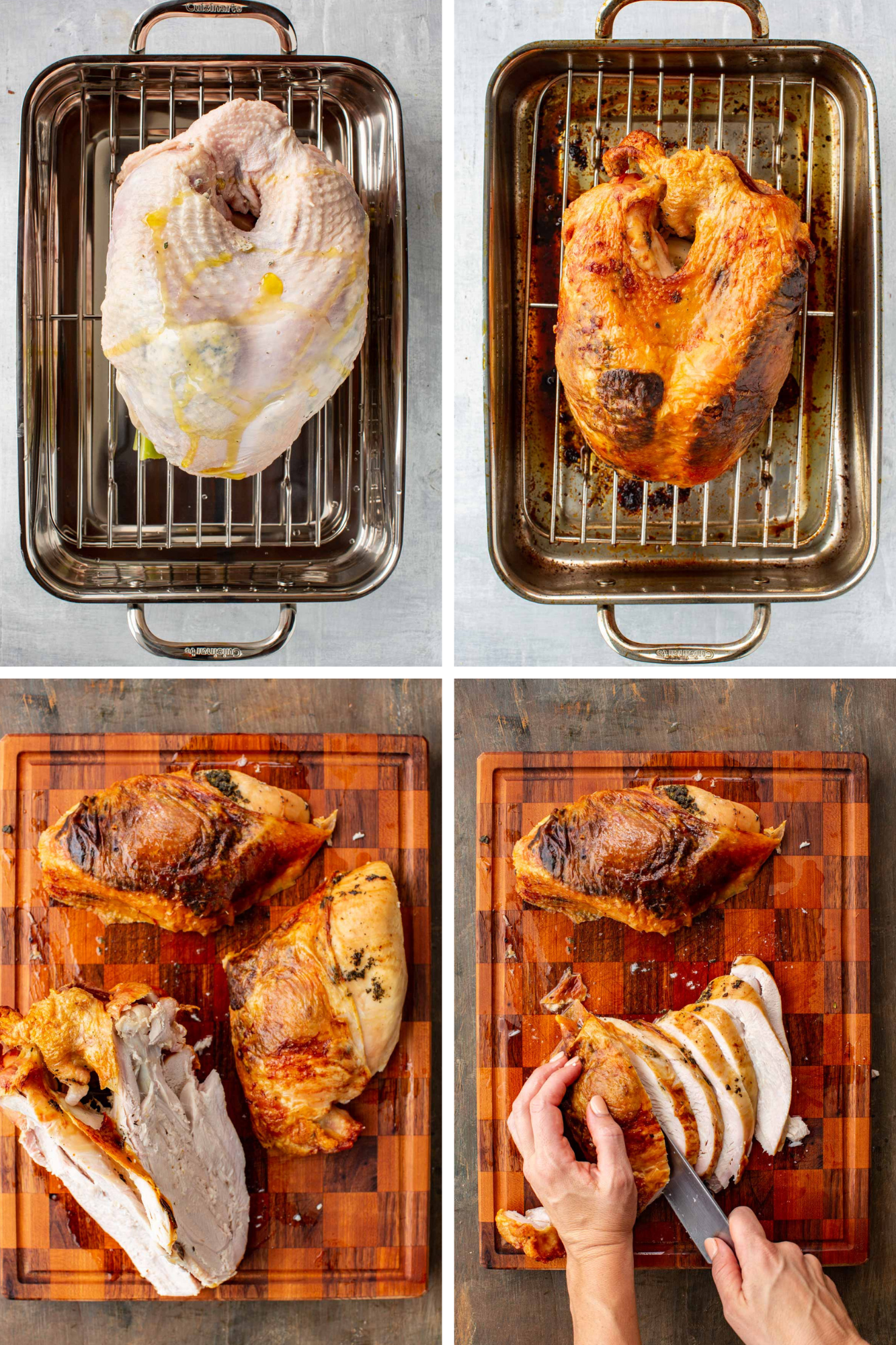
- Loosely place the onion, celery, sage, thyme, and rosemary inside the cavity. Do not pack it tightly. Rub the outside all over with the olive oil.
How Long to Cook a Bone-In Turkey Breast
- Place the turkey breast skin-side up on a wire rack set inside a rimmed sheet pan or shallow roasting pan. Roast for 1 hour, then increase the oven temperature to 375°F.
- Continue roasting until the skin is browned and crisp, about 40-90 minutes longer depending on size.
Pro Tip: Save the turkey and herb butter drippings from the pan to make gravy later.
What Temperature Is Turkey Breast Done?
- When an instant-read thermometer inserted into the thickest part of the breast registers 155°F, remove the turkey from the oven and let it rest for 20-30 minutes before carving. The temperature should come up to 165°F while it rests.
Pro Tip: If the temp doesn't reach 165°F with carryover cooking, cover it with foil or put it back in the oven for a couple of minutes to make sure it's thoroughly cooked.
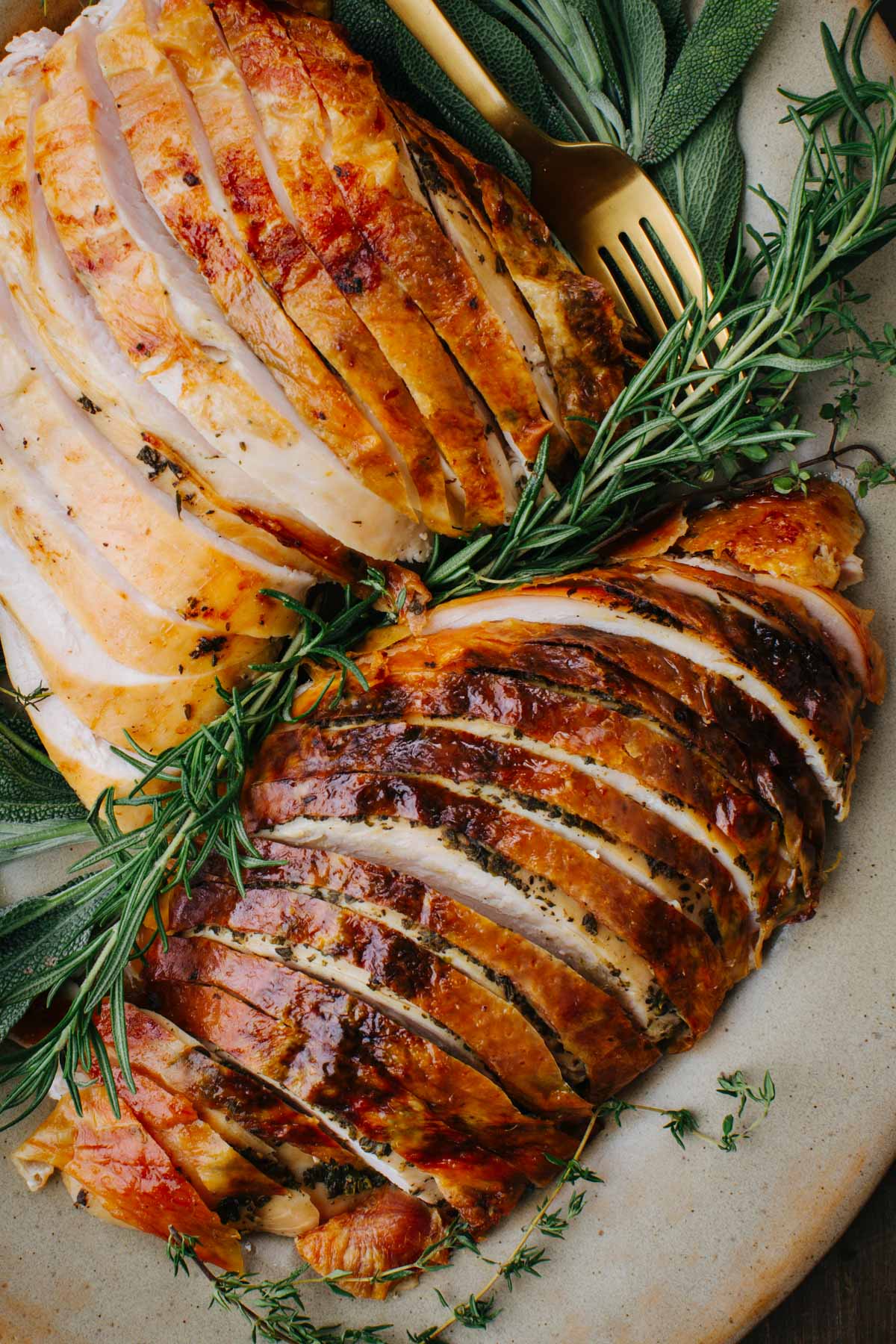
- Remove each breast half from the bone, slice crosswise and serve.
Tips For Perfectly Roasted Turkey Breast
- If using a frozen turkey, be sure to let it defrost slowly in the refrigerator for several days before brining to ensure it is fully thawed. It will take 2-3 days depending on size.
- Weighing salt is the most accurate option since different types of salt vary by volume. Use approximately 3 grams of salt, any variety, per pound of turkey.
- Pat dry the turkey's skin again with paper towels before adding butter to remove any remaining surface moisture.
- If the skin browns too quickly, loosely tent it with foil.
- Cooking time will vary depending on the size and shape of the turkey breast. Measure the internal temperature rather than time to determine when it's done.
Roasted Turkey Breast Variations
- Use other herbs and spices to flavor the butter like parsley, basil, tarragon, dill, or chives.
- Try adding some spices to the dry brine like black pepper, finely ground chili flakes, smoked paprika, crushed fennel seeds, or coriander seeds.
- Add some grated garlic or mashed black garlic to your butter for a garlicky punch.
- Add halved lemons and oranges, fennel, and apple wedges inside the turkey cavity for a more fragrant flavor.
What to Serve with Roasted Turkey Breast
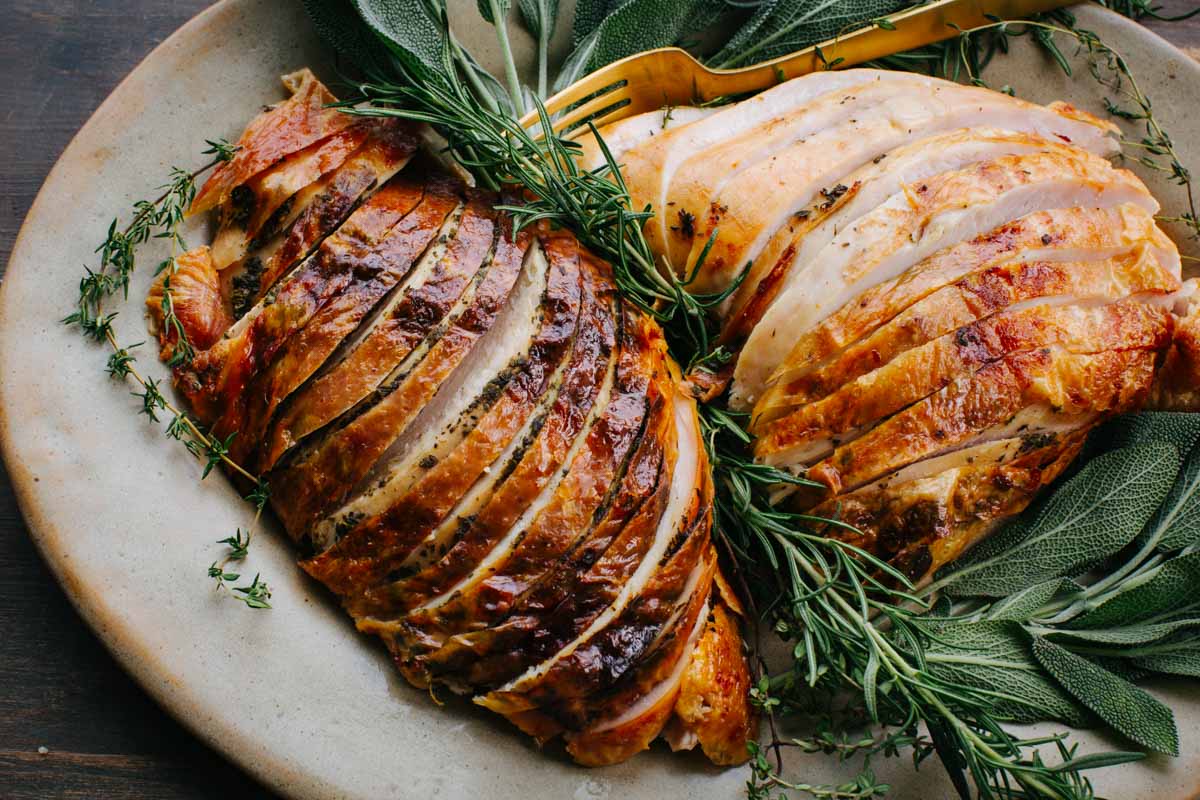
Serve this succulent turkey breast as the center of your Thanksgiving feast along with perfect homemade turkey gravy, tart balsamic cranberry sauce, and classic green beans amandine.
Don't forget to add some starchy sides like my silky brown butter squash puree, orange mashed sweet potatoes with pecans, easy Dauphinoise potato gratin, or creamy mascarpone red skin mashed potatoes on the side.
How to Store and Reheat Leftover Turkey
Once cool, store leftover turkey in an airtight container in the fridge for up to 3 days, or up to 3 months in the freezer. Defrost before reheating.
To reheat, place in an oven-safe container drizzled with a small splash of water or broth, cover with foil and place in a 300°F oven until warmed through. This keeps the turkey moist and prevents it from drying out, but can take 10-15 minutes.
If you want to revive the skin, place it separately in an air fryer for a few minutes to crisp back up.
FAQs
To get crispy skin you want to eliminate moisture. The best way to do it is to dry brine the turkey with salt in the fridge for 12-24 hours, uncovered. The salt draws out moisture and the dry, cold air helps it evaporate from the surface so the fatty skin can easily crisp up in the oven.
Yes, as long as you weigh it. Table salt is much denser than kosher salt, so by volume it's about twice as salty as Diamond Crystal, with Morton kosher salt falling in between. Using 3 grams per pound gives around the same result with any variety.
A thermometer is strongly recommended because there are so many variables such as size, your oven, and the temperature of the turkey before going in. If you don't have a thermometer, budget about 15-20 minutes per pound and look for the juices to run clear when you pierce the thickest part.


Did you LOVE this recipe? Please leave a star ⭐️ rating and comment and tag your creations @ColeyCooks on Instagram!
Want to Save This Recipe?
Enter your email & I'll send it to your inbox along with my best Thanksgiving ideas and tips.
By submitting this form, you consent to receive emails from Coley Cooks.
Dry Brined Turkey Breast with Herb Butter
Ingredients
- 1 turkey breast whole bone-in skin-on, 5-8 pounds *see note
- 2 tablespoons Diamond Crystal kosher salt or 3 grams per pound of turkey *see note
- 6 tablespoons butter unsalted, softened
- 2 teaspoons fresh sage finely chopped, plus 4-6 fresh sage leaves
- 2 teaspoons fresh thyme finely chopped, plus 4-6 sprigs fresh thyme
- 1 teaspoon fresh rosemary finely chopped, plus 1 small sprig fresh rosemary
- 1 teaspoon black pepper freshly ground
- 1 medium yellow onion quartered
- 2 celery stalks cut into large pieces
- 1 tablespoon olive oil
Instructions
- Pat the turkey breast very dry with paper towels. Carefully loosen the skin from the breast meat with your fingers, taking care not to tear it. Sprinkle some of the salt evenly over the meat underneath the skin, then season the skin, underside and cavity with the remaining salt. Rub until the salt is evenly distributed, especially under the skin.1 turkey breast, 2 tablespoons Diamond Crystal kosher salt
- Place the turkey breast on a wire rack set over a rimmed sheet pan and refrigerate uncovered for at least 12, but no more than 24 hours.
- Remove the turkey from the refrigerator about 45 minutes to an hour before roasting. Position a rack in the lower third of the oven and preheat to 325°F.
- Combine the softened butter, sage, thyme, rosemary, and black pepper in a small bowl.6 tablespoons butter, 2 teaspoons fresh sage, 2 teaspoons fresh thyme, 1 teaspoon fresh rosemary, 1 teaspoon black pepper
- Carefully loosen the skin again and spread the herb butter evenly over the breast meat underneath the skin. Smooth the skin back into place and make sure the butter is evenly distributed throughout.
- Loosely place the onion, celery, sage, thyme, and rosemary inside the cavity. Do not pack it tightly. Rub the outside all over with the olive oil.1 medium yellow onion, 2 celery stalks, 1 tablespoon olive oil
- Place the turkey breast skin-side up on a wire rack set inside a rimmed sheet pan or shallow roasting pan. Roast for 1 hour, then increase the oven temperature to 375°F.
- Continue roasting until the skin is browned and crisp, about 40-90 minutes longer depending on size.
- When an instant-read thermometer inserted into the thickest part of the breast registers 155°F, remove the turkey from the oven and let it rest for 20-30 minutes before carving. The temperature should come up to 165°F while it rests.
- Remove each breast half from the bone, slice crosswise and serve.
Notes
- If using a frozen turkey, be sure to let it defrost slowly in the refrigerator for several days before brining to ensure it is fully thawed. It will take 2-3 days depending on size.
- Weighing salt is the most accurate option since different types of salt vary by volume. Use approximately 3 grams of salt, any variety, per pound of turkey.
- Do not rinse the turkey after dry brining. You'll be ruining the work of drying out the skin by introducing moisture and it will not get crispy.
- Pat dry the turkey's skin again with paper towels before adding butter to remove any remaining surface moisture.
- Place the butter underneath the skin for flavor, richness and moisture, not on top. Adding butter on top can cause the skin to brown too fast since it has a low smoke point and the herbs could burn. The outer layer should only have oil.
- If the skin browns too quickly, loosely tent it with foil.
- Cooking time will vary depending on the size and shape of the turkey breast. Measure the internal temperature rather than time to determine when it's done.
- Save the turkey and herb butter drippings from the pan to make gravy later.
- If the temp doesn't reach 165°F with carryover cooking, cover it with foil or put it back in the oven for a couple of minutes to make sure it's thoroughly cooked.

Hey Coley, this looks great! Funny thing is that I decided last week to try cooking just a turkey breast for TG, so your timing is perfect. Will give this a try!
Awesome, Greg! I hope you love the recipe. I actually think a turkey breast turns out way better than cooking a whole bird. It's just easier to manage the temperature. Please let me know how it goes! 😀