
Bucatini all'Amatriciana
Pasta all'Amatriciana is one of the great Roman pasta dishes, and my version stays true to the classic while adding a few personal touches. This easy-to-follow recipe breaks down every step with expert tips and techniques to help you make a restaurant-worthy bowl of pasta at home every single time!
This post may contain affiliate links.
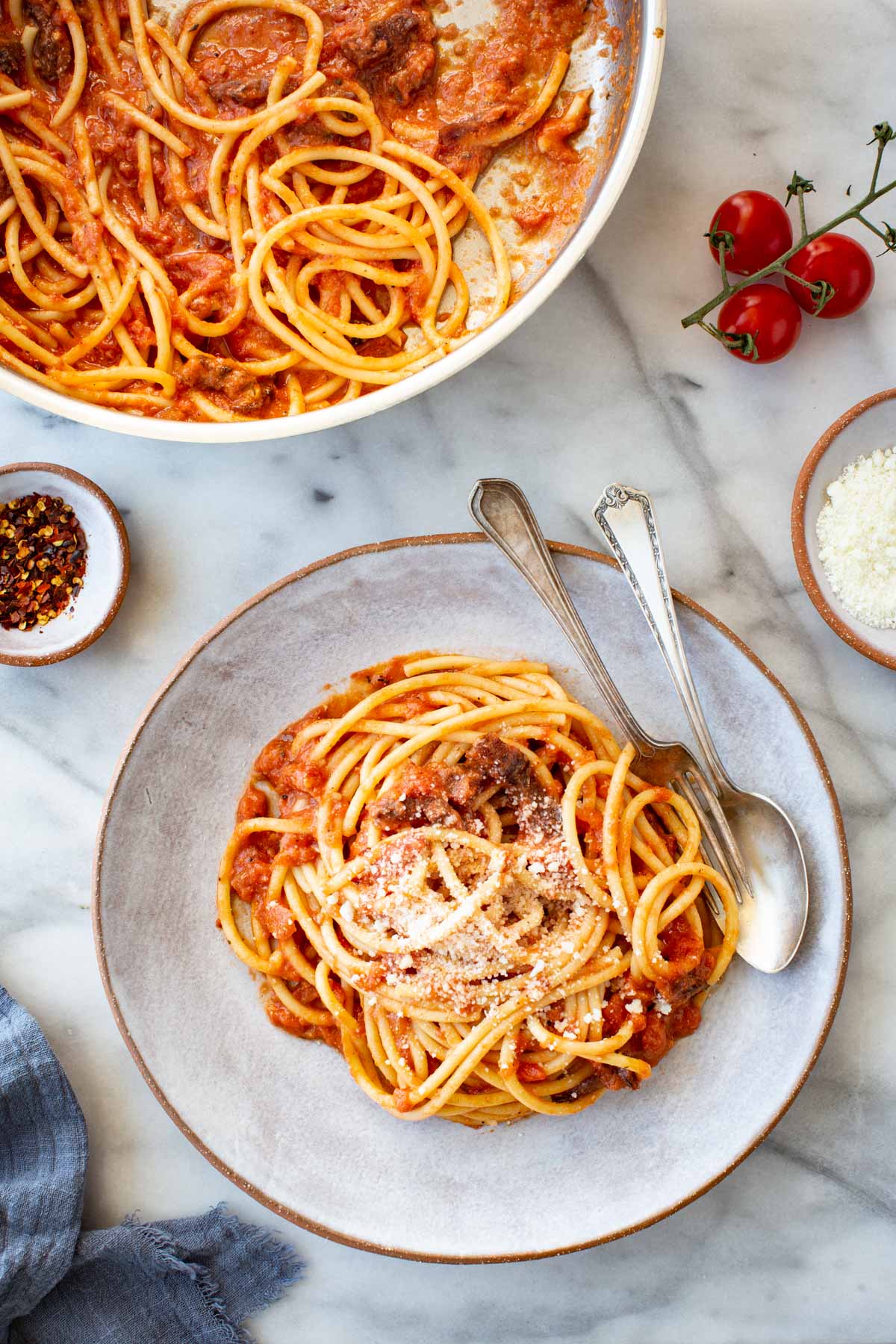
I've been making this recipe for decades and have developed a few key methods to help keep the sauce perfectly seasoned, smooth, and emulsified with perfectly al dente pasta.
Like most simple Italian recipes, the quality of ingredients really matters, especially when there are so few. More on that below.
What is Pasta all'Amatriciana?
Amatriciana is one of the four classic pastas of Rome along with Carbonara, Gricia, and Cacio e Pepe.
The traditional recipe is essentially Gricia with tomatoes. It's rich and savory from the guanciale and Pecorino Romano, but lighter and tangier from the tomato sauce.
It's made with just a handful of ingredients, so it's a simple dish at its core, but the technique is what makes it special. The goal is to create a cohesive sauce with the rendered guanciale fat, tomatoes, pecorino, and pasta water.
One of the most important steps to making great amatriciana is rendering the guanciale as much as you can so that it gives off enough fat to really enrich the sauce. Start it in a cold pan and let it cook slowly over low heat so the fat can render gradually.
Once the guanciale is crisp, you'll use that rendered fat to build the sauce. I like adding garlic, but it's not traditional, so I keep it minimal and use the Italian technique of cooking a whole clove, then removing it. This way it imparts a subtle flavor without overpowering.
I also add a pinch of crushed red pepper to bloom in the fat, then a splash of white wine. While not everyone uses white wine in their amatriciana, I like the depth it brings and it's actually part of the Amatrice Municipality's traditional amatriciana recipe. However, you can easily skip it if you want.
The wine is cooked down until it reduces by more than half, then the tomatoes are incorporated.
I always use whole peeled tomatoes that I crush by hand, but a can of crushed tomatoes works too. If you want an even smoother sauce, you can use passata. I add more tomatoes than most since I like my pasta extra saucy, but you can scale it back if you like yours with less.
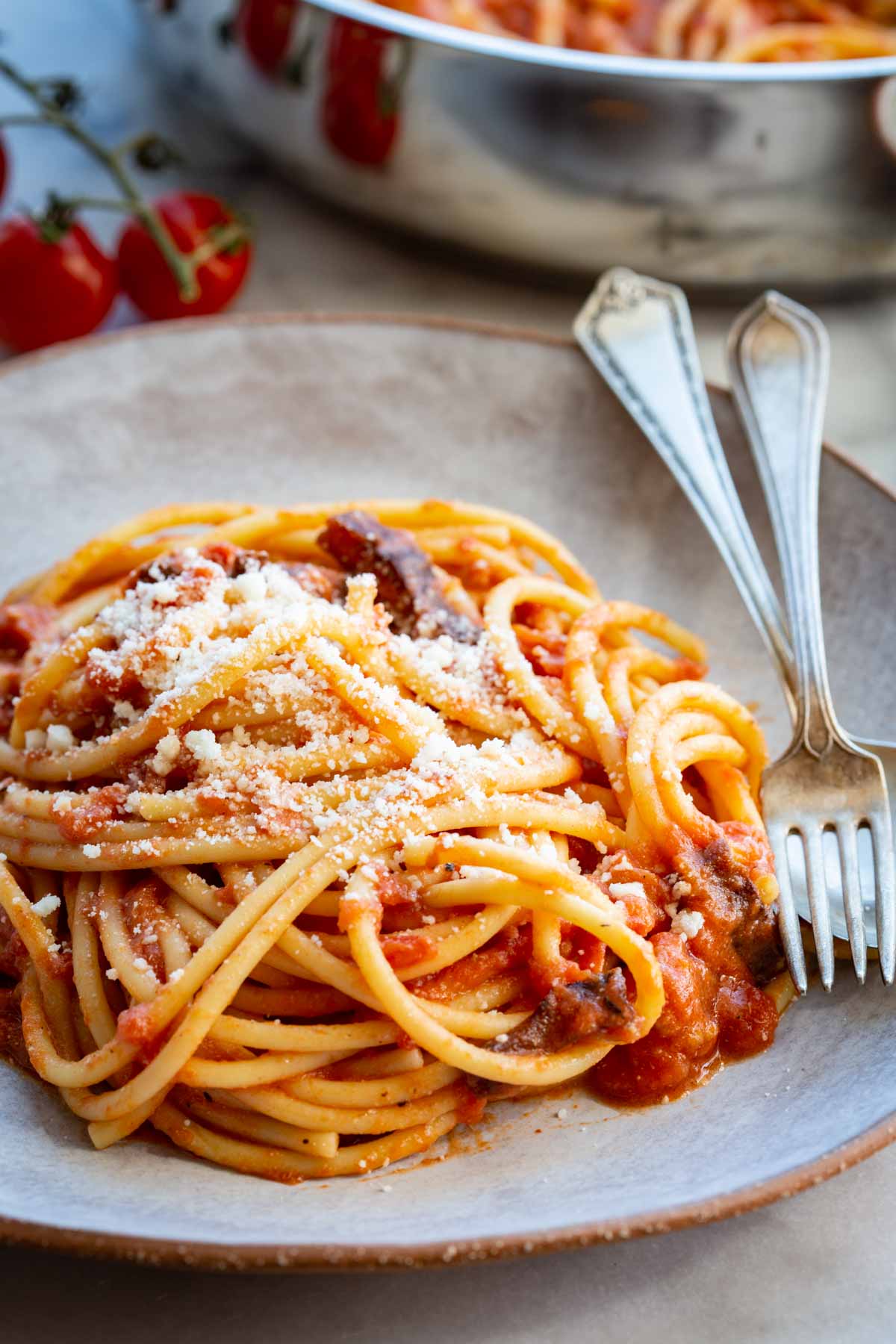
The sauce simmers gently until slightly thickened and the fat and tomatoes begin to meld together. You're looking for a consistency that lightly coats the noodles, not a loose tomato sauce sitting underneath it.
It's important to cook the pasta just shy of al dente, then finish it in the sauce with a splash of pasta water. Tossing and stirring constantly encourages the sauce to emulsify and helps it cling to every piece of pasta.
The Pecorino Romano gets added off the heat right at the very end. Let the pan cool slightly before stirring so it melts smoothly into the sauce rather than clumping.
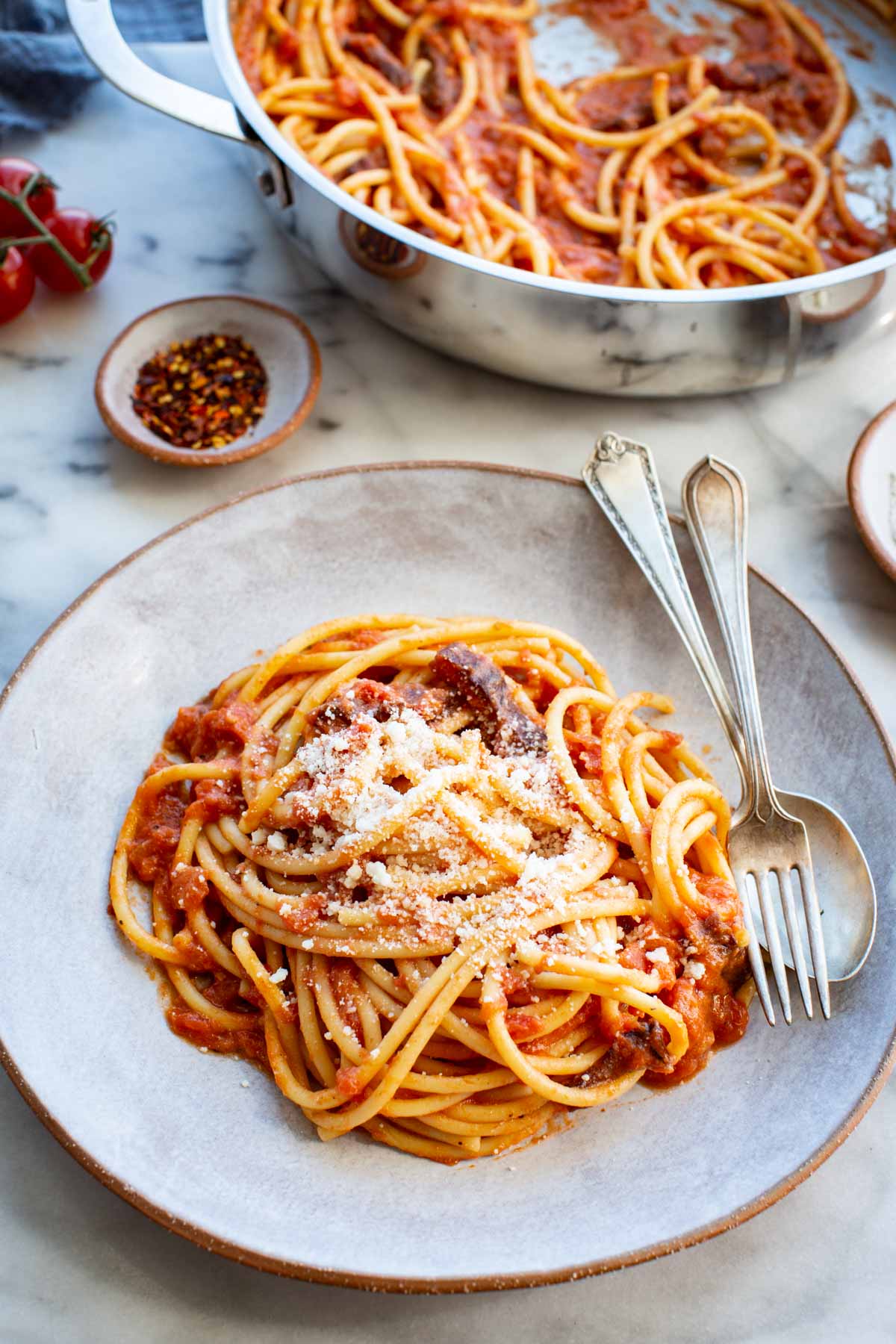
Toss vigorously to bring everything together into a cohesive, glossy finish, then serve on warmed plates with a nice hunk of bread to mop up every last bit!
Want more classic Italian pasta recipes? Try a citrusy pasta al limone, a hearty pasta alla Genovese, or a pungent spaghetti puttanesca.
Why This Recipe Works
- It's a simple recipe that relies on a few smart techniques to create a truly exceptional bowl of pasta.
- Starting the guanciale in a cold pan and rendering over low heat makes it extra crispy and releases more fat for the sauce.
- Cooking the pasta just shy of al dente then finishing it in the pan guarantees the perfect texture.
- Tossing vigorously helps the sauce emulsify so it becomes silky and clings to every strand of pasta.
- Comes together in 30 minutes with just 5 basic ingredients!
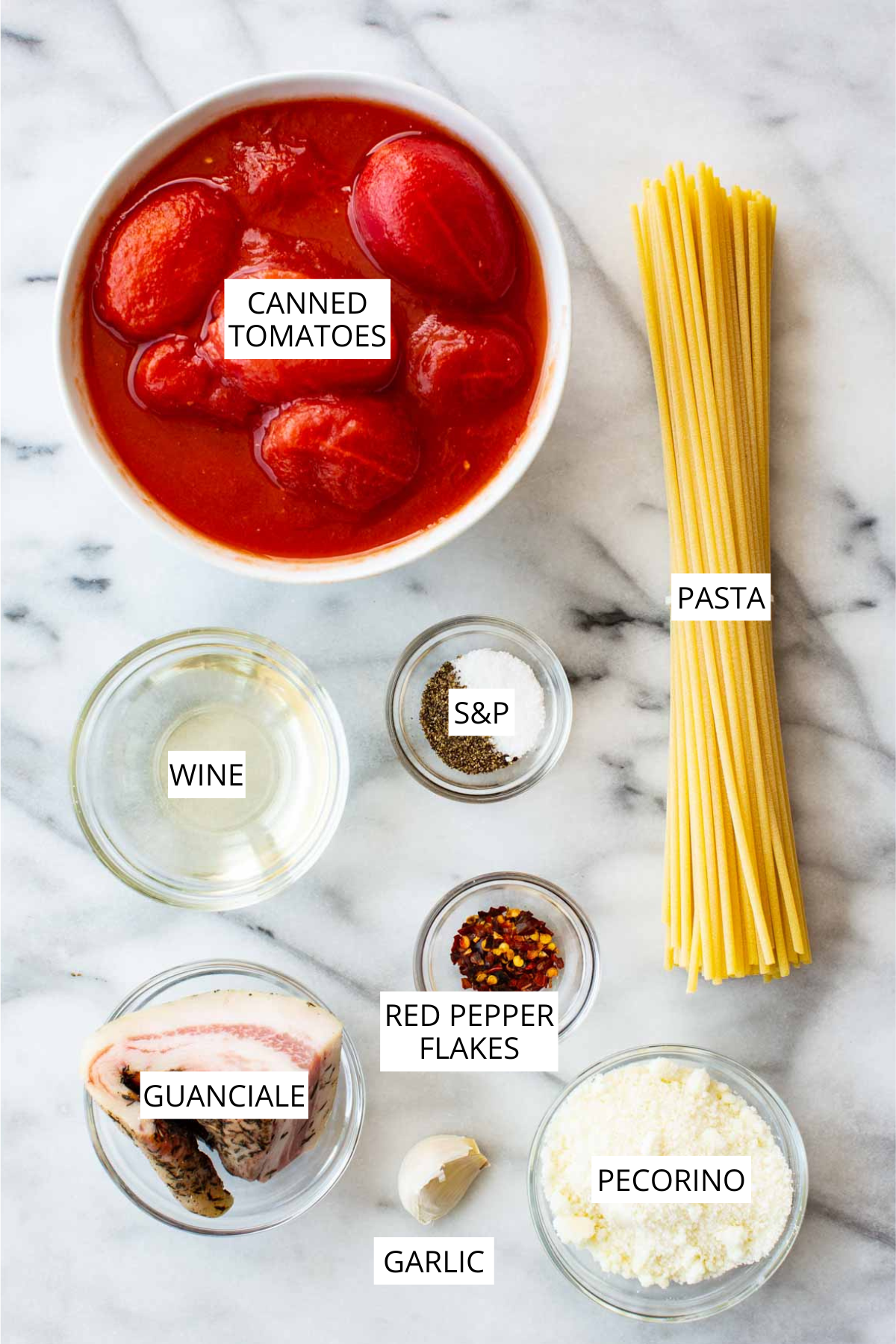
Amatriciana Ingredients
Pasta - Amatriciana is traditionally made with a long pasta like bucatini or spaghetti, though rigatoni is also common and great for catching bits of sauce and guanciale. Use a good quality dried pasta that's been slow-dried and bronze-die extruded, and boil it a few minutes shy of al dente so it can finish in the sauce.
Guanciale - Guanciale is an Italian cured meat product made from pork cheek. Depending on the type and age of guanciale, you may want to trim the outer layer if it feels tough. Pancetta can be used as a substitute, although it won't be quite as rich.
Pecorino Romano - Good quality Pecorino Romano is absolutely crucial! Look for a DOP imported cheese brand like Locatelli. Avoid lower quality versions, which don't melt as smoothly and can make the sauce grainy.
Tomatoes - Use good quality canned whole peeled tomatoes, preferably San Marzano or another DOP variety. Crush them by hand for the best texture, or use an immersion blender if they're especially firm. The sauce should be lightly chunky, not completely smooth.
Wine - Use a dry white wine that hasn't been oaked, like a sauvignon blanc or pinot grigio.
*Find the full ingredient list in the recipe card below!
Helpful Equipment
- Large pot
- Large skillet
- Colander
- Tongs
- Cheese grater
How to Make Pasta all'Amatriciana
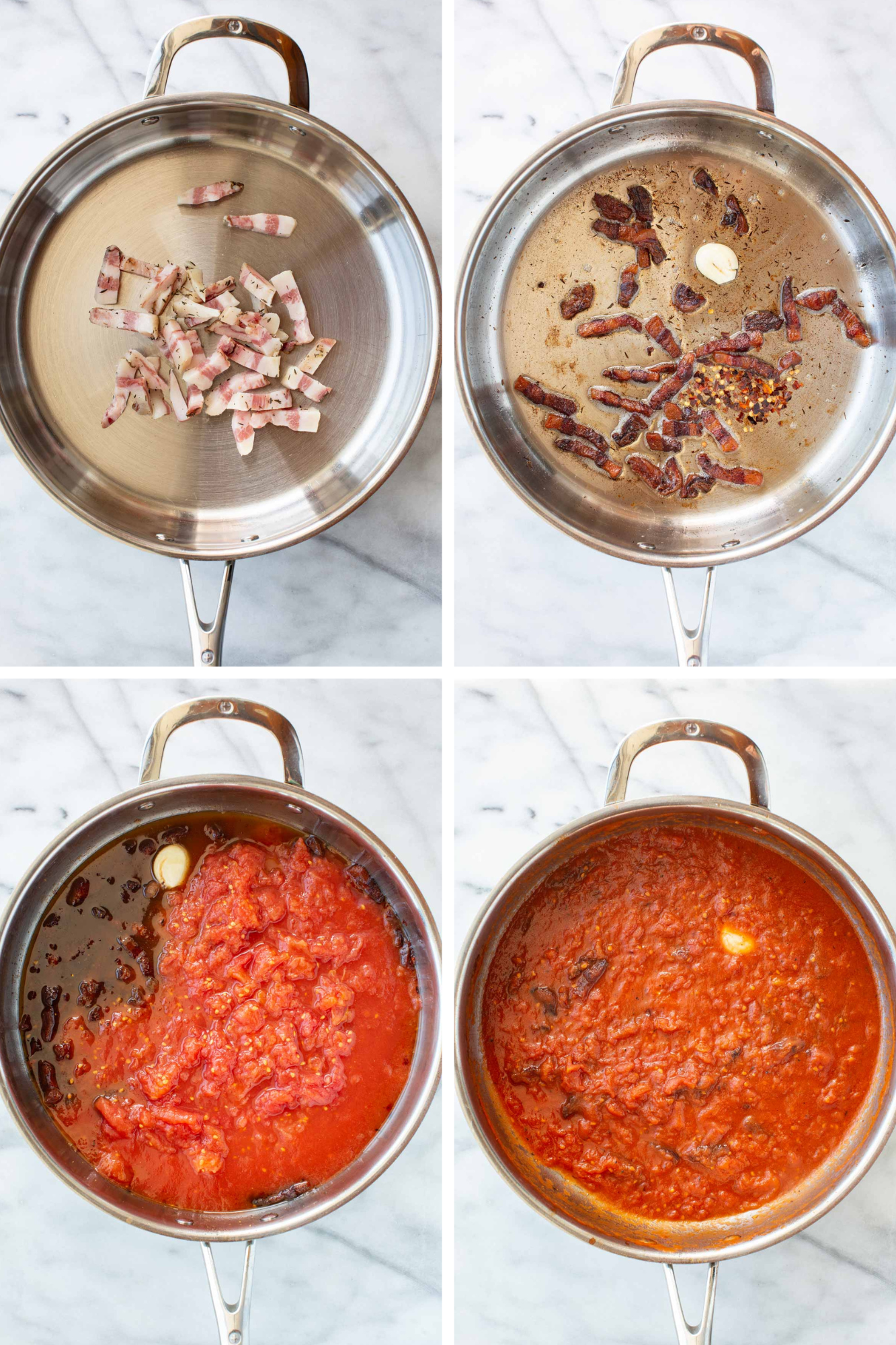
- Bring a large pot of water to a boil and season generously with salt.
- Add the guanciale to a cold, unoiled skillet and place over low heat. Let it slowly render, stirring occasionally, until the fat is clear and the meat is golden and crisp, about 10 minutes.
Pro Tip: Using guanciale cut into lardons or small batons ensures an even distribution of fat and meat while also helping the pieces cook evenly.
- Add the red pepper flakes and garlic to the rendered fat. Cook gently, stirring, until the garlic is just lightly golden and fragrant, about 1-2 minutes. Don't let it brown too far.
- Pour in the white wine and let it simmer until reduced by about half, scraping up any browned bits from the pan.
- Add the hand-crushed tomatoes and a pinch of salt. Bring to a simmer and cook until slightly thickened, about 8-10 minutes. Then remove the garlic clove.
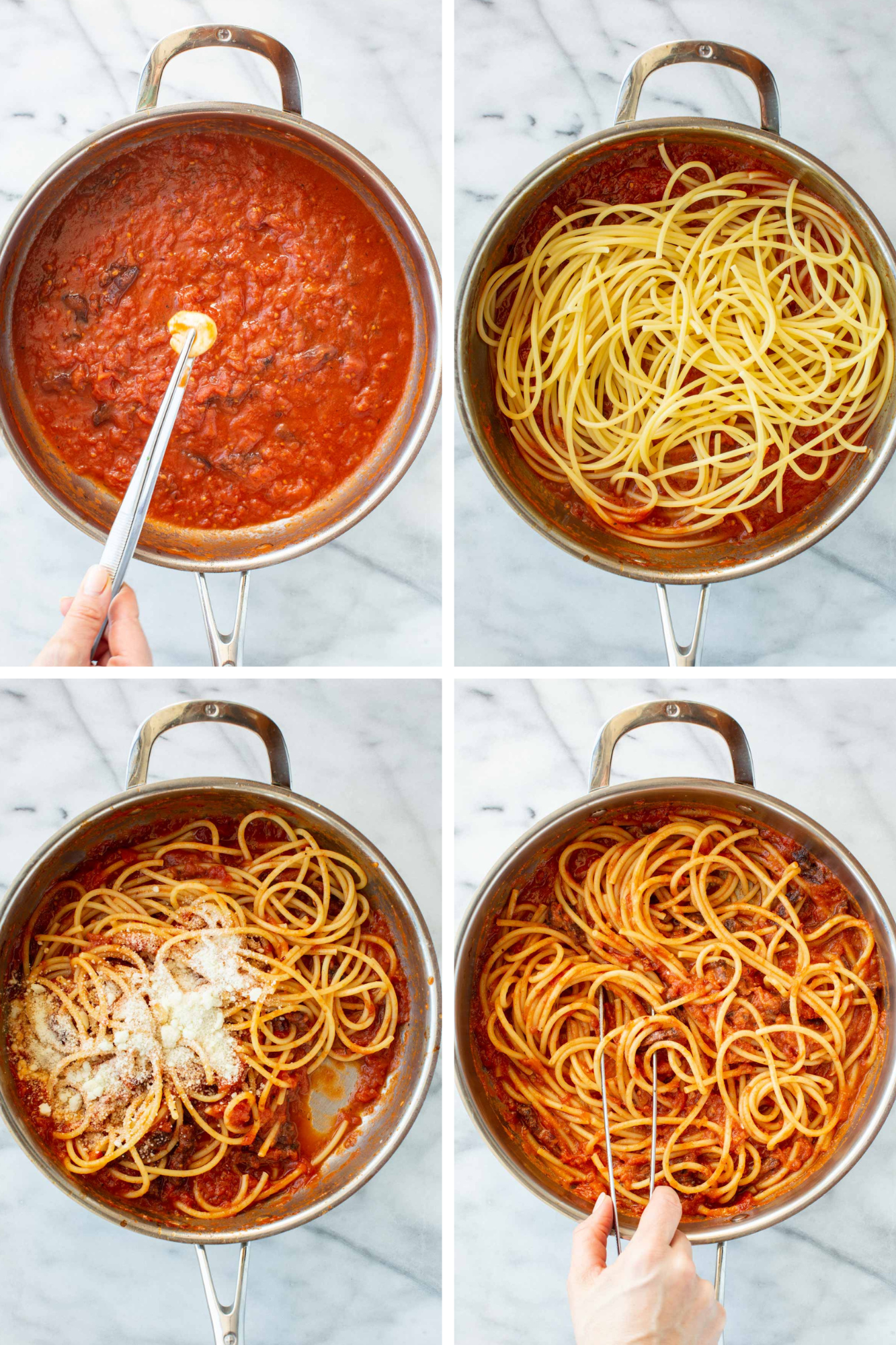
- While the sauce simmers, cook the bucatini until just shy of al dente according to package directions. Reserve some of the cooking water before draining.
Pro Tip: Transfer the pasta about 2-3 minutes before the package's suggested al dente time, then finish cooking it in the pan with the guanciale fat and pasta water. This allows it to absorb flavor and release starch that helps emulsify the sauce. The total cooking time will vary widely depending on the brand.
- Transfer the pasta directly into the sauce, then increase the heat to medium-high and toss continuously until the sauce thickens and clings to the pasta, about 1-2 minutes. Add a splash of pasta water if the sauce gets too thick.
- Remove from the heat, then add the Pecorino Romano. Toss vigorously until the cheese emulsifies into the sauce. Add more pasta water if needed to loosen and smooth it out.
- Taste and adjust with salt and black pepper as needed. Serve immediately with more grated Pecorino on top.
Tips For the Best Pasta all'Amatriciana
- Start the guanciale in a cold pan to render it slowly. Add a small drizzle of olive oil to help it along if the pan is too dry.
- For extra crispy guanciale, remove it from the pan before adding the garlic and chili flakes, then add it on top of the finished pasta.
- Hand-crushing whole tomatoes is best, but you can also use canned crushed tomatoes in a pinch. For a smoother sauce, blend the tomatoes with an immersion blender or use tomato passata instead.
- Turn off the heat before adding the cheese to prevent it from clumping. Add a splash of pasta water if needed to help it melt smoothly.
Variations and Substitutions
- If you can't find guanciale, use pancetta or American bacon. Guanciale has a funkier, more complex, and stronger flavor, while pancetta is milder and sweeter, and bacon is smoky.
- Pecorino Romano's tangy and salty flavor stands up to the intense guanciale and tomatoes. For a milder, less traditional version, you can substitute with Parmigiano Reggiano or Grana Padano.
- When in season, use fresh hand-crushed plum tomatoes. You will need to first blanch and peel the whole tomatoes, then squeeze out their seeds and strain the excess liquid or the sauce will be too watery.
- Look for smaller local and seasonal tomatoes, like pomodorini, that aren't watery. If using smaller cherry-sized tomatoes, you can leave the peel on and crush them by hand.
What to Serve with Bucatini all'Amatriciana
Like any simple pasta dish, this is best served with some side veggies or a salad, along with a piece of crusty bread or homemade focaccia to mop up every last bit of sauce.
Try it with my Sicilian-inspired rapini with pine nuts and garlic or Neapolitan style zucchini alla scapece.
You can never go wrong with a classic Caesar salad, or try this shaved fennel salad with hazelnuts and olives for something more unique.
How to Store and Reheat
This pasta is best served and eaten on the spot for the best texture and flavor. If you have leftovers, store them in an airtight container in the fridge for up to 3 days.
Reheat in a skillet over low heat with a splash of water while covered. When hot, toss vigorously to bring the sauce together again.
FAQs
Both contain pasta, guanciale, Pecorino, pasta water and black pepper, but Amatriciana also has the addition of tomatoes, white wine and red pepper flakes.
It's likely you added it while the pan was too hot and/or didn't toss the pasta enough. Another reason could be that you used pre-grated cheese or didn't grate it finely enough. The best tool for this is a Microplane. You can also process it into a fine sand in a food processor or blender, but be careful to not go too far or it will turn it into paste.
Aim to remove it 2-3 minutes before the package's suggested al dente time. If the package says 11 minutes, drain it at 9, or even 8 if you like it extra al dente.
You can, but you still need to finish the dish by tossing the freshly cooked pasta with the sauce and cheese before serving. If you want your guanciale to stay crisp, you should remove it from the pan before adding the red pepper flakes and garlic, and store them in an airtight container until you toss the pasta. Recrisp them in the oven or air fryer for best results.



Did you LOVE this recipe? Please leave a star ⭐️ rating and comment and tag your creations @ColeyCooks on Instagram!
Want to Save This Recipe?
Enter your email & I'll send it to your inbox along with my best Thanksgiving ideas and tips.
By submitting this form, you consent to receive emails from Coley Cooks.
Classic Pasta Amatriciana Recipe
Ingredients
- kosher salt to taste
- 4 ounces guanciale cut into lardons or strips
- ½ teaspoon red pepper flakes or to taste
- 1 garlic clove peeled and smashed
- ¼ cup white wine dry
- 1 28-ounce can whole peeled tomatoes crushed by hand
- ½ lb bucatini spaghetti or your favorite pasta shape
- ½ cup Pecorino Romano finely grated, plus more for serving
- extra virgin olive oil if needed
- freshly ground black pepper to taste
Instructions
- Bring a large pot of water to a boil and season generously with salt.kosher salt
- Add the guanciale to a cold, unoiled skillet and place over low heat. Let it slowly render, stirring occasionally, until the fat is clear and the meat is golden and crisp, about 10 minutes. Add a small drizzle of olive oil to help it along if the pan is too dry.4 ounces guanciale, extra virgin olive oil
- Add the red pepper flakes and garlic to the rendered fat. Cook gently, stirring, until the garlic is just lightly golden and fragrant, about 1-2 minutes. Don't let it brown too far.½ teaspoon red pepper flakes, 1 garlic clove
- Pour in the white wine and let it simmer until reduced by about half, scraping up any browned bits from the pan.¼ cup white wine
- Add the hand-crushed tomatoes and a pinch of salt. Bring to a simmer and cook until slightly thickened, about 8-10 minutes.1 28-ounce can whole peeled tomatoes
- While the sauce simmers, cook the bucatini until just shy of al dente according to package directions. Reserve some of the cooking water before draining.½ lb bucatini
- Transfer the pasta directly into the sauce, then increase the heat to medium-high and toss continuously until the sauce thickens and clings to the pasta, about 1-2 minutes. Add a splash of pasta water if the sauce gets too thick.
- Remove from the heat, then add the Pecorino Romano. Toss vigorously until the cheese emulsifies into the sauce. Add more pasta water if needed to loosen and smooth it out.½ cup Pecorino Romano
- Taste and adjust with salt and black pepper as needed. Serve immediately with more grated Pecorino on top.freshly ground black pepper
Notes
- Using guanciale cut into lardons or small batons ensures an even distribution of fat and meat while also helping the pieces cook evenly.
- Transfer the pasta about 2-3 minutes before the package's suggested al dente time, then finish cooking it in the pan with the guanciale fat and pasta water. This allows it to absorb flavor and release starch that helps emulsify the sauce. The total cooking time will vary widely depending on the brand.
- Start the guanciale in a cold pan to render it slowly. Add a small drizzle of olive oil to help it along if the pan is too dry.
- For extra crispy guanciale, remove it from the pan before adding the garlic and chili flakes, then add it on top of the finished pasta.
- Hand-crushing whole tomatoes is best, but you can also use canned crushed tomatoes in a pinch. For a smoother sauce, blend the tomatoes with an immersion blender or use tomato passata instead.
- Turn off the heat before adding the cheese to prevent it from clumping. Add a splash of pasta water if needed to help it melt smoothly.




A great recipe. Sauce is delish. Heartily recommend thus one. Pastafarians, you will luv this!
Thank you so much! So glad you loved the recipe! 🙂