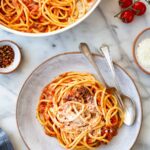
Classic Pasta Amatriciana Recipe
Pasta all'Amatriciana is one of the great Roman pasta dishes, and my version stays true to the classic while adding a few personal touches. This easy-to-follow recipe breaks down every step with expert tips and techniques to help you make a restaurant-worthy bowl of pasta at home every single time!
Servings: 2
Calories: 951kcal
Ingredients
- kosher salt to taste
- 4 ounces guanciale cut into lardons or strips
- ½ teaspoon red pepper flakes or to taste
- 1 garlic clove peeled and smashed
- ¼ cup white wine dry
- 1 28-ounce can whole peeled tomatoes crushed by hand
- ½ lb bucatini spaghetti or your favorite pasta shape
- ½ cup Pecorino Romano finely grated, plus more for serving
- extra virgin olive oil if needed
- freshly ground black pepper to taste
Instructions
- Bring a large pot of water to a boil and season generously with salt.kosher salt
- Add the guanciale to a cold, unoiled skillet and place over low heat. Let it slowly render, stirring occasionally, until the fat is clear and the meat is golden and crisp, about 10 minutes. Add a small drizzle of olive oil to help it along if the pan is too dry.4 ounces guanciale, extra virgin olive oil
- Add the red pepper flakes and garlic to the rendered fat. Cook gently, stirring, until the garlic is just lightly golden and fragrant, about 1-2 minutes. Don’t let it brown too far.½ teaspoon red pepper flakes, 1 garlic clove
- Pour in the white wine and let it simmer until reduced by about half, scraping up any browned bits from the pan.¼ cup white wine
- Add the hand-crushed tomatoes and a pinch of salt. Bring to a simmer and cook until slightly thickened, about 8-10 minutes.1 28-ounce can whole peeled tomatoes
- While the sauce simmers, cook the bucatini until just shy of al dente according to package directions. Reserve some of the cooking water before draining.½ lb bucatini
- Transfer the pasta directly into the sauce, then increase the heat to medium-high and toss continuously until the sauce thickens and clings to the pasta, about 1-2 minutes. Add a splash of pasta water if the sauce gets too thick.
- Remove from the heat, then add the Pecorino Romano. Toss vigorously until the cheese emulsifies into the sauce. Add more pasta water if needed to loosen and smooth it out.½ cup Pecorino Romano
- Taste and adjust with salt and black pepper as needed. Serve immediately with more grated Pecorino on top.freshly ground black pepper
Notes
- Using guanciale cut into lardons or small batons ensures an even distribution of fat and meat while also helping the pieces cook evenly.
- Transfer the pasta about 2-3 minutes before the package's suggested al dente time, then finish cooking it in the pan with the guanciale fat and pasta water. This allows it to absorb flavor and release starch that helps emulsify the sauce. The total cooking time will vary widely depending on the brand.
- Start the guanciale in a cold pan to render it slowly. Add a small drizzle of olive oil to help it along if the pan is too dry.
- For extra crispy guanciale, remove it from the pan before adding the garlic and chili flakes, then add it on top of the finished pasta.
- Hand-crushing whole tomatoes is best, but you can also use canned crushed tomatoes in a pinch. For a smoother sauce, blend the tomatoes with an immersion blender or use tomato passata instead.
- Turn off the heat before adding the cheese to prevent it from clumping. Add a splash of pasta water if needed to help it melt smoothly.
Nutrition
Calories: 951kcal | Carbohydrates: 87g | Protein: 29g | Fat: 51g | Saturated Fat: 21g | Polyunsaturated Fat: 1g | Monounsaturated Fat: 2g | Cholesterol: 87mg | Sodium: 803mg | Potassium: 312mg | Fiber: 4g | Sugar: 4g | Vitamin A: 253IU | Vitamin C: 1mg | Calcium: 297mg | Iron: 2mg
