Chicken Saltimbocca
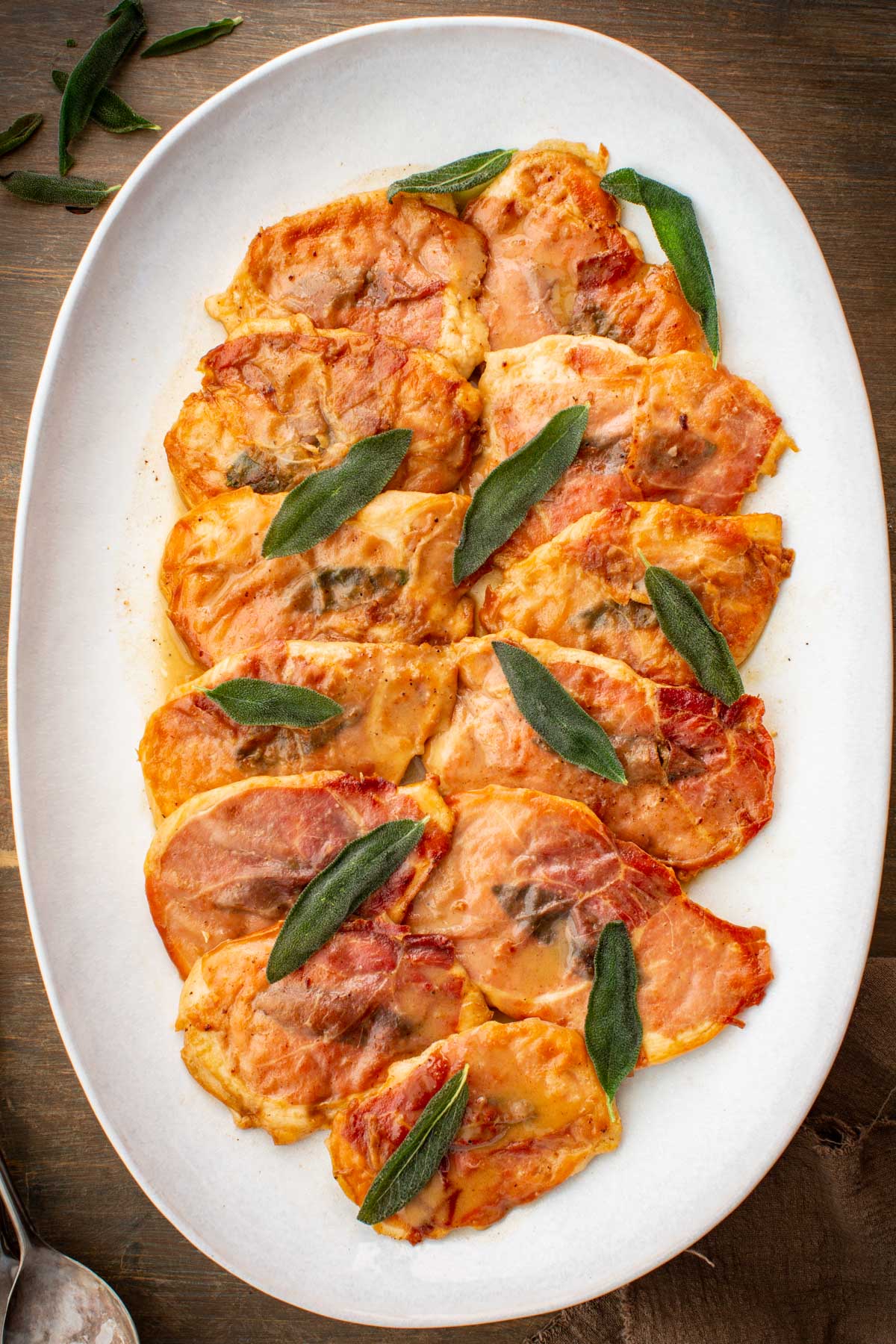
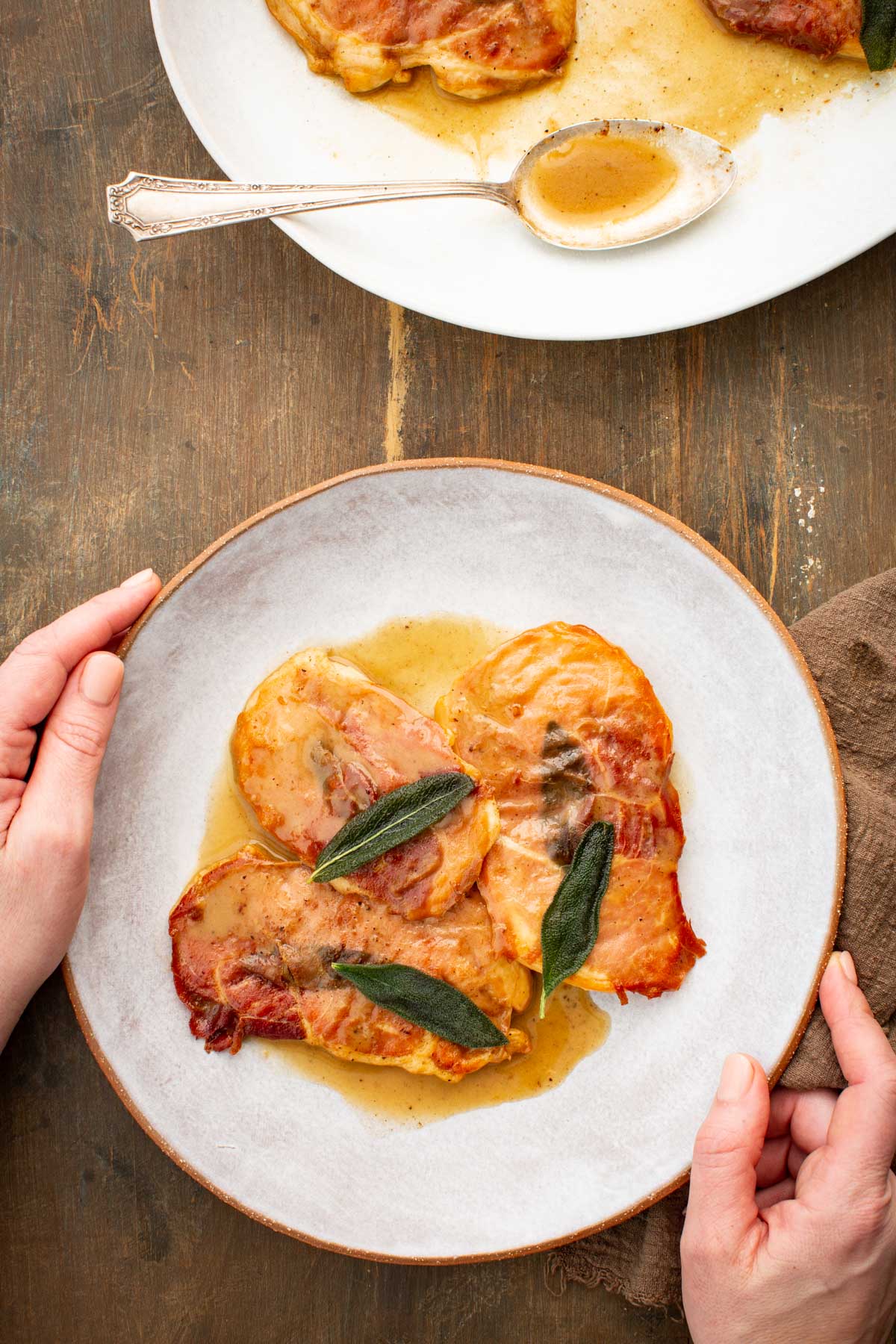
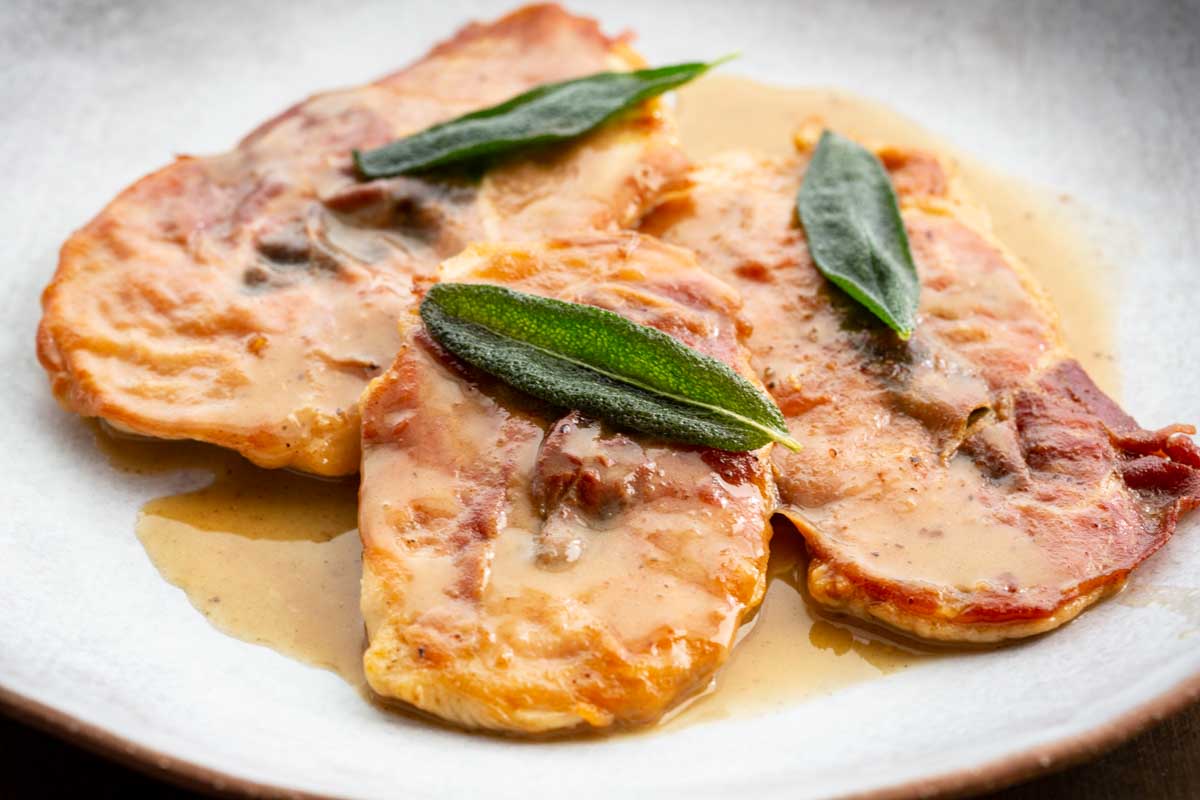
This recipe for chicken saltimbocca is a lighter, more approachable version that stays true to the Roman classic. Tender chicken cutlets are layered with fresh sage and salty prosciutto, then finished in a silky white wine butter sauce that truly lives up to its name! It's an impressive dish that comes together quickly but tastes like something from a fancy Italian restaurant.
This post may contain affiliate links.
What is Saltimbocca?
Saltimbocca is a classic Roman dish that literally means "to jump in the mouth," which refers to its big, bold flavors. It's traditionally made with thin slices of veal that are topped with, or wrapped in thin slices of prosciutto and fresh sage leaves, then seared and served with a bright white wine sauce.
I personally prefer to make saltimbocca with chicken instead of veal. It's a little bit lighter and easier to source, but you can make this recipe with veal or even pork if you want.
As with most traditional Italian recipes, it's a really simple dish that relies on high-quality ingredients and a few key techniques to get it just right.
Prosciutto and Sage
The most important ingredient in saltimbocca is the prosciutto. Seek out good quality varieties such as Prosciutto di Parma or San Daniele, and be sure to have it sliced very thin. If it's too thick, it will be tough to bite through and will be too strong and salty.
I learned a great trick from chef Luke Palladino for getting the prosciutto to adhere to the chicken without using toothpicks to keep it together.
Simply lay a piece of plastic wrap over the chicken, then use the knobby side of your meat mallet to gently press the prosciutto on top. This works incredibly well!
Fresh sage is important too; this simply won't work with dried sage. The look of whole sage leaves tucked underneath the prosciutto is gorgeous, but you can tear them into pieces if you prefer a milder flavor.
I also love frying some of the sage leaves to use as a garnish. This is totally optional, but it makes for a nice presentation and they add a light crunch as well!
To do this, just heat a small layer of neutral oil in a saucepan until hot, then drop the leaves in and let them fry until they're bright green and crisp, about 20-30 seconds. Drain on paper towels and then add them on top of the finished dish!
The Chicken
The chicken should be thinly sliced, then pounded out really well to be nice and thin using the flat side of a meat mallet.
I like to cut the chicken into smaller pieces to make them more manageable, but you can also butterfly whole breasts if you prefer larger, showstopping pieces. If going this route, tuck a few extra sage leaves under the prosciutto to make up for the added surface area.
Afterwards, dredge the chicken lightly in flour before pan-frying. This is an important step since that little bit of starch helps create the pan sauce. Make sure you tap off any excess flour first to make sure there isn't too much.
I don't season the chicken because the prosciutto is already salty enough. I just add seasoning to the sauce as needed to balance it out.
The Sauce
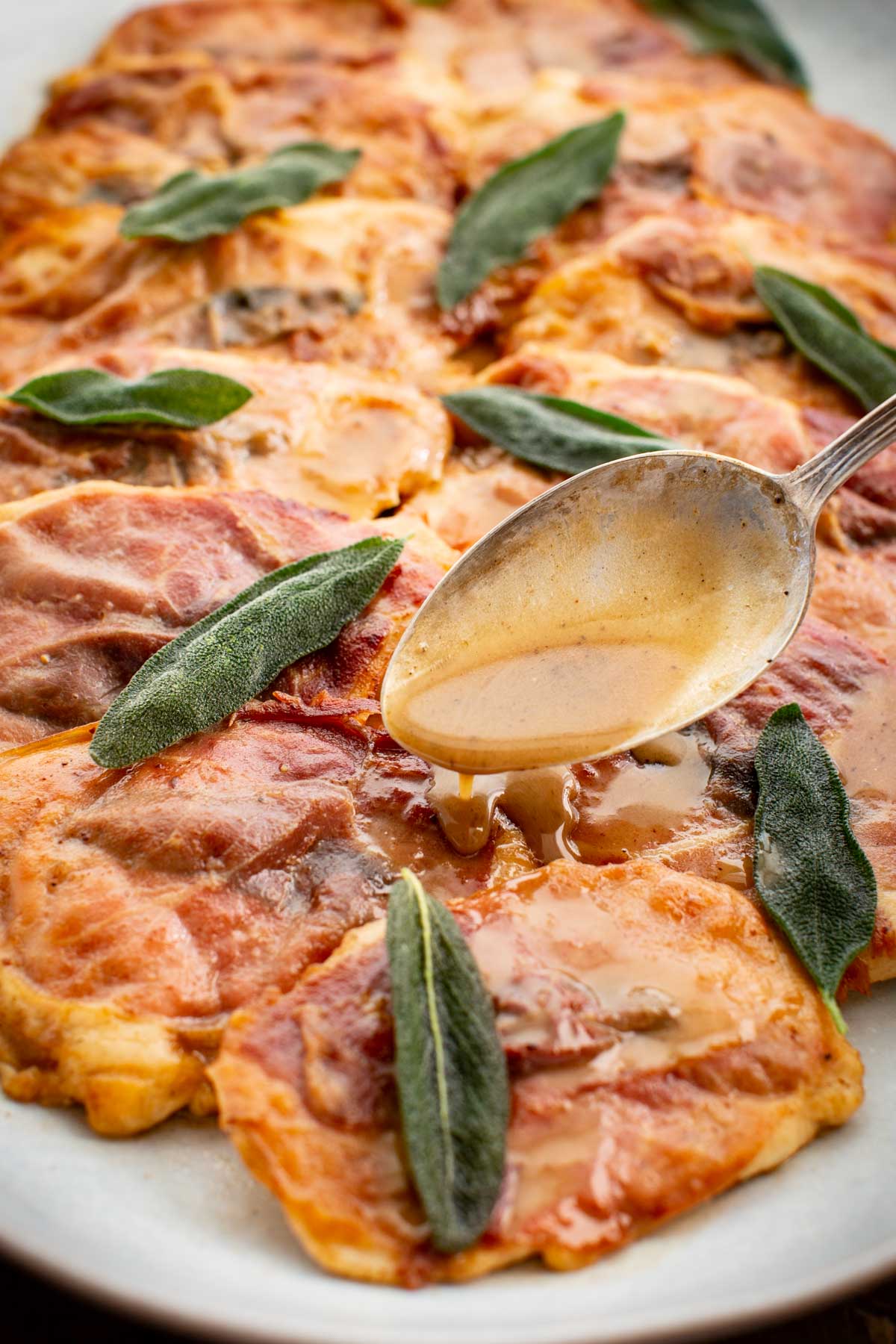
Typically just a splash of white wine is used to deglaze the pan, then mounted with a little bit of butter to make a simple, quick pan sauce. Using chicken stock is not traditional, but I love things extra saucy, so I add some to create a bit more sauce than you'd typically find in Rome.
Reduce the wine and stock down to concentrate their flavor, then add the chicken pieces back to the pan for a minute or two to let the residual flour thicken the sauce before finishing with the butter.
Always use cold butter and whisk it in continuously over very low or no heat to avoid breaking the sauce.
For more Italian chicken recipes, try my recipe for the best chicken parmesan, crispy chicken milanese with tomato salad, or this family-favorite, chicken francaise.
Why This Recipe Works
- An upscale restaurant-style dish that's easier to make than it looks.
- Made with just 8 simple ingredients and ready in under 40 minutes!
- Chicken makes saltimbocca lighter and more accessible for home cooks than veal.
- A meat pounder gets the chicken ultra thin and helps the prosciutto adhere without needing toothpicks.
- The sauce comes together in the same pan you cook the chicken for extra flavor and fewer dishes!
Chicken Saltimbocca Ingredients
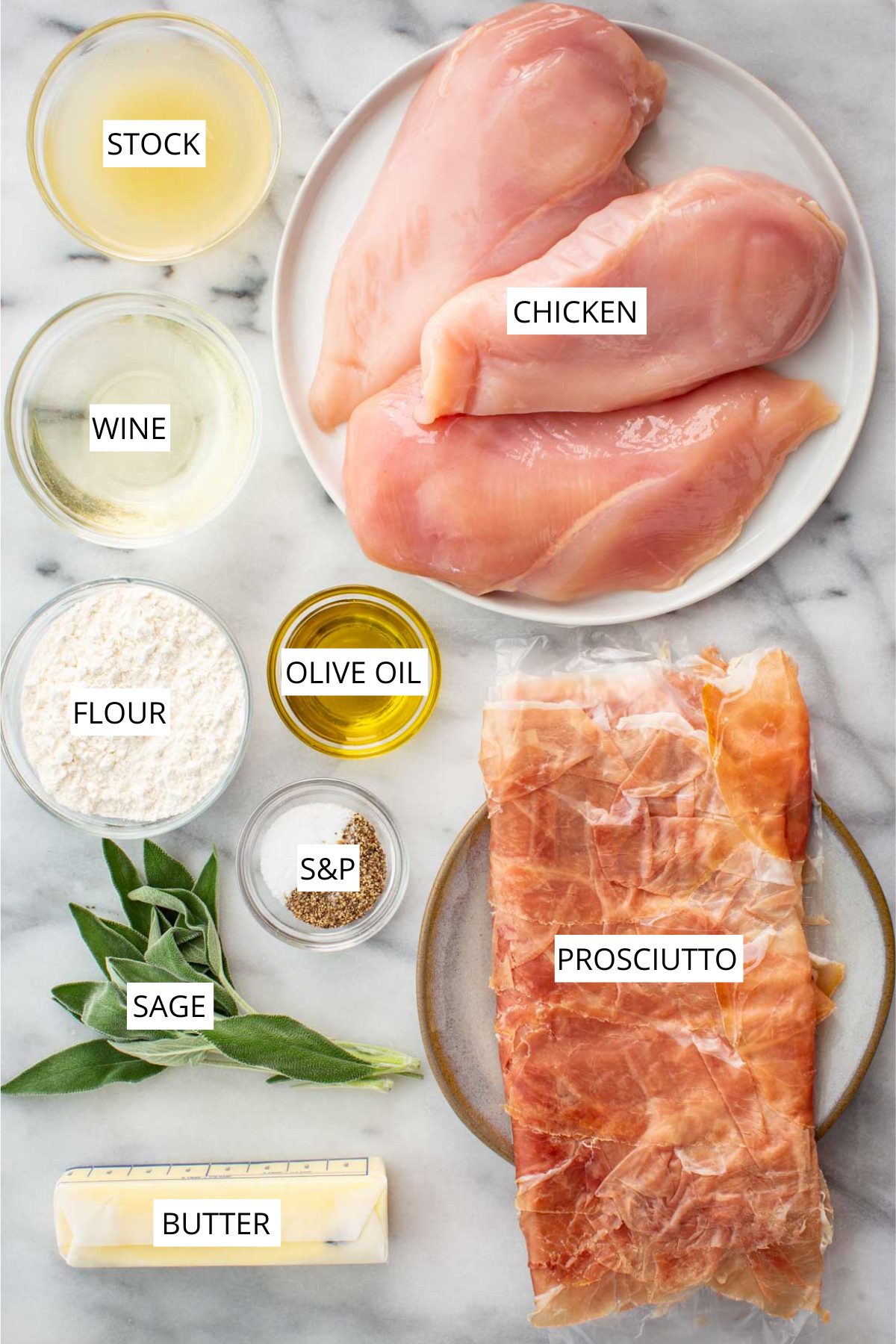
Chicken breasts - Boneless, skinless chicken breasts are the protein of choice. They are pounded thin for the right thickness. You can also use veal, which is traditional, or even pork loin in a pinch.
Prosciutto - Use the best you can find, such as Prosciutto di Parma or San Daniele, and make sure it's sliced super thin. Otherwise it will be tough, chewy and overly salty. For more on Italian cured meats, check out my guide.
Sage - Fresh sage leaves are a must for this dish! Do not substitute dried herbs. Whole sage leaves layered between the chicken and prosciutto make a stunning presentation, but you can also tear them into pieces if you prefer a milder flavor.
Wine - Use a dry, neutral white wine like a pinot grigio or sauvignon blanc for the sauce. Avoid anything strong or oaked.
Chicken stock - Not traditional, but will help you create extra sauce! Homemade is best if you have it, otherwise use low sodium to control the seasoning.
*Find the full ingredient list in the recipe card below!
Helpful Equipment
- Meat mallet
- Plastic wrap
- Large skillet
- Wooden spoon
- Tongs
How to Make Chicken Saltimbocca
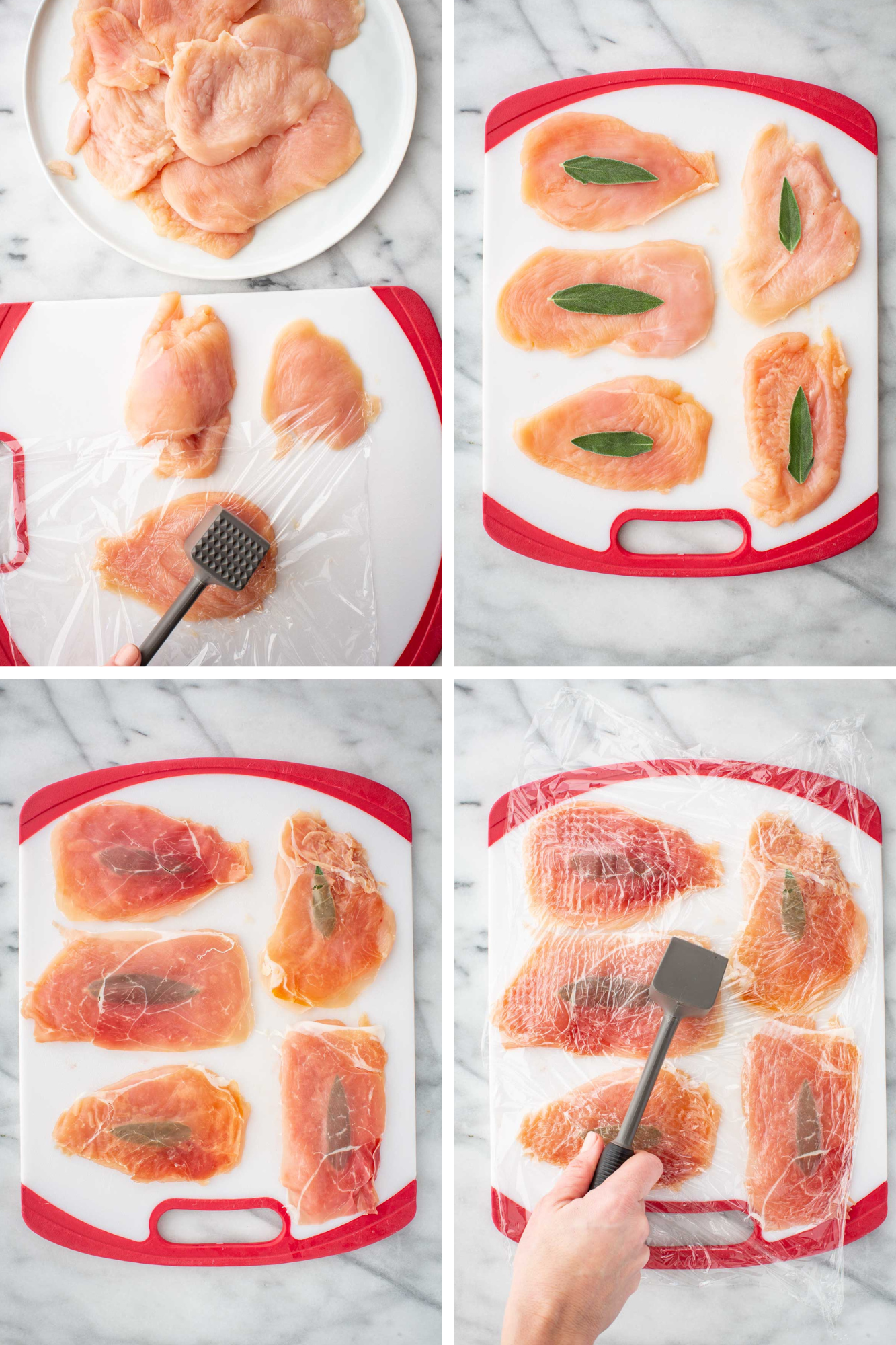
- Thinly slice the chicken breasts into 8-12 pieces and pound them very thin with the flat side of a meat mallet, about ¼ inch thick.
Pro Tip: Aim to pound the chicken slices out to an even thickness all around. This not only tenderizes the meat but also helps them cook evenly.
- Place one whole sage leaf on each piece of chicken. Lay a slice of prosciutto on top, then place a piece of plastic wrap over top and use the knobby side of a meat mallet to gently press on the prosciutto so it adheres to the chicken.
Pro Tip: Look for the largest leaves in your sage bunch. If they're big enough, a single leaf per cutlet will be enough, but if not, go for two or three if your cutlets are large. For a milder flavor, tear a single leaf into a few pieces instead.
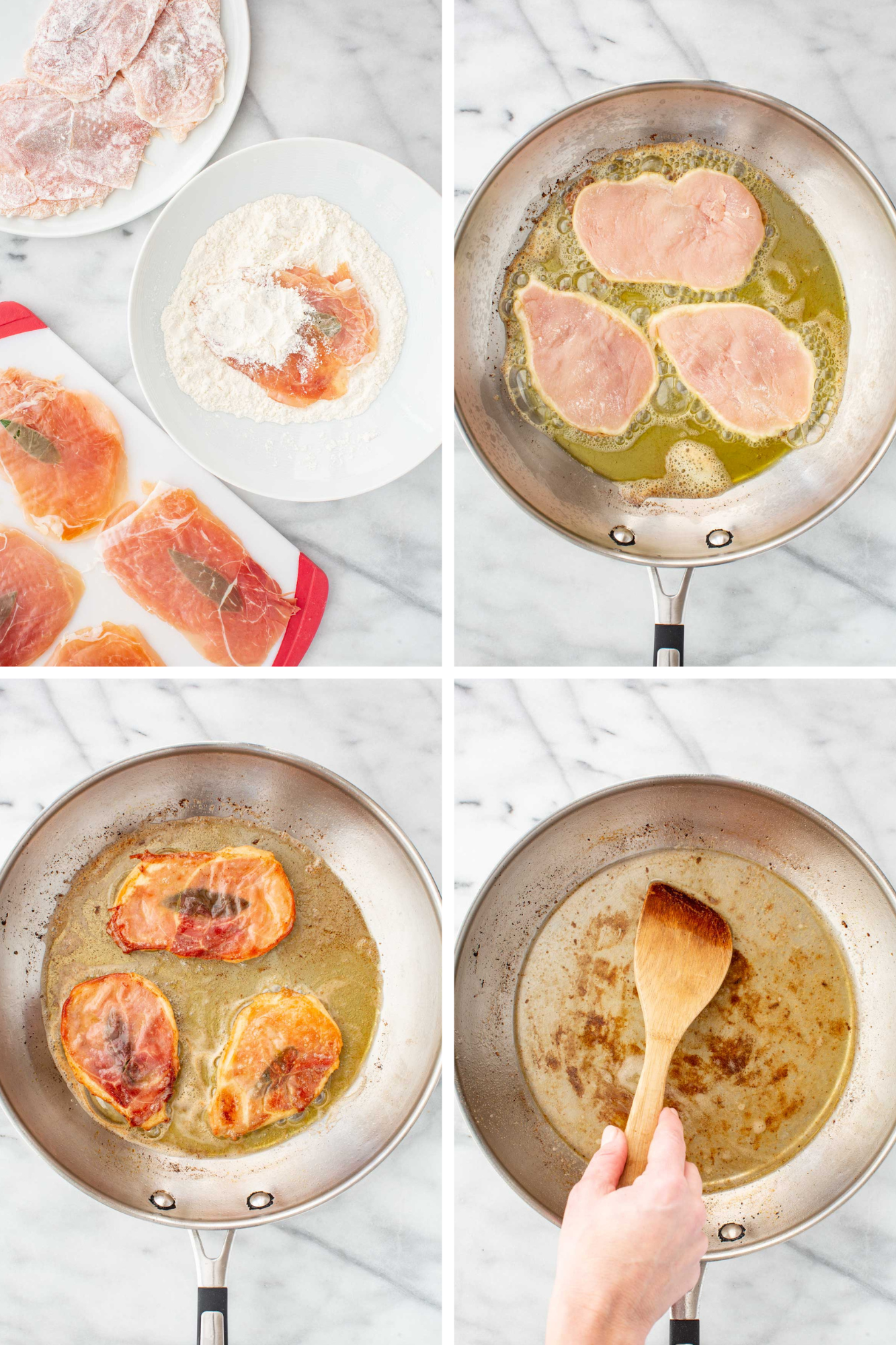
- Dredge the chicken in flour, shaking off all excess. The flour should be barely visible.
- Heat the olive oil and 2 tablespoons of butter in a large skillet over medium heat.
- Add the chicken, prosciutto side down and cook until the prosciutto firms up and lightly browns, about 2 minutes. Flip and cook the second side briefly, about 1 minute more. Transfer the chicken to a plate.
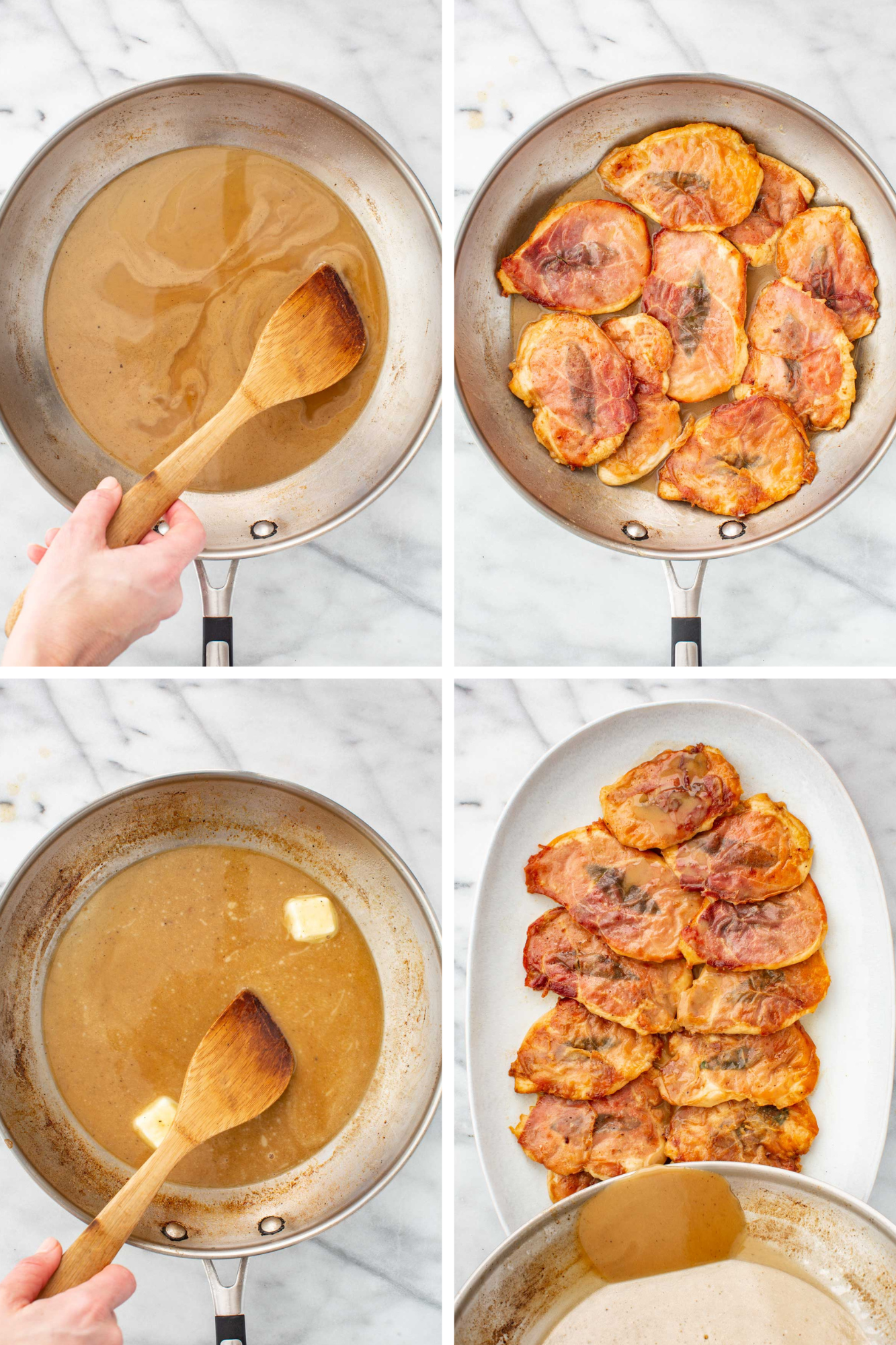
- Pour off excess fat if needed, leaving just enough to coat the pan. Add the white wine and scrape up the fond with a wooden spoon. Let the wine reduce slightly for about 30 seconds.
- Add the chicken stock, then simmer until it's reduced by about half.
- Return the chicken to the pan just to warm through and coat in the sauce. Then use a pair of tongs to transfer the chicken to a serving platter.
- Lower the heat, then whisk in the remaining two tablespoons of cold butter until the sauce is emulsified and glossy, about 1 minute. Taste and adjust seasoning if needed.
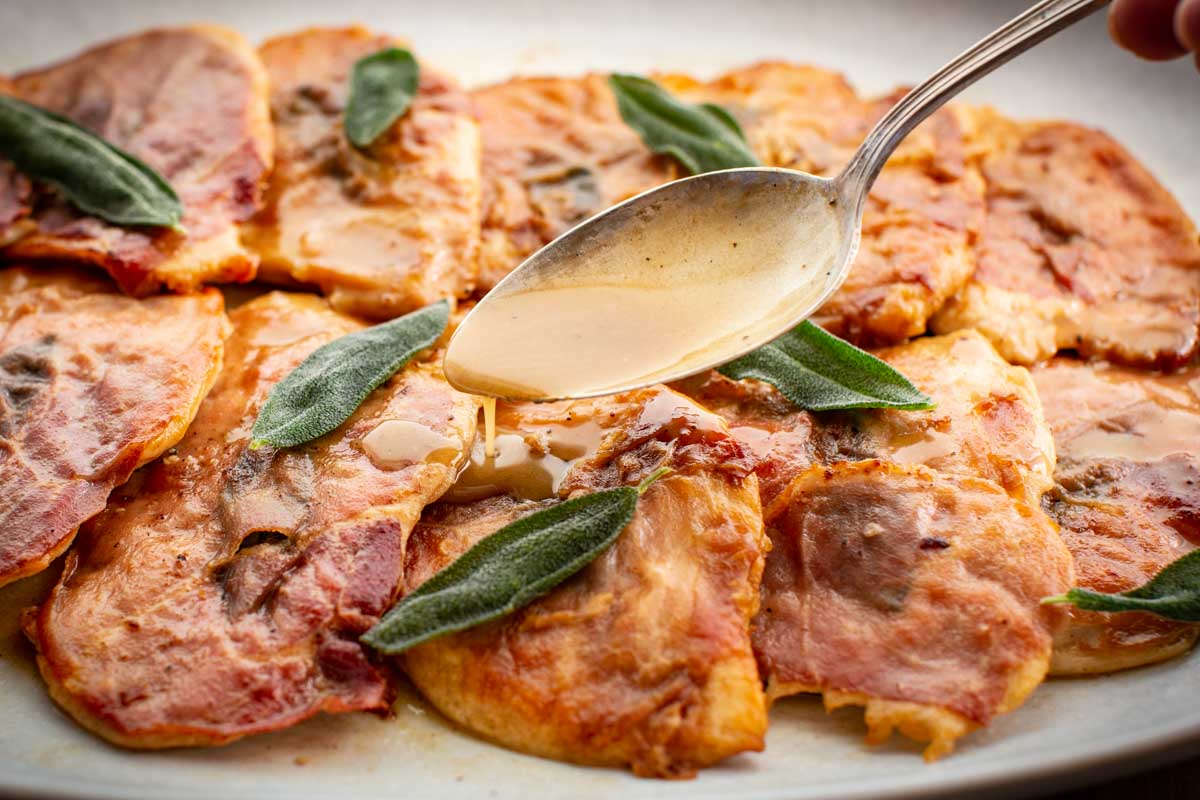
Pro Tip: The sauce should be shiny and thick enough to leave a trail on the bottom of the skillet when you drag a spoon across. If it looks separated, whisk in a tablespoon or two of cold water or stock and mix until it comes back together.
- Pour the sauce over the chicken and garnish with a few fresh or fried sage leaves if desired. Serve immediately.
Coley's Tips For Success
- Prosciutto adds plenty of salt, so season sparingly and taste before adding more.
- Pound the chicken very thin. This is key to keeping it tender and allowing the sauce to come together quickly without needing extra liquid.
- Fried sage leaves are optional and not traditional, but they add a nice texture and beautiful presentation! Just drop a few dry leaves into a pan of hot oil until bright and crisp, about 20-30 seconds.
Saltimbocca Variations
- Use veal, beef or pork cutlets, or even roasted eggplant instead of chicken.
- Make the chicken saltimbocca rollatini by rolling into bundles and securing with a toothpick instead of flat.
- Sauté some minced shallots or garlic in the pan before deglazing for a more complex tasting sauce.
- For extra herb flavor, add a few sage leaves to the sauce after deglazing with wine. You could also try other fresh herbs like rosemary, thyme or parsley.
- If you want your sauce to be even brighter, squeeze half a lemon before adding the butter, or serve with a few lemon wedges on the side.
What to Serve with Saltimbocca
Make this a complete meal with a few easy sides. It's great with something creamy and starchy, like this parsnip and celery root puree, comforting mascarpone mashed potatoes or a rich parmesan polenta.
If you prefer something crispy, try my easy roasted potatoes and onions! For something green, serve with a classic Caesar salad or simple spinach with butter and parmesan.
How to Store and Reheat Saltimbocca
This dish is best eaten fresh, but leftovers can be stored in an airtight container in the fridge for up to 3 days.
To reheat, place the chicken cutlets in a low oven (300°F) until warmed through, about 10-12 minutes.
Reheat the sauce separately over moderate heat, whisking in a tablespoon of cold butter or a splash of chicken broth if it looks too thick. If there isn't a lot of sauce leftover, the chicken is good with a squirt of lemon juice instead!
FAQs
Yes! Any gluten-free flour, cornstarch, arrowroot and potato starch make good substitutions for flour in this recipe. They help with searing and thickening the sauce with a nice texture.
Remove the pan from the heat, then add 1 or 2 tablespoons of cold water or stock and whisk until emulsified. High heat and not whisking continuously can cause the sauce to break, so keep the heat gentle and keep it moving.
Prosciutto is traditional in any saltimbocca. If you can't source it, the next best thing is a young Jamón Serrano, also sliced as thin as possible. It's a similar dry cured pork product but it's slightly dryer and saltier, so you should sear it less, only about 30 seconds to 1 minute, and be careful when seasoning the sauce after. Other possible options are Culatello or even some bacon, but you should change the cooking time accordingly.


Did you LOVE this recipe? Please leave a star ⭐️ rating and comment and tag your creations @ColeyCooks on Instagram!
Want to Save This Recipe?
Enter your email & I'll send it to your inbox.
By submitting this form, you consent to receive emails from Coley Cooks.

Chicken Saltimbocca
Ingredients
- 1 ½ pounds chicken breasts boneless skinless
- 8-12 thin slices prosciutto
- 8-12 sage leaves fresh and whole, plus more for frying if desired
- ½ cup all purpose flour
- 2 tablespoons extra virgin olive oil
- 4 tablespoons butter unsalted, divided
- ¾ cup dry white wine
- ½ cup chicken stock
- freshly cracked black pepper
Instructions
- Thinly slice the chicken breasts into 8-12 pieces and pound them very thin with the flat side of a meat mallet, about ¼ inch thick.1 ½ pounds chicken breasts
- Place one whole sage leaf on each piece of chicken. Lay a slice of prosciutto on top, then place a piece of plastic wrap over top and use the knobby side of a meat mallet to gently press on the prosciutto so it adheres to the chicken.8-12 thin slices prosciutto, 8-12 sage leaves
- Dredge the chicken in flour, shaking off all excess. The flour should be barely visible.½ cup all purpose flour
- Heat the olive oil and 2 tablespoons of butter in a large skillet over medium heat.2 tablespoons extra virgin olive oil, 4 tablespoons butter
- Add the chicken, prosciutto side down and cook until the prosciutto firms up and lightly browns, about 2 minutes. Flip and cook the second side briefly, about 1 minute more. Transfer the chicken to a plate.
- Pour off excess fat if needed, leaving just enough to coat the pan. Add the white wine and scrape up the fond with a wooden spoon. Let the wine reduce slightly for about 30 seconds.¾ cup dry white wine
- Add the chicken stock, then simmer until it's reduced by about half.½ cup chicken stock
- Return the chicken to the pan just to warm through and coat in the sauce. Then use a pair of tongs to transfer the chicken to a serving platter.
- Lower the heat, then whisk in the remaining two tablespoons of cold butter until the sauce is emulsified and glossy, about 1 minute. Taste and adjust seasoning if needed.
- Pour the sauce over the chicken and garnish with a few fresh or fried sage leaves if desired. Serve immediately.freshly cracked black pepper
Notes
- Aim to pound the chicken slices out to an even thickness all around. This not only tenderizes the meat but also helps them cook evenly.
- Look for the largest leaves in your sage bunch. If they're big enough, a single leaf per cutlet will be enough, but if not, go for two or three if your cutlets are large. For a milder flavor, tear a single leaf into a few pieces instead.
- The sauce should be shiny and thick enough to leave a trail on the bottom of the skillet when you drag a spoon across. If it looks separated, whisk in a tablespoon or two of cold water or stock and mix until it comes back together.
- Prosciutto adds plenty of salt, so season sparingly and taste before adding more.
- Pound the chicken very thin. This is key to keeping it tender and allowing the sauce to come together quickly without needing extra liquid.
- Fried sage leaves are optional and not traditional, but they add a nice texture and beautiful presentation! Just drop a few dry leaves into a pan of hot oil until bright and crisp, about 20-30 seconds.