
Pasta alla Genovese
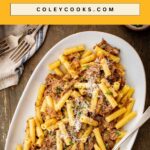
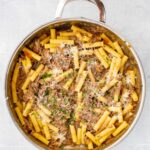
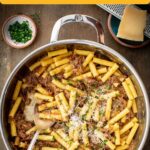
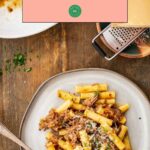
Pasta alla Genovese is a classic Neapolitan dish that's rich, meaty, and incredibly comforting. Sweet onions and beef slowly cook down until caramelized and fall-apart tender, creating a ragù that tastes like a cross between French onion soup and pot roast, only better. It gets tossed with pasta and a shower of grated Parmigiano for a dish that's so delicious you'll want to double the recipe!
This post may contain affiliate links.
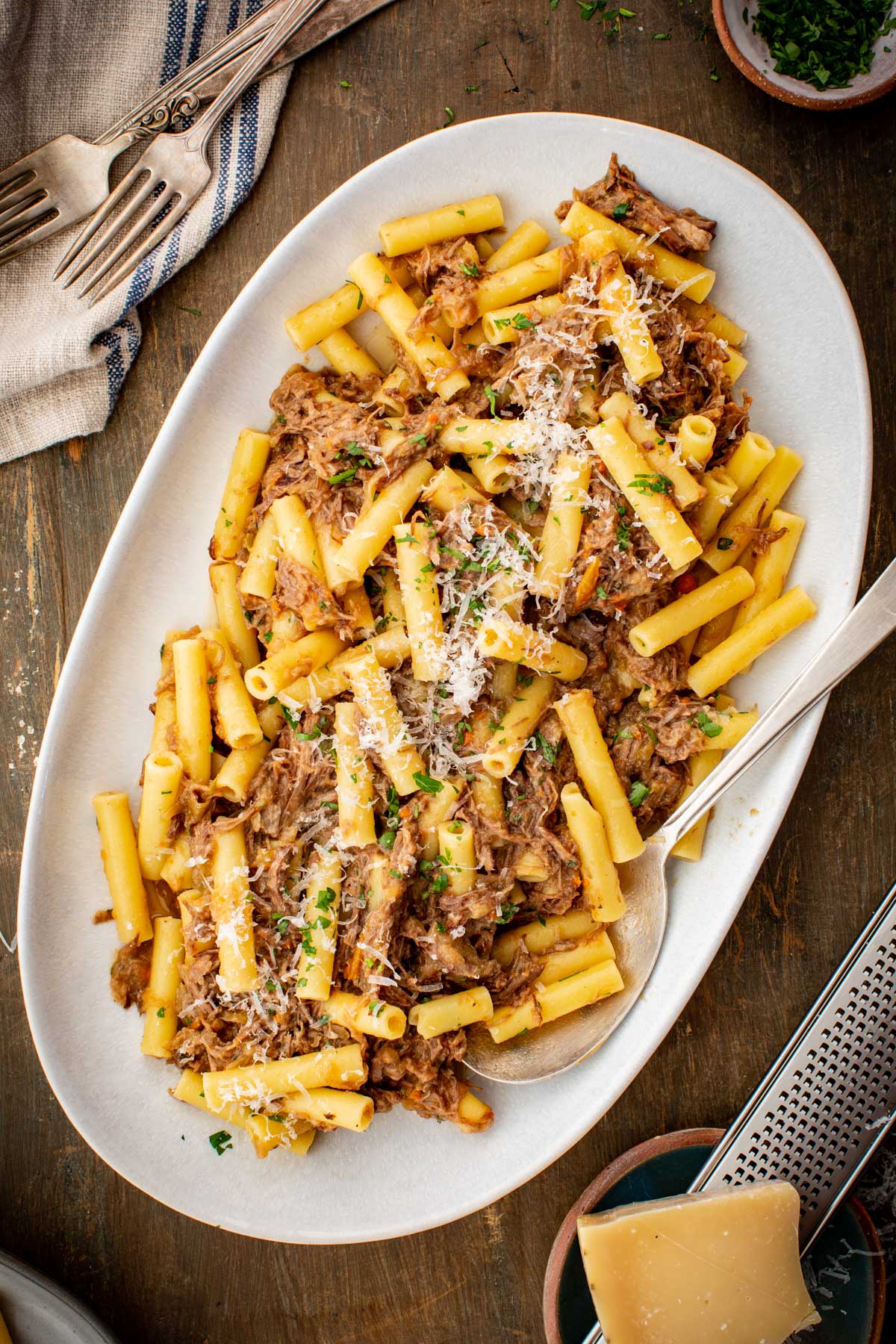
Although Genovese is my family name (my grandparents, aunts, uncles, and cousins all bear the name!), I only learned about this dish a few years ago when it started circulating online. I couldn't believe I'd never heard of it before, and I couldn't wait to give it a try!
It's unlike any pasta dish I've ever had before, and definitely different from the traditional Sunday sauce I grew up eating.
My family's roots are in Sicily, but this super regional dish comes from Naples, so it's no wonder we'd never heard of it, even though it bears our name.
Once I made Pasta alla Genovese for the first time, I knew it would become a regular recipe in my repertoire.
It's especially great during these cold winter months when I crave meals that really stick to your ribs. This is one of them!
What is Pasta alla Genovese
The best way to describe the flavor of pasta Genovese is almost like a cross between French onion soup and pot roast, but it's also its own thing entirely.
Essentially, it's a ragù made with onions, beef and/or pork, wine, and aromatics that get slowly braised for hours, resulting in a sweet, savory, glossy sauce that's traditionally served with tubular pasta.
There are tons of slight variations on the recipe, but the onions and beef are the stars.
By the way, this is completely different from pesto alla Genovese, which is the traditional basil, olive oil, garlic, cheese and pine nut sauce from Genoa, Liguria, in Northern Italy.
Pasta alla Genovese uses a crazy amount of onions that get braised down until they are soft, jammy and sweet.
I'm not gonna lie - it's a lot of onions to cut, and I cry my eyes out every time I make this recipe! But it's totally worth it, and I can't wait for you to experience it for yourself.
For meat, beef shanks are traditional, but they can be hard to find, so I use a cut-up chuck roast instead. To make up for the bones, I like to add in a marrow bone to provide that extra flavor. You can leave the bone out, but it adds an extra oomph to the sauce that you won't get from just the meat alone.
You can easily use any other meat here that's good for slow cooking, just make sure it has a decent amount of fat and marbling to make sure it gets really soft and falls apart, which is key to the sauce.
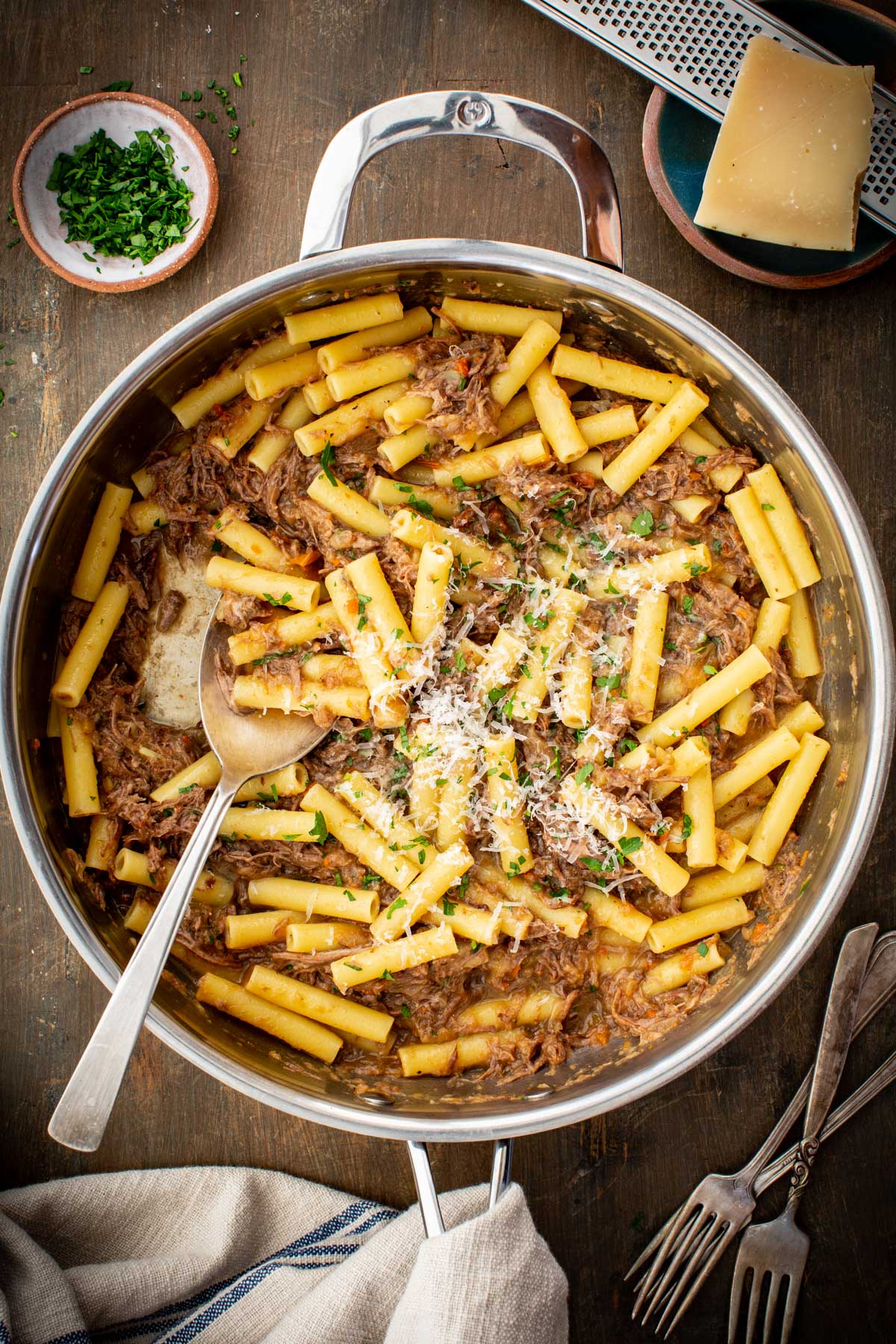
I always keep parmesan cheese rinds stashed in my freezer, so I usually throw one into the sauce to give it even more depth. But again, you can skip this if you don't have one.
I like to add plenty of white wine and a handful of cherry tomatoes for a little bit of acidity, which balances out the sweetness of the onions.
I also keep a bag of cherry tomatoes in my freezer leftover from summer, so this is a great way to use them up. You can also use a tablespoon or two of tomato paste in a pinch, but tomatoes are not traditional in this recipe, so you can also leave them out entirely.
I love adding lots of bay leaves to my version, but some don't add any. I'm a big fan of the subtle flavor that bay imparts, but if you don't like them or don't believe they add anything then go ahead and skip them.
You can play around with this recipe and adjust it to your taste or substitute whatever ingredients you have on hand. At the end of the day, the sauce will be delicious no matter what!
I find it's best to slow cook the sauce in the oven, rather than on the stovetop, since the sugars in the onions can easily scorch on the bottom of the pan. The oven maintains even heat all around and prevents any burning, but you can easily cook it on the stove too if you prefer.
The traditional pasta used for this dish is called ziti spezzati, which is a long tubular pasta that gets broken up by hand. I just use regular ziti which is more commonly found in grocery stores, but any tubular pasta like paccheri or rigatoni will be great.
The key to finishing the dish is to toss the pasta in the pan with plenty of grated Parmigiano Reggiano and pasta water to help the sauce get creamy and cling to the noodles.
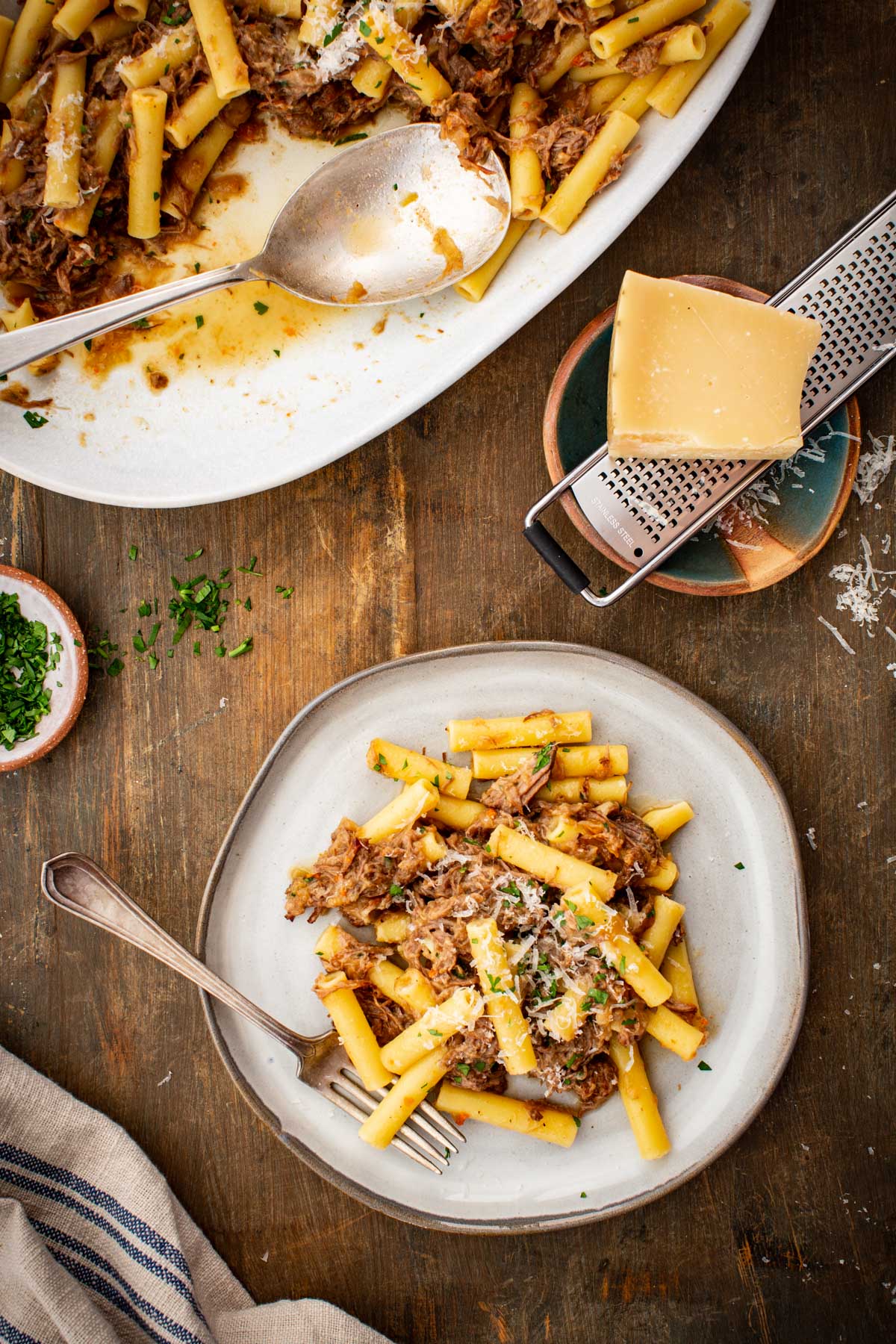
Plate it up with a little parsley if you want, plus more grated parm and a nice drizzle of good extra virgin olive oil.
Since it takes a bit of time and effort to make, I like to double the recipe and then freeze half of the sauce for later. It freezes really well and is so nice to pull out of the freezer for a super cozy slow cooked meal with very little effort.
You'll definitely want to make extra. Trust me, you'll be so glad you did!
For more meaty pasta recipes, try this easy orecchiette with sausage and broccoli rabe, a rich tagliatelle alla bolognese or a velvety rigatoni with Italian sausage and mascarpone.
Why This Recipe Works
- Slow cooking in the oven maintains even heat and prevents burning, while creating perfectly tender meat.
- The large amount of onions reduce down to get jammy to add sweetness and moisture to the dish.
- A parmesan rind, white wine and cherry tomatoes provide depth and acidity to balance the sweetness.
- The sauce freezes very well and it's make-ahead friendly so you can easily double the recipe.
- It takes a long time to cook but it's mostly inactive, hands off cooking!
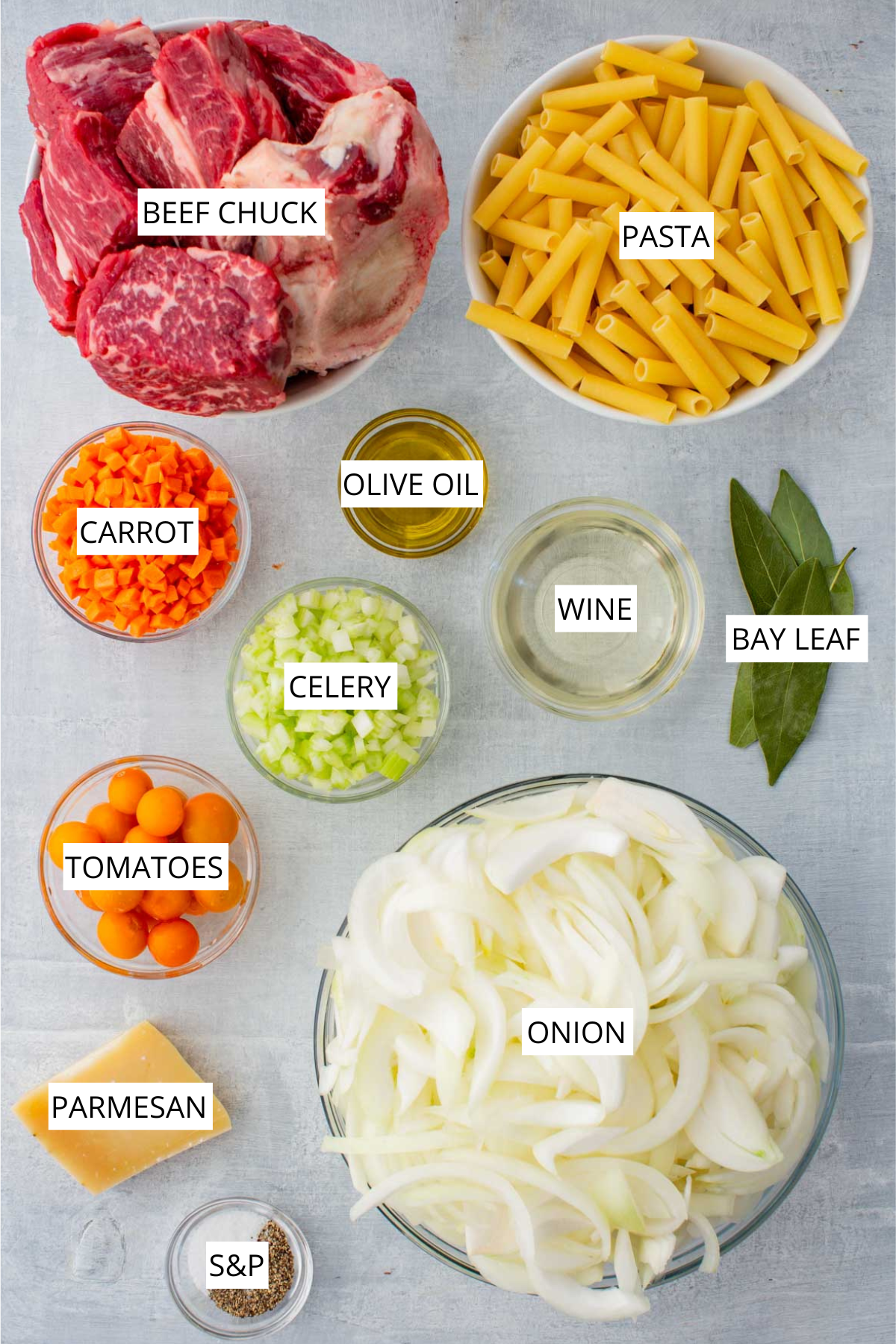
Genovese Pasta Ingredients
Beef chuck - Beef shanks are traditional, but can be difficult to find. I use a chuck roast instead, cut up into big chunks. You can use any type of beef that's good for slow cooking as long as it's not super lean.
Onion - Onions are a central part of this dish. It requires over 2 pounds of them! I used standard yellow onions but you could also use sweet onions, red onions or a combination.
White wine - White wine adds acidity and balance to the otherwise sweet dish. Make sure it's a dry white wine that isn't oaked and is nice to drink. Try a pinot gris, pinot grigio, or sauvignon blanc.
Beef marrow bone - A beef marrow bone or shank gives extra flavor and enhances the texture. While optional, it adds depth that you won't get from the meat alone!
Cherry tomatoes - Cherry tomatoes add acidity, but you can replace them with a little bit of tomato paste, or leave them out altogether. I used a handful of frozen cherry tomatoes from last summer's garden harvest.
Parmigiano - Parmigiano Reggiano gives a sharp, nutty taste and helps the sauce emulsify and cling to the pasta. Adding an old Parmesan cheese rind to the sauce is also a good idea for even more depth. You can replace it with other high-quality hard aged Italian cheeses, like Grana Padano or Pecorino Romano.
Pasta - Any tubular pasta like ziti works well. Ziti spezzati, which is a longer form of ziti, is traditional. But use whatever you can find at your grocery store. Other shapes like paccheri or rigatoni are also great.
*Find the full ingredient list in the recipe card below!
Helpful Equipment
- Heavy-bottomed pot or Dutch oven with a lid
- Oven
- Tongs
- Large pot
- Cheese grater or Microplane
How to Make Pasta alla Genovese
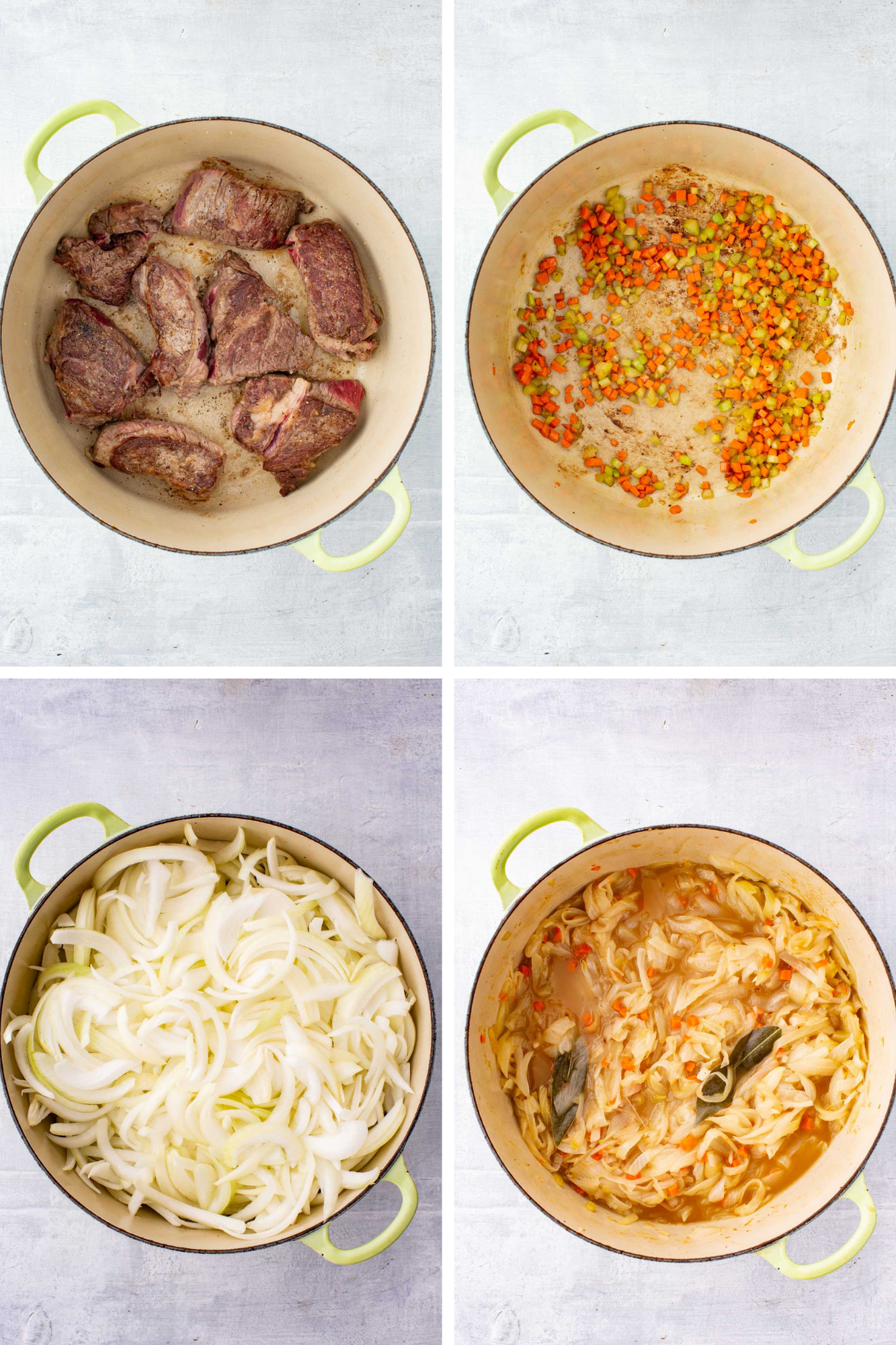
- Heat the olive oil in a large heavy-bottomed pot or Dutch oven over medium heat. Season the beef generously with salt and pepper, then add it to the pot in a single layer. Cook, turning occasionally, until browned on several sides, then transfer the meat to a plate and set aside.
Pro Tip: If you can, season the beef and allow it to rest for 30-60 minutes before cooking. This will allow the salt to permeate inside the meat but also allow it to come to room temperature for a better sear.
- Add the carrot and celery along with a pinch of salt. Cook, stirring, until softened, about 5 minutes.
- Add the sliced onions, bay leaves and another pinch of salt. Stir well to coat everything in the oil, then add ½ cup of water. Cover and reduce the heat to medium-low.
- Cook, stirring every 5 minutes, until the onions have softened and released their liquid, about 20-30 minutes.
- While the onions cook, preheat the oven to 325°F.
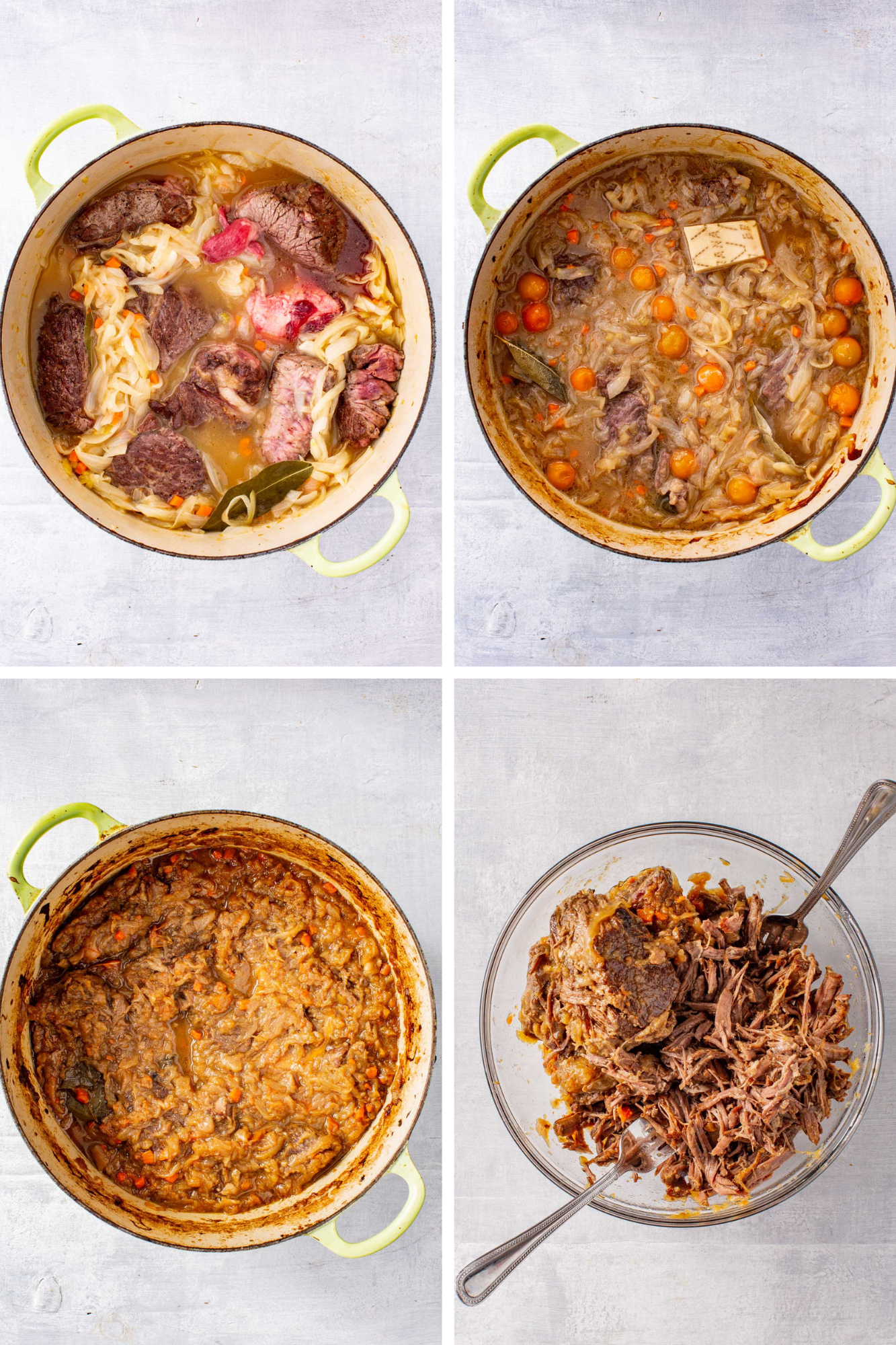
- Uncover the pot and add the white wine. Nestle the beef back into the pot along with the marrow bone, if using, then cover completely with onions.
- Cover the pot, then transfer to the oven and cook for 1 hour.
- Give everything a stir, then add the cherry tomatoes and the Parm rind if using. If a lot of liquid has evaporated and the pot looks dry, add a splash of water.
- Cover and return the pot to the oven for an additional 2-3 hours, checking and stirring halfway through. Add more water as needed to keep it moist. It's done when the onions are very soft and jammy and the beef is easily falling apart.
- Remove the beef and set aside to cool slightly, then remove the Parm rind, bay leaves and marrow bone. If using a marrow bone, scoop the softened marrow into the pot and discard the bone. Mix in the marrow so it's fully incorporated into the sauce.
- Shred the beef while it's still warm, then return it to the pot and stir to combine. Taste and adjust with more salt and pepper as needed.
- Bring a large pot of well-salted water to a boil. Cook the pasta until al dente. Reserve about 1 cup of pasta water, then drain.
Pro Tip: Only cook the amount of pasta you are planning to eat right away. Store the leftover sauce for later, then cook fresh pasta again. This will ensure the texture of your pasta is perfect every time.
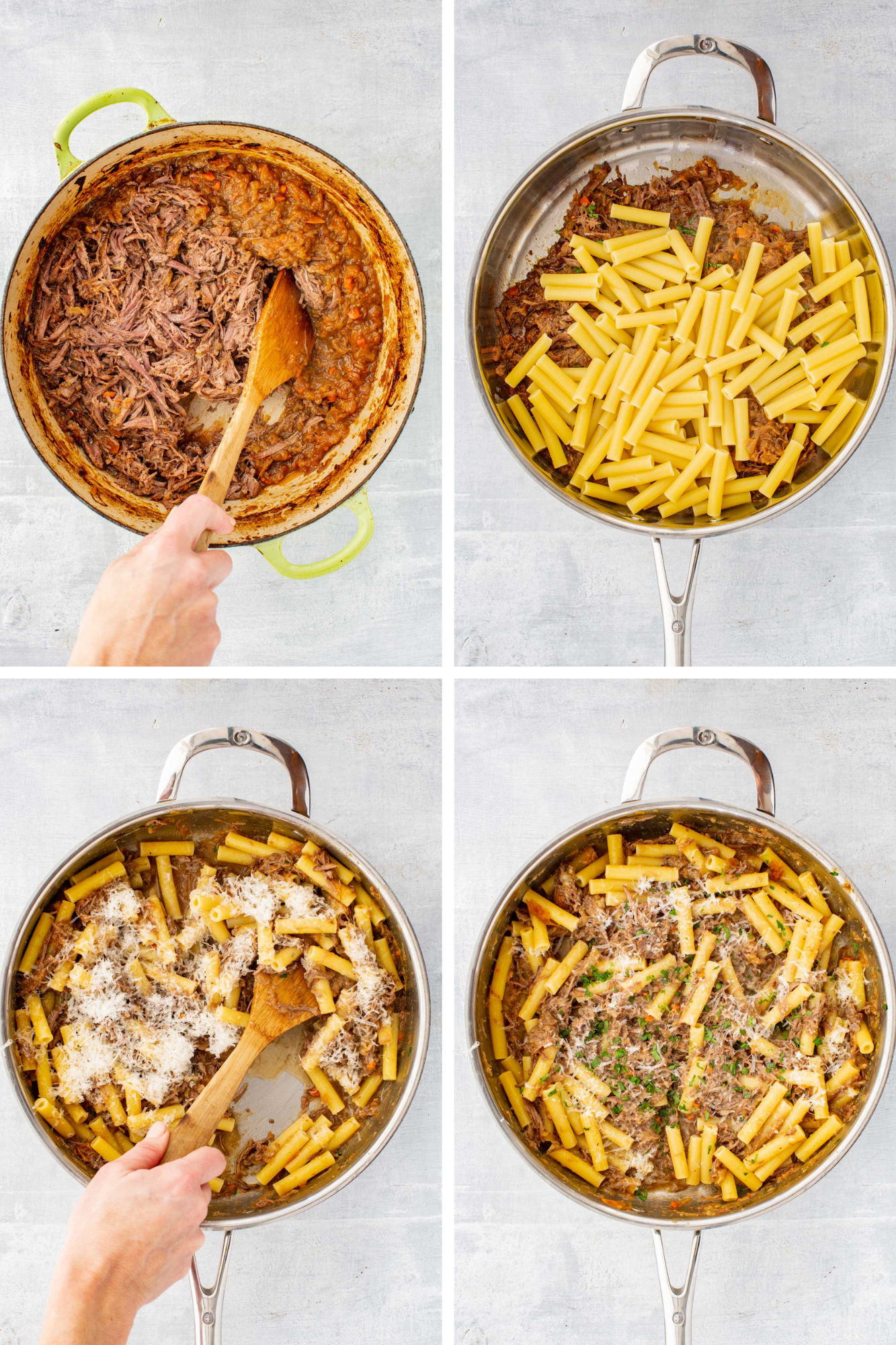
- Add the pasta directly to the sauce along with a splash of pasta water. Cook over low heat while stirring and tossing constantly.
- Add a little bit of grated Parmigiano Reggiano, a little bit of parsley if desired and more pasta water as needed, then continue tossing until the sauce clings to the pasta and looks cohesive.
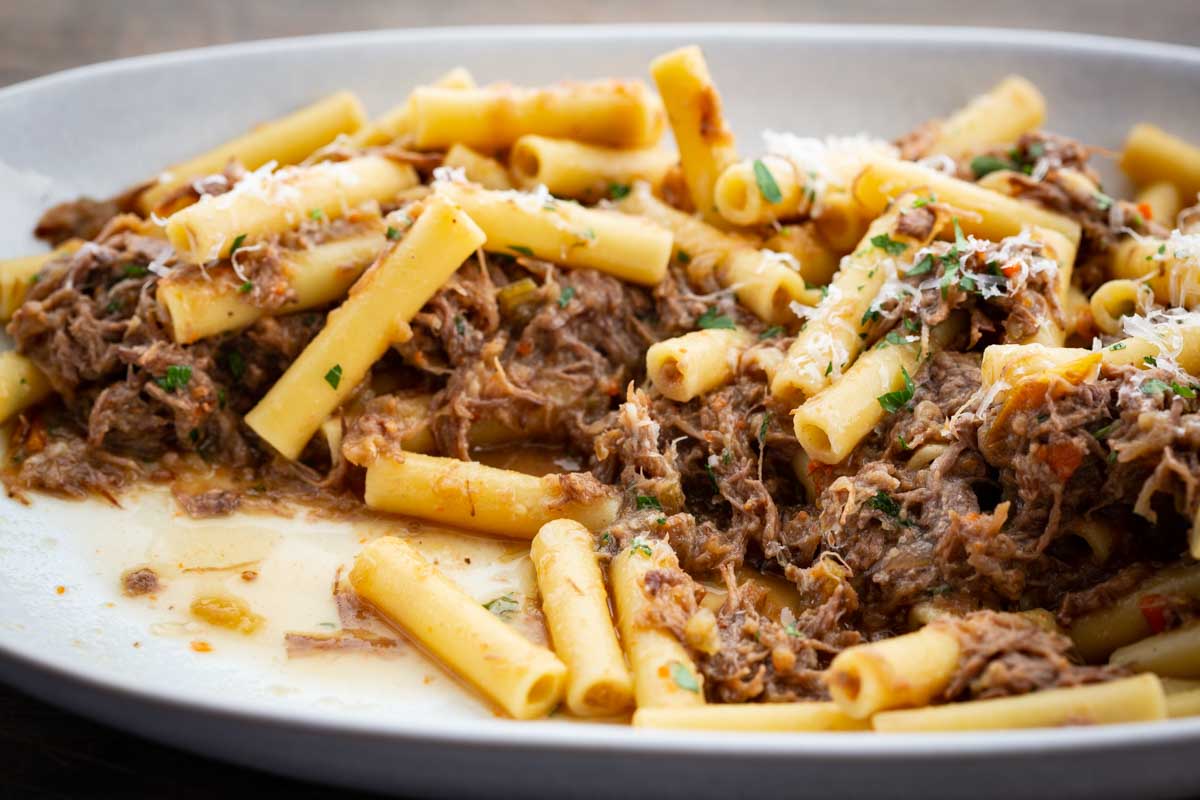
- Serve hot with a drizzle of extra virgin olive oil and plenty of freshly grated Parmigiano Reggiano.
Coley's Tips For Success
- If you use meat other than chuck or beef shanks, just make sure it's not too lean.
- The meat does not need a super hard sear. Just get some color on it to develop flavor.
- The onions should be very soft and jammy when the sauce is finished. If the onions still look separate or soupy, it needs more time.
- Skim any excess fat off of the top if it looks greasy. To do this, fill a metal ladle or measuring cup with ice cubes, then run the bottom over the top of the liquid. The fat will stick to the cold metal. Wipe off with paper towels and repeat until you've removed most of the excess fat.
- The sauce can be made a few days ahead. Cool completely, refrigerate, then reheat gently before cooking the pasta.
Variations
- Strutto (lard) is traditional in this recipe. If you have some, go ahead and use it.
- Start by rendering some pancetta or guanciale to add more flavor.
- Replace parsley with some hand-torn basil leaves.
- Try making this with pork instead of beef. Pork shoulder or pork shanks would be great!
What to Serve with Pasta Genovese
This rich pasta pairs well with crisp salads and fresh veggie sides that help balance out the heaviness. Try making a classic Caesar salad tableside, a fresh simple arugula salad or this savory spinach with butter and parmesan.
Bitter greens are ideal on the side. Try this easy sautéed broccoli rabe with garlic or this escarole with olives and capers, which is also typical of Naples.
A nice hunk of crusty bread or a slice of buttery homemade no-knead focaccia is perfect to mop up any leftover ragù on the plate!
How to Store and Reheat Genovese Pasta
Extra sauce can be stored in the fridge for up to 5 days and frozen for 4 months or longer. I usually make a double batch and keep it in my freezer for easy meals at a later date. Reheat with a splash of water in a saucepan or in the oven for 10-15 minutes. Meanwhile, boil a fresh batch of pasta, then toss and serve.
Genovese Pasta FAQs
No, pasta alla Genovese is a slow-cooked beef ragu, while pesto alla Genovese is the typical basil, olive oil and pine nut pesto sauce. Pasta alla Genovese actually comes from Naples in Southern Italy, while pesto Genovese comes from Genoa, in Liguria.
Technically, this is a ragù bianco, which uses white wine and doesn't include tomatoes. However, I like to add a small amount of cherry tomatoes or tomato paste to help add acidity and balance without overpowering the dish.
Yes, this recipe actually tastes better the next day as the flavors have a chance to meld. You can make the sauce up to 3 days in advance for the best results, but you can also store it in the freezer for 4 months or longer. Be sure to cook pasta and toss with the sauce just before serving so it remains al dente.
Did you LOVE this recipe? Please leave a star ⭐️ rating and comment and tag your creations @ColeyCooks on Instagram!
Want to Save This Recipe?
Enter your email & I'll send it to your inbox.
By submitting this form, you consent to receive emails from Coley Cooks.

Pasta alla Genovese Napoletana
Ingredients
- 2 tablespoons extra virgin olive oil plus more for drizzling
- 1 ½ pounds beef chuck cut into large cubes
- kosher salt and freshly cracked black pepper
- ¼ cup carrot very finely diced (about 1 small carrot)
- ¼ cup celery very finely diced (about 1 rib)
- 2 ½ pounds yellow onions thinly sliced pole to pole
- 3 bay leaves
- ¾ cups dry white wine
- 1 small beef marrow bone or shank, optional
- ¼ cup cherry tomatoes
- 1 Parmigiano Reggiano rind optional
- 1 pound ziti ziti spezzati or other short tubular pasta
- Parmigiano Reggiano freshly grated
- Italian flat leaf parsley finely minced, optional
Instructions
- Heat the olive oil in a large heavy bottomed pot or Dutch oven over medium heat. Season the beef generously with salt and pepper, then add it to the pot in a single layer. Cook, turning occasionally, until browned on several sides, then transfer the meat to a plate and set aside.2 tablespoons extra virgin olive oil, 1 ½ pounds beef chuck, kosher salt and freshly cracked black pepper
- Add the carrot and celery along with a pinch of salt. Cook, stirring, until softened, about 5 minutes.¼ cup carrot, ¼ cup celery
- Add the sliced onions, bay leaves and another pinch of salt. Stir well to coat everything in the oil, then add ½ cup of water. Cover and reduce the heat to medium-low.2 ½ pounds yellow onions, 3 bay leaves
- Cook, stirring every 5 minutes, until the onions have softened and released their liquid, about 20-30 minutes.
- While the onions cook, preheat the oven to 325°F.
- Uncover the pot and add the white wine. Nestle the beef back into the pot along with the marrow bone, if using, then cover completely with onions.¾ cups dry white wine, 1 small beef marrow bone
- Cover the pot, then transfer to the oven and cook for 1 hour.
- Give everything a stir, then add the cherry tomatoes and the Parm rind if using. If a lot of liquid has evaporated and the pot looks dry, add a splash of water.¼ cup cherry tomatoes, 1 Parmigiano Reggiano rind
- Cover and return the pot to the oven for an additional 2-3 hours, checking and stirring halfway through. Add more water as needed to keep it moist. It's done when the onions are very soft and jammy and the beef is easily falling apart.
- Remove the beef and set aside to cool slightly, then remove the Parm rind, bay leaves and marrow bone. If using a marrow bone, scoop the softened marrow into the pot and discard the bone. Mix in the marrow so it's fully incorporated into the sauce.
- Shred the beef while it's still warm, then return it to the pot and stir to combine. Taste and adjust with more salt and pepper as needed.
- Bring a large pot of well-salted water to a boil. Cook the pasta until al dente. Reserve about 1 cup of pasta water, then drain.
- Add the pasta directly to the sauce along with a splash of pasta water. Cook over low heat while stirring and tossing constantly.1 pound ziti
- Add a little bit of grated Parmigiano Reggiano, a little bit of parsley if desired and more pasta water as needed, then continue tossing until the sauce clings to the pasta and looks cohesive.Parmigiano Reggiano
- Serve hot with a drizzle of extra virgin olive oil and plenty of freshly grated Parmigiano Reggiano.Italian flat leaf parsley
Notes
- If you can, season the beef and allow it to rest for 30-60 minutes before cooking. This will allow the salt to permeate inside the meat but also allow it to come to room temperature for a better sear.
- If you use meat other than chuck or beef shanks, just make sure it's not too lean.
- The meat does not need a super hard sear. Just get some color on it to develop flavor.
- The onions should be very soft and jammy when the sauce is finished. If the onions still look separate or soupy, it needs more time.
- Skim any excess fat off of the top if it looks greasy. To do this, fill a metal ladle or measuring cup with ice cubes, then run the bottom over the top of the liquid. The fat will stick to the cold metal. Wipe off with paper towels and repeat until you've removed most of the excess fat.
- Only cook the amount of pasta you are planning to eat right away. Store the leftover sauce for later, then cook fresh pasta again. This will ensure the texture of your pasta is perfect every time.
- The sauce can be made a few days ahead. Cool completely, refrigerate, then reheat gently before cooking the pasta.

Great recipe but there is a small error. At one point it says to add the beef back in but it never said to remove it. I left it in and it worked out perfectly so not a big deal. It also says to remove the beef and shred. I just used a fork and smashed the beef while in the pot and that was perfect. No need to remove to shred.
Thanks for letting me know - I've updated the recipe! I'm so glad you enjoyed it.