Spaghetti al Pomodoro
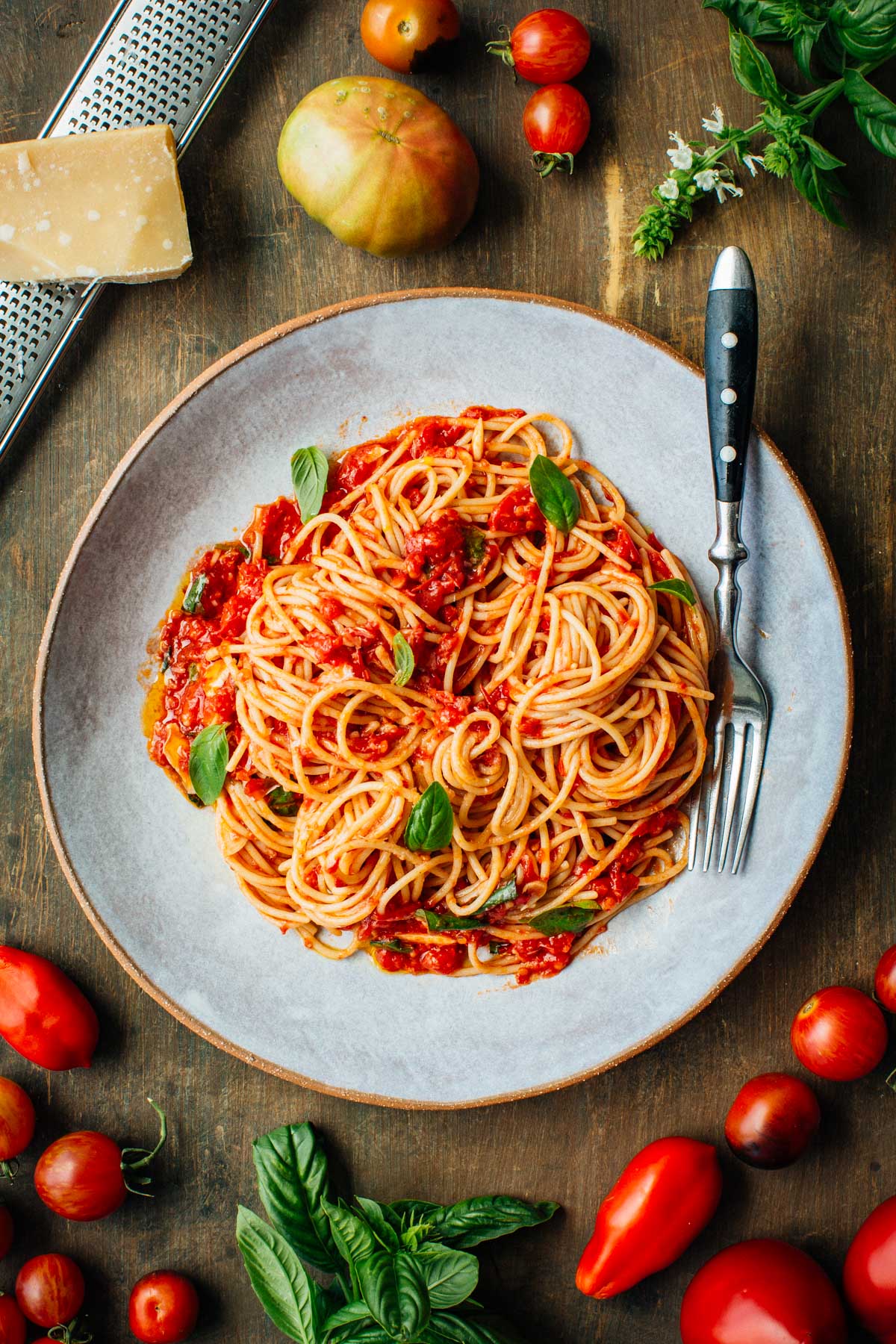
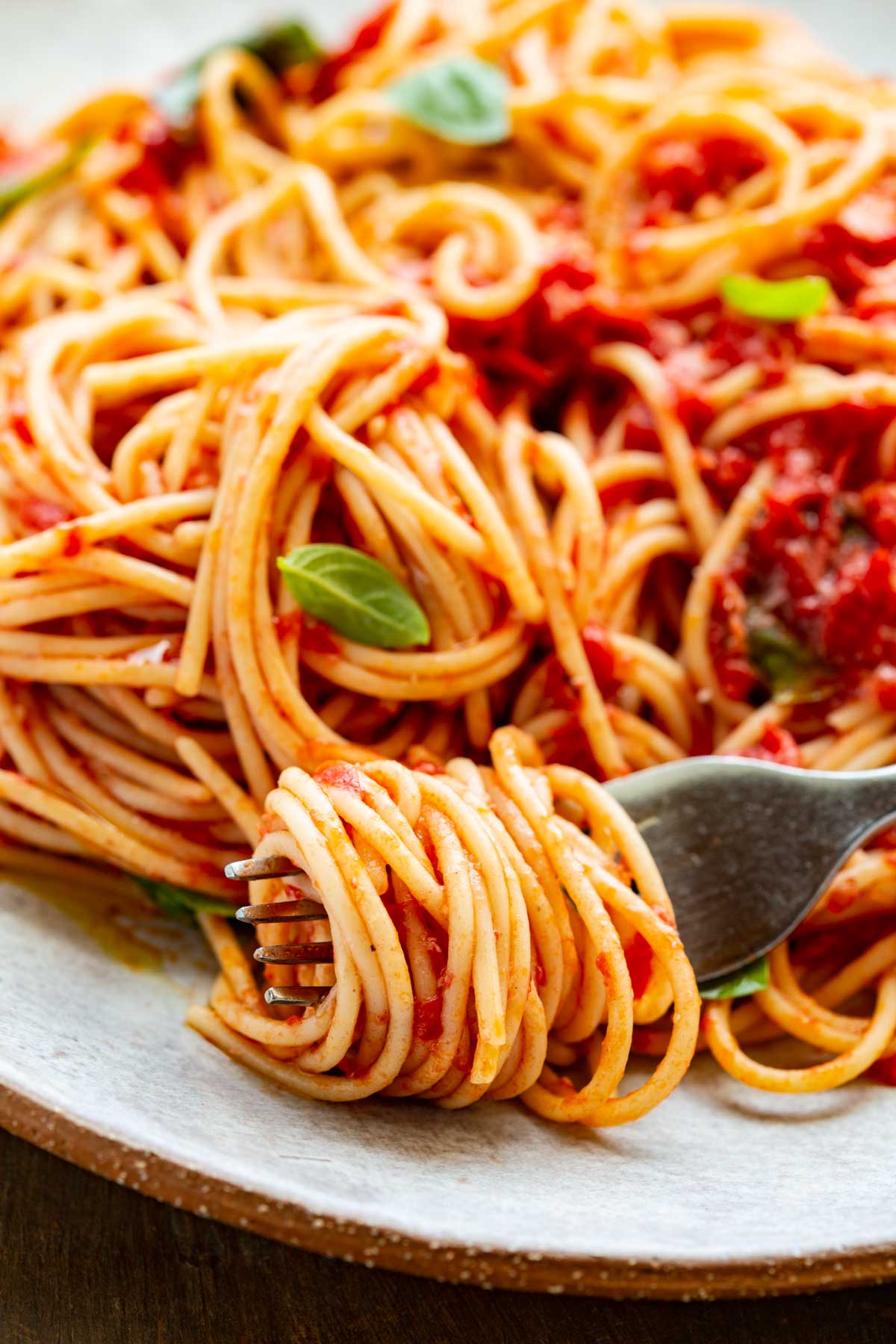
This spaghetti al pomodoro is the quintessential classic Italian dish. Ripe fresh tomatoes, garlic and extra virgin olive oil create a delicate tomato sauce that clings perfectly to pasta and is light, flavorful and pure summer comfort.
This post may contain affiliate links.
This is a really simple, yet classic recipe that I've been making every tomato season since I can remember. My mom always made this in the summer as soon as the Jersey tomatoes came to the markets.
The fresh tomatoes produce a sauce that's lighter and fresher tasting than one made with canned tomatoes. When tossed with hot spaghetti, it makes the simplest summer dinner that always reminds me of my family.
Pasta Pomodoro is an example of how amazing simple Italian cooking can be. When you cook with high quality ingredients at their peak, you don't need a long cooking time or complicated steps to get a flavorful sauce.
This is the kind of pasta you make when tomatoes are at their sweetest and juiciest. Instead of peeling and simmering for hours, the whole tomatoes get a quick blitz in the food processor, then cook just long enough with garlic cloves, a pinch of salt and extra-virgin olive oil to mellow.
Toss this simple tomato sauce with cooked pasta, fresh basil leaves, and plenty of parmesan cheese for a main dish that really celebrates the season!
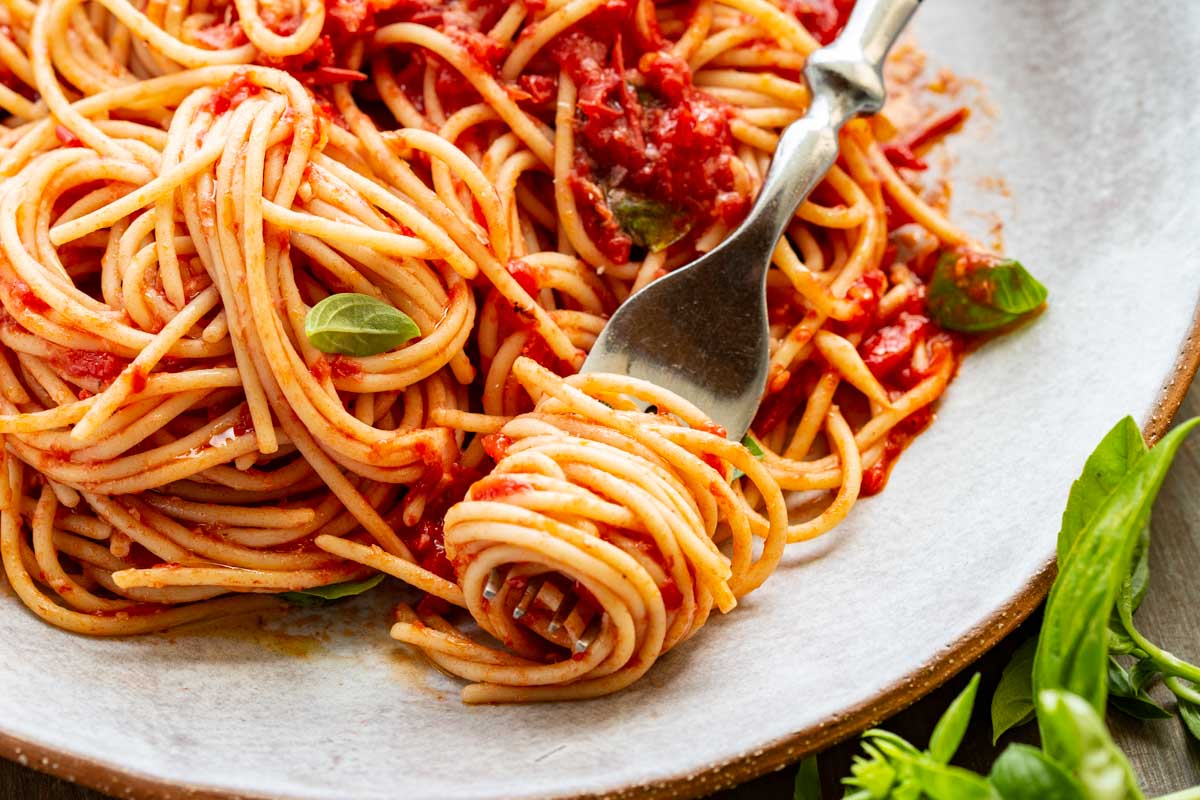
What is pomodoro sauce?
Pomodoro is the Italian word for "tomato." Pomodoro sauce is a simple tomato-based pasta sauce made with fresh chopped tomatoes, olive oil, and garlic. It's a light and fresh homemade sauce that's often left a bit chunky, making it the perfect summer sauce recipe.
What's the difference between pomodoro and marinara sauce?
Marinara sauce is usually simmered longer, often made with a can of tomatoes or tomato paste, and sometimes includes red pepper flakes, herbs, or even a splash of red wine. Pomodoro sauce, on the other hand, uses fresh ripe tomatoes cooked briefly for a fresher, more delicate tomato sauce.
Want more simple Italian pasta recipes? Try this bright pasta al limone, this garlicky pasta aglio e olio, or this cheesy spaghetti cacio e pepe.
Why This Recipe Works
- Fresh tomatoes make a lighter, fresher sauce that doesn't need a long cooking time.
- The food processor saves time and creates a sauce that's smooth but still has some texture.
- Starchy pasta cooking water and some parmesan cheese help the sauce cling to the pasta.
- Just a handful of simple ingredients create a great recipe that's both traditional and adaptable.
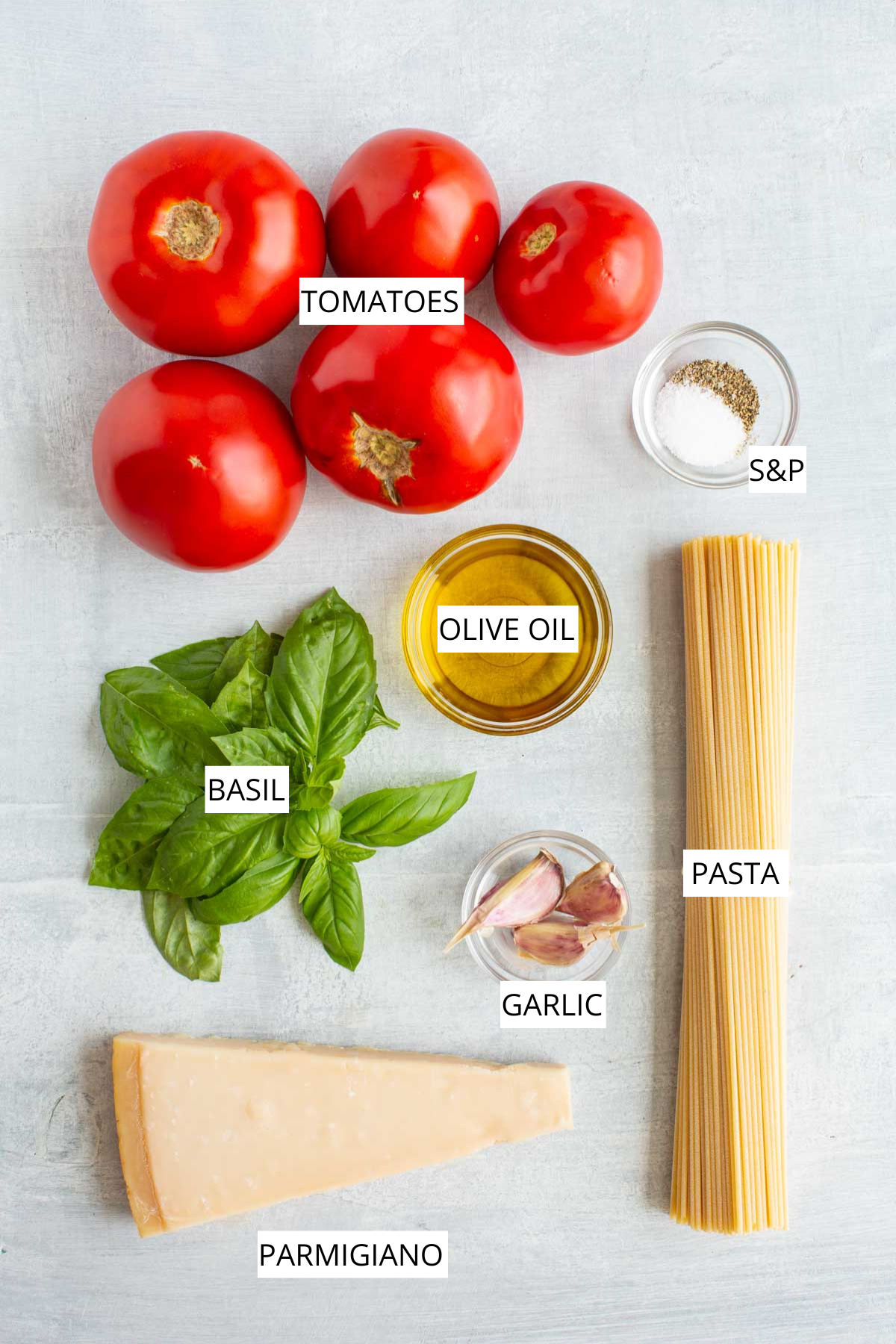
Pomodoro Sauce Ingredients
Tomatoes - Use ripe seasonal tomatoes that preferably haven't been refrigerated.
Olive oil - A high quality extra virgin olive oil is essential. Learn more in my guide to Italian olive oil and vinegars.
Pasta - I love spaghetti pomodoro, but any pasta shape works. Angel hair, farfalle, or even homemade pasta are all good ideas. Always cook in a large pot of salted water and follow the package instructions until al dente. See my guide to Italian dried pasta to choose the best.
Cheese - Freshly grated Parmigiano Reggiano or Pecorino Romano add richness and balance the acidity of the tomatoes. Check out my post on Italian cheeses.
Basil - Fresh basil leaves bring a classic Italian finish. Tear them by hand rather than cutting to preserve the vibrant flavor.
Best Tomatoes for Pomodoro Sauce
Plum tomatoes, Roma tomatoes, or fresh San Marzano tomatoes have less water and produce a more flavorful sauce. Cherry tomatoes or other juicy varieties can also work in a pinch.
*Find the full ingredient list in the recipe card below!
Helpful Equipment
- Large pot of water
- Food processor, potato masher or food mill (optional)
- Large skillet
- Wooden spoon
- Medium bowl
- Large Dutch oven (for big batches)
- Airtight container
How to make Pomodoro Sauce
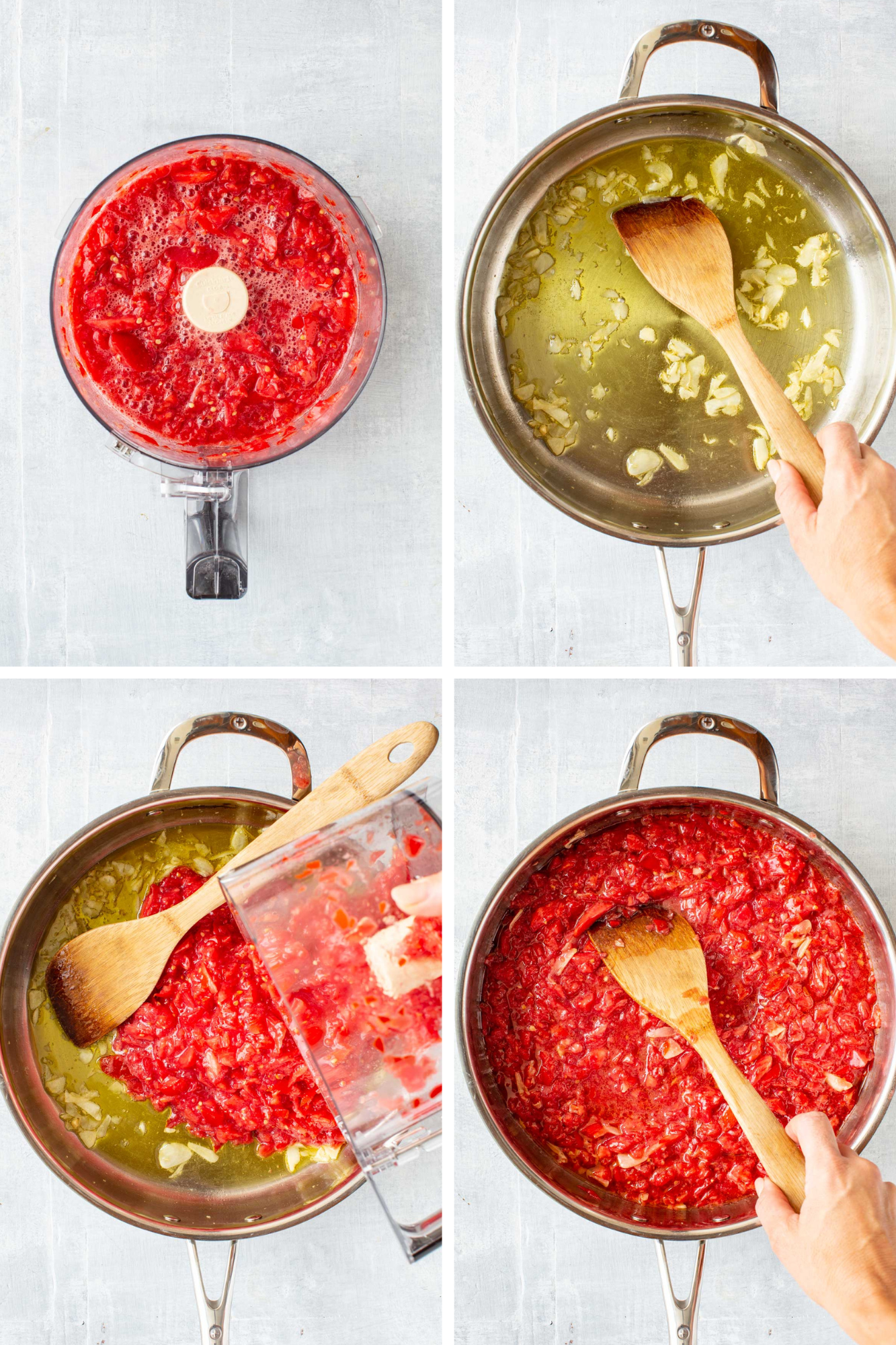
- Bring a large pot of salted water to a boil.
- Place the quartered tomatoes in a food processor and pulse until mostly smooth with a few small pieces remaining. Adjust as needed if you prefer a more chunky sauce.
- In a large skillet, heat the extra virgin olive oil over medium heat. Add the garlic cloves and cook for about 30 seconds until fragrant, being careful not to let them brown.
- Pour in the processed tomatoes, season with kosher salt and black pepper, and let simmer for about 10 minutes over medium-low heat until some of the tomato liquid evaporates. Stir occasionally with a wooden spoon.
Pro Tip: If the sauce tastes too acidic, add a pinch of sugar, but this shouldn't be a problem if you're working with high quality ripe tomatoes.
How to make Pasta Pomodoro
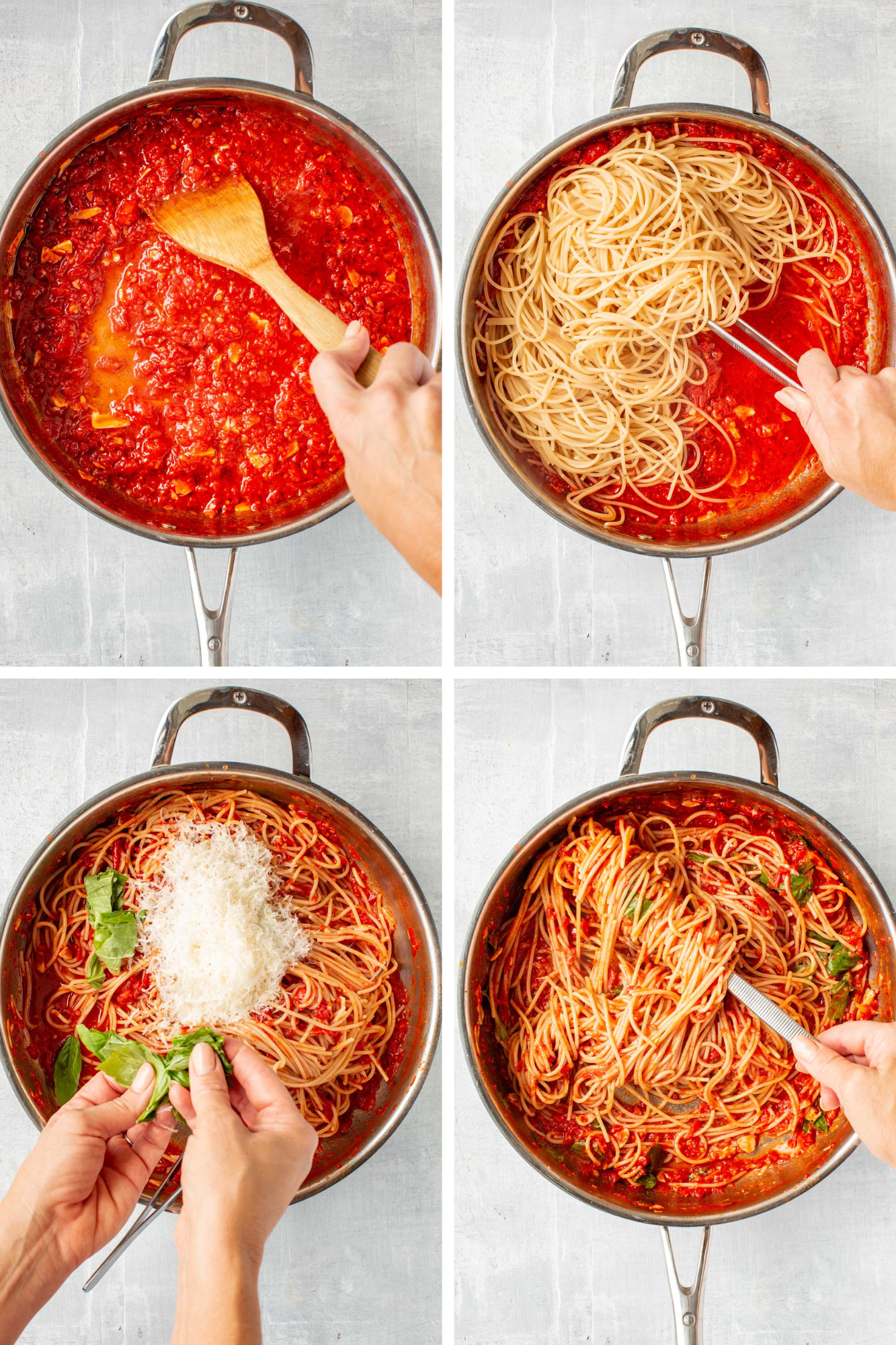
- While the sauce cooks, boil the spaghetti until just shy of al dente. Reserve about 1 cup of the pasta cooking water, then drain.
- Add the cooked pasta to the sauce, tossing well to coat. Add splashes of the cup of the pasta water as needed to help the delicate tomato sauce cling.
- Remove from the heat, stir in the fresh basil leaves, and add parmesan cheese, tossing until the pasta is glossy and well-coated.
- Serve right away with extra cheese, basil, and a drizzle of extra-virgin olive oil.
Tips for Success
- Use the best ripe tomatoes you can find for a fresh pasta sauce with great flavor.
- Always salt the large pot of water generously before the pasta cooks.
- Stir the sauce with a wooden spoon to prevent burning.
- Reserve more pasta cooking water than you think you'll need. It helps create a rich, flavorful sauce.
- Transfer pasta directly to the skillet to finish cooking in the sauce rather than draining completely.
Variations
- Add a pinch of red pepper flakes for gentle heat.
- Stir in a little bit of tomato paste for a richer, thicker sauce.
- Use cherry tomatoes or golden tomatoes for a sungold tomato pasta.
- Swap spaghetti for your favorite pasta shape.
- Try other fresh herbs like oregano, thyme, mint or parsley.
- Finish with a drizzle of homemade basil infused oil.
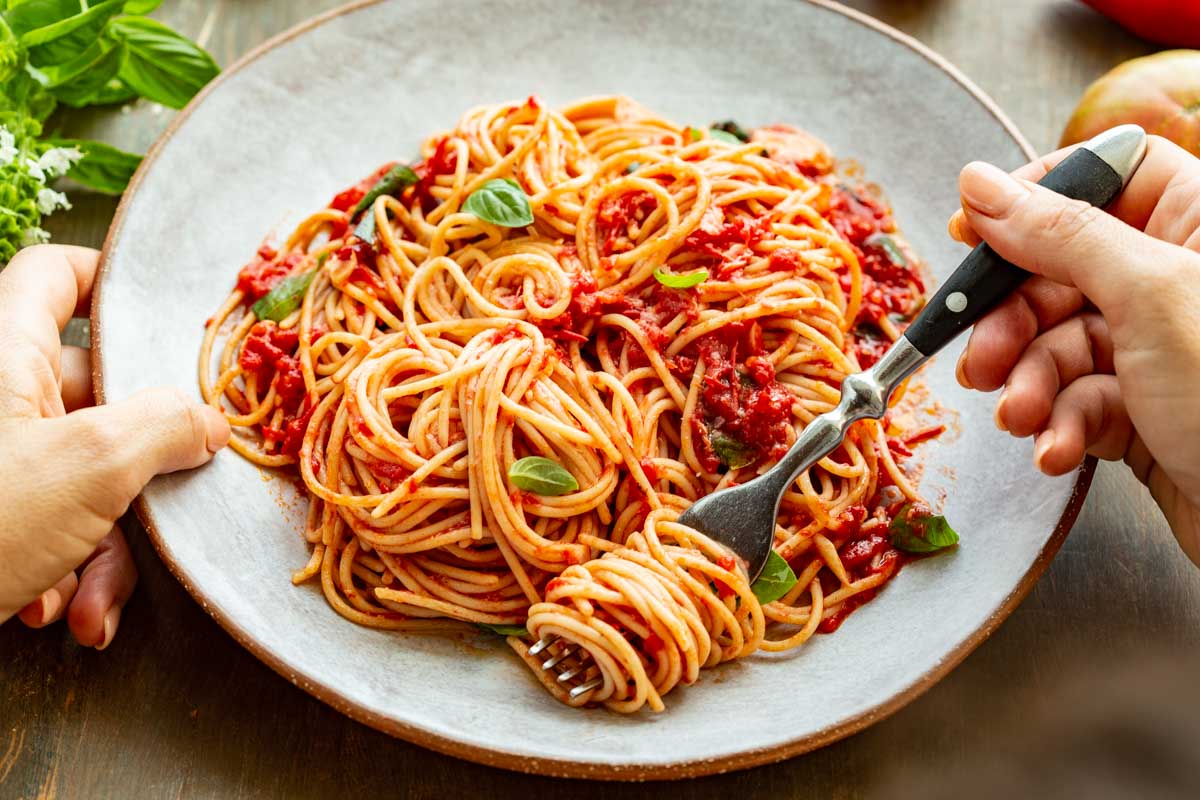
Serving Suggestions
This pasta al pomodoro is a family favorite and makes a satisfying main dish on its own.
Crusty homemade focaccia or classic garlic bread is a great way to soak up the flavorful sauce. For a bright salad on the side, try this easy arugula salad with pine nuts or this crisp fresh zucchini salad.
When summer produce is abundant, this juicy peach cherry burrata salad or this hearty grilled vegetable panzanella is also a good idea to serve!
How to store Spaghetti Pomodoro
Pasta al pomodoro is always best cooked and eaten on the spot. The texture of freshly cooked pasta is unmatched, and it's never quite the same once cooled and reheated.
If you do have leftovers, store pasta in an airtight container in the refrigerator for up to 3 days. Reheat gently in a large skillet over medium-low heat with a splash of water to loosen the sauce. Leftover pasta pomodoro should not be frozen.
FAQs
Plum tomatoes, roma tomatoes, or San Marzano tomatoes are ideal because they have less water and make a more concentrated, flavorful sauce.
Yes, a can of tomatoes can be substituted outside of tomato season, but the fresh pasta sauce made with ripe tomatoes is lighter and fresher.
If the acidity of the tomatoes is too strong, add a little butter or even a pinch of sugar to balance the flavors.
Spaghetti is traditional, but angel hair, tagliatelle, penne or any favorite pasta shape will work. Follow package instructions and always cook until al dente.
Place in an airtight container and refrigerate. Reheat gently with a splash of starchy water to revive the sauce.


Did you LOVE this recipe? Please leave a star ⭐️ rating and comment and tag your creations @ColeyCooks on Instagram!
Want to Save This Recipe?
Enter your email & I'll send it to your inbox along with my best Thanksgiving ideas and tips.
By submitting this form, you consent to receive emails from Coley Cooks.

Pomodoro Pasta
Ingredients
- 2 pounds ripe tomatoes cored and quartered
- 1 pound spaghetti or any other pasta shape
- ¼ cup extra virgin olive oil
- 3 cloves garlic thinly sliced
- Kosher salt to taste
- Freshly ground black pepper to taste
- 1 cup Pecorino Romano or Parmesan cheese freshly grated, plus more for serving
- 1 handful fresh basil leaves torn
Instructions
- Bring a large pot of salted water to a boil.
- Place the quartered tomatoes in a food processor and pulse until mostly smooth with a few small pieces remaining.
- In a large skillet, heat the olive oil over medium heat. Add the garlic and cook for about 30 seconds until fragrant, being careful not to let it brown.
- Pour in the tomatoes, season with salt and pepper, and let it simmer for about 10 minutes or until some of the liquid has evaporated and the raw tomato mellows.
- While the sauce cooks, boil the spaghetti until just shy of al dente. Reserve about 1 cup of the pasta cooking water, then drain.
- Add the spaghetti to the sauce, tossing well to coat. Add splashes of the reserved pasta water as needed to help the sauce cling.
- Remove from the heat, stir in the basil, and add the cheese, tossing until the pasta is glossy and well-coated.
- Serve right away with extra cheese, basil and a drizzle of olive oil on top.
Notes
- Use the best ripe tomatoes you can find for a fresh pasta sauce with great flavor.
- Always salt the large pot of water generously before the pasta cooks.
- Stir the sauce with a wooden spoon to prevent burning.
- Reserve more pasta cooking water than you think you'll need. It helps create a rich, flavorful sauce.
- Transfer pasta directly to the skillet to finish cooking in the sauce rather than draining completely.