
Spaghetti alla Puttanesca
Spaghetti alla puttanesca is one of the easiest pantry pasta recipes out there, and it also happens to be one of my favorites. After years of professional cooking, I've perfected this recipe and can't wait to share all of my tips to help you make it perfectly, too! I'll guide you through the techniques that make a difference so you can create a restaurant-worthy pasta at home in under 30 minutes, with very little effort.
This post may contain affiliate links.
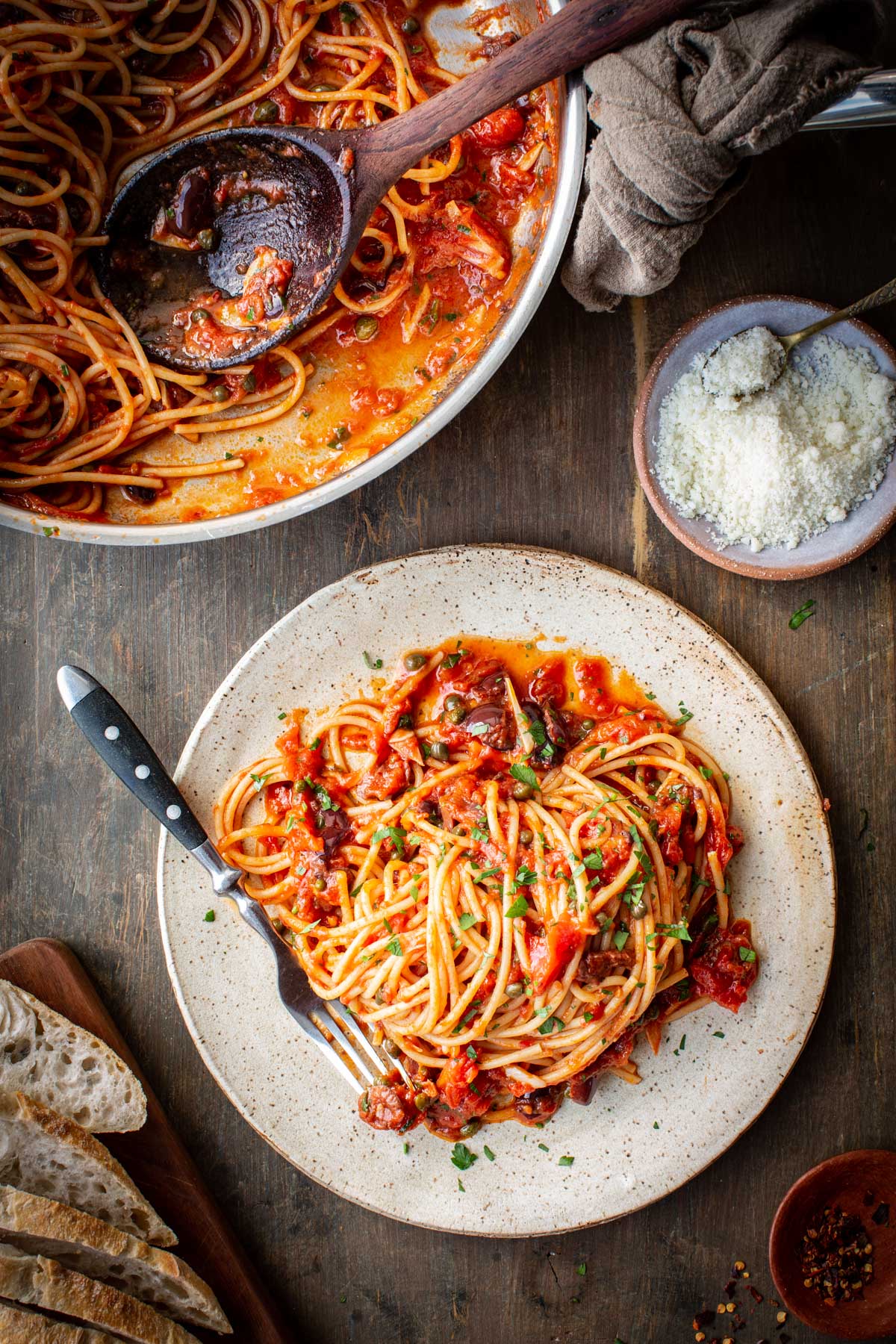
Puttanesca is easily one of my all-time favorite pastas, and is my go-to quick and easy pantry meal for when I don't really feel like cooking and don't know what else to make.
My version of this classic does not reinvent the wheel. However, my goal is to teach you some key tips and techniques to make your own personal best version at home.
That's what recipes like this are all about. Simple pantry pastas are meant to be adjusted to taste exactly the way you like. Not me, not the best chef in Italy, YOU!
What is Puttanesca?
Puttanesca is an Italian pasta sauce with a controversial name that literally means "in the style of a prostitute."
It's a relatively modern Italian pasta dish, having emerged in Naples sometime in the mid-20th century, and its origins are debated.
Some say it was a quick meal that sex workers would prepare between clients, using the pungent scent to lure in more. Others suggest the name simply refers to a sauce made with humble, everyday ingredients that are common to Southern Italy, like tomatoes, olives, and capers.
Different versions of this pasta already existed under different names in the region before it became known as puttanesca, some with the addition of anchovies and chili peppers, others without. To this day, the dish varies slightly from region to region.
At its core, puttanesca is all about big bold flavors, but how big and bold it gets is completely your call. Some people might tell you that the anchovies are optional, and if you really don't want to use them, then I suppose they are. But in my book, anchovies are non-negotiable, and the more the merrier! Just use the best quality anchovies you can find.
The same goes for the tomatoes. Really good, sweet canned tomatoes make all the difference in the world. If your tomatoes are lacking in sweetness, a tiny pinch of sugar will bring the balance needed for this dish, but don't go overboard.
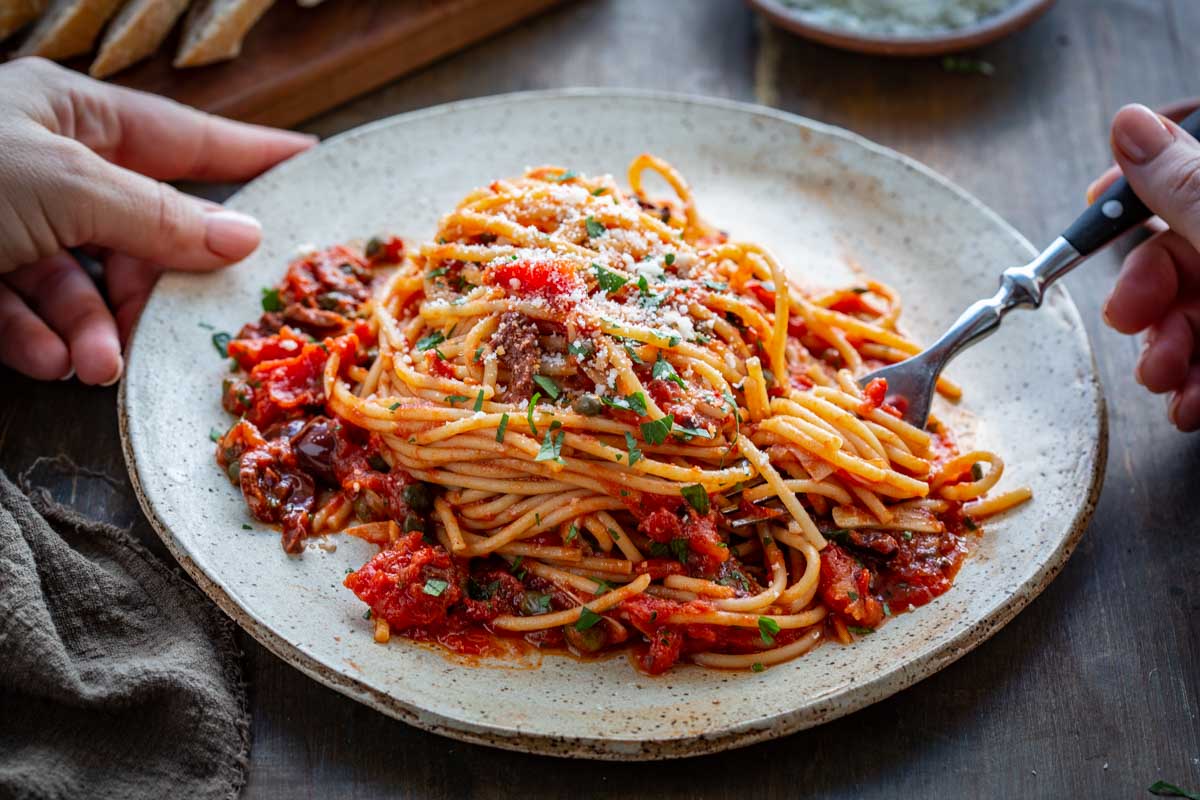
You're not looking for a sweet sauce, you just want to temper down the acidity. A lot of people will say not to do this, since it's not traditional. But trust me, if your tomatoes are lacking, it makes all the difference!
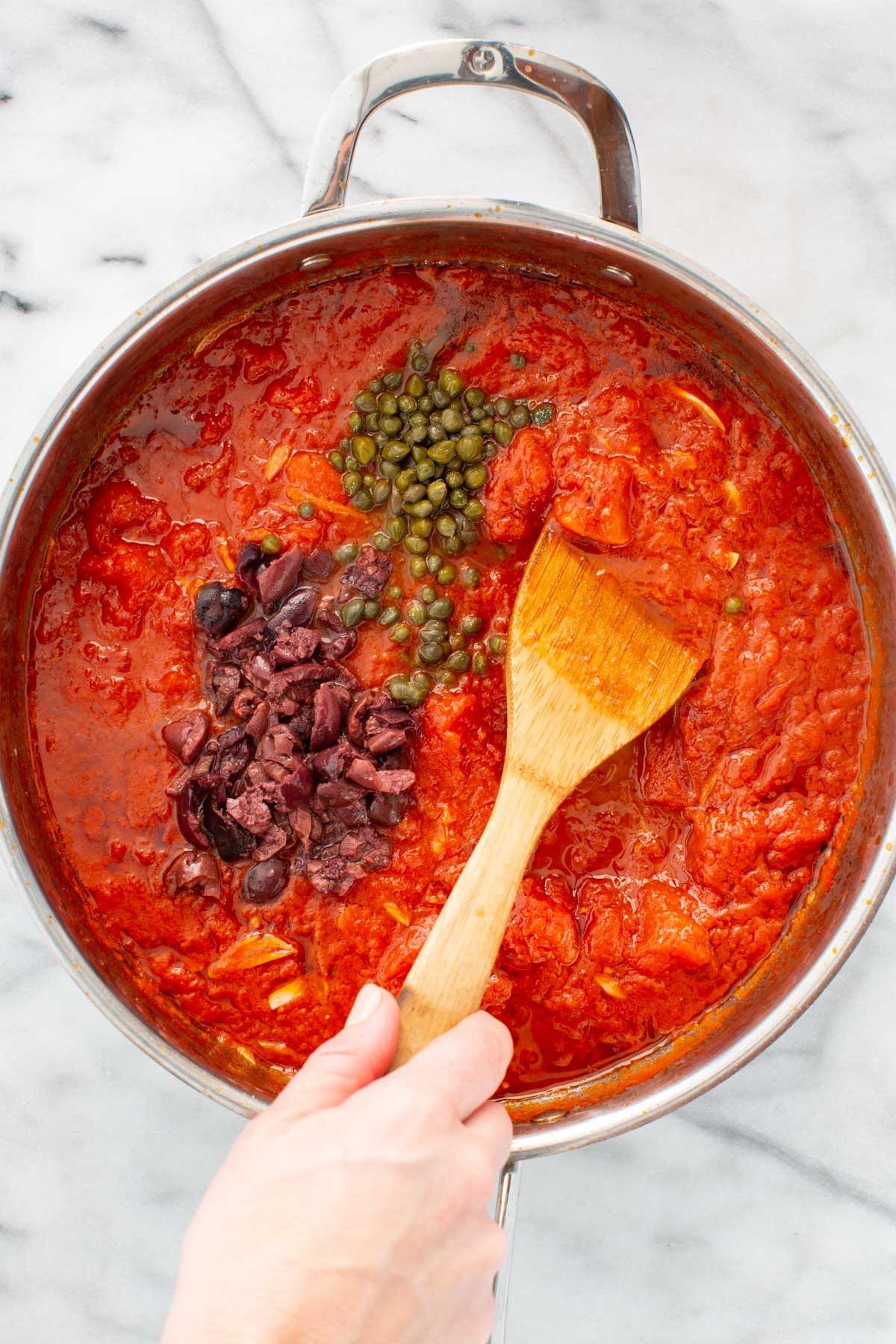
Italian Gaeta olives are also traditional, but they can be a little difficult to find, so Kalamata olives are a good substitute. I like to tear them into rustic pieces rather than chopping them.
The type of capers you use is up to you. Small nonpareil capers add a sharper, more complex pop of flavor, while the larger capote capers add a meatier texture.
If using salt-packed capers, it's important to soak them in water, changing it out several times, for about 20 minutes before using, otherwise they will be way too salty. For capers packed in brine, it's a good idea to give them a rinse before adding to the pan so the brine doesn't overpower the sauce.
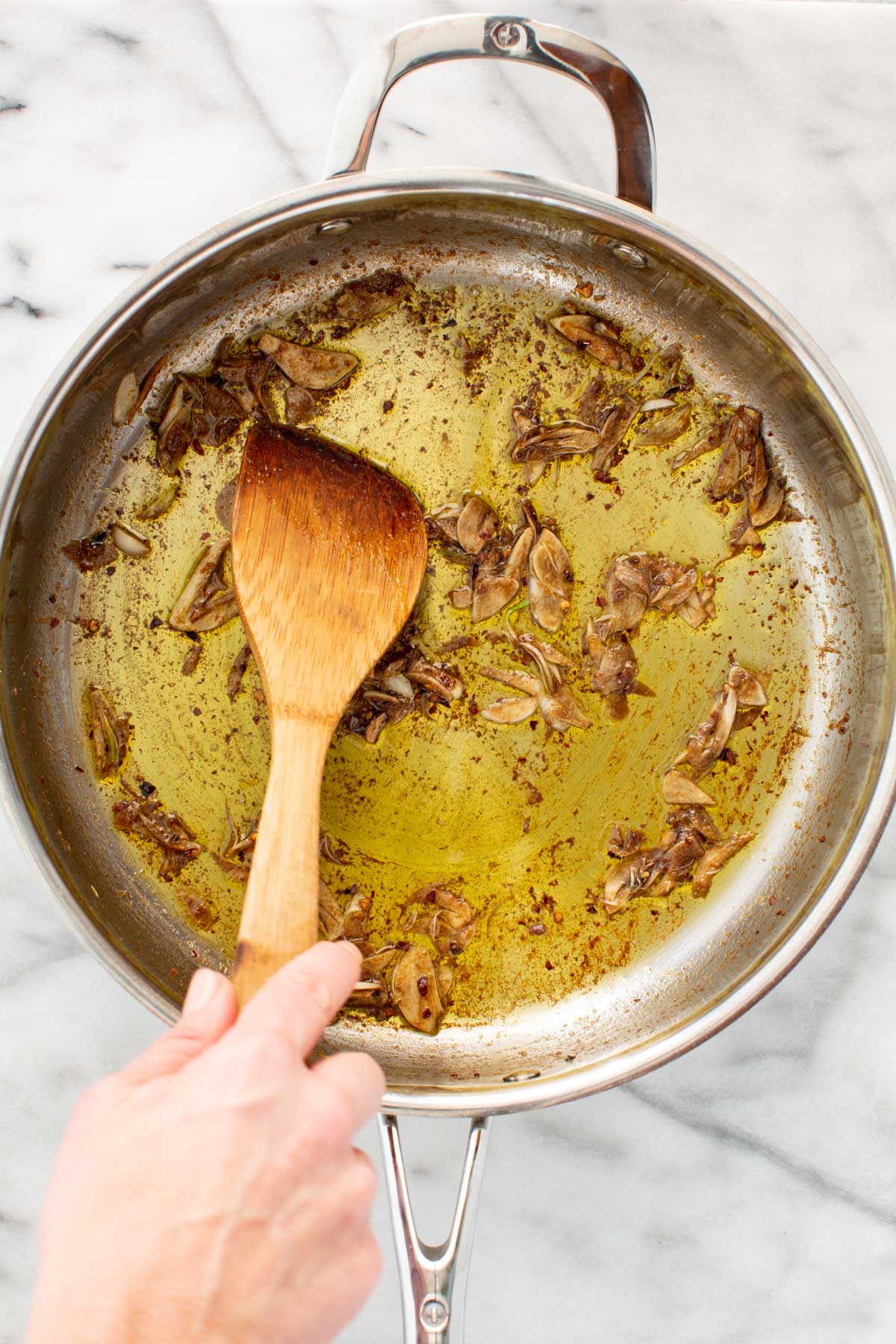
The difference between a flat puttanesca and a great one comes down to a few small techniques. It's crucial to let the anchovies melt completely into the oil as they sauté with the garlic and chili flakes over medium-low heat. And be very careful not to let the garlic take on any color at all, or it will make the sauce taste bitter.
In addition, it's really important to toss the spaghetti in the sauce along with a little bit of pasta water to help it cling. Boil the pasta a few minutes shy of al dente, then let it finish cooking directly in the sauce so it can absorb some of that flavor and let it all become one.
Want more classic coastal Italian pasta recipes? Try my easy linguine alle vongole, a creamy lemon spaghetti or the best Pasta alla Norma recipe.
Why This Recipe Works
- A classic puttanesca that stays true to tradition but can, and should be adjusted to taste.
- Anchovies melt into the olive oil with garlic and chili flakes to create a savory foundation without tasting "fishy."
- The capers and olives give enough brine and acid to balance the richness.
- Using high-quality ingredients makes all the difference!
- Finishing the pasta in the sauce allows the spaghetti to absorb flavor and cling to the sauce while staying al dente.
- A simple and delicious pantry meal you can make on repeat in 30 minutes or less!
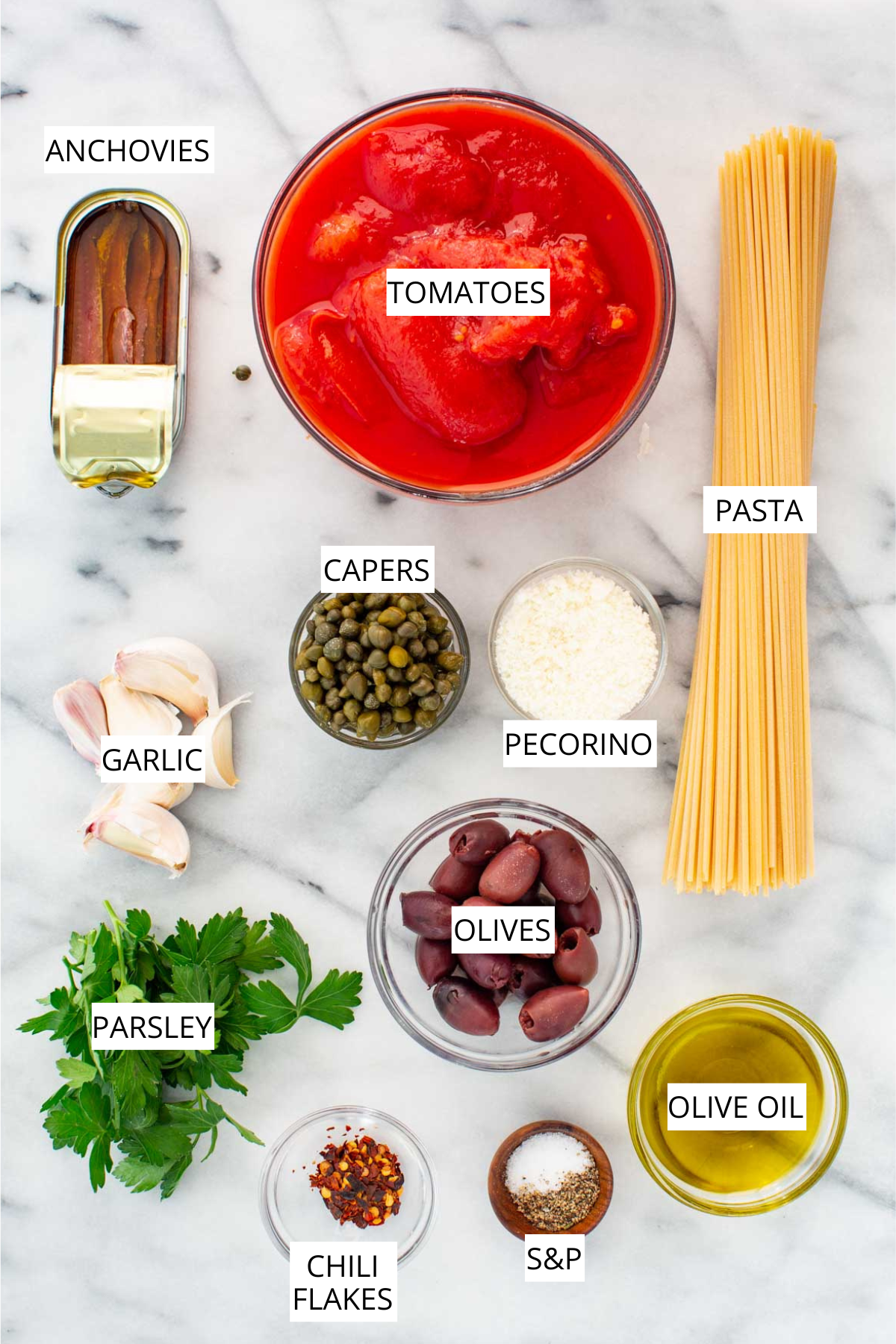
Pasta Puttanesca Ingredients
Anchovy - Anchovies are a must if you're looking for that classic umami punch in your puttanesca. Use the best ones you can find. I recommend the brand Fishwife. Add the oil they're packed in to give lots of extra flavor. Use as many anchovies as you want!
Tomatoes - Get the best canned whole peeled tomatoes you can find, such as San Marzano, or other good plum tomatoes, like Roma. Read my guide to learn more about how to select high-quality canned tomatoes. You can use fresh tomatoes if they're in season, but you will first need to blanch them to remove the skins, then squeeze out the seeds.
Olives - Italian Gaeta olives are traditional, but they can be a little difficult to find, so Kalamata olives are a good substitute. I like to tear them into rustic pieces rather than chopping them. Just make sure they are pitted first!
Capers - Use whatever capers you have access to. Be sure to soak or rinse them if they are salt-packed or brined. Small nonpareil will be sharper and more complex, while large capote capers are milder and meatier. Both work great.
Garlic - Lots of fresh garlic is essential for this simple recipe, so don't skimp! It will melt into the oil with the anchovy to build the backbone of the flavor in the sauce.
Red chili flakes - You can adjust the amount of red chili flakes to balance the heat to your liking. If you have access to Calabrian chili paste, it makes a great substitute.
Pasta - Puttanesca is traditionally made with spaghetti, but you can make this with any dried Italian pasta variety of your choice. Make sure to use a high-quality pasta to match the other ingredients. Look for pasta that's made with 100% semolina, is slow dried, and bronze-die extruded.
*Find the full ingredient list in the recipe card below!
Helpful Equipment
- Large pot
- Colander
- Large skillet
- Wooden spoon
- Tongs
- Cheese grater
How to Make Puttanesca Sauce
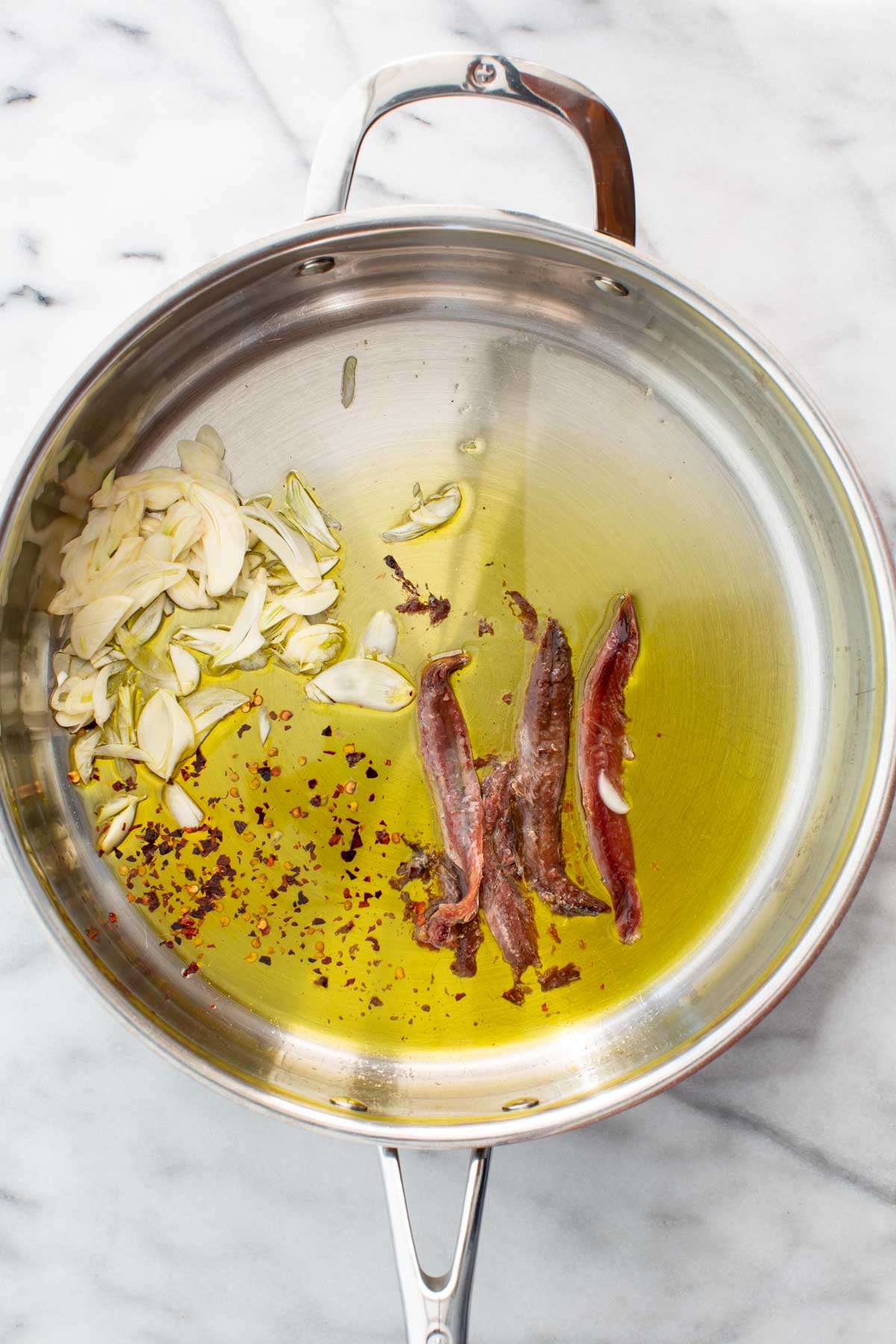
- Bring a large pot of salted water up to a boil.
Pro Tip: To get concentrated pasta water, use a 12-inch skillet or a sauté pan with enough salted boiling water to cover the pasta instead. A low-water method increases the concentration of starch, which will help the sauce thicken and cling to the noodles even better.
- Heat the olive oil in a large wide skillet over medium heat.
- Add the anchovies and their oil, garlic, and chili flakes, then cook for 1-2 minutes while stirring until the garlic is softened and the anchovies dissolve into the oil. Do not let the garlic take on any color.
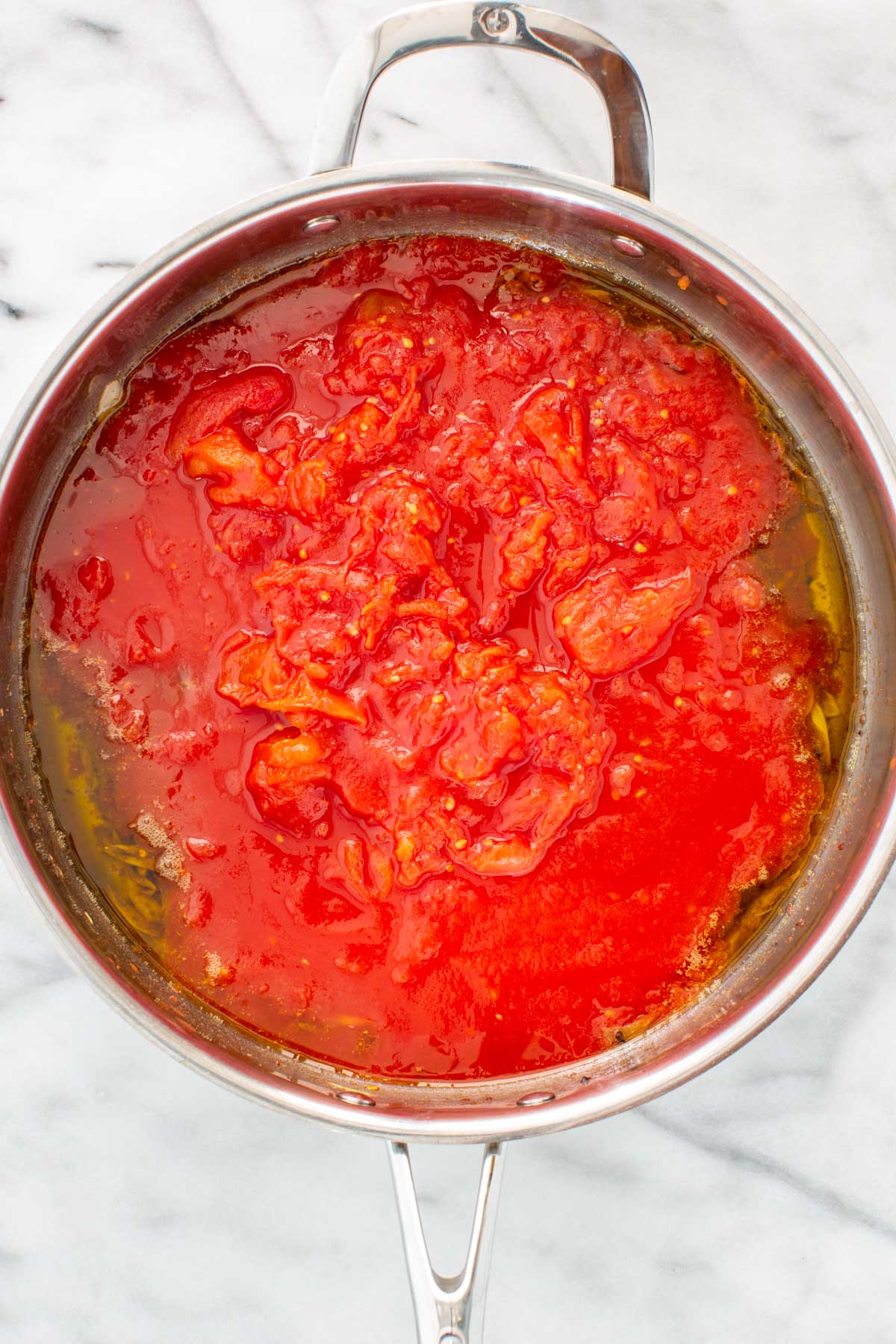
- Pour in the tomatoes, then rinse the can with a splash of water and add that too. Bring up to a simmer, then cover and cook for about 10 minutes, stirring occasionally, until slightly thickened.
- Stir the olives and capers into the sauce, then taste and add salt as needed. The anchovies, olives, and capers add plenty of salt, so it may not need much, if any at all.
- While the sauce is simmering, cook the pasta until just shy of al dente. Reserve about 1 cup of pasta water before draining.
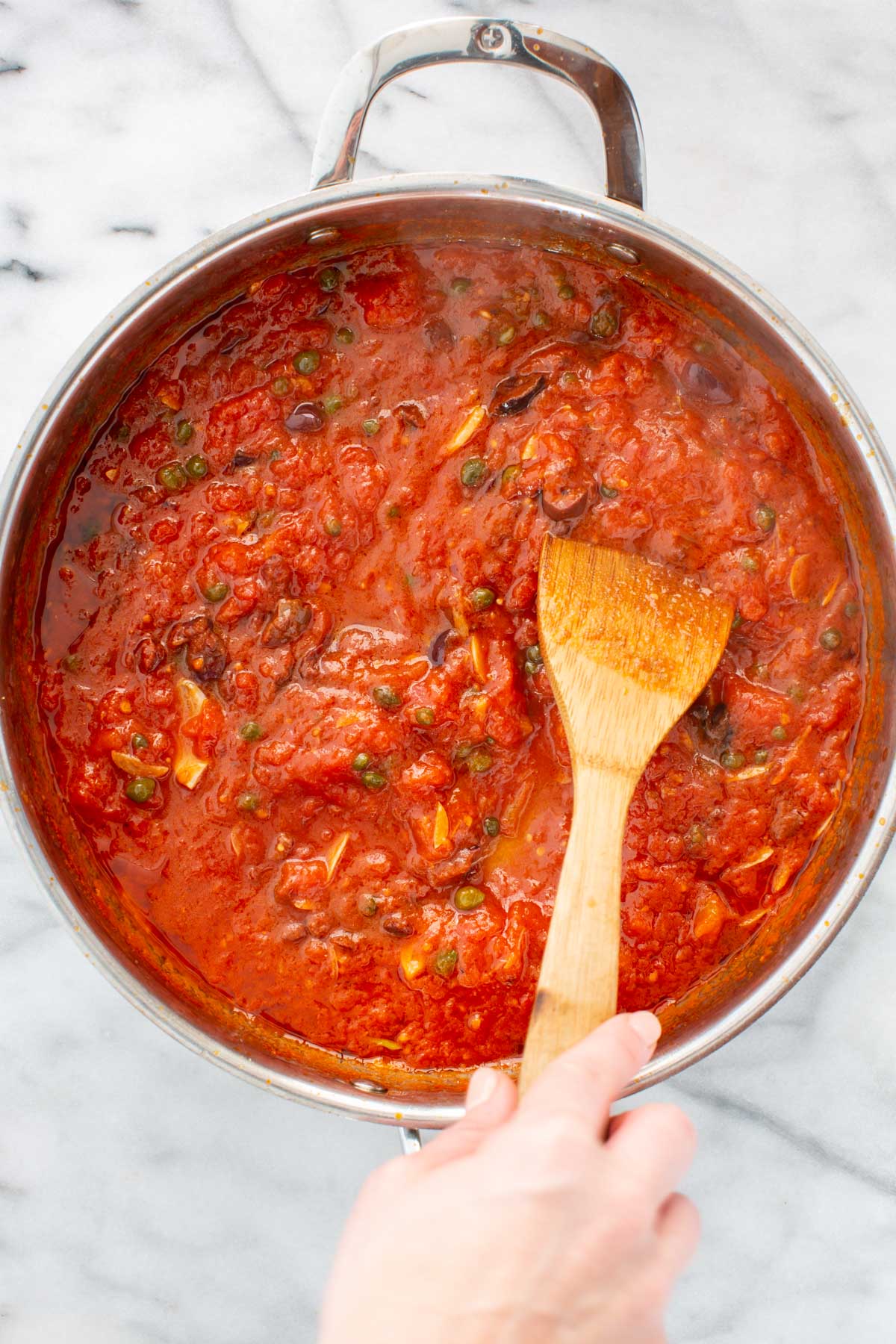
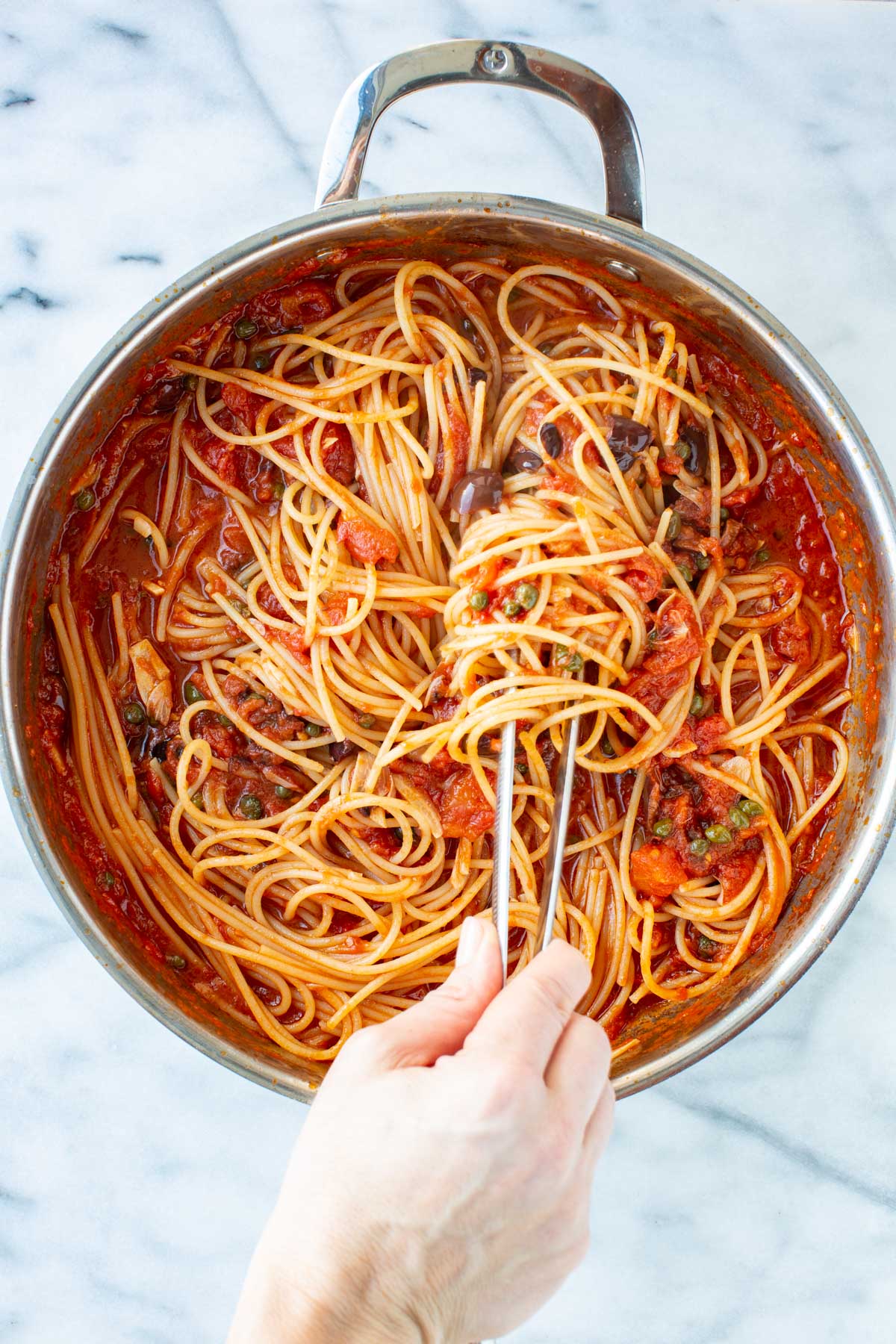
- Add the drained pasta directly to the sauce, then toss until the noodles are coated and the sauce clings nicely, about 1-2 minutes. Add a splash of pasta water as needed to loosen.
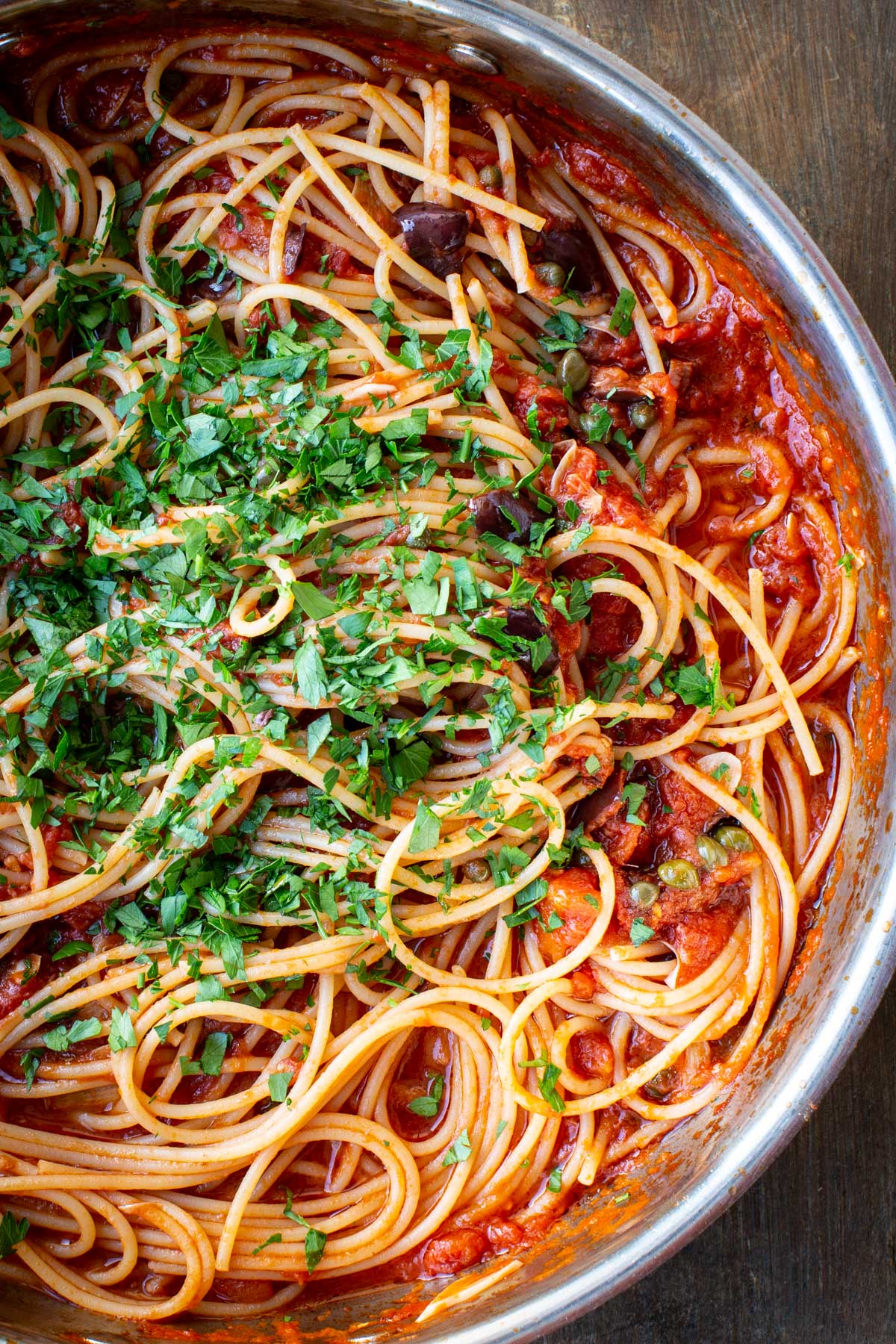
- Finish with parsley and toss once more. Serve immediately with plenty of grated Pecorino Romano on top.
Coley's Tips For Success
- This sauce can and should be adjusted to your taste. Add more or less garlic, anchovies, chilies, olives, or capers as you like.
- You can leave the tomatoes whole and break them up in the pan with a wooden spoon if you want a chunkier sauce. You can also substitute crushed tomatoes in a pinch.
- If your tomatoes are lacking in sweetness, a tiny pinch of sugar will bring the balance needed for this dish.
- Go easy on the salt at first since the anchovies, capers and olives are very salty. Always taste the sauce and adjust before serving. Same goes for salting the pasta water - adding a lot is an easy way to make this dish overly salty.
Pasta Puttanesca Recipe Variations
- Add a splash of white wine if you have an open bottle before adding the tomatoes for a deeper flavor.
- Add a bit of dried oregano or use fresh basil in place of, or in addition to, the fresh parsley.
- For added protein and substance, add a can of Italian oil-packed tuna with the tomatoes.
- Drizzle with this fragrant basil oil for a delightfully herbal finish!
How to Serve Spaghetti alla Puttanesca
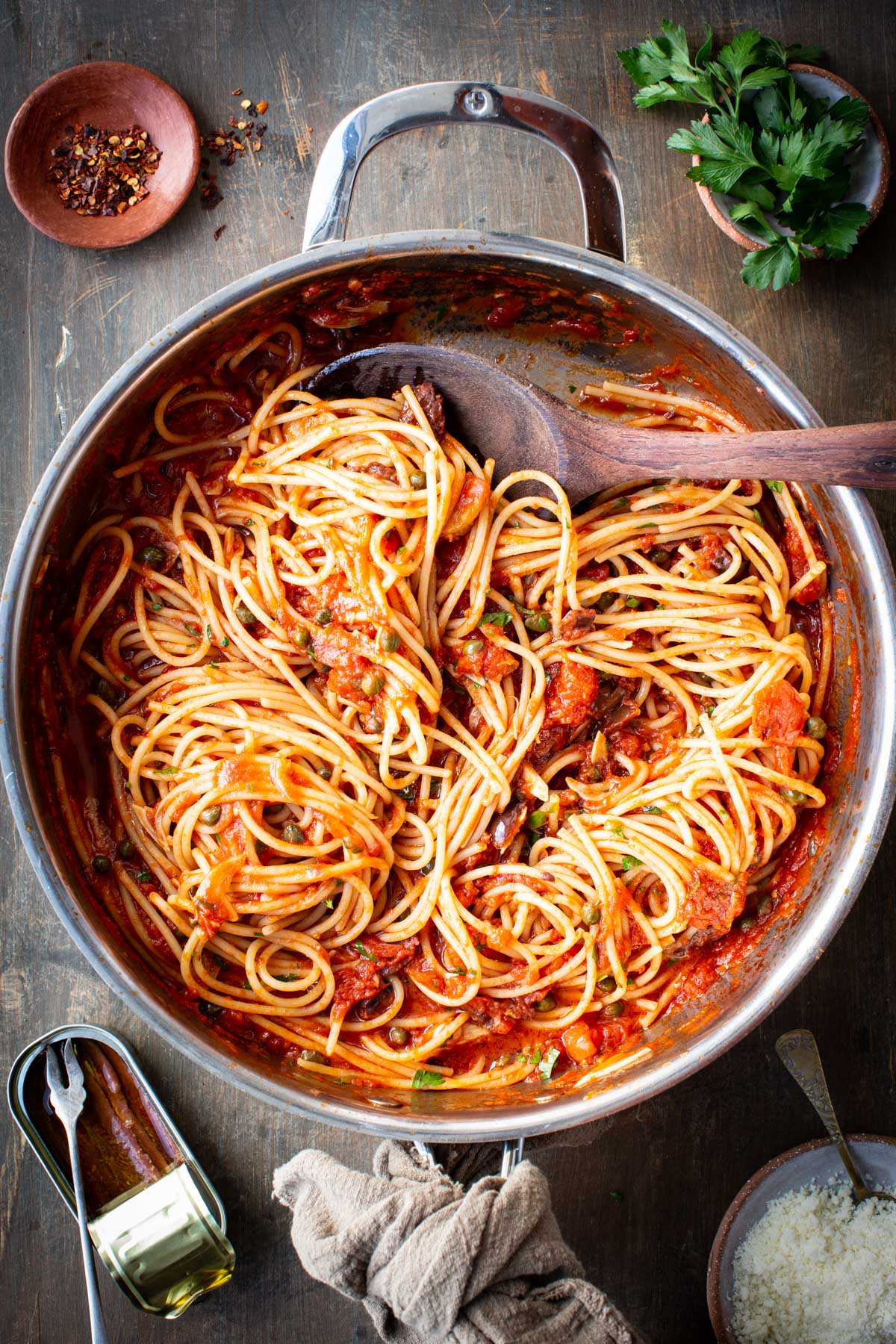
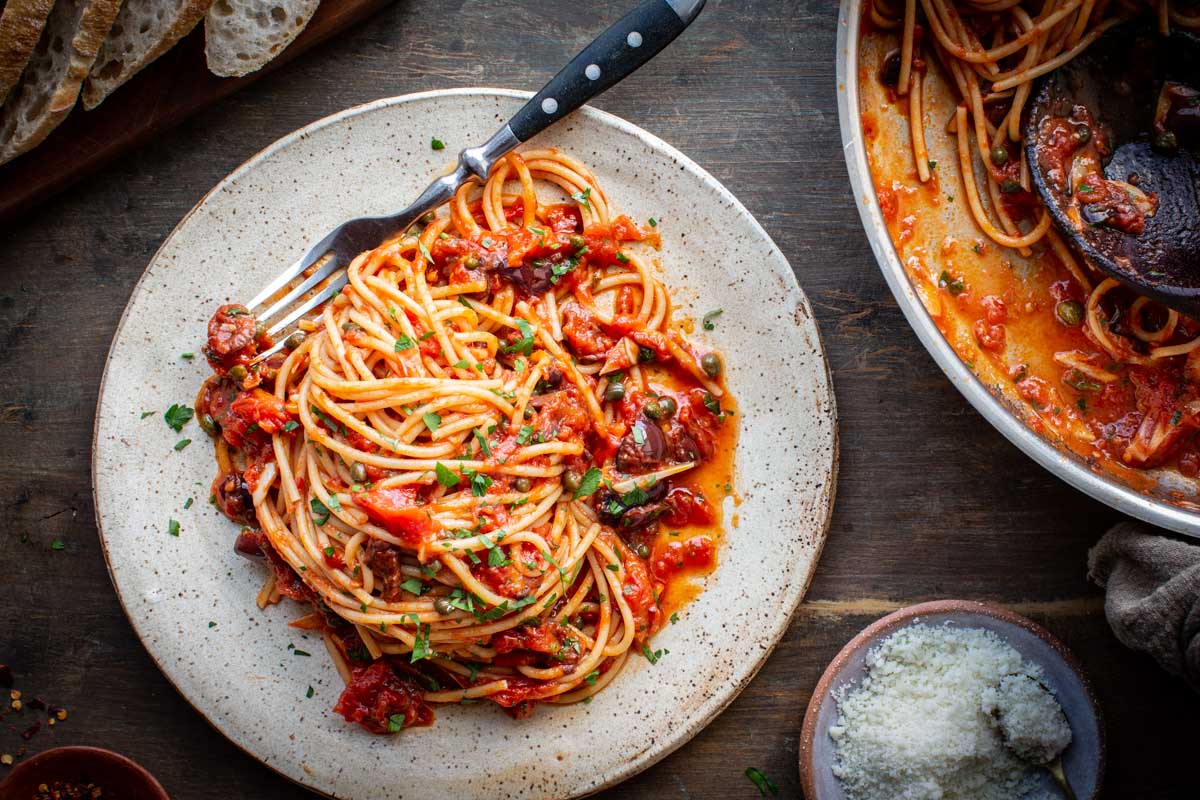
Sometimes a bowl of puttanesca in the middle of the night is all you need! Still, it never hurts to add some simple veggies or a salad on the side.
Try it with a classic tableside Caesar salad, a buttery parmesan spinach recipe, Neapolitan style escarole, or a fresh arugula salad tossed with a simple balsamic vinaigrette.
Of course, a nice crusty piece of bread or a slice of homemade focaccia is always great to mop up, or scarpetta, the extra sauce!
How to Store and Reheat
Spaghetti puttanesca is always best cooked and eaten on the spot. The texture of freshly cooked pasta is unmatched, and it's never quite the same once cooled and reheated.
If you do have leftovers, store the pasta in an airtight container in the refrigerator for up to 3 days. Reheat gently in a large skillet over medium-low heat with a splash of water to loosen the sauce. Leftover pasta should not be frozen.
Puttanesca Recipe FAQs
Anchovies are hard to substitute, and the only similar ingredient that's easy to access is fish sauce, which is also packed with umami richness. Try adding ¼ to ½ teaspoon of fish sauce per fillet. If you're vegetarian, a good substitute is miso paste, which also has a strong umami flavor.
If you skip the anchovies, the pasta will still be great and you could increase the amount of garlic, capers, and olives to make up for the missing anchovy flavor.
It's likely you browned or burnt the garlic while cooking it with the oil and anchovies. It's important to constantly stir over medium or medium-low heat, watching over the process to avoid the garlic taking any color.
While it's an Italian rule to never have cheese in seafood dishes, all rules are meant to be broken. Anchovies and parmesan or Pecorino Romano are a great pairing that can be seen in recipes like Caesar salad, anchovy pizza and many pasta recipes. While it's not traditional, puttanesca pasta can be served with some finely grated Pecorino Romano and it will add creaminess and complement the sharp tangy taste of the sauce.

Did you LOVE this recipe? Please leave a star ⭐️ rating and comment and tag your creations @ColeyCooks on Instagram!
Want to Save This Recipe?
Enter your email & I'll send it to your inbox.
By submitting this form, you consent to receive emails from Coley Cooks.
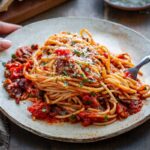
Spaghetti Puttanesca Recipe
Ingredients
- 2 tablespoons extra virgin olive oil
- 5-6 anchovy fillets plus 1 teaspoon of their oil
- 6 cloves garlic thinly sliced
- ½ teaspoon red chili flakes or 1 teaspoon calabrian chili paste, to taste
- 1 28-ounce can whole peeled tomatoes crushed by hand
- Kosher salt to taste
- ⅓ cup Gaeta olives pitted, or kalamata olives, roughly torn or chopped
- 2 tablespoons capers drained
- ½ lb dried spaghetti or linguine
- pasta water as needed
- 2 tablespoons flat leaf parsley finely chopped
- Pecorino Romano finely grated, for serving
Instructions
- Bring a large pot of salted water up to a boil.
- Heat the olive oil in a large wide skillet over medium heat.2 tablespoons extra virgin olive oil
- Add the anchovies and their oil, garlic, and chili flakes, then cook for 1-2 minutes while stirring, until the garlic is softened and the anchovies dissolve into the oil. Do not let the garlic take on any color.5-6 anchovy fillets, 6 cloves garlic, ½ teaspoon red chili flakes
- Pour in the tomatoes, then rinse the can with a splash of water and add that too. Bring up to a simmer, then cover and cook for about 10 minutes, stirring occasionally, until slightly thickened.1 28-ounce can whole peeled tomatoes
- Stir the olives and capers into the sauce, then taste and add salt as needed. The anchovies, olives, and capers add plenty of salt, so it may not need much, if any.⅓ cup Gaeta olives, 2 tablespoons capers, Kosher salt
- While the sauce is simmering, cook the pasta until just shy of al dente. Reserve about 1 cup of pasta water before draining.½ lb dried spaghetti
- Add the drained pasta directly to the sauce, then toss until the noodles are coated and the sauce clings nicely, about 1-2 minutes. Add a splash of pasta water as needed to loosen.pasta water
- Finish with parsley and toss once more. Serve immediately with plenty of grated Pecorino Romano on top.2 tablespoons flat leaf parsley, Pecorino Romano
Notes
- To get concentrated pasta water, use a 12-inch skillet or a sauté pan with enough salted boiling water to cover the pasta instead. A low-water method increases the concentration of starch, which will help the sauce thicken and cling to the noodles even better.
- This sauce can and should be adjusted to your taste. Add more or less garlic, anchovies, chilies, olives, or capers as you like.
- You can leave the tomatoes whole and break them up in the pan with a wooden spoon if you want a chunkier sauce. You can also substitute crushed tomatoes in a pinch.
- If your tomatoes are lacking in sweetness, a tiny pinch of sugar will bring the balance needed for this dish.
- Go easy on the salt at first since the anchovies, capers and olives are very salty. Always taste the sauce and adjust before serving. Same goes for salting the pasta water - adding a lot is an easy way to make this dish overly salty.

I can't wait to try this recipe. Thanks Coley this dinner is good for lent.
Maria
Thanks Maria! 🙂