
Homemade Lobster Stock
Homemade lobster stock turns leftover lobster shells into a rich, savory broth with concentrated lobster flavor and a hint of natural sweetness. Save the shells in your freezer, then use this stock to make lobster bisque, risotto, soups, pasta, and sauces that taste far better than anything made with store-bought broth. It's the secret ingredient that separates a good seafood dish from an unforgettable one!
This post may contain affiliate links.
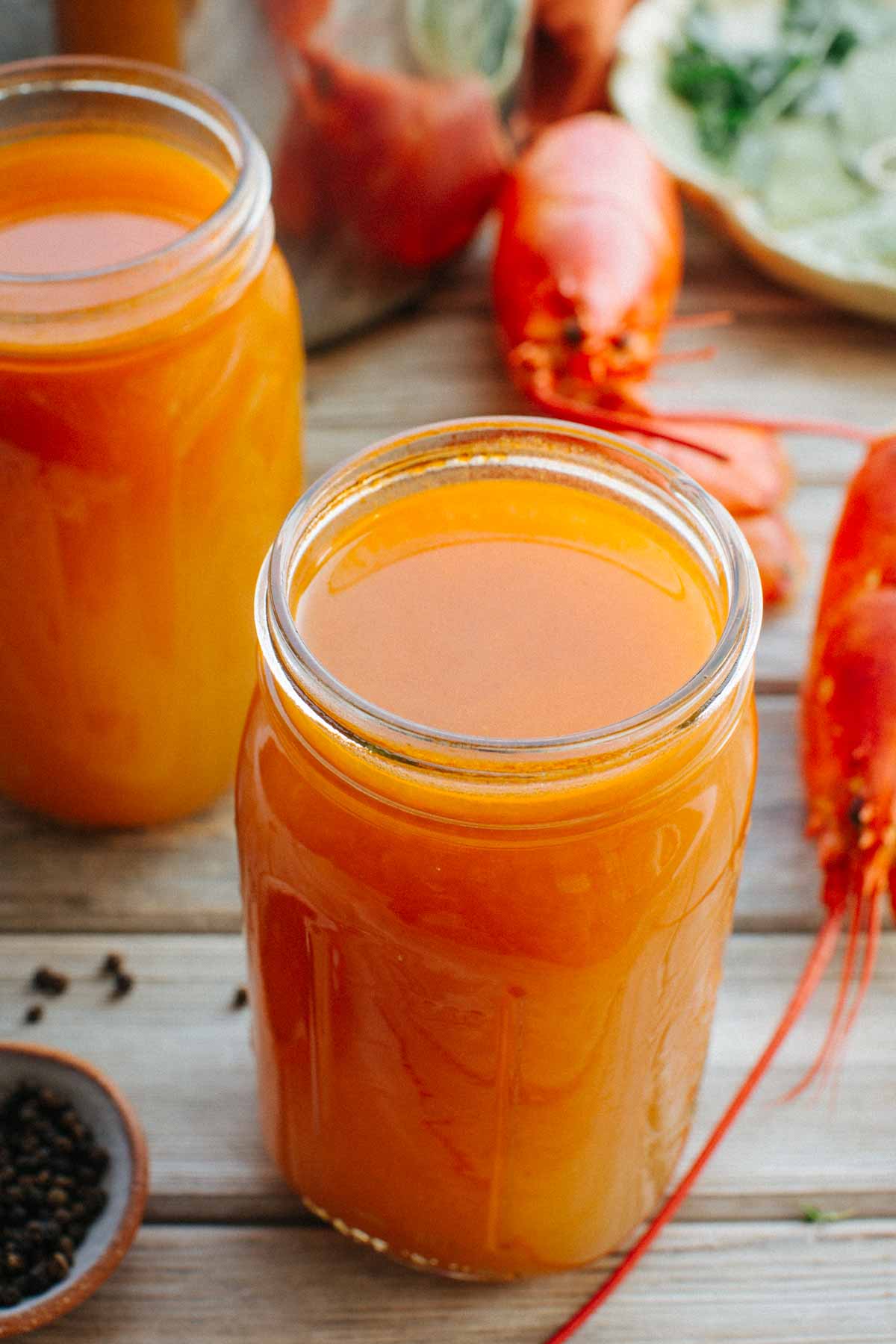
What is Lobster Stock?
Lobster stock is a rich, briny, savory, and sweet liquid made by simmering lobster shells with aromatics, vegetables, spices, and herbs. It's what adds that signature lobster flavor to dishes like lobster bisque, sauces, pasta, risotto, and more.
If you ever cook whole lobsters or lobster tails at home, you should always save the shells to make stock. I keep them stashed in my freezer and make stock as soon as I have enough to make a big pot, and sometimes throw a few shrimp shells in too for even more shellfish flavor.
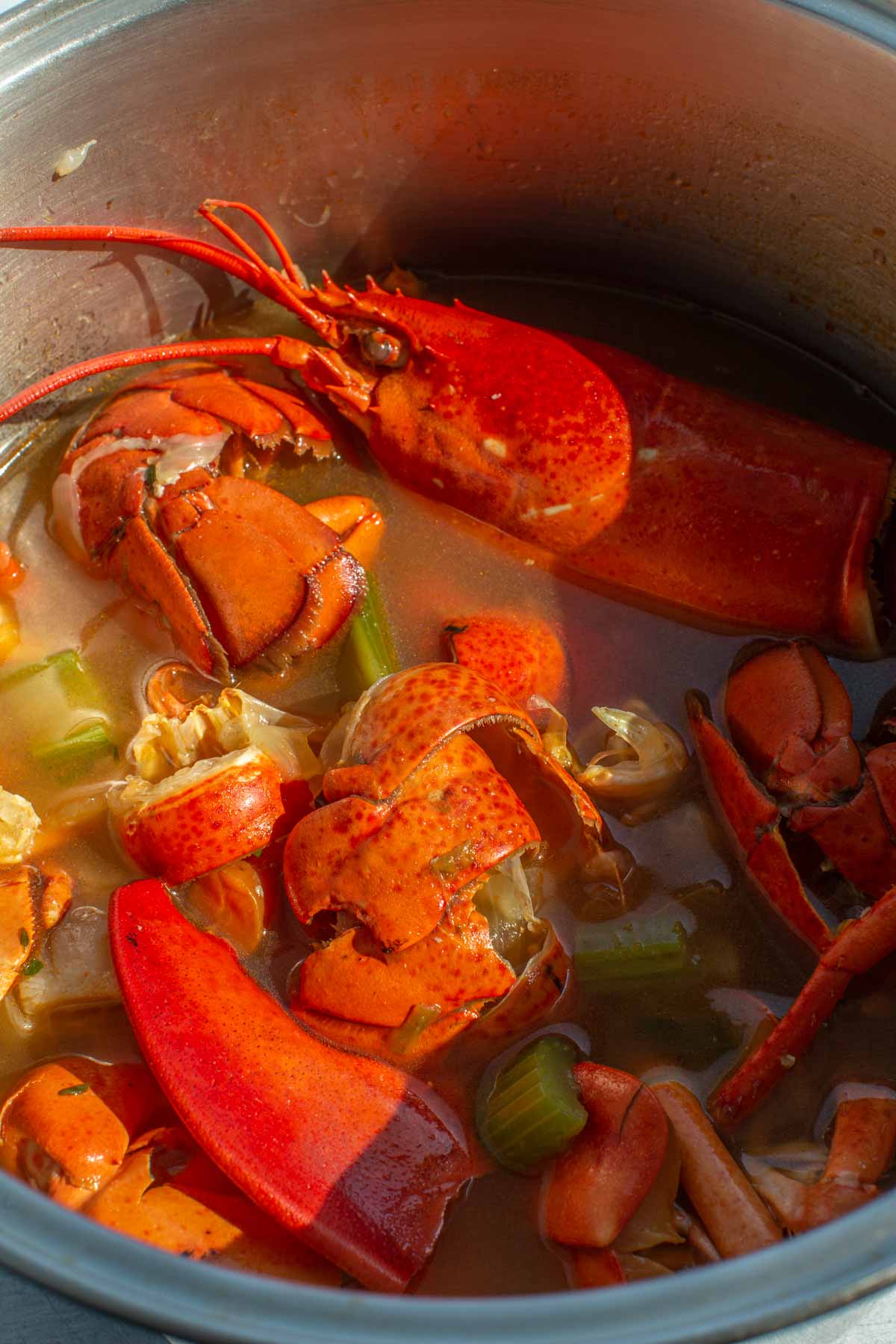
Lobster Stock is the Key to Flavorful Recipes
Lobster stock is an essential ingredient for delicious lobster soups, sauces, risotto, pasta, or any lobster-based dish. It provides a deep lobster flavor that you just can't get any other way!
If starting with whole lobsters, it's important to remove the innards so that you're left with only the orange shells. First, sauté them to develop more flavor, then add aromatics and tomato paste. Cover with liquid, add the herbs and spices, then simmer for an hour.
Leave the stock unsalted so that you can adjust the seasoning level later. This prevents dishes from becoming overly salty when the stock is reduced.
Avoid vigorously boiling the stock or simmering it for several hours, which can produce an unpleasant bitter flavor.
Unlike chicken and beef stocks, lobster stock and all other seafood stocks don't benefit from longer cooking times. Cooking any longer can lead to off flavors and doesn't add anything extra to the stock.
However, you can continue reducing the stock after straining in order to concentrate the flavor. It can always be reconstituted with more water, and reducing it will also result in a smaller amount that's easier to store if your freezer space is limited.
Freeze the finished stock in small, measured portions so it's easy to use for risotto, bisque, chowders, soups, and sauces. If you have limited freezer space, reduce your stock significantly more, then add water as needed after defrosting.
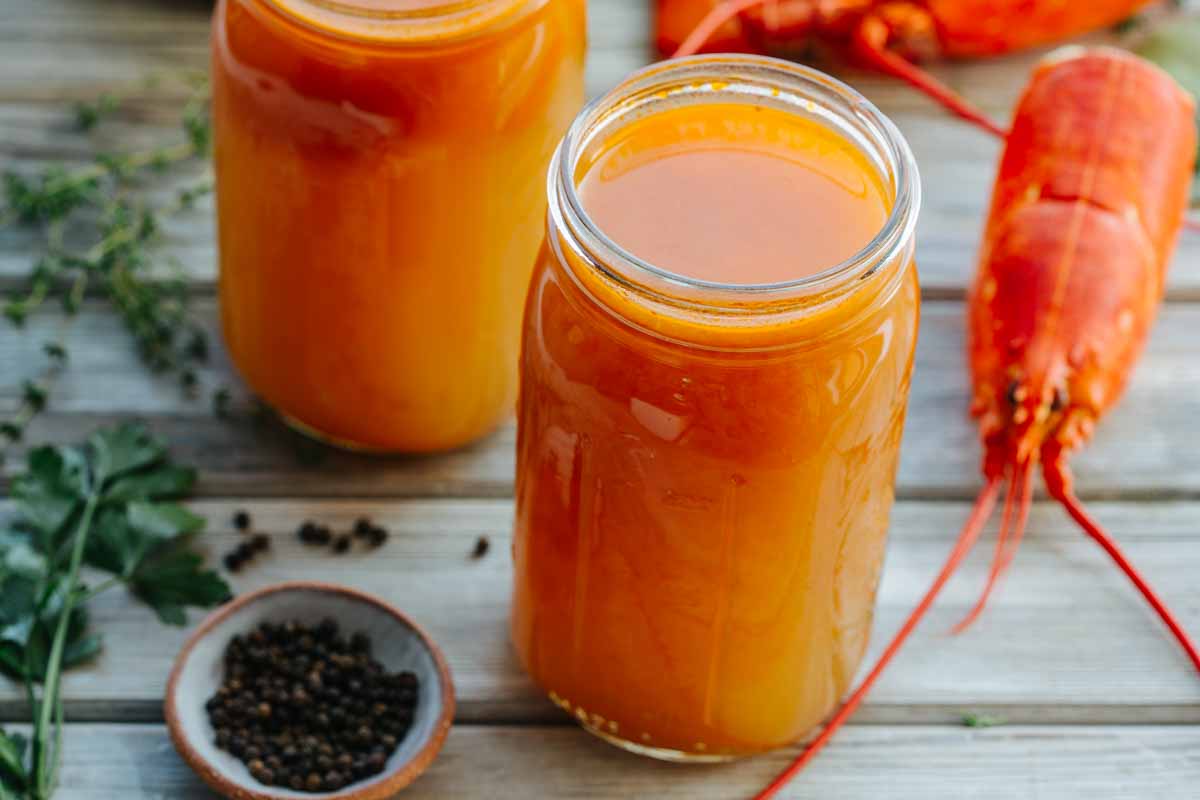
Want more great lobster recipes? Try these classic Maine lobster rolls, elegant butter poached lobster tails, or this over-the-top lobster mac and cheese.
Why This Recipe Works
- Browning the lobster shells develops a full-bodied flavor that will enhance any lobster dish.
- Omitting salt gives you more control over the seasoning in the final dish.
- A moderate cooking time creates a clean, flavorful broth and prevents bitterness.
- Keeps well in the freezer for several months so you can make a big batch for later.
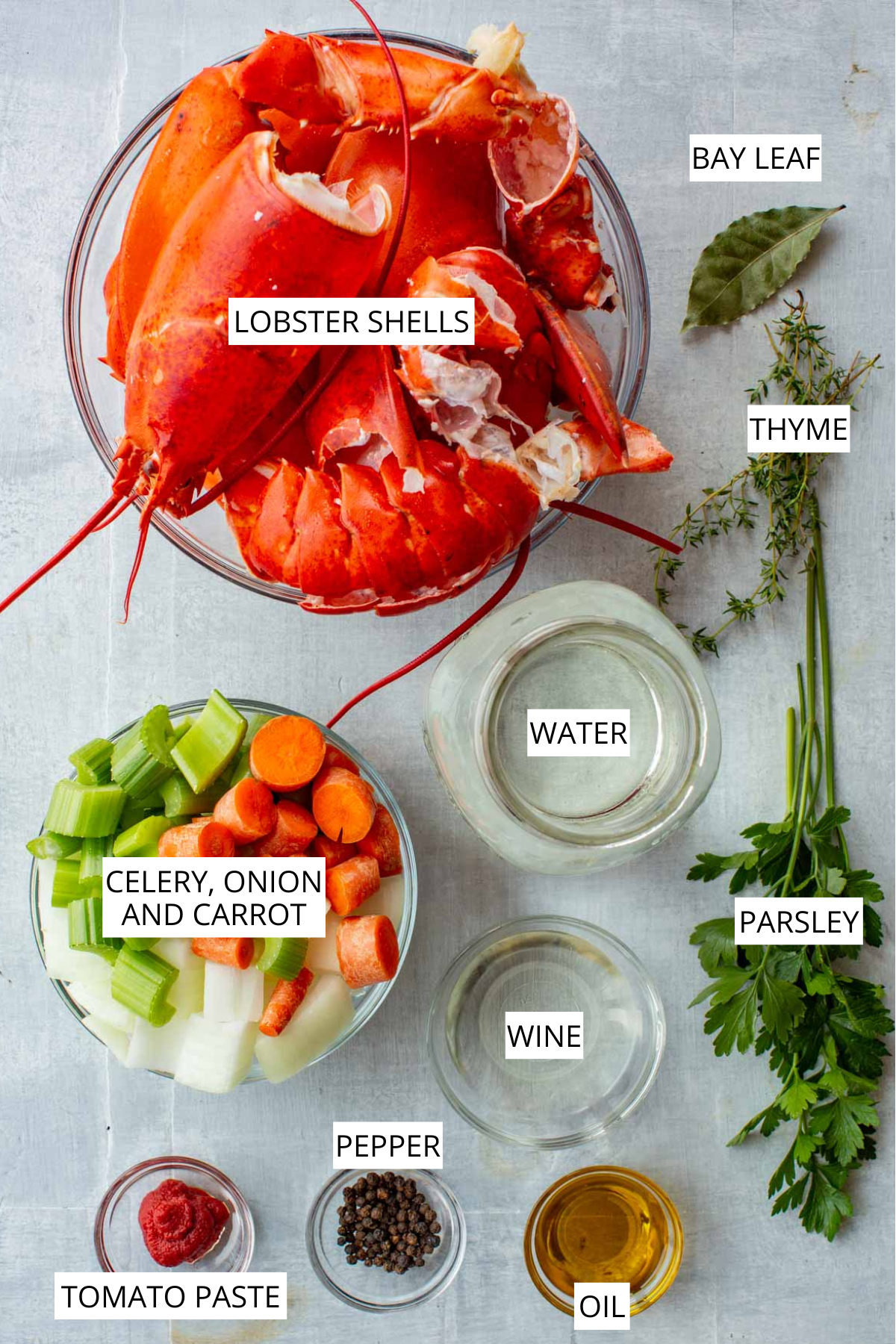
Homemade Lobster Stock Ingredients
Lobster shells - Use shells from 2-3 cooked lobsters or 6 tails, but the more the better! You can collect shells and store them in the freezer until you have enough to make the stock. You can also supplement with shrimp shells to amp up the flavor a bit more.
Tomato paste - Tomato paste adds color and acidity to help extract the lobster flavor from the shells. It also adds a subtle savory backbone without making the stock taste like tomato. You can also add a little bit of paprika for extra color and flavor.
Wine - Dry white wine adds acidity to help extract flavor from the lobster shells. You can omit the wine, but if you do, add a tablespoon of lemon juice and a little extra water instead. For an extra pop of flavor, add ¼ cup of dry sherry as well.
Herbs - Both tarragon and thyme work in the stock, but tarragon offers an extra boost of flavor that naturally enhances lobster. You can substitute with a pinch of dried tarragon, but don't add dried thyme, as it's too strong. Additionally, a bay leaf and fresh parsley round out the herbs.
Mirepoix - A classic mix of onion, carrot, and celery forms the aromatic base of the stock along with the lobster shells..
Black peppercorns - Make sure they are fresh and whole, to avoid staining the stock.
*Find the full ingredient list in the recipe card below!
Helpful Equipment
- Large stockpot
- Fine-mesh strainer
How to Make Lobster Stock
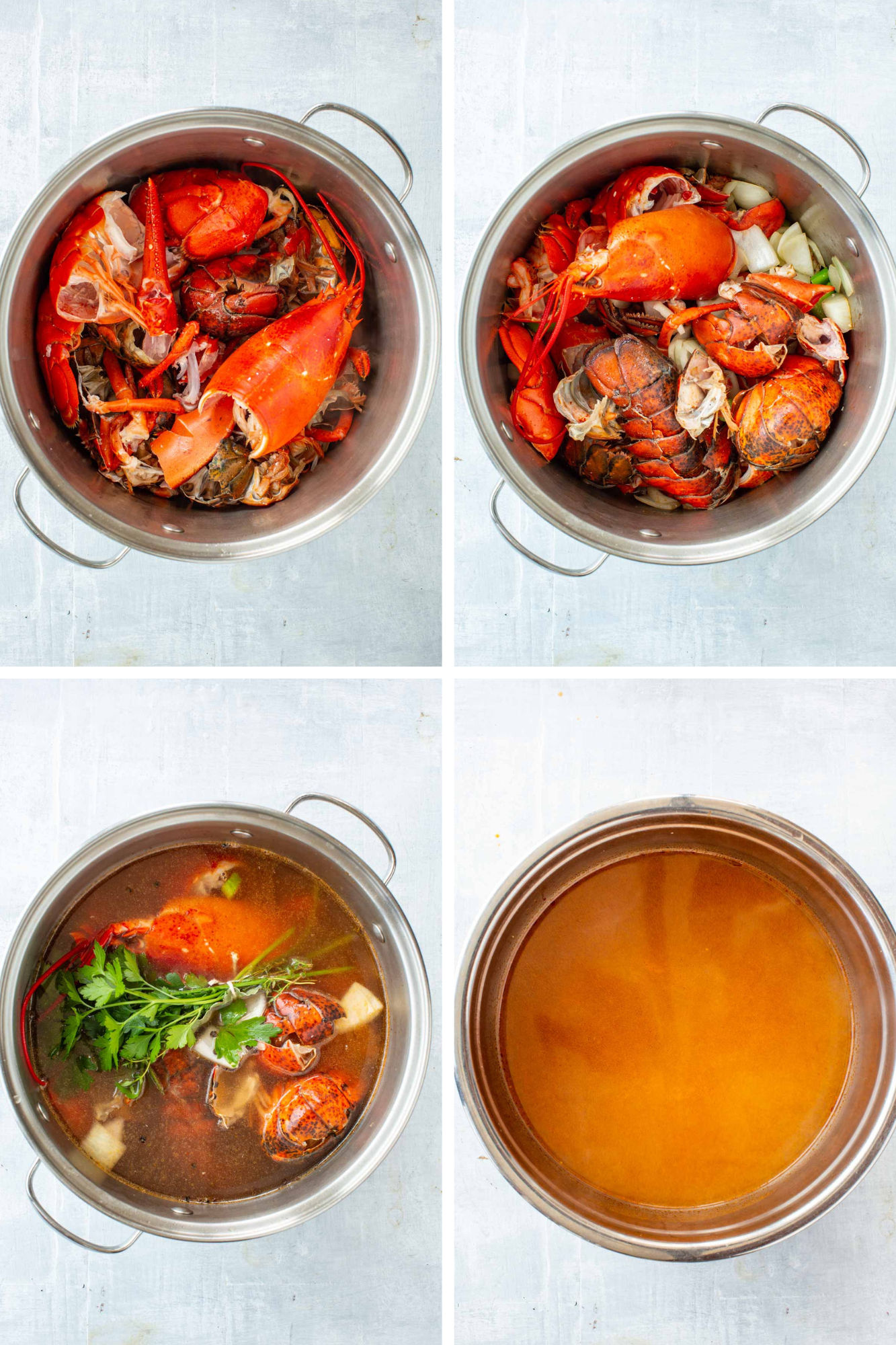
- Heat the oil in a large stockpot over medium-high heat. Pat your lobster shells dry to prevent oil spatter, then add them to the pot. Sauté, stirring frequently until hot, fragrant, and beginning to lightly brown, about 5-7 minutes.
Pro Tip: Make sure to use a large enough stockpot so lobster shells aren't overcrowded in this first step, since crowding will introduce too much moisture and get in the way of browning. If your pot is small, brown the shells in batches.
- Add the onion, carrot, and celery. Cook, stirring occasionally, until the vegetables begin to soften, about 5 minutes.
- Add the tomato paste and cook, stirring constantly, until it darkens slightly and coats the shells and vegetables, about 2 minutes.
- Add the white wine and scrape the bottom of the pot to release any browned bits. Simmer until the wine is reduced by about half, about 3 minutes.
- Add the cold water, parsley, thyme or tarragon, bay leaf, and peppercorns. Bring just to a boil, then immediately reduce to a gentle simmer.
Pro Tip: For an extra-strong, flavorful lobster stock, you can use unsalted fish, shrimp, or even chicken stock instead of half of the water.
- Simmer uncovered or partially covered for 45-60 minutes, occasionally skimming any foam that rises to the surface. Avoid vigorously boiling the stock or simmering it for several hours, which can produce an unpleasant bitter flavor.
- Strain through a fine-mesh strainer, pressing gently on the solids to extract the liquid. Discard the solids. Double strain if necessary.
- If the stock tastes weak, return it to the pot and simmer until reduced to the desired concentration. Cool completely before refrigerating or freezing.
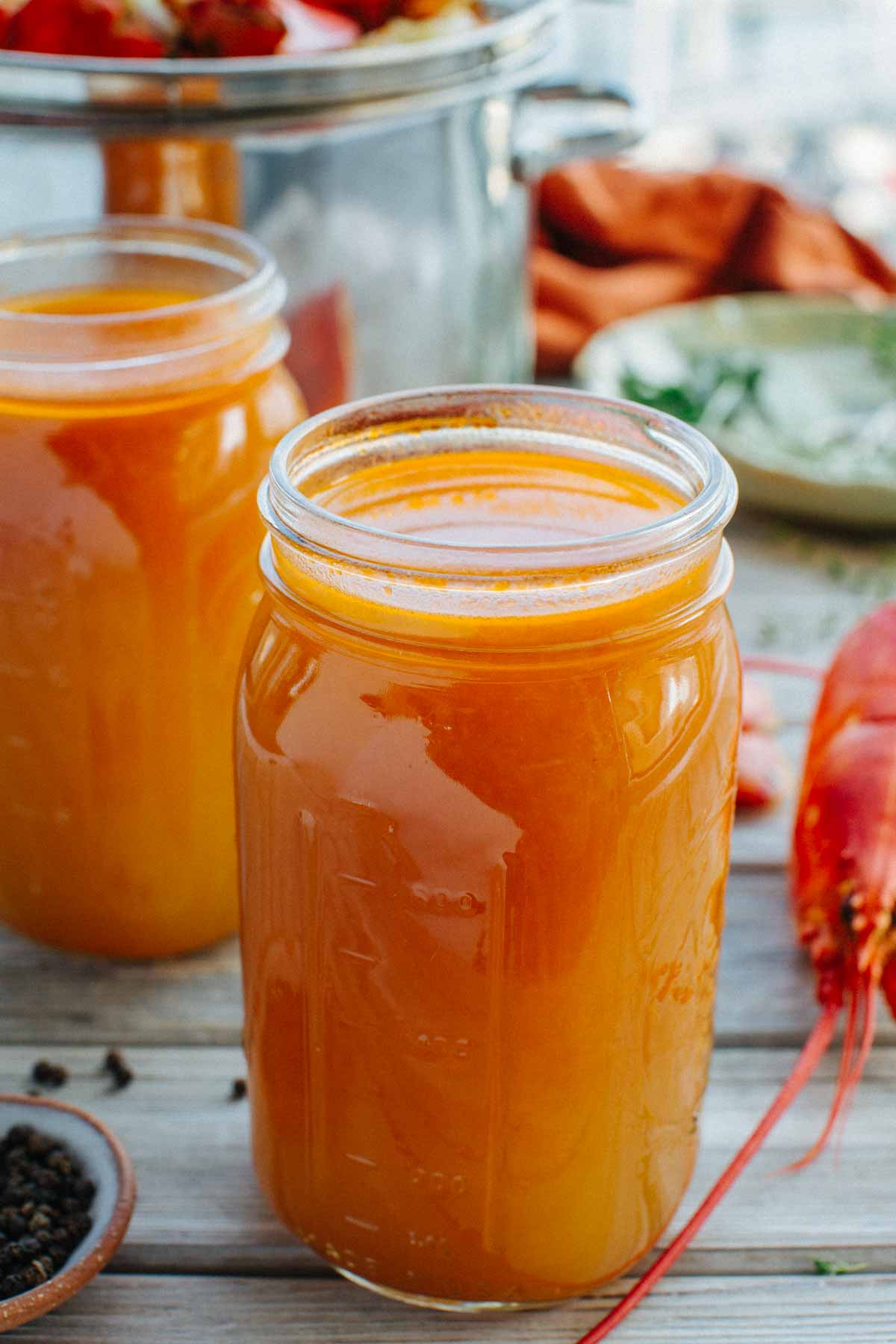
Tips For Making Lobster Stock
- Remove and discard the feathery gills and any remaining innards from your lobsters so you're left with only the orange shells. Break into smaller pieces as needed to fit your stockpot.
- If you don't have enough lobster shells to make stock, rinse and dry them well, then store them in the freezer until you can collect more. You can also save shrimp shells to enhance your stock with a similar flavor. Freeze them in an airtight bag for up to 3 months.
- Shells from 2 whole lobsters or 6 lobster tails will be sufficient to make stock, but the more shells you use, the better it will be. More shells means more concentrated lobster flavor.
- Don't salt the stock. Leaving it unsalted makes it much more versatile and prevents dishes from becoming overly salty when the stock is reduced.
- Freeze the finished stock in measured 1-2-cup portions so it's easy to use for risotto, bisque, chowders, soups, and sauces.
How to Use Lobster Stock
Lobster stock is the secret to adding incredible depth of flavor to all kinds of lobster and shellfish dishes!
Try it in this silky lobster bisque, or even in shrimp bisque for a richer, deeper flavor. It adds oomph to lobster chowder, this impressive lobster fra diavolo, or this luxurious creamy lobster fettuccine.
How to Store and Freeze
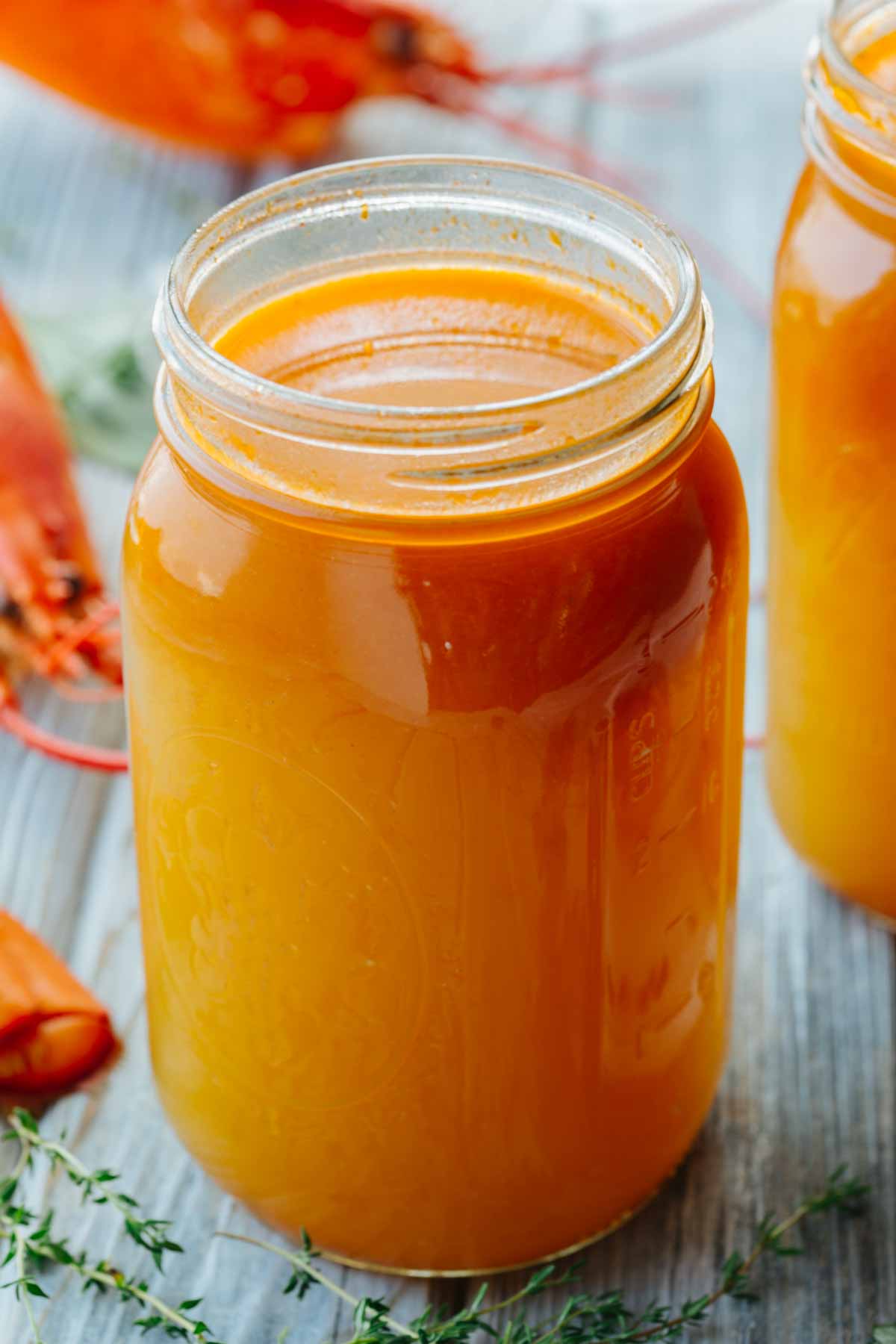
Once cooled, store lobster stock in an airtight container for up to 3 days in the refrigerator or up to 3 months in the freezer. You can divide it into small portions or freeze in ice cube trays, so it's easier to use only what you need without defrosting more.
FAQs
Yes, frozen shells work just fine for stock. No need to thaw them first, although you can rinse off any excess ice before sautéing. Be careful, as any excess water or ice will cause the oil to spatter.
This usually comes from boiling too vigorously or simmering for too long. Unlike meat stocks, seafood stocks don't benefit from extended cooking and can turn bitter after about an hour.
Dried tarragon and bay leaf work, but dried thyme should be avoided since it becomes too strong. Fresh parsley is also best for adding a clean, herbaceous flavor.
Slowly simmer the strained stock uncovered for a little longer so it can reduce, which will concentrate the flavor. You can also add extra lobster shells, shrimp shells, lobster base, or bouillon, or combine with another seafood or chicken stock.

Did you LOVE this recipe? Please leave a star ⭐️ rating and comment and tag your creations @ColeyCooks on Instagram!
Want to Save This Recipe?
Enter your email & I'll send it to your inbox.
By submitting this form, you consent to receive emails from Coley Cooks.
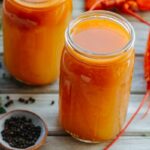
Best Recipe for Lobster Stock
Ingredients
- 2 tablespoons neutral oil such as vegetable, avocado, grapeseed or canola
- shells from 2-3 cooked lobsters or 6 tails *see note
- 1 yellow onion medium size, roughly chopped
- 1 carrot medium size, roughly chopped
- 2 celery stalks roughly chopped
- 2 tablespoons tomato paste
- ½ cup dry white wine
- 10 cups cold water
- 6 sprigs fresh parsley
- 2-3 sprigs fresh thyme or tarragon
- 1 bay leaf
- 1 teaspoon whole black peppercorns
Instructions
- Heat the oil in a large stockpot over medium-high heat. Pat your lobster shells dry to prevent oil spatter, then add them to the pot. Sauté, stirring frequently until hot, fragrant, and beginning to lightly brown, about 5-7 minutes.2 tablespoons neutral oil, shells from 2-3 cooked lobsters or 6 tails
- Add the onion, carrot, and celery. Cook, stirring occasionally, until the vegetables begin to soften, about 5 minutes.1 yellow onion, 1 carrot, 2 celery stalks
- Add the tomato paste and cook, stirring constantly, until it darkens slightly and coats the shells and vegetables, about 2 minutes.2 tablespoons tomato paste
- Add the white wine and scrape the bottom of the pot to release any browned bits. Simmer until the wine is reduced by about half, about 3 minutes.½ cup dry white wine
- Add the cold water, parsley, thyme or tarragon, bay leaf, and peppercorns. Bring just to a boil, then immediately reduce to a gentle simmer.10 cups cold water, 6 sprigs fresh parsley, 2-3 sprigs fresh thyme or tarragon, 1 bay leaf, 1 teaspoon whole black peppercorns
- Simmer uncovered or partially covered for 45-60 minutes, occasionally skimming any foam that rises to the surface. Avoid vigorously boiling the stock or simmering it for several hours, which can produce an unpleasant bitter flavor.
- Strain through a fine-mesh strainer, pressing gently on the solids to extract the liquid. Discard the solids. Double strain if necessary.
- If the stock tastes weak, return it to the pot and simmer until reduced to the desired concentration. Cool completely before refrigerating or freezing.
Notes
- Remove and discard the feathery gills and any remaining innards from your lobsters so you're left with only the orange shells. Break into smaller pieces as needed to fit your stockpot.
- If you don't have enough lobster shells to make stock, rinse and dry them well, then store them in the freezer until you can collect more. You can also save shrimp shells to enhance your stock with a similar flavor. Freeze them in an airtight bag for up to 3 months.
- Shells from 2 whole lobsters or 6 lobster tails will be sufficient to make stock, but the more shells you use, the better it will be. More shells means more concentrated lobster flavor.
- Don't salt the stock. Leaving it unsalted makes it much more versatile and prevents dishes from becoming overly salty when the stock is reduced.
- Make sure to use a large enough stockpot so lobster shells aren't overcrowded in this first step, since crowding will introduce too much moisture and get in the way of browning. If your pot is small, brown the shells in batches.
- For an extra-strong, flavorful lobster stock, you can use unsalted fish, shrimp, or even chicken stock instead of half of the water.
- Freeze the finished stock in measured 1-2-cup portions so it's easy to use for risotto, bisque, chowders, soups, and sauces.