Creamy Lobster Fettuccine
This recipe for creamy lobster pasta is so simple to make, but tastes like it came from a fine dining restaurant. Sweet, tender lobster is tossed with perfectly al dente pasta and an alfredo-inspired sauce that's rich and luxurious, yet delicate enough to let the lobster shine. After years of cooking professionally and testing lobster recipes, I have every tip you need to make the ultimate lobster pasta at home in under 40 minutes!
This post may contain affiliate links.
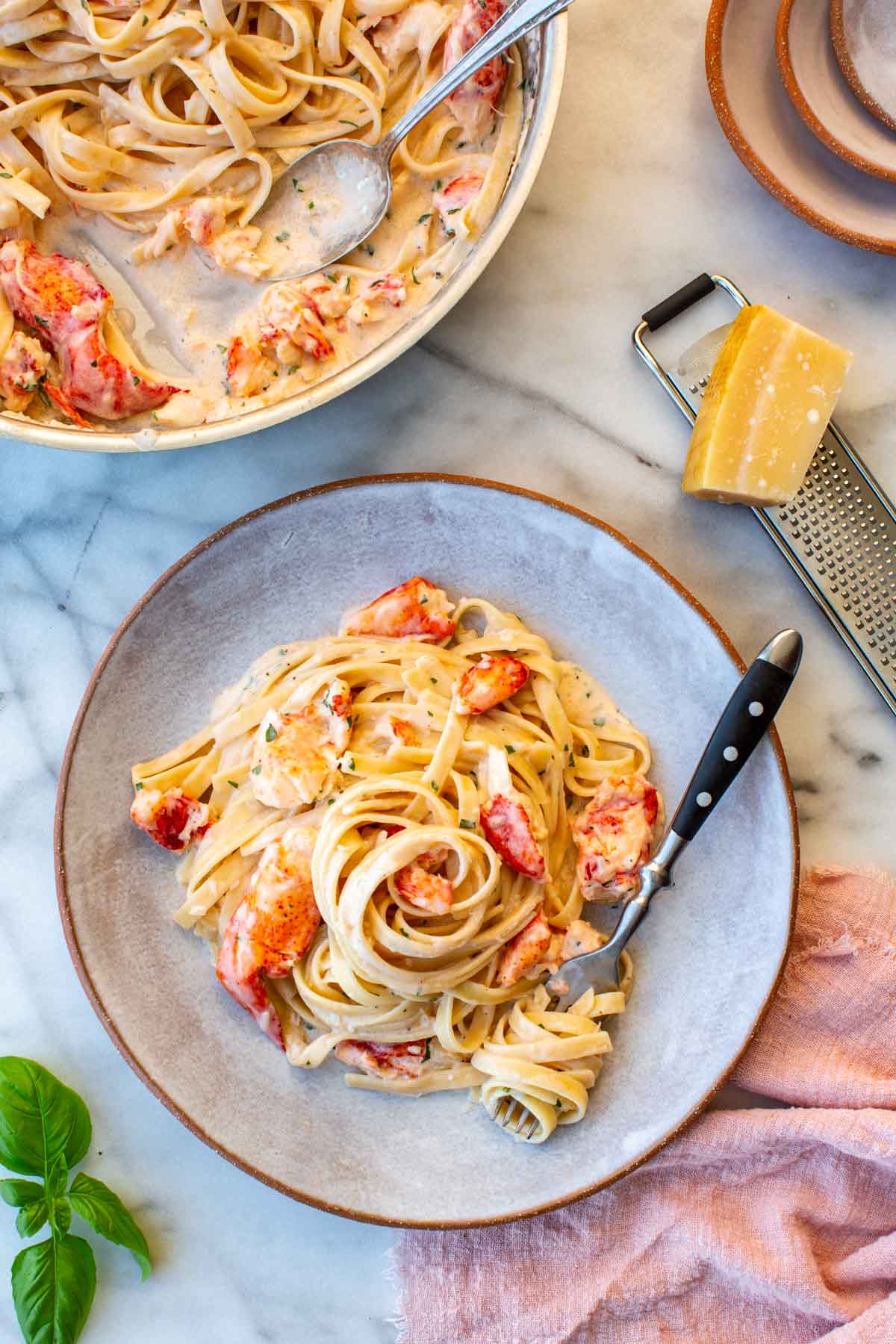
When making lobster pasta, one of the biggest mistakes people make is overcooking the lobster meat or making the sauce so rich that the lobster gets completely lost. This recipe helps you avoid all of that!
Lobster is easily my favorite seafood. There's really nothing like it!
I've been lucky to enjoy a lot of lobster in my day. Growing up, my grandfather and uncles would return from their fishing trips to New England with tons of lobster and we would have big lobster feasts.
I also represented Greenhead Lobster on QVC for many years and got to cook their incredible Maine lobster countless times - in the studio, at my home, and on location up in Maine!
Over the years, both professionally and at home, I've learned that lobster really benefits from restraint. It's best to not overcomplicate the recipe with lots of different ingredients and competing flavors.
Lobster Pasta Recipe
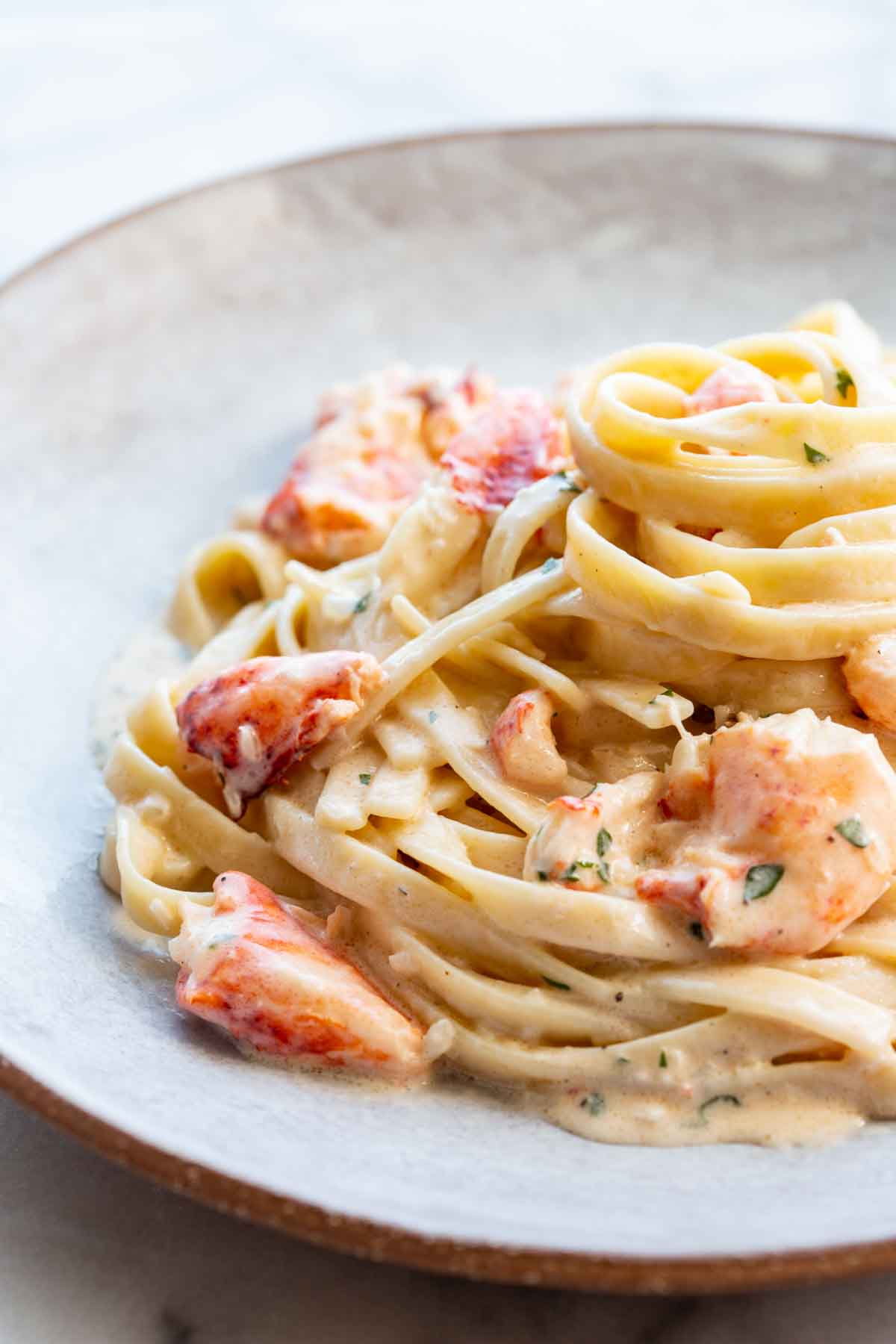
The sauce for this pasta is silky and luxurious, but still delicate enough to let the sweet flavor of the lobster come through in every bite. It's Alfredo-inspired, but has more body, depth and acidity than the typical stodgy version you'll find in most American chain restaurants.
I intentionally developed this recipe to work with already cooked and cleaned lobster meat, because it doesn't require using the shells. Plus, it's just a whole lot easier!
This recipe is simple and approachable while still feeling special enough for special occasions, holidays, anniversaries or a cozy date night dinner at home.
The Best Lobster Meat to Use for Pasta
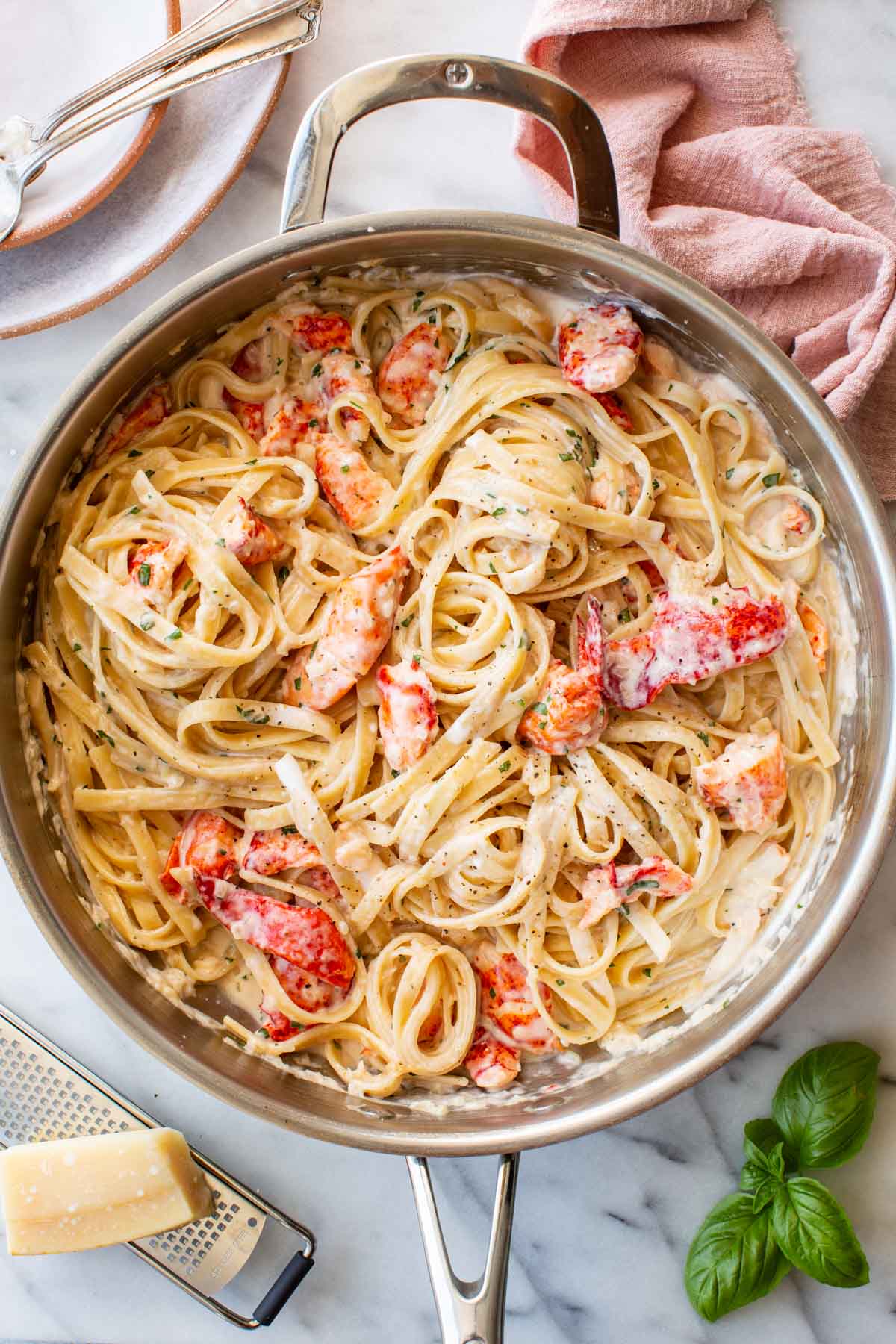
This lobster pasta recipe is flexible enough to work with any type of lobster meat, whether it's a whole cooked lobster, frozen tails, or a package of pre-cooked meat. The key is to use high-quality lobster and avoid overcooking it.
For ease and convenience, I love using packaged cooked lobster meat, especially since this recipe doesn't rely on using the shells for flavor. It's sweet, tender and already perfectly cooked, which makes this recipe come together quickly.
Both fresh and frozen lobster meat can be purchased already cooked and cleaned, and will typically be knuckle and claw meat, which works great in this recipe.
How to Cook Lobster for Pasta
No matter which type of lobster you use, it should always be added at the very end of cooking, and only warmed through gently. Since lobster meat is already cooked before it gets added to the pasta, simmering it too long can make it rubbery and chewy rather than tender and buttery.
If you don't have access to pre-cooked lobster meat, you can first cook it yourself either using whole lobsters or frozen lobster tails. The most important thing is that you use really good lobster, preferably from Maine, Canada, or another cold-water location, as they have superior flavor and texture.
You will need about 2-3 medium-sized whole lobsters or 4 medium-sized lobster tails to get 1 pound of meat, depending on their size. However, a little bit more or less lobster meat will not impact the final dish in a meaningful way, so it does not have to be exactly 1 pound.
If using frozen lobster tails, defrost them first, then boil or steam for 1 minute per ounce. So a 5-ounce tail will need to cook for 5 minutes. Since the tails account for some of the weight, you will want to purchase slightly more than 1 pound. Shoot for 1 ¼ or 1 ½ pounds to get 1 pound of cleaned lobster meat.
If using whole lobsters, steam for 10 minutes for 1-1½ pound lobsters, and one additional minute for each additional ½ pound.
Save your shells in the freezer to use in the future to make lobster bisque, soup, or risotto!
Want more luxurious lobster recipes? Try this elegant butter poached lobster, a fiery lobster fra diavolo pasta, or my over-the-top lobster mac and cheese.
Why You'll Love This Lobster Pasta Recipe
- The rich, creamy sauce complements the lobster without overpowering.
- Can be made with pre-cooked lobster meat, fresh whole lobsters, or frozen tails.
- Approachable for any cook while still feeling special.
- Perfect for special occasions like the holidays, anniversaries, or date night.
- Ready in under 40 minutes with just 10 ingredients!
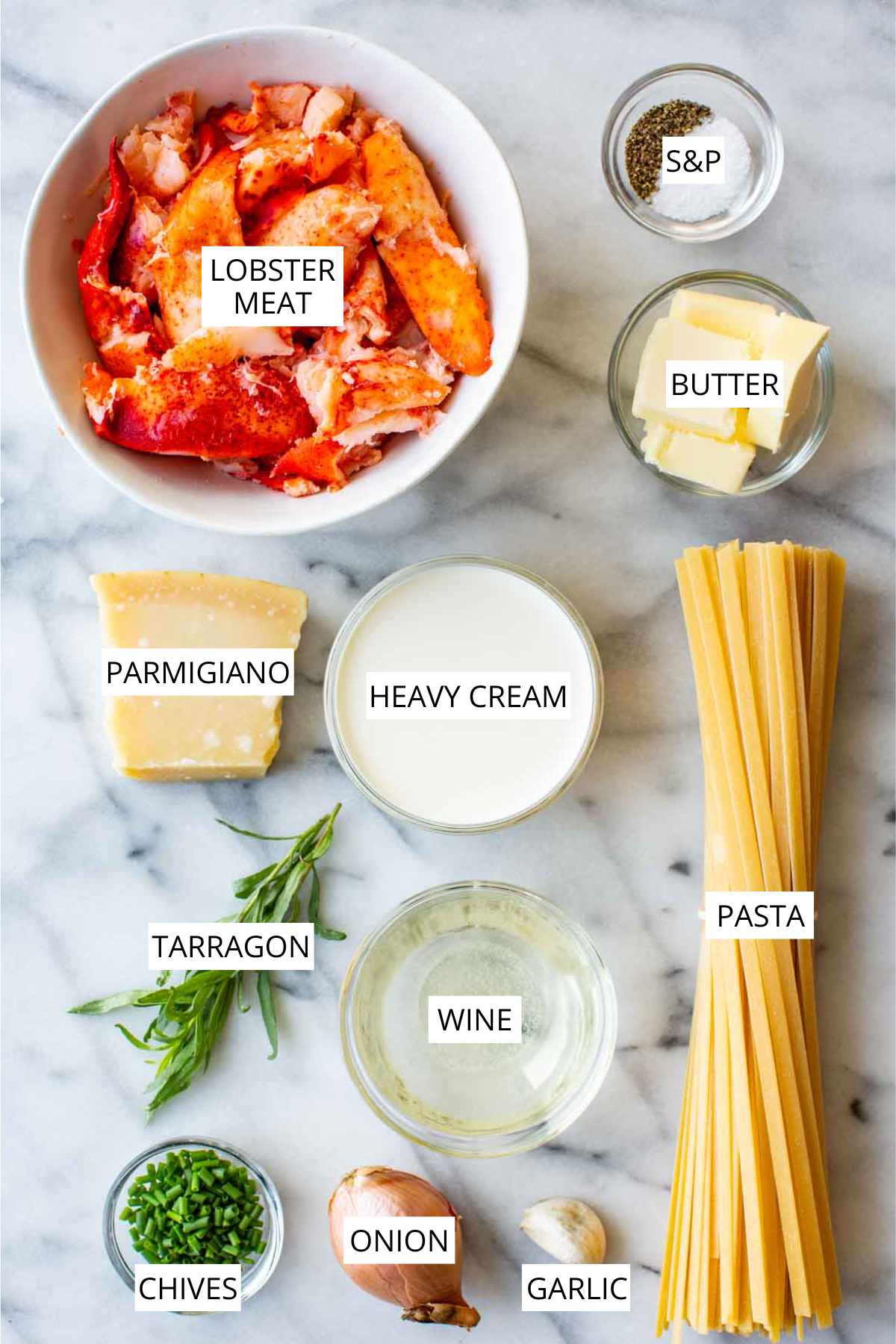
Ingredients to Make Lobster and Pasta
Lobster - The quickest and most convenient option for making this dish is packaged cooked lobster meat, both fresh or frozen. However, you can also use whole cooked lobster or frozen lobster tails. Whatever type of meat you use, make sure it's high-quality, preferably from Maine, Canada, or cold-water locations. Cold-water lobster has better flavor and texture.
Cream - Heavy cream is used for the base of the sauce to make it ultra rich and creamy. Do not substitute light cream or milk as they will not produce the same results .
Wine - Use an unoaked dry white wine like pinot grigio or sauvignon blanc to add depth and acidity to the sauce.
Pasta - I love this dish with fettuccine, but you can make this with any long dried pasta of your choice. Make sure to use a high-quality pasta to match the other ingredients. Look for one that's made with 100% semolina, slow dried, and bronze-die extruded.
Cheese - Use freshly grated Parmigiano Reggiano or Grana Padano. Pecorino Romano is a little bit too sharp for this dish.
Herbs - Fresh tarragon lightly flavors the sauce as it cooks, while chopped parsley adds freshness to the final dish. Substitute with basil if you prefer.
*Find the full ingredient list in the recipe card below!
Helpful Equipment
- Large pot
- Large skillet
- Cheese grater
- Colander
How to Make Pasta and Lobster
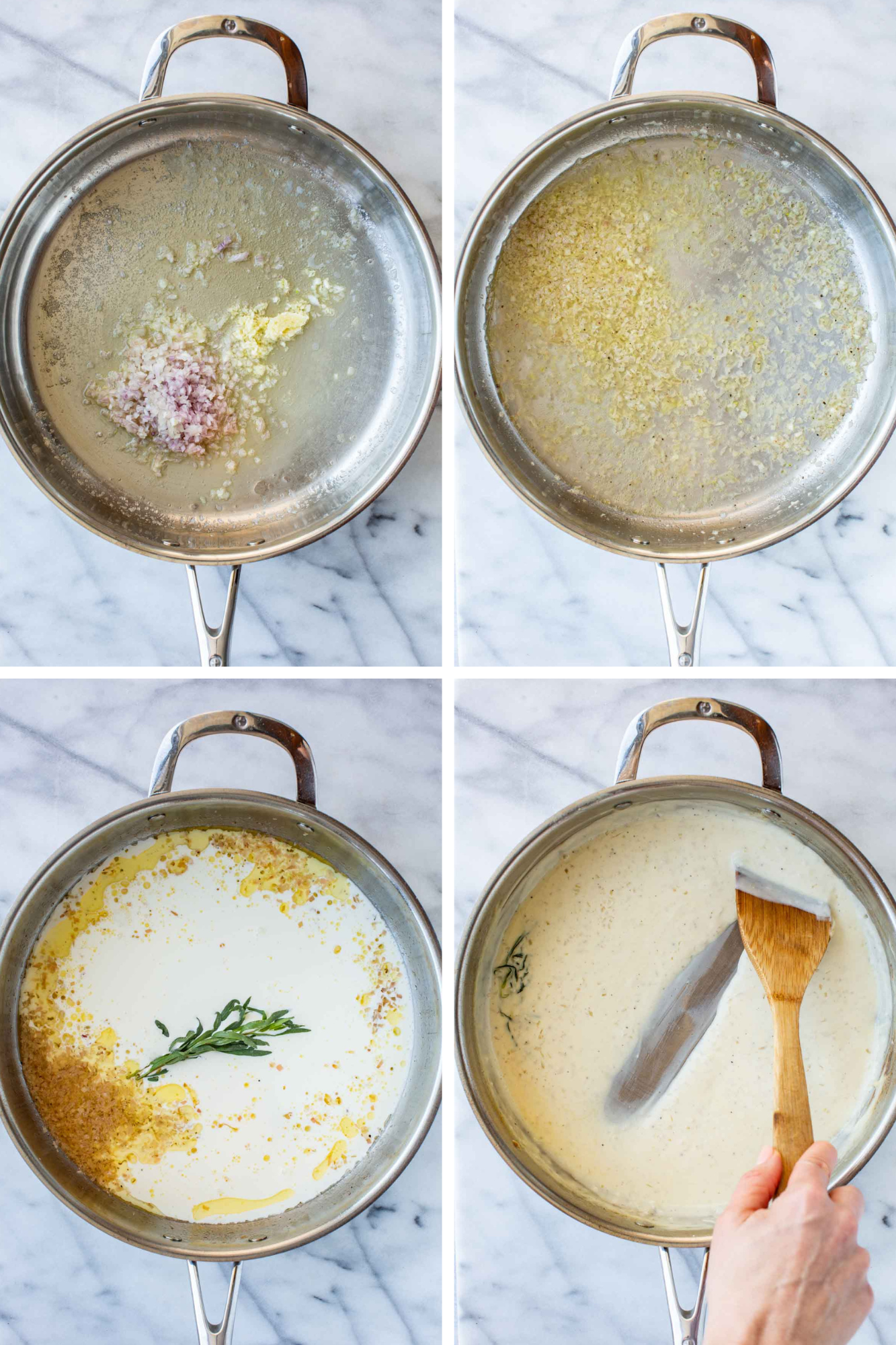
- Bring a large pot of well-salted water to a boil.
- Melt the butter in a large skillet over medium-low heat. Add the shallots and garlic, and cook until softened and fragrant, about 3-5 minutes. Adjust the heat as needed so the garlic doesn't brown.
- Pour in the white wine. Increase the heat slightly and simmer until reduced by about half and no longer smells sharp, about 3-4 minutes.
- Lower the heat and add the cream along with the sprig of tarragon. Let it gently simmer, stirring occasionally, until it's thick enough to leave a line in the pan after dragging a spoon through it, about 3-5 minutes.
- While the cream is simmering, cook the fettuccine until just shy of al dente, then reserve at least 1 cup of the pasta water before draining.
Pro Tip: Drain the pasta 2 minutes before your package's al dente mark. This will guarantee that you have the perfect pasta texture after you finish it in the sauce.
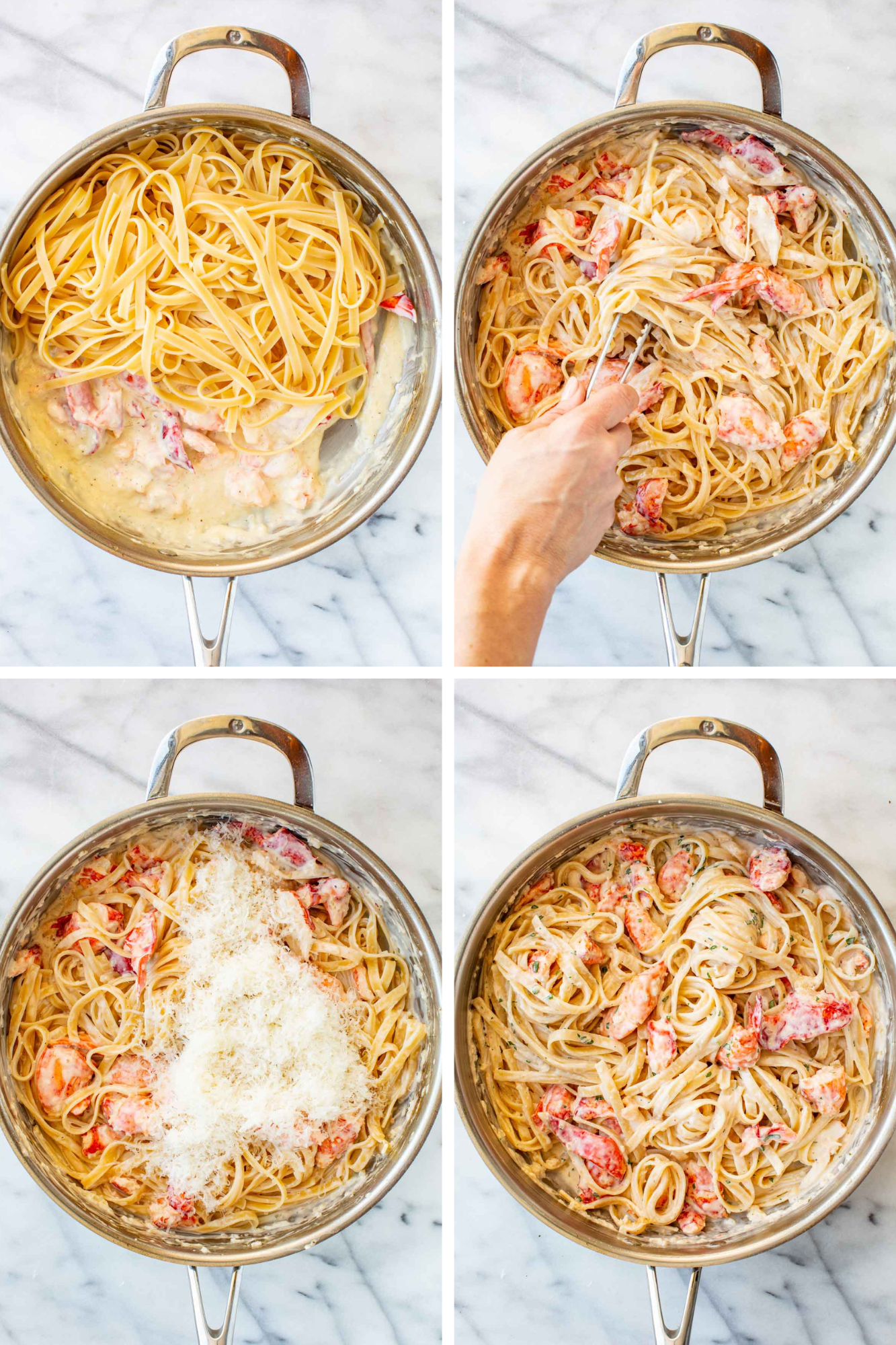
- Once the cream has reduced, remove the tarragon and discard. Stir in the lobster meat, then season lightly with salt and black pepper.
- Add the drained pasta directly to the pan along with a splash of the reserved pasta water. Toss continuously until the sauce loosens and coats the noodles evenly.
- Turn off the heat, then add the grated Parmigiano Reggiano and continue tossing until melted and emulsified. Add more pasta water as needed to keep the sauce silky and fluid.
Pro Tip: Incorporating the cheese off the heat will prevent it from seizing and clumping. Make sure it's freshly and finely grated for best results.
- Finish with chopped parsley, then serve immediately.
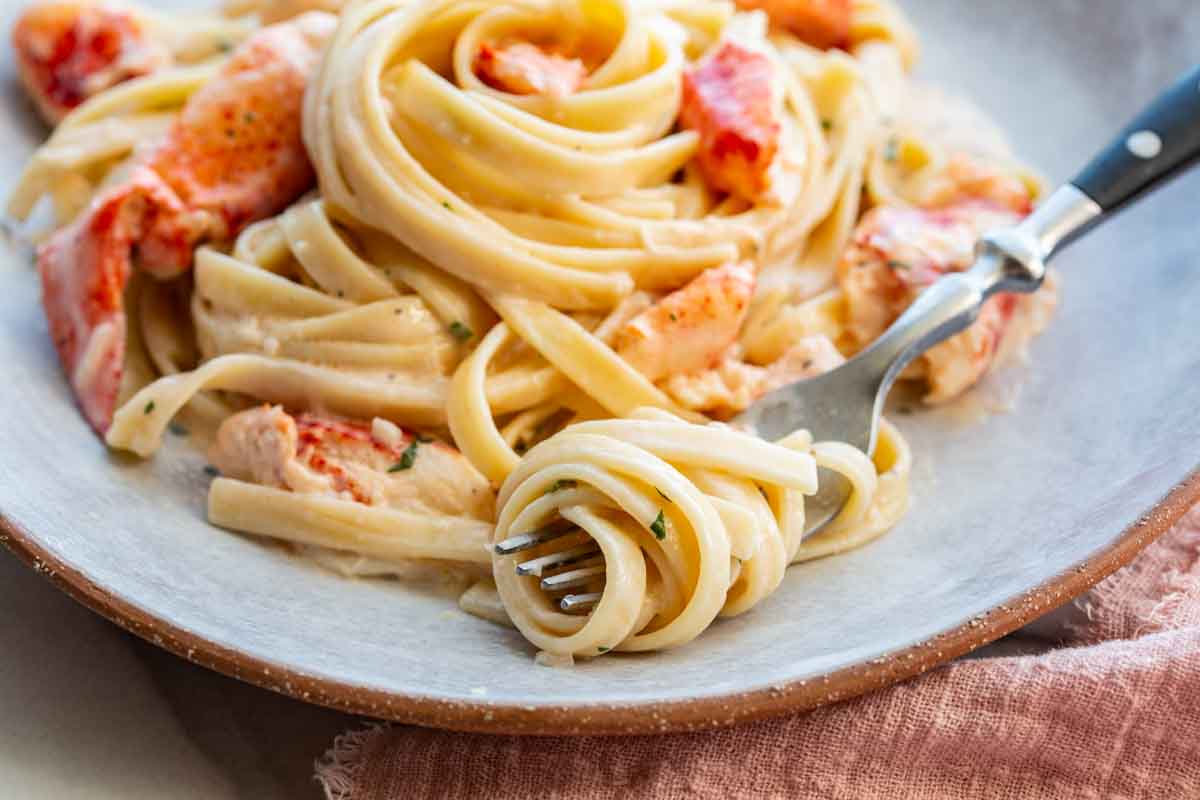
Lobster Pasta Recipe Tips
- Since this recipe does not use shells, you can purchase pre-cooked and shelled lobster meat to use. Otherwise, you will need to first cook and de-shell your lobster. Whole live lobsters and frozen lobster tails both work great. See the section in the post titled "The Best Lobster Meat to Use for Pasta" and "How to Cook Lobster for Pasta" for more details.
- The key to tender lobster is to avoid overcooking. Since it's already cooked, it only needs to be warmed through at the very end. Overcooking will make it rubbery and dry.
- Don't skip adding the pasta water. It helps emulsify the sauce and keeps it from becoming too thick or heavy.
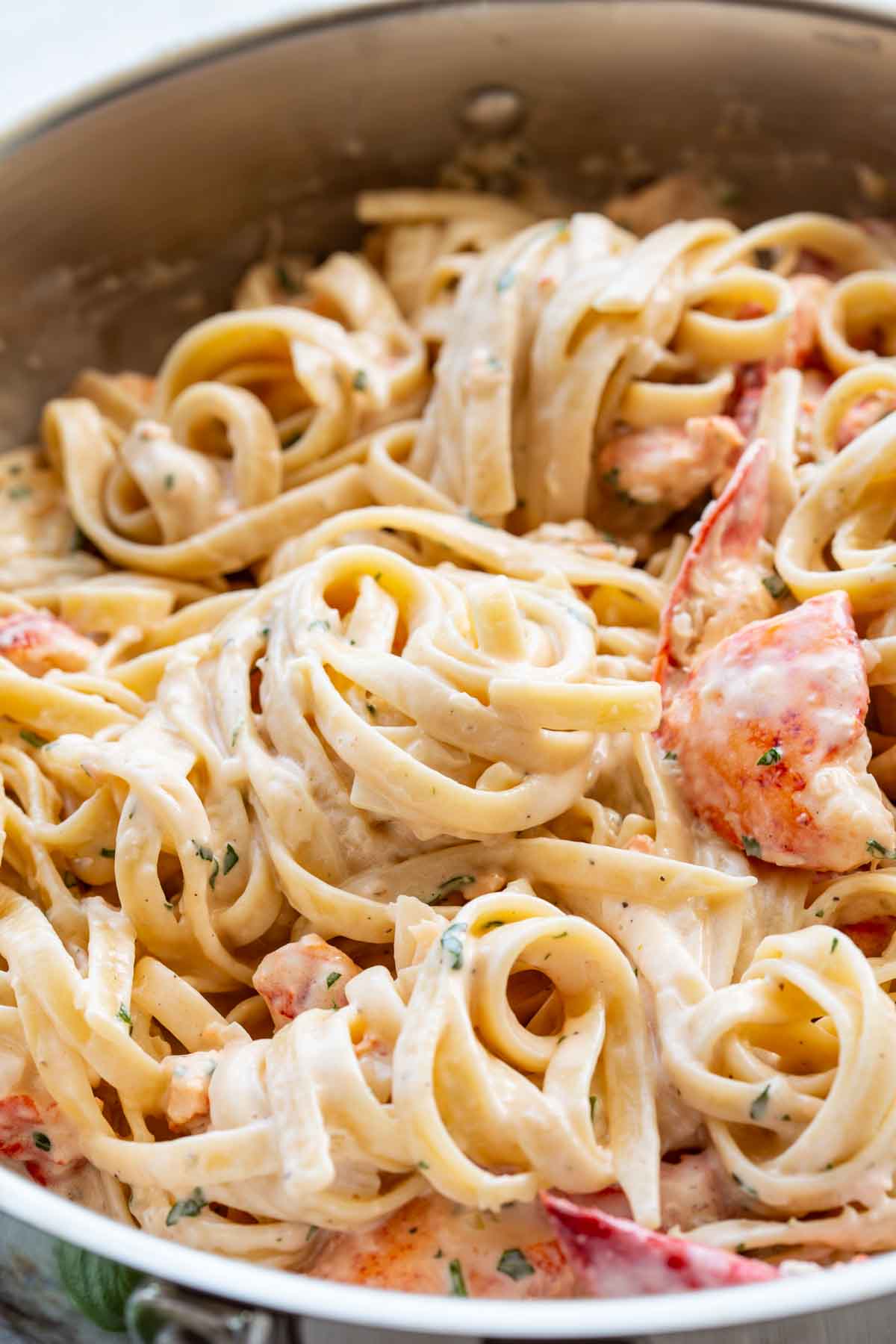
- The sauce should lightly cling to the pasta, not sit thickly in the pan. Add pasta water as needed to loosen it.
Customizing Your Pasta With Lobster
- Finish with toasted breadcrumbs for a fun textural component! Toast some panko breadcrumbs with butter or olive oil, then season with salt, pepper, and parsley.
- Tarragon pairs beautifully with lobster and will lightly perfume the sauce, but you can leave it out or use a basil sprig or bay leaf instead. If you want a stronger tarragon flavor, add chopped tarragon leaves at the end in place of the parsley.
- For a different herbal finish, both torn basil leaves, finely chopped chives, or dill are a nice replacement for parsley.
- Make this with any long dried pasta you have, fettuccine is classic, but bucatini, tagliatelle, chitarra, or spaghetti all work. Fresh homemade pasta works well here, too!
- Consider adding a small splash of cognac, brandy, or sherry while reducing the wine. They all give tons of depth and are classic companions to lobster!
What to Serve with this Creamy Lobster Pasta
Serve this luscious lobster pasta with a classic tableside Caesar salad or a shaved fennel salad with hazelnuts and olives for crunch.
A traditional caprese salad or this simple spinach with butter and Parmesan are also great pairings.
Make sure to have some crusty bread or fluffy homemade focaccia to mop up that delicious sauce!
Storing and Reheating Lobster Pasta
Due to the delicate nature of the lobster, cream sauce, and pasta, this recipe is best eaten immediately after making and does not reheat well.
However, if you have any leftovers, store them in an airtight container for up to 2 days. Reheat in a skillet over medium heat just long enough to warm through, about 3-4 minutes, adding a splash of water and tossing to revive the sauce. Avoid overheating to maintain the texture of the lobster.
FAQs
No, this recipe is made with precooked lobster meat for ease and convenience while still highlighting the sweet flavor of lobster.
Yes! Frozen cleaned lobster meat is a great option for this recipe since it doesn't require the use of shells. Just make sure to thaw it and squeeze out any excess liquid before making the recipe.
The cream sauce might have broken due to excessive boiling. The cream should be reduced over a slow simmer, not a harsh boil. If it's looking clumpy but not broken, it's likely because you added the cheese while the heat was still on and it caused it to seize and clump instead of melt.
This dish is best finished and served on the spot to guarantee that the texture of the pasta and the lobster are both on point. You can prepare the cream sauce ahead and store it on its own, but only add the lobster meat, freshly cooked pasta and grated Parmigiano right before serving.




Did you LOVE this recipe? Please leave a star ⭐️ rating and comment and tag your creations @ColeyCooks on Instagram!
Want to Save This Recipe?
Enter your email & I'll send it to your inbox.
By submitting this form, you consent to receive emails from Coley Cooks.

The Best Lobster Pasta
Ingredients
- kosher salt to taste
- 4 tablespoons unsalted butter
- 1 shallot finely minced
- 1 garlic clove finely minced
- ½ cup dry white wine
- 1¼ cups heavy cream
- 1 small sprig fresh tarragon basil or a bay leaf, optional
- 12 ounces fettuccine linguine, tagliatelle, or any long pasta
- 1 pound cooked lobster meat cut into large chunks*
- freshly cracked black pepper to taste
- ½ cup Parmigiano Reggiano freshly grated, plus more for serving
- 1 tablespoon parsley finely chopped, or chives, tarragon, or basil leaves
Instructions
- Bring a large pot of well-salted water to a boil.
- Melt the butter in a large skillet over medium-low heat. Add the shallots and garlic, and cook until softened and fragrant, about 3-5 minutes. Adjust the heat as needed so the garlic doesn't brown.4 tablespoons unsalted butter, 1 shallot, 1 garlic clove
- Pour in the white wine. Increase the heat slightly and simmer until reduced by about half and no longer smells sharp, about 3-4 minutes.½ cup dry white wine
- Lower the heat and add the cream along with the sprig of tarragon. Let it gently simmer, stirring occasionally, until it's thick enough to leave a line in the pan after dragging a spoon through it, about 3-5 minutes.1¼ cups heavy cream, 1 small sprig fresh tarragon
- While the cream is simmering, cook the fettuccine until just shy of al dente, then reserve at least 1 cup of the pasta water before draining.12 ounces fettuccine
- Once the cream has reduced, remove the tarragon and discard. Stir in the lobster meat, then season lightly with salt and black pepper.kosher salt, 1 pound cooked lobster meat, freshly cracked black pepper
- Add the drained pasta directly to the pan along with a splash of the reserved pasta water. Toss continuously until the sauce loosens and coats the noodles evenly.
- Turn off the heat, then add the grated Parmigiano Reggiano and continue tossing until melted and emulsified. Add more pasta water as needed to keep the sauce silky and fluid.½ cup Parmigiano Reggiano
- Finish with chopped parsley, then serve immediately.1 tablespoon parsley
Notes
- Drain the pasta 2 minutes before your package's al dente mark. This will guarantee that you have the perfect pasta texture after you finish it in the sauce.
- Incorporating the cheese off the heat will prevent it from seizing and clumping. Make sure it's freshly and finely grated for best results.
- Since this recipe does not use shells, you can purchase pre-cooked and shelled lobster meat to use. Otherwise, you will need to first cook and de-shell your lobster. Whole live lobsters and frozen lobster tails both work great. See the section in the post titled "The Best Lobster Meat to Use for Pasta" and "How to Cook Lobster for Pasta" for more details.
- The key to tender lobster is to avoid overcooking. Since it's already cooked, it only needs to be warmed through at the very end. Overcooking will make it rubbery and dry.
- Don't skip adding the pasta water. It helps emulsify the sauce and keeps it from becoming too thick or heavy.
- The sauce should lightly cling to the pasta, not sit thickly in the pan. Add pasta water as needed to loosen it.