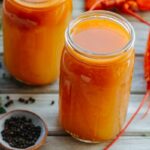
Best Recipe for Lobster Stock
Homemade lobster stock turns leftover lobster shells into a rich, savory broth with concentrated lobster flavor and a hint of natural sweetness. Save the shells in your freezer, then use this stock to make lobster bisque, risotto, soups, pasta, and sauces that taste far better than anything made with store-bought broth. It's the secret ingredient that separates a good seafood dish from an unforgettable one!
Servings: 8 cups
Calories: 56kcal
Ingredients
- 2 tablespoons neutral oil such as vegetable, avocado, grapeseed or canola
- shells from 2-3 cooked lobsters or 6 tails *see note
- 1 yellow onion medium size, roughly chopped
- 1 carrot medium size, roughly chopped
- 2 celery stalks roughly chopped
- 2 tablespoons tomato paste
- ½ cup dry white wine
- 10 cups cold water
- 6 sprigs fresh parsley
- 2-3 sprigs fresh thyme or tarragon
- 1 bay leaf
- 1 teaspoon whole black peppercorns
Instructions
- Heat the oil in a large stockpot over medium-high heat. Pat your lobster shells dry to prevent oil spatter, then add them to the pot. Sauté, stirring frequently until hot, fragrant, and beginning to lightly brown, about 5-7 minutes.2 tablespoons neutral oil, shells from 2-3 cooked lobsters or 6 tails
- Add the onion, carrot, and celery. Cook, stirring occasionally, until the vegetables begin to soften, about 5 minutes.1 yellow onion, 1 carrot, 2 celery stalks
- Add the tomato paste and cook, stirring constantly, until it darkens slightly and coats the shells and vegetables, about 2 minutes.2 tablespoons tomato paste
- Add the white wine and scrape the bottom of the pot to release any browned bits. Simmer until the wine is reduced by about half, about 3 minutes.½ cup dry white wine
- Add the cold water, parsley, thyme or tarragon, bay leaf, and peppercorns. Bring just to a boil, then immediately reduce to a gentle simmer.10 cups cold water, 6 sprigs fresh parsley, 2-3 sprigs fresh thyme or tarragon, 1 bay leaf, 1 teaspoon whole black peppercorns
- Simmer uncovered or partially covered for 45-60 minutes, occasionally skimming any foam that rises to the surface. Avoid vigorously boiling the stock or simmering it for several hours, which can produce an unpleasant bitter flavor.
- Strain through a fine-mesh strainer, pressing gently on the solids to extract the liquid. Discard the solids. Double strain if necessary.
- If the stock tastes weak, return it to the pot and simmer until reduced to the desired concentration. Cool completely before refrigerating or freezing.
Notes
- Remove and discard the feathery gills and any remaining innards from your lobsters so you’re left with only the orange shells. Break into smaller pieces as needed to fit your stockpot.
- If you don’t have enough lobster shells to make stock, rinse and dry them well, then store them in the freezer until you can collect more. You can also save shrimp shells to enhance your stock with a similar flavor. Freeze them in an airtight bag for up to 3 months.
- Shells from 2 whole lobsters or 6 lobster tails will be sufficient to make stock, but the more shells you use, the better it will be. More shells means more concentrated lobster flavor.
- Don't salt the stock. Leaving it unsalted makes it much more versatile and prevents dishes from becoming overly salty when the stock is reduced.
- Make sure to use a large enough stockpot so lobster shells aren’t overcrowded in this first step, since crowding will introduce too much moisture and get in the way of browning. If your pot is small, brown the shells in batches.
- For an extra-strong, flavorful lobster stock, you can use unsalted fish, shrimp, or even chicken stock instead of half of the water.
- Freeze the finished stock in measured 1–2-cup portions so it's easy to use for risotto, bisque, chowders, soups, and sauces.
Nutrition
Serving: 1cup | Calories: 56kcal | Carbohydrates: 4g | Protein: 0.5g | Fat: 3g | Saturated Fat: 1g | Polyunsaturated Fat: 2g | Monounsaturated Fat: 1g | Trans Fat: 0.02g | Sodium: 39mg | Potassium: 110mg | Fiber: 1g | Sugar: 2g | Vitamin A: 1407IU | Vitamin C: 3mg | Calcium: 12mg | Iron: 0.3mg
