
Butter Poached Lobster
Butter poached lobster is one of the most elegant and delicious dishes you can serve. This recipe relies on a special technique to keep the lobster tender and delicate and the butter sauce silky and emulsified. It might sound intimidating, but I'm here to guide you through all the steps needed to achieve buttery lobster perfection in under 30 minutes!
This post may contain affiliate links.
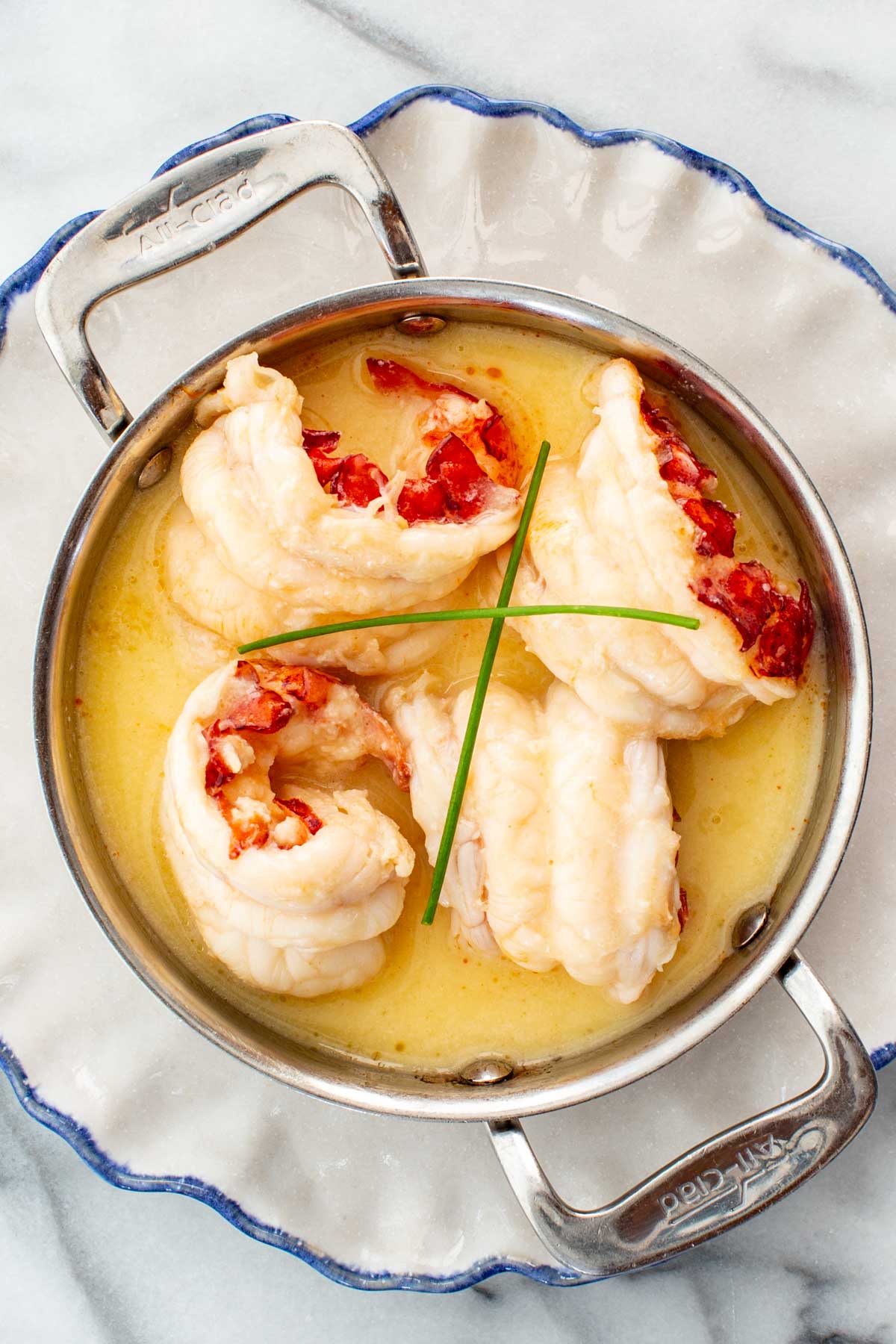
For years I appeared on QVC selling Maine lobster for Greenhead Lobster, which meant I always had plenty of lobster on hand to cook and experiment with.
Of all the different preparations I tried, butter poached lobster tails was hands down my favorite.
While butter poached lobster isn't a dish for every day, if you're looking to serve something truly unforgettable, this recipe will NOT disappoint!
What sets this recipe apart from others is the use of a classic French technique known as beurre monté. It creates a silky butter sauce that completely envelopes the lobster, getting into every nook and cranny.
This method produces the most tender and succulent lobster you will ever try. It's absolutely sublime!
What is Beurre Monté?
Beurre monté is a classic French butter sauce that's made by whisking cold butter into a small amount of hot liquid, piece by piece, over low heat to create an emulsion. It has a silky, luxurious texture that's far superior to plain melted butter, which can have a greasy mouthfeel.
The sauce stays creamy instead of separating, which makes it ideal for gently cooking delicate foods like lobster since the gentle heat and rich butter help keep the meat incredibly tender and moist.
Beurre monté sounds complicated, but if you take your time and follow a few important steps, it's actually quite simple.
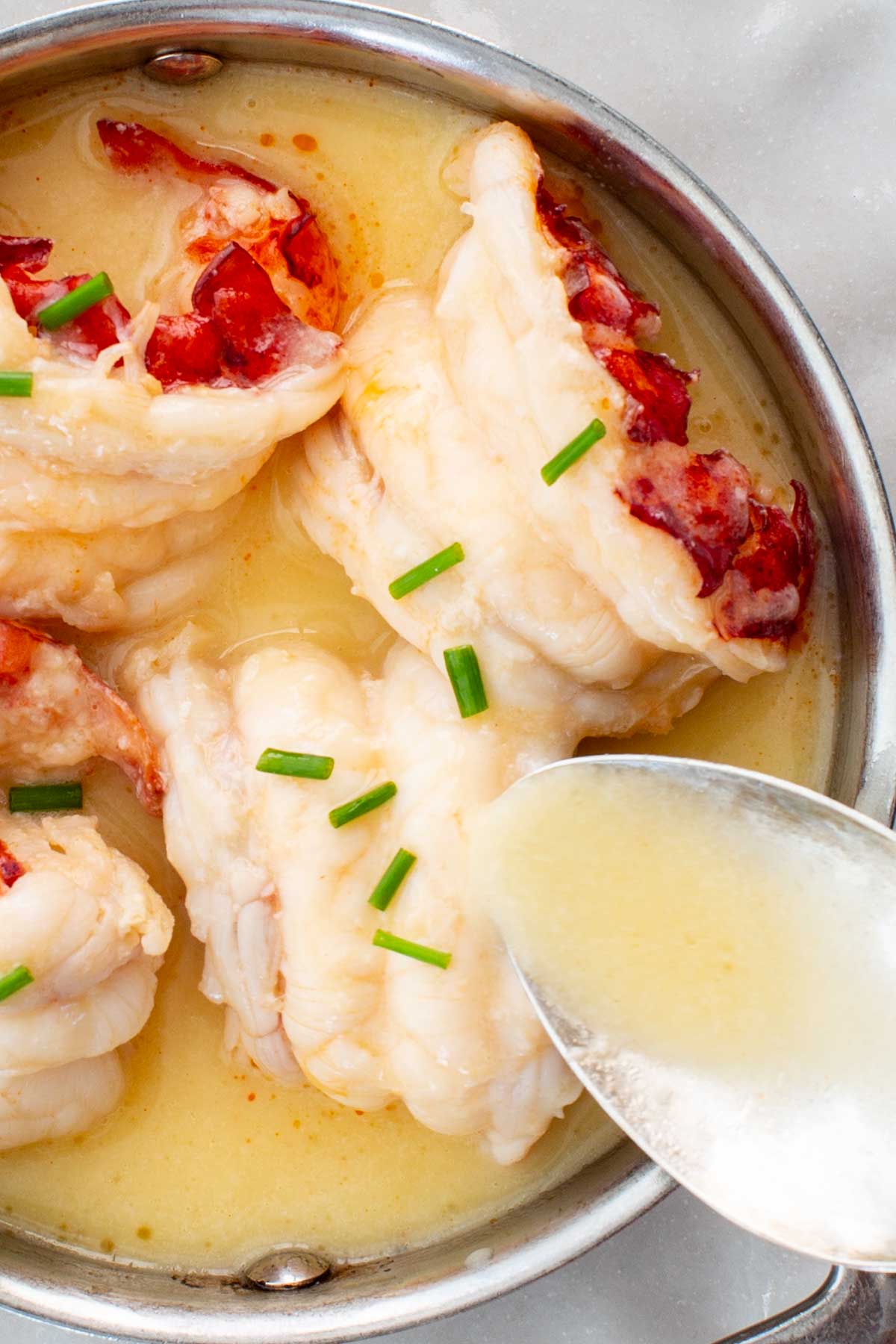
The key is to keep the heat as low as possible and never let the butter bubble or boil. This not only keeps the sauce creamy and emulsified, but also ensures that the lobster cooks slowly to become ultra tender and succulent.
For a very pure and clean-tasting beurre monté, you can use water alone, but I like to use a little bit of white wine to add a touch more flavor and brightness. You can also omit the wine and use a splash of lemon juice or white wine vinegar instead.
Sometimes I also like to steep a few herbs and/or aromatics to gently perfume the butter, but for this recipe I kept it super simple. A little bit of tarragon is my favorite, but a bay leaf, parsley, thyme, a smashed garlic clove or even a long strip of lemon peel are all nice too.
Just make sure you remove the aromatics so they don't add too much flavor and overpower the lobster. If you're spending good money on lobster, the last thing you want to do is muddy its delicate flavor with a bunch of other ingredients. Sometimes simple is best!
While this can be made with any type of lobster, for best results I highly recommend seeking out cold water lobster tails from Maine or Canada because they have the sweetest meat and best texture.
If you're going to make butter poached lobster, you might as well use the best lobster you can get!
Want more delicious lobster recipes? Try this lobster fra diavolo pasta, classic Maine lobster rolls, or the best lobster mac and cheese.
Why This Recipe Works
- Uses an emulsified butter sauce for a more luxurious texture than plain melted butter.
- The sauce envelops the lobster and poaches slowly to become tender, succulent and buttery.
- The seasoning is kept simple to let the lobster shine, but can be infused with herbs and aromatics for more flavor.
- Only requires 5 ingredients and comes together quickly in 30 minutes or less.
- It's a simple, yet impressive recipe that's ideal for special occasions!
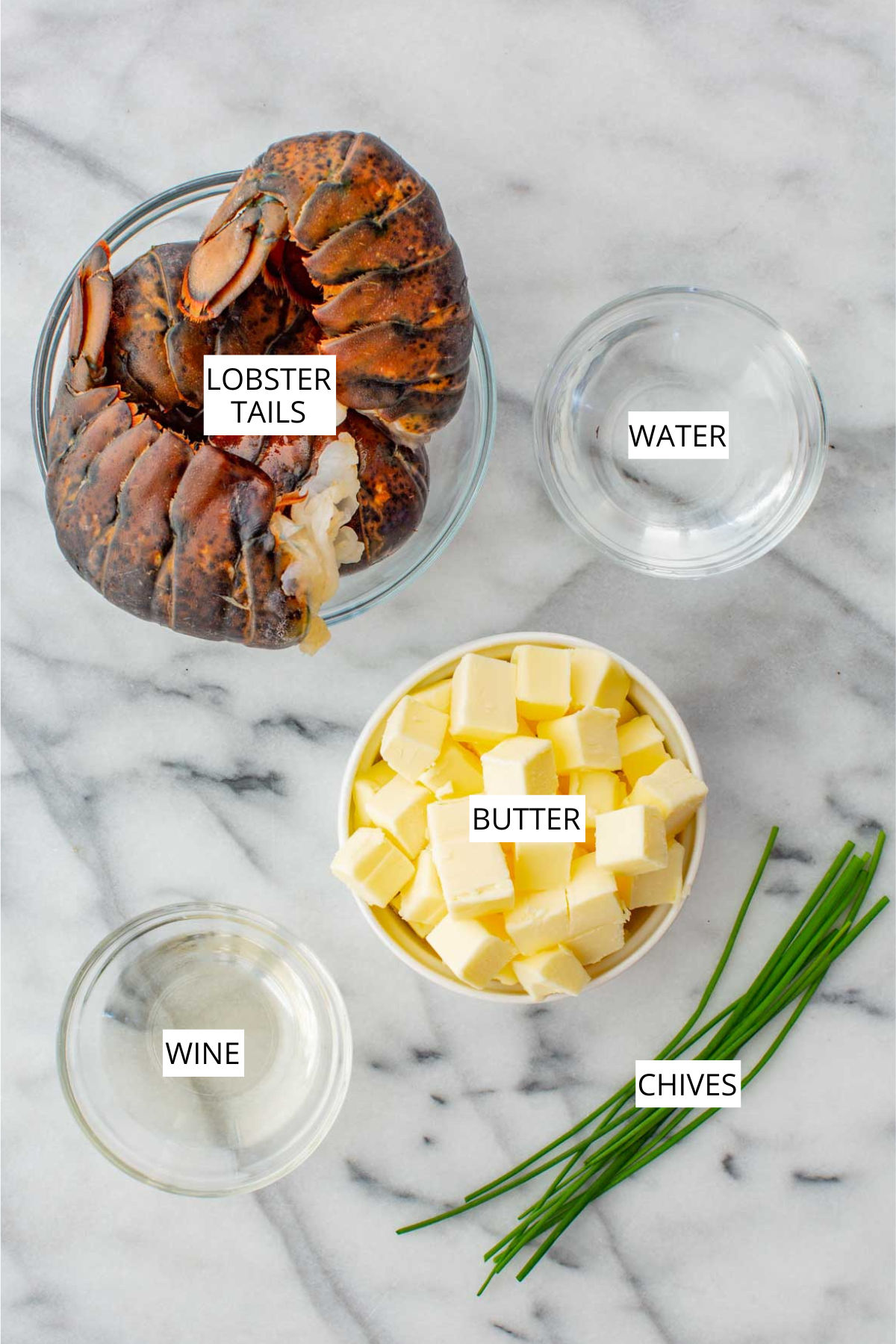
Ingredients for Butter Poached Lobster
Butter - I prefer using salted butter in this recipe, but if you're sensitive to salt I recommend using unsalted butter and then adding just a pinch of salt to your taste.
Lobster - For the best flavor and texture, use cold water lobster tails from Maine or Canada. However, this recipe works with any type of lobster. If frozen, slowly defrost them in the fridge the night before. Use one medium-sized lobster tail per person, about 5-6 ounces, or more if you like.
Wine - Dry white wine, such as sauvignon blanc or pinot grigio, will give more flavor to the sauce. You can also use only water or water mixed with a bit of lemon juice or white wine vinegar.
Herbs and seasonings - This sauce is a blank canvas for adding any herbs and seasonings of your choice, such as tarragon, bay leaf, parsley, thyme, garlic or lemon peel. Just make sure not to add too much to avoid overpowering the lobster.
*Find the full ingredient list in the recipe card below!
Helpful Equipment
- Kitchen shears
- Small saucepan
- Whisk
- Tongs
How to Make Butter Poached Lobster
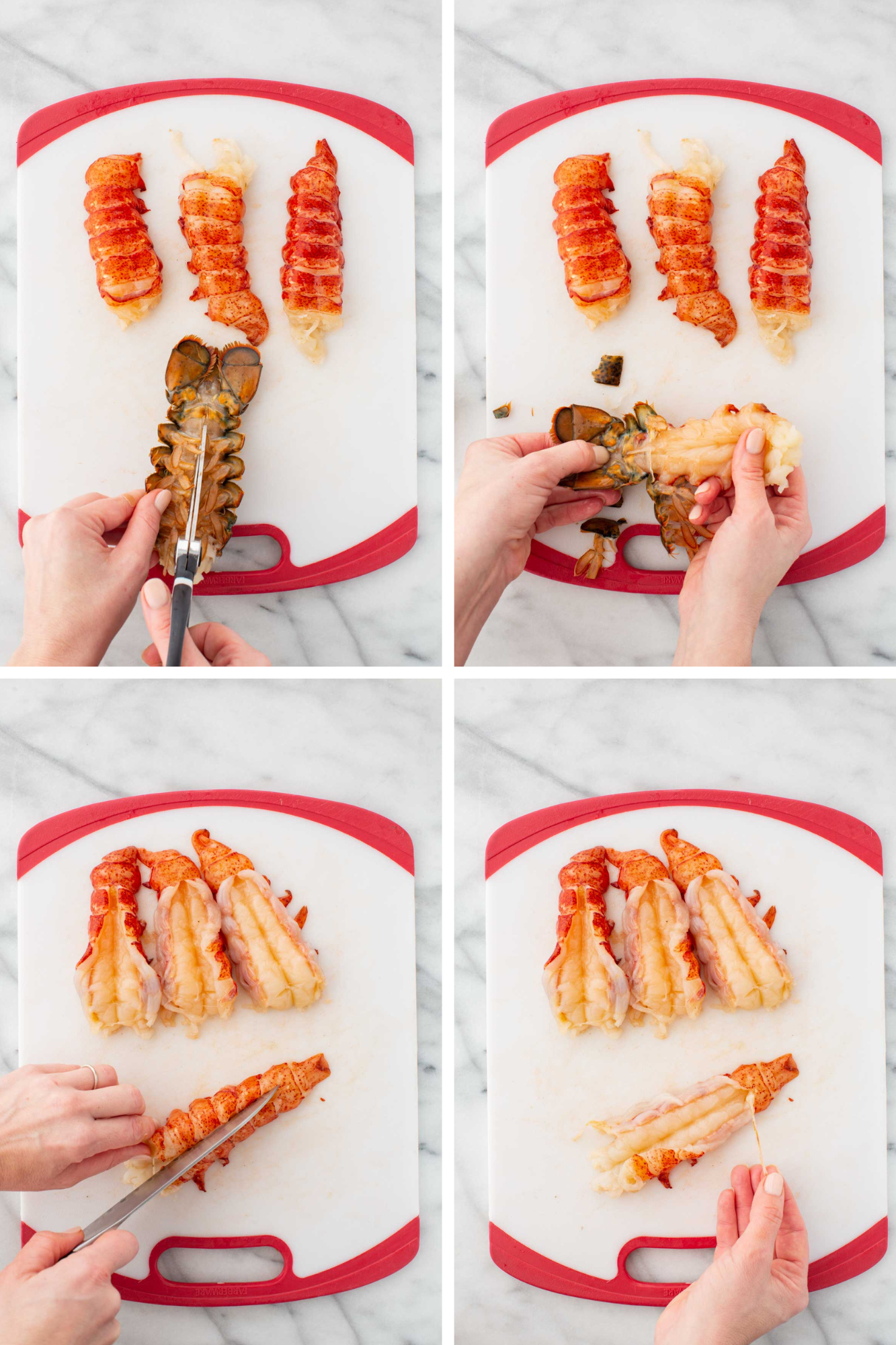
- Using kitchen shears, carefully cut lengthwise through the bottom of each lobster shell, being careful not to pierce the flesh if possible.
- Gently crack the top shell and pull off a few pieces, then slide your fingers underneath the meat to loosen it. Lift it out in one piece, trying your best to keep it intact. Pinch the end of the tail to release the last bit.
Pro Tip: Don't worry if some of the meat separates while trying to remove the shell. The lobster tails will still cook well and turn out delicious.
- Run a sharp knife down the top of the lobster meat and remove the vein if desired. This is optional, but recommended. Refrigerate the lobster while you prepare the beurre monté.
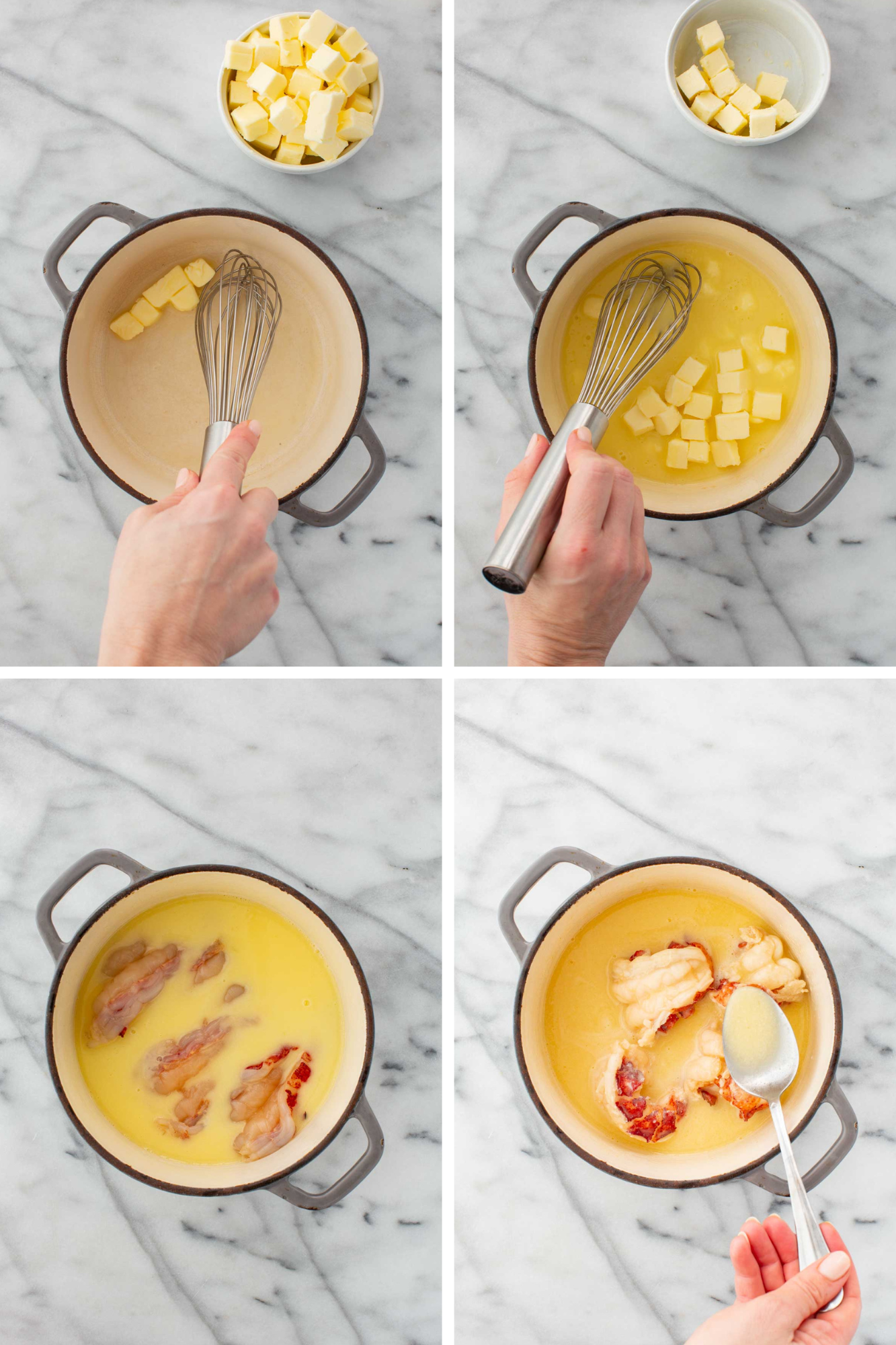
- In a small saucepan, combine the white wine and water and bring to a gentle simmer over medium-low heat. Let it reduce for about 30-60 seconds to cook off the raw alcohol, but don't let it evaporate completely.
- Lower the heat and whisk in a few pieces of cold butter until melted. Continue adding the butter a few pieces at a time, whisking constantly and letting each addition emulsify before adding more. Don't rush this step.
- Keep the heat very low so the butter never bubbles. You may have to turn off the heat intermittently as needed. The butter should be fully melted and emulsified but not simmering.
Pro Tip: Taste and add salt if needed. This is also a good moment to add herbs or other seasonings of your choice so they infuse into the sauce, such as bay leaf, a sprig of tarragon or thyme, a large piece of lemon peel, or a crushed garlic clove. Keep them in the sauce for 1-2 minutes and remove. The sauce will season the lobster so keep the flavors mild so they don't take away from the lobster's natural flavor.
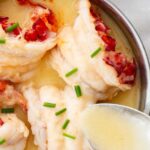
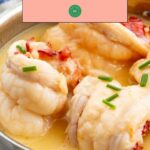
- Keep the heat on low, then add the lobster meat and gently spoon butter over the top. Poach slowly, turning once or twice, until the meat is opaque and just firm, about 5-7 minutes, depending on size. Aim to keep the butter between 160-180°F and continue spooning the butter over the lobster and shaking the pan gently to keep it emulsified.
Pro Tip: If you are also poaching claw meat from a whole lobster, remember that it cooks a little faster than the tail so remove it a few minutes early.
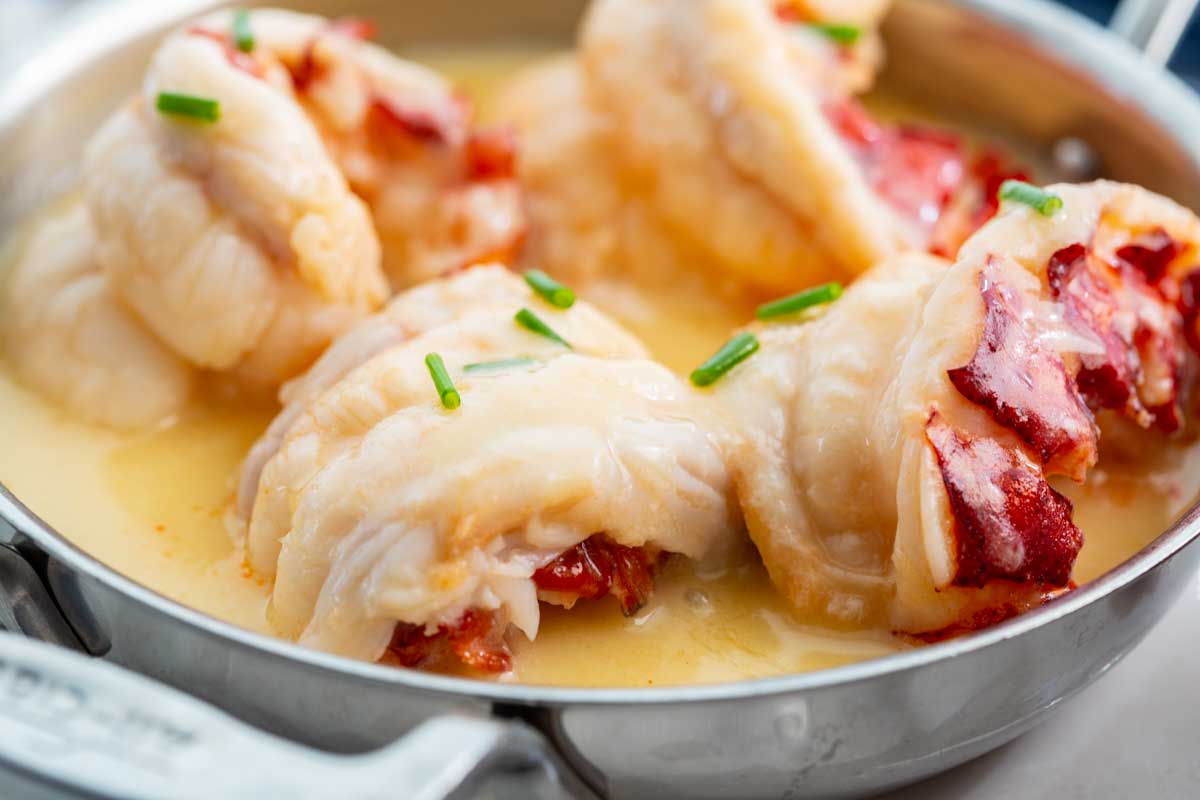
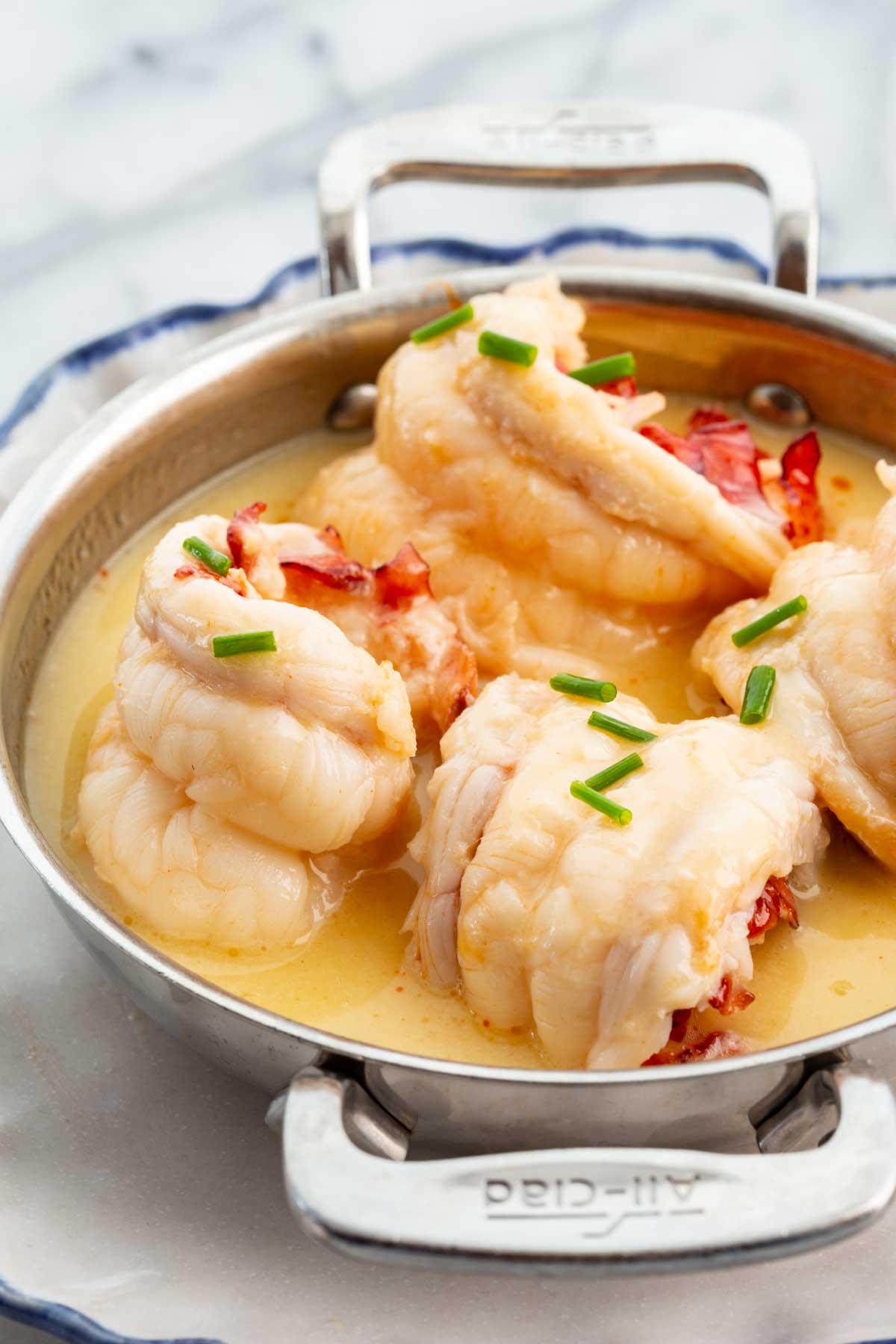
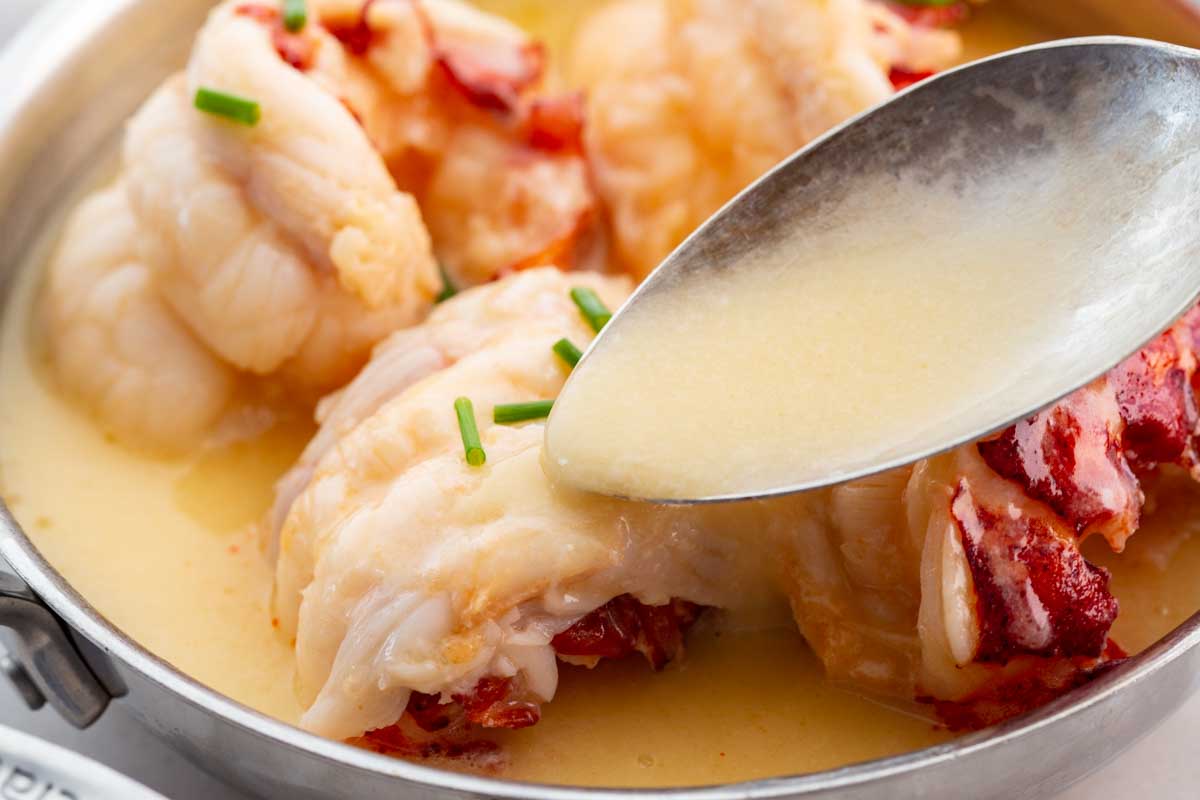
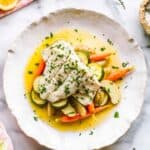
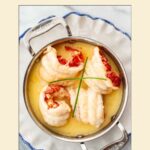
- Transfer the lobster to warm plates and spoon some of the butter sauce over the top. Finish with chopped chives, tarragon or parsley if desired and serve right away.
Coley's Tips For Success
- You can omit the wine and instead use 3 tablespoons of water and 1 tablespoon of lemon juice.
- I prefer using salted butter, but if you're more sensitive to salt, use unsalted butter with just a pinch of salt added to taste.
- If the butter starts bubbling, it's too hot and can break the emulsion or toughen the lobster. Low heat is key.
- The lobster should be opaque and gently springy. If it tightens or turns rubbery, it's gone too far. Timing will ultimately depend on the size of your tails and how cold they were before going into the butter.
- If the sauce breaks, vigorously whisk in a tablespoon of ice-cold water until it emulsifies again.
- You will have a lot of leftover butter that's infused with lobster flavor. Save it and serve over fish, toss it with pasta, or brush onto grilled bread for a delicious treat.
Variations
- Infuse the sauce with herbs such as bay leaf, tarragon, or thyme.
- Add a smashed clove of garlic and/or a big piece of lemon peel to the butter sauce for added depth.
- Finish the dish with fine herbs like fresh chives, dill, parsley, and/or chervil.
- Give the sauce a bit of spice with a pinch of paprika, cayenne, or white pepper.
- Add a splash of cognac, brandy, or sherry when adding the wine for a bit more sweetness and depth. Remember to allow the alcohol to evaporate before adding the butter.
What to Serve with Butter Poached Lobster
This succulent lobster pairs well with simple veggie sides like French green beans amandine, or these green beans with pancetta along with creamy mascarpone mashed potatoes, or silky celery root and parsnip puree for a starch.
You can also slice butter poached lobster and serve it over homemade crostini with a dollop of creme fraiche and chives for an elegant appetizer! Add a bit of caviar to take it over the top!
How to Store and Reheat Butter Poached Lobster
Store leftover lobster and sauce in an airtight container for up to 3 days. For longer storage, you can freeze the lobster for up to 6 months. To reheat, place in a skillet over low heat with the leftover butter sauce until warm. If the sauce separated while reheating, whisk with a tablespoon of cold water until it comes back together.
FAQs
While you can use any kind of lobster, the best results come from cold water lobster tails, preferably from Maine or Canada. These have the sweetest meat and the best texture.
Yes! Whole lobsters can also be poached, you just need to remove the meat first from the shells. Follow the same method, but remember that claw and knuckle meat will cook a little faster than the tail, so remove them first, then let the tails finish cooking.
It's likely your heat was too high and made the sauce bubble or boil, the butter wasn't cold enough before you added it to the pan, or you didn't stir/whisk enough. But don't worry, you can easily fix it! Remove the pan from the heat, then add a tablespoon of ice-cold water and vigorously whisk until it emulsifies.
The meat should turn opaque and feel lightly springy when pressed. It should be plump and tender, not tight, curled, or rubbery. Timing will depend on the size of your lobster tails and how cold they were before going into the butter.
Yes, frozen lobster tails work very well for this recipe. Thaw them completely overnight in the refrigerator before cooking, then pat them dry before adding to the butter sauce.



Did you LOVE this recipe? Please leave a star ⭐️ rating and comment and tag your creations @ColeyCooks on Instagram!
Want to Save This Recipe?
Enter your email & I'll send it to your inbox.
By submitting this form, you consent to receive emails from Coley Cooks.

Butter Poached Lobster Tails
Ingredients
- 4 lobster tails cold water lobster, 5-6 ounces each, thawed if frozen
- 3 tablespoons dry white wine
- 2 tablespoons water
- 1 cup butter (2 sticks), salted, cold, cut into 1 tablespoon pieces
- chives finely chopped, or tarragon or parsley, for finishing (optional)
Instructions
- Using kitchen shears, carefully cut lengthwise through the bottom of each lobster shell, being careful not to pierce the flesh if possible.4 lobster tails
- Gently crack the top shell and pull off a few pieces, then slide your fingers underneath the meat to loosen it. Lift it out in one piece, trying your best to keep it intact. Pinch the end of the tail to release the last bit.
- Run a sharp knife down the top of the lobster meat and remove the vein if desired. This is optional, but recommended. Refrigerate the lobster while you prepare the beurre monté.
- In a small saucepan, combine the white wine and water and bring to a gentle simmer over medium-low heat. Let it reduce for about 30-60 seconds to cook off the raw alcohol, but don't let it evaporate completely.3 tablespoons dry white wine, 2 tablespoons water
- Lower the heat and whisk in a few pieces of cold butter until melted. Continue adding the butter a few pieces at a time, whisking constantly and letting each addition emulsify before adding more. Don't rush this step.1 cup butter
- Keep the heat very low so the butter never bubbles. You may have to turn off the heat intermittently as needed. The butter should be fully melted and emulsified but not simmering.
- Keep the heat on low, then add the lobster meat and gently spoon butter over the top. Poach slowly, turning once or twice, until the meat is opaque and just firm, about 5-7 minutes, depending on size. Aim to keep the butter between 160-180°F and continue spooning the butter over the lobster and shaking the pan gently to keep it emulsified.
- Transfer the lobster to warm plates and spoon some of the butter sauce over the top. Finish with chopped chives, tarragon or parsley if desired and serve right away.chives
Notes
- Don't worry if some of the meat separates while trying to remove the shell. The lobster tails will still cook well and turn out delicious.
- Taste and add salt if needed. This is also a good moment to add herbs or other seasonings of your choice so they infuse into the sauce, such as bay leaf, a sprig of tarragon or thyme, a large piece of lemon peel or a crushed garlic clove. Keep them in the sauce for 1-2 minutes and remove. The sauce will season the lobster so keep the flavors mild so they don't take away from the lobster's natural flavor.
- If you are also poaching claw meat from a whole lobster, remember that it cooks a little faster than the tail so remove it a few minutes early.
- You can omit the wine and instead use 3 tablespoons of water and 1 tablespoon of lemon juice.
- I prefer using salted butter, but if you're more sensitive to salt, use unsalted butter with just a pinch of salt added to taste.
- If the butter starts bubbling, it's too hot and can break the emulsion or toughen the lobster. Low heat is key.
- The lobster should be opaque and gently springy. If it tightens or turns rubbery, it's gone too far. Timing will ultimately depend on the size of your tails and how cold they were before going into the butter.
- If the sauce breaks, vigorously whisk in a tablespoon of ice-cold water until it emulsifies again.
- You will have a lot of leftover butter that's infused with lobster flavor. Save it and serve over fish, toss it with pasta, or brush onto grilled bread for a delicious treat.



After checking the sodium content of 1267, I will need to use the unsalted butter. The rest of this recipe is excellent.
Please note that the nutritional information is automatically calculated based on the ingredients in the recipe. This includes the entire cup of salted butter used to poach the lobster, but not all of it is meant to be consumed. The total amounts depend on how much butter you choose to serve, which can be as much or as little as you want. Hope this helps!