
Lobster Risotto
This creamy lobster risotto combines sweet, tender lobster meat with homemade lobster stock made from shells for unmistakable lobster flavor. My detailed instructions walk you through the process so you can achieve a silky, rich risotto with perfectly al dente rice, even on your first try! This recipe takes time and care, but the result is an impressive special occasion dinner that's well worth the effort.
This post may contain affiliate links.
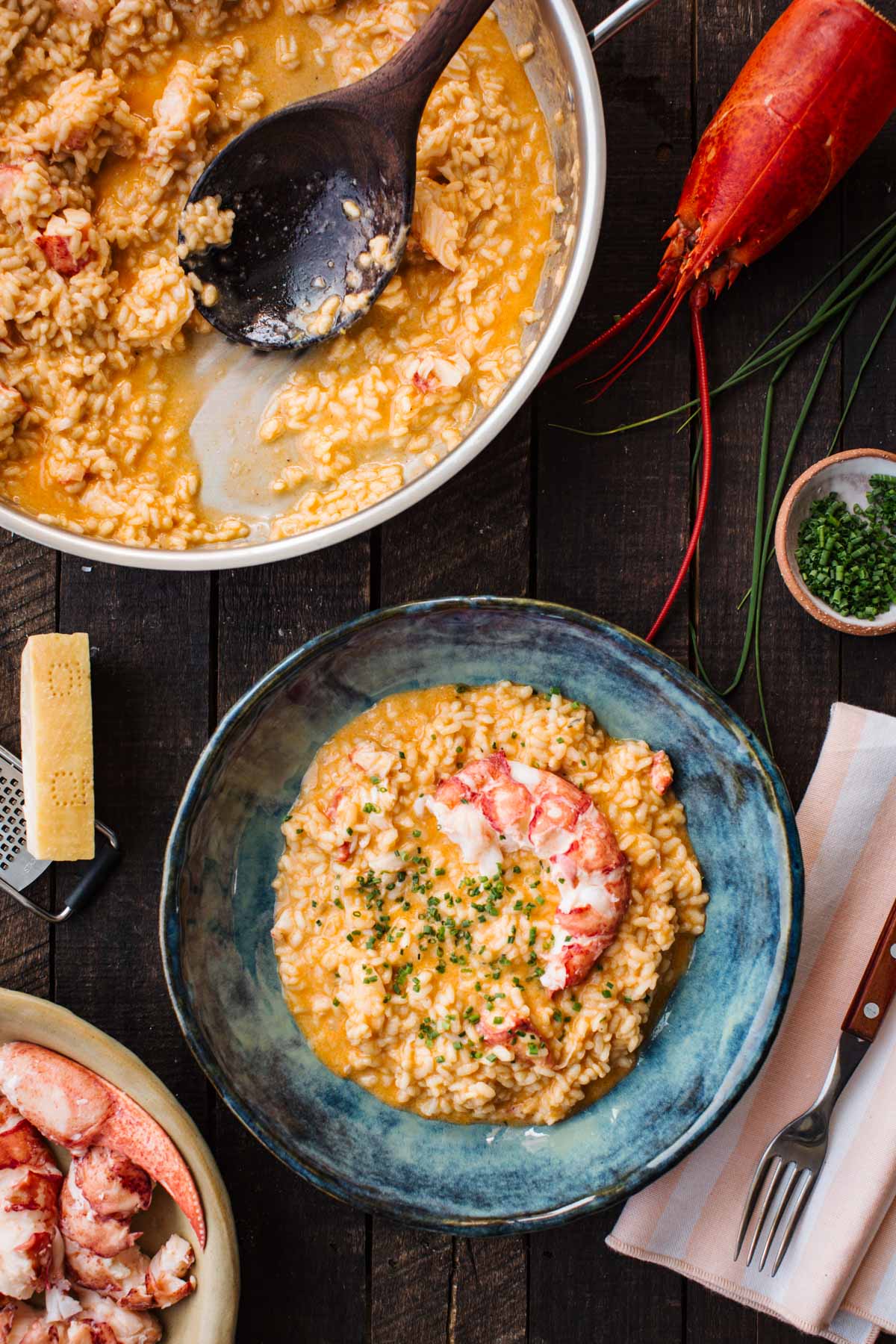
The Best Lobster Risotto Recipe
If you're going to spend the time and money it takes to make lobster risotto, you want to make sure you do it right. I don't make this dish often, but when I do, I go all out!
This recipe for risotto with lobster is ideal for special occasions like holidays and date nights, or when you really want to impress.
It makes a fantastic addition to the Feast of the Seven Fishes on Christmas Eve. Many of the components can be prepped ahead, so the risotto can be finished off right before serving for easier entertaining.
What is Lobster Risotto
Lobster risotto is an Italian seafood dish prepared by slowly cooking short-grain rice with deeply flavored lobster stock, aromatics, seasonings, and plenty of tender lobster meat.
To make risotto, I like to use 2 whole lobsters, but you can also use 4 lobster tails. Slice two tails in half lengthwise so each serving gets its own half tail garnish, then dice the rest of the meat to mix into the risotto.
Reserve the shells to make homemade lobster stock, which is essential for a great lobster risotto!
This recipe relies on brandy, white wine, and sherry for a deep, nuanced flavor, and each serves a different purpose. Brandy adds warmth and spice, white wine provides acidity, and sherry adds a subtle sweet, nutty note that complements the lobster.
If you prefer not to cook with alcohol, you can leave it out and increase the stock to make up for the lost liquid. Add a squeeze of lemon juice or a dash of sherry vinegar for acidity, and consider reducing the lobster stock a little more for concentrated flavor.
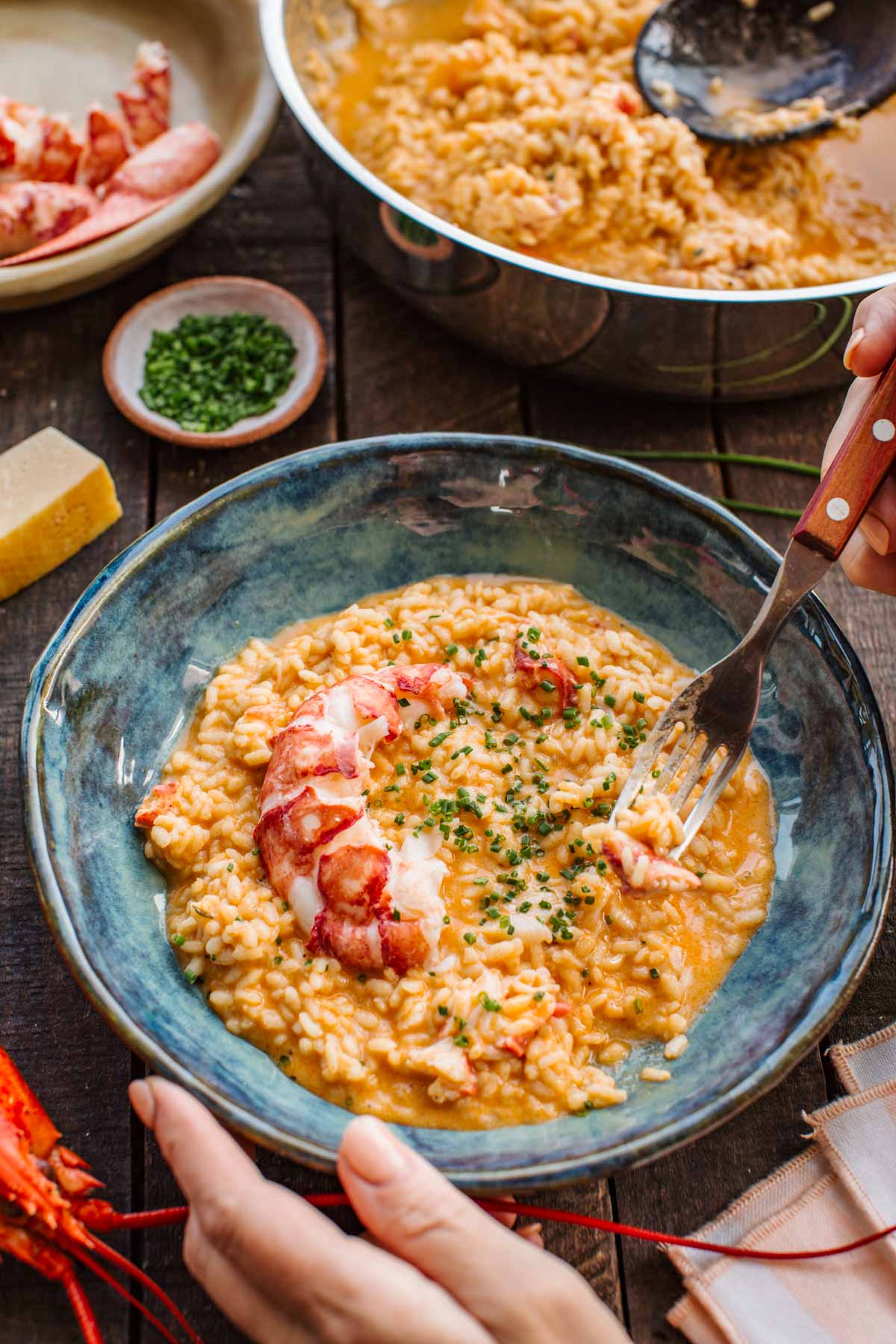
Risotto should be all'onda, meaning it's loose enough to spread across the plate or ripple like a wave. It will continue thickening quickly after it comes off the heat, so you always need to keep that in mind.
I love finishing risotto with mascarpone, as I think it adds the most luxurious texture and flavor, but you could also use butter instead. A little bit of grated Parmigiano adds another layer of creamy, nutty flavor.
Lobster risotto is best served immediately and does not make a particularly good make-ahead dish. However, some elements can be prepped in advance in order to make the last-minute cooking much easier.
First, cook your lobsters, remove the meat and make lobster stock up to a day in advance. Then, you can sauté the shallots and garlic, toast the rice several hours in advance, then continue cooking the risotto 25-30 minutes before you're ready to serve.
Have all of your ingredients chopped, grated, or measured out and ready to go!
Want more tender lobster recipes? Try this elegant butter poached lobster, this fun lobster mac and cheese, or this creamy lobster fettuccine.
Why This Recipe Works
- Most of the recipe can be prepared in advance, so you can focus on cooking the risotto just before serving.
- I walk you through how to prepare whole lobsters and cook the meat just until tender.
- Homemade lobster stock adds a concentrated lobster flavor that store-bought broth can't match.
- Brandy adds warmth, white wine brings acidity, and sherry lends subtle sweetness.
- Served all'onda, with a loose, creamy consistency that ripples across the plate while the rice remains al dente.
- An impressive main course for holidays, anniversaries, and other special dinners.
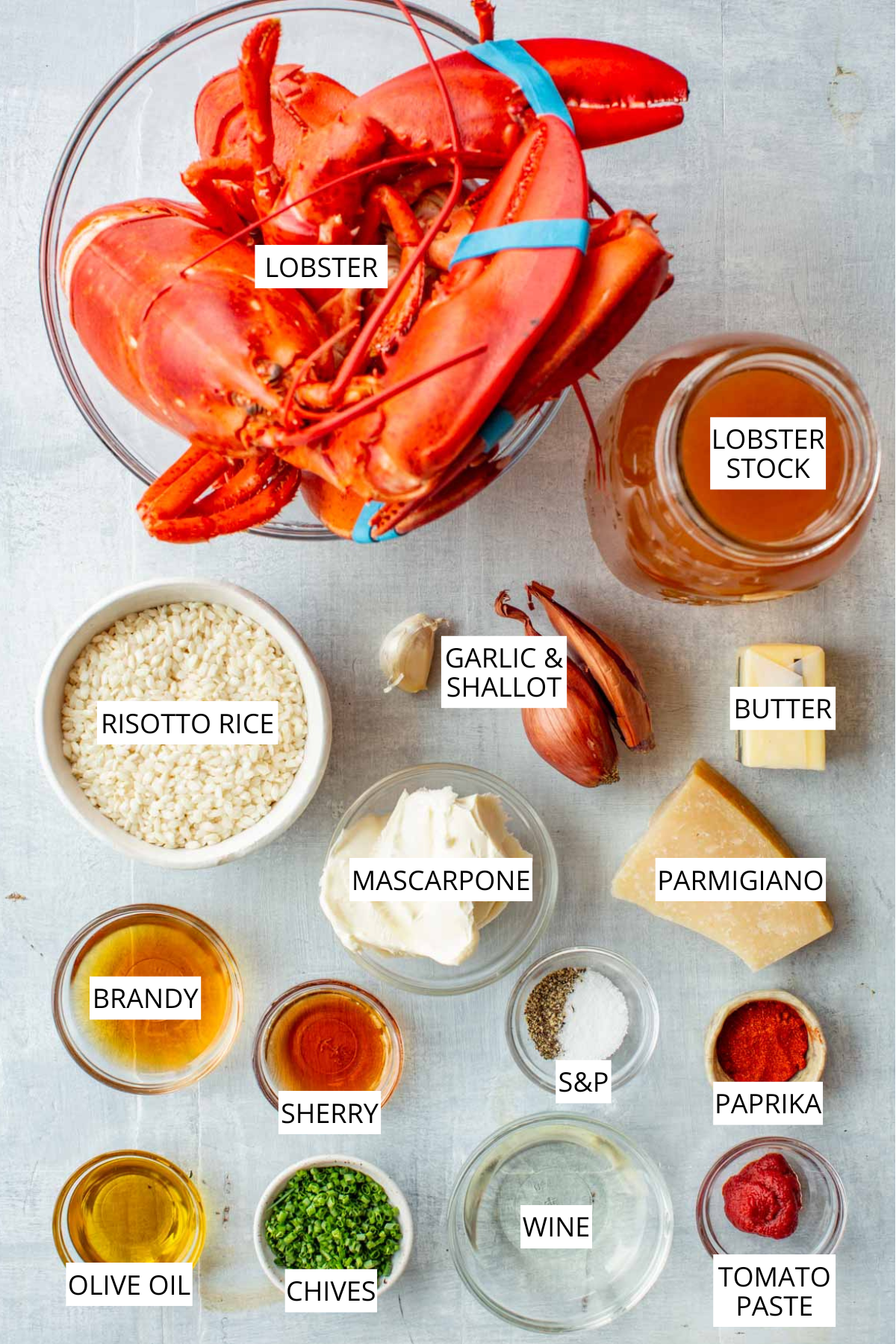
Lobster Risotto Recipe ingredients
Lobster - I used 2 live lobsters, about 1¼ - 1½ pounds each, but you can also use 4 lobster tails, two of them sliced in half lengthwise and two diced into pieces.
Lobster stock - For best results, use homemade lobster stock made with lobster shells, spices, aromatics, and herbs. Alternatively, you can purchase lobster bouillon or lobster base and mix that into water or chicken stock, but it won't have quite as rich or deep of a flavor as the real thing.
Rice - Carnaroli is the best rice variety to use for risotto because it maintains its al dente texture better, but Arborio is usually much easier to find and works well, too.
Sherry - I used cream sherry for a slightly sweeter finish that I think really works here, but dry sherry can also be used. Avoid cooking sherry, which contains added salt and is typically found next to the vinegars in the grocery store.
Brandy - Use brandy or cognac to add warmth and spice.
Wine - A dry, unoaked white wine like Sauvignon Blanc or Pinot Grigio is best to provide a clean, fruity acidity.
Mascarpone - Mascarpone cheese will help emulsify and turn everything creamy, silky, and smooth.
Parmigiano - Use Parmigiano Reggiano to add creaminess and a nutty undertone. To choose a high-quality product, read my guide to Italian Cheeses.
*Find the full ingredient list in the recipe card below!
Helpful Equipment
- Large pot
- Tongs
- Sharp knife
- Kitchen scissors
- Medium saucepan
- Wide heavy-bottomed saucepan
- Ladle
- Cheese grater
How to make Lobster Risotto
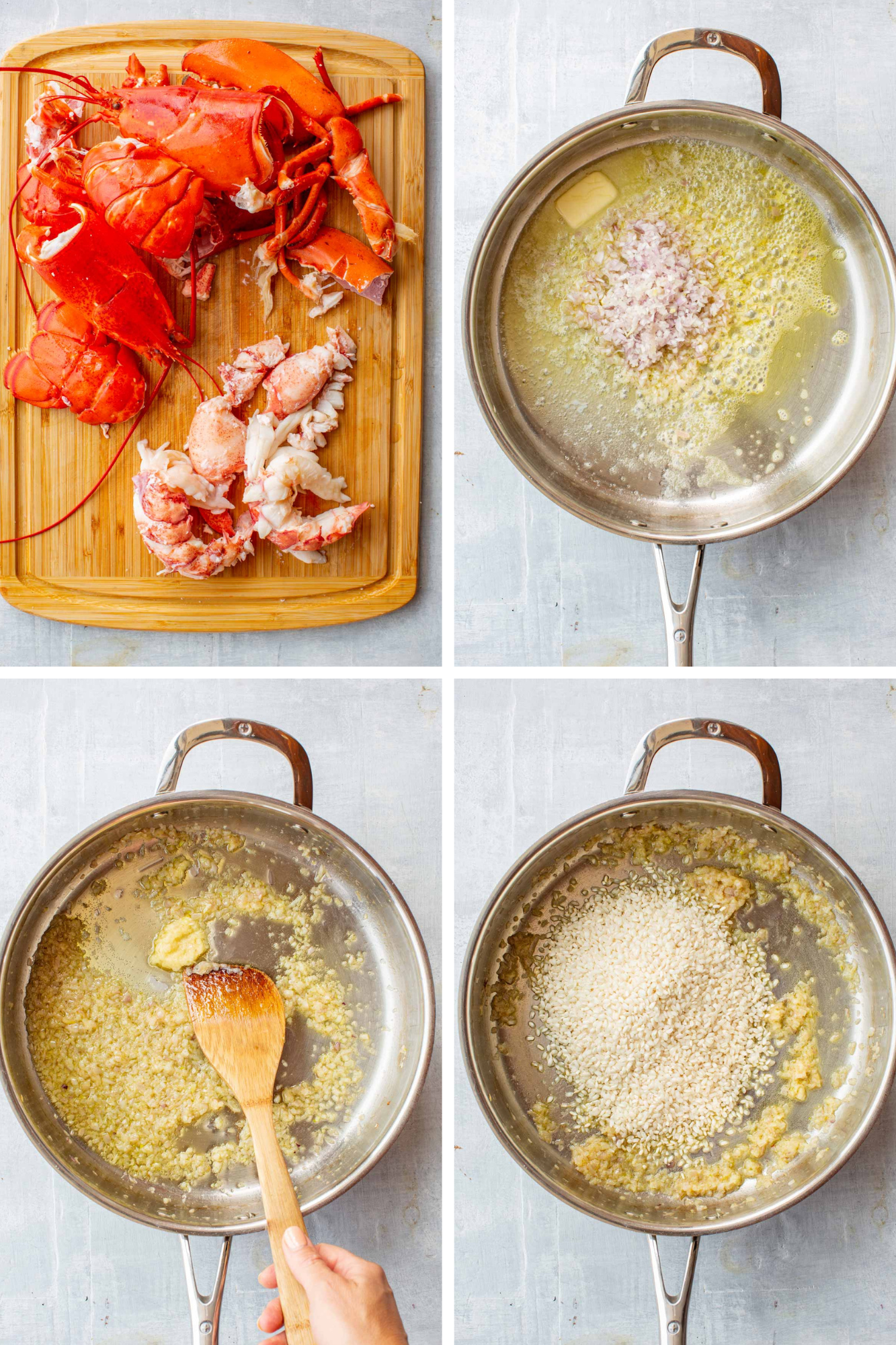
- Bring a large pot of well-salted water to a boil. Add the lobsters, cover and cook for about 8 minutes, until the shells are bright red but the meat is just barely cooked through. Transfer immediately to a bowl and cover with ice to stop the cooking.
- Remove the tail, claw, and knuckle meat from the shells. Cut the ragged ends from the tails and set aside, then slice the tails in half lengthwise and remove the vein. Cut the tail end pieces and claws into bite-sized chunks, then refrigerate the lobster meat until needed. Reserve the shells for making lobster stock.
- Add the lobster stock to a saucepan and keep it hot over low heat.
Pro Tip: Keep the lobster stock hot while cooking the risotto. Adding cold stock slows the cooking and makes it harder to achieve the right texture.
- Heat the olive oil and butter in a wide, heavy-bottomed saucepan over medium heat. Add the shallot and cook until soft and translucent, about 3 minutes. Add the garlic and stir for about 30 seconds.
- Add the rice and cook, stirring frequently, until the grains are glossy and lightly toasted around the edges, about 2 minutes.
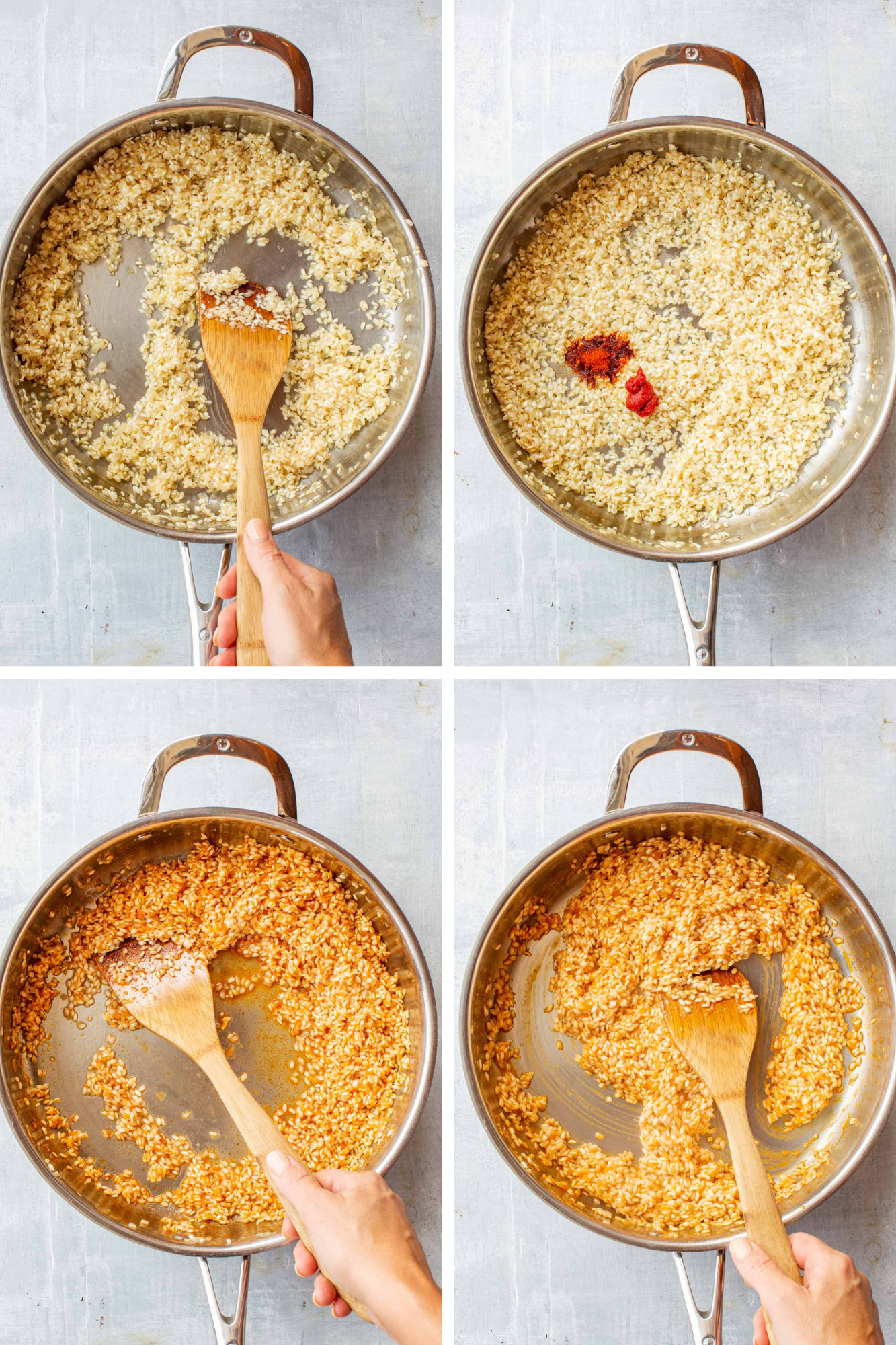
- Stir in the tomato paste and paprika until fully combined, then continue stirring for another minute.
- Lower the heat, add the brandy, and cook, stirring, until almost completely evaporated, about 1-2 minutes.
- Add the white wine and return the heat to medium. Simmer, stirring frequently, until the liquid is reduced and almost completely absorbed, about 2-3 minutes.
- Stir in a ladleful (about ½ - ¾ cup) of hot lobster stock and the salt. Cook at a steady simmer, stirring frequently, until most of the liquid has been absorbed.
- Continue adding stock ½ - ¾ cup at a time every few minutes. Stir continuously and don't add more stock until it's mostly absorbed. Adjust the heat as needed to maintain a steady simmer.
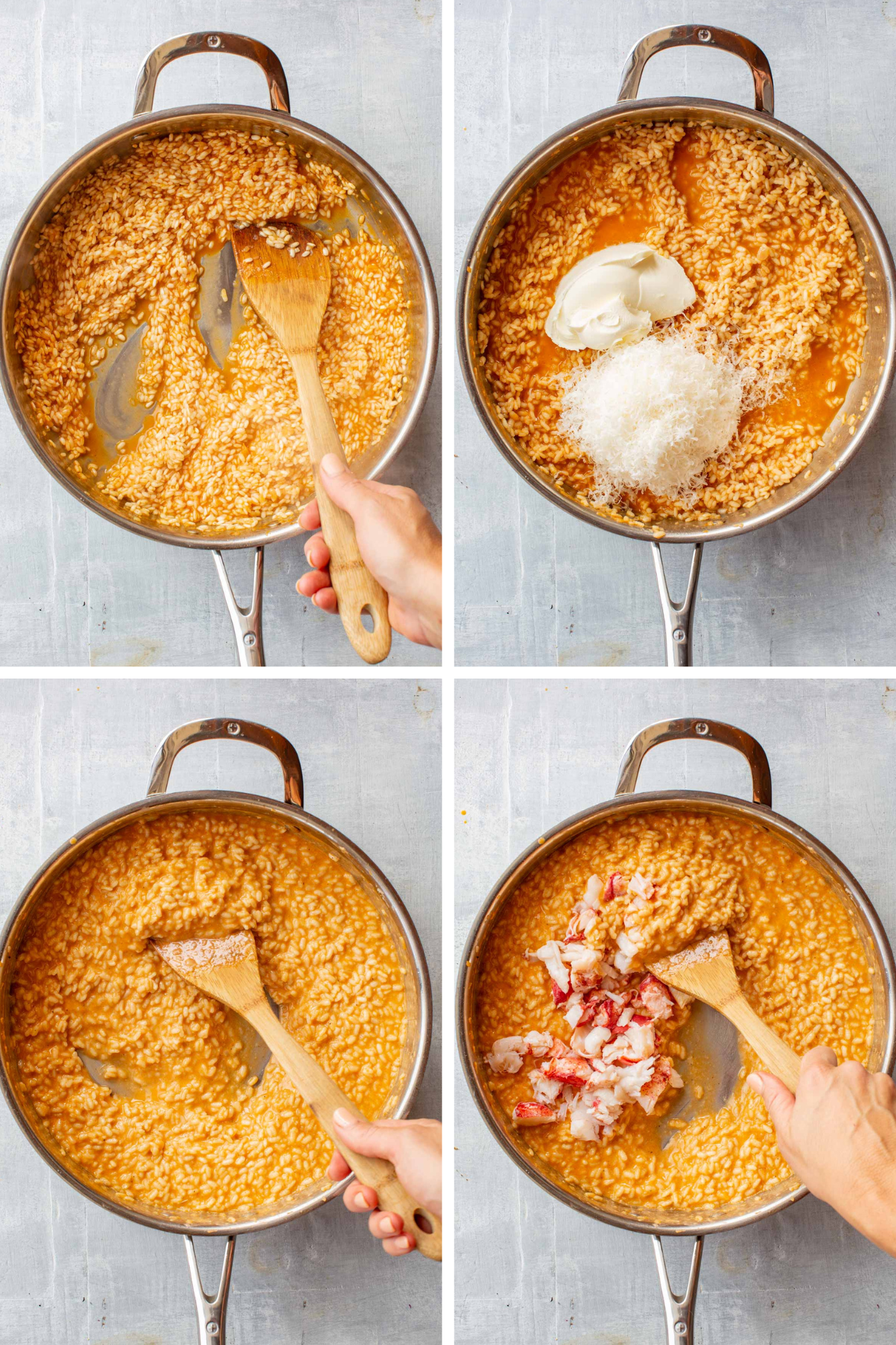
- Keep cooking and stirring until the rice is creamy and mostly cooked through, but with a slight firmness in the center, about 20 minutes total. Keep the risotto slightly looser since it will continue to thicken.
- Remove from the heat, then vigorously stir in the mascarpone, sherry, and Parmigiano Reggiano. Add another splash of hot lobster stock as needed until the risotto is loose and creamy enough to slowly spread across a plate.
- Gently fold in the lobster meat for about 30 seconds or so until the lobster is warmed through.
- Taste and adjust the seasoning with more salt and freshly cracked black pepper. Garnish with fresh chives and serve immediately in warm shallow bowls.
Pro Tip: Warm your plates before serving. Risotto cools and thickens fast, so warming the serving bowls or plates in a low oven for a few minutes helps it hold its creamy texture at the table.
Best Lobster Risotto Recipe Tips
- Don't rinse the rice. The surface starch helps create the creamy consistency.
- The amount of stock needed will vary. Have the full 5 cups hot and ready, but don't force all of it into the risotto if the rice is already properly cooked. Keep any extra on hand for loosening the risotto just before serving.
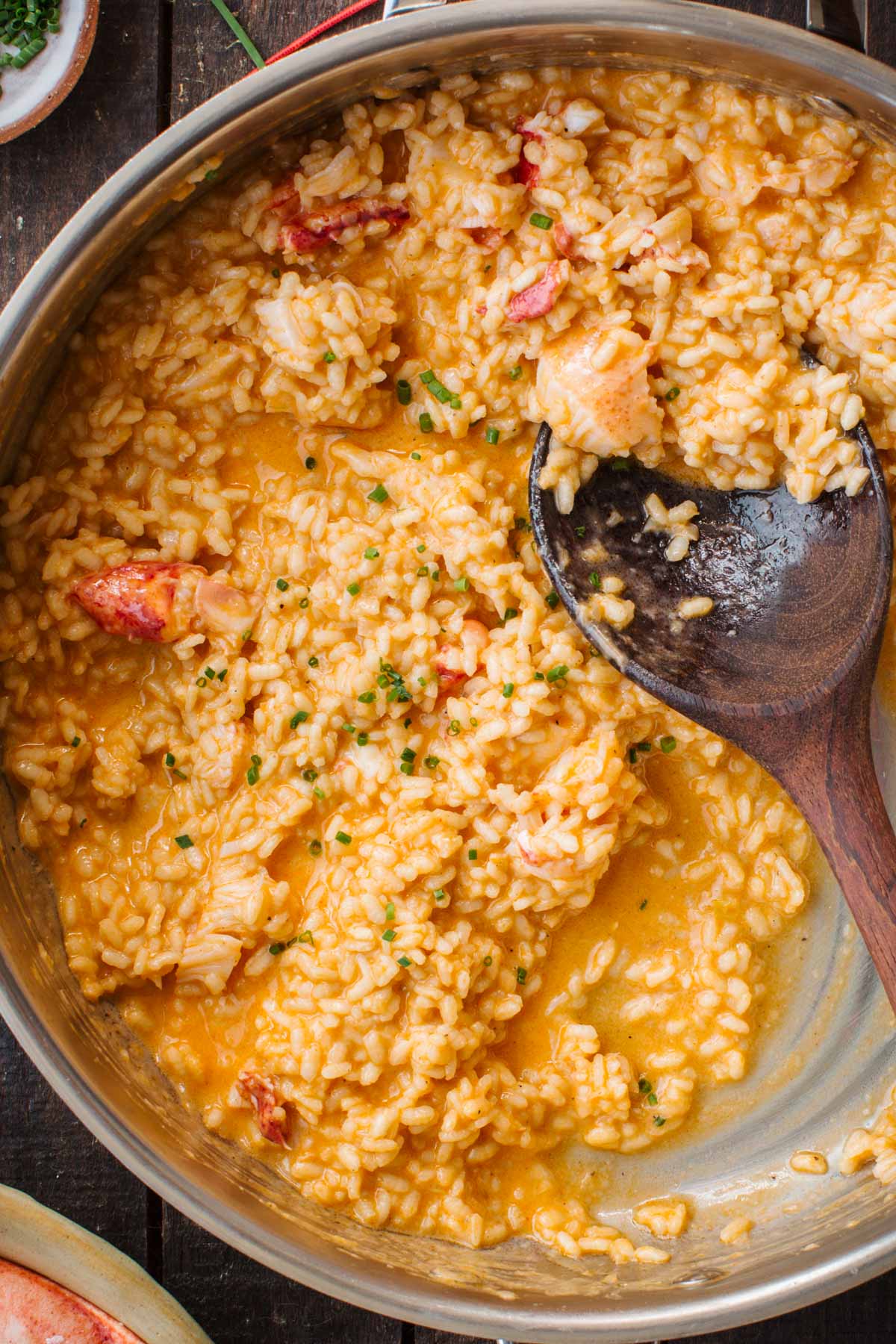
- The finished risotto should be al dente and all'onda, loose enough to ripple in the pan and slowly spread across the plate rather than hold its shape.
- Serve immediately. Risotto continues absorbing liquid and thickening as it sits.
Variations
- Swap out the lobster for shrimp and shrimp stock for a more budget-friendly version that's still super delicious.
- Add a handful of frozen peas or chopped asparagus in the last few minutes of cooking for color and freshness.
- Use saffron threads steeped in the warm stock for an extra golden hue and a subtle, floral note that will complement lobster and give a nod to Risotto alla Milanese.
How to serve Risotto with Lobster
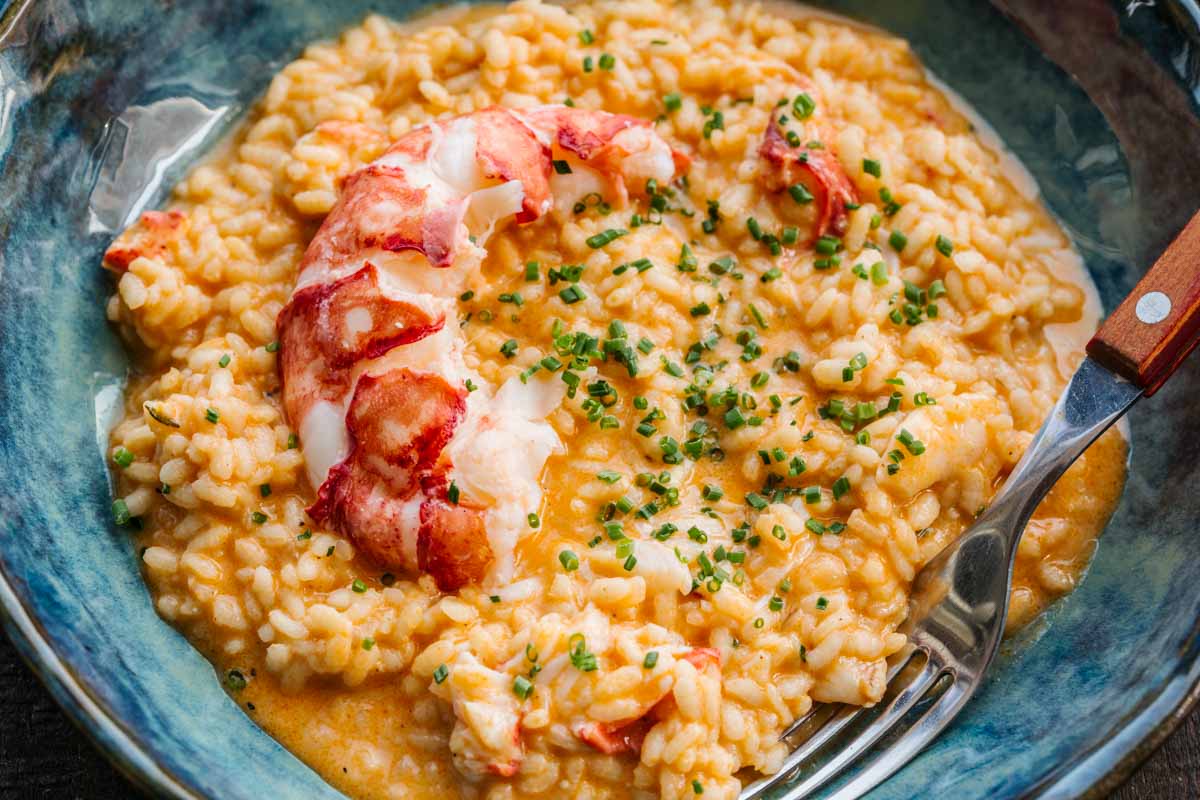
This silky, restaurant-style lobster risotto is great on its own, but I love serving it with a nice salad or a few simple veggie sides.
Try it with a classic Caesar salad made tableside, a vibrant celery salad with dates, walnuts, and Parmigiano, a crisp shaved fennel salad with hazelnuts and olives, or some smoky roasted asparagus with Parmesan breadcrumbs.
And definitely serve it with some good crusty bread or some fluffy homemade focaccia to mop up every last bit.
Storing leftover Lobster Risotto
Risotto is best eaten fresh, but leftovers can be refrigerated in an airtight container for up to 2 days. It will firm up as it chills, since rice keeps absorbing liquid.
To reheat, warm it gently on the stovetop over low heat, adding a splash of stock or water, a little bit at a time, and stirring until it loosens back up and turns creamy. Do not overcook, or the lobster will get tough and the risotto will get mushy.
FAQs
Carnaroli is the gold standard for risotto because it holds its al dente bite especially well, but Arborio is more widely available and works nearly as well.
Yes. Use 4 lobster tails, or more, depending on size, budget, and preference. Thaw them fully, then steam or boil until just cooked through (about 1 minute per ounce), then follow the same steps detailed in the introduction.
Make up for the lost liquid with extra stock and add a small squeeze of lemon juice or sherry vinegar towards the end for acidity. The result won't be the same but it will still taste good.
This usually means the rice was overcooked, you stirred too aggressively, or you added all the stock at once, which boils the rice instead of letting it slowly release starch into a creamy sauce.




Did you LOVE this recipe? Please leave a star ⭐️ rating and comment and tag your creations @ColeyCooks on Instagram!
Want to Save This Recipe?
Enter your email & I'll send it to your inbox.
By submitting this form, you consent to receive emails from Coley Cooks.

Best Recipe for Lobster Risotto
Ingredients
- 2 live lobsters 1¼ - 1½ pounds each
- 1 tablespoon extra virgin olive oil
- 3 tablespoons butter
- 1 shallot large size, or two small shallots, finely minced
- 1 garlic clove small size, finely minced
- 1 ½ cups Carnaroli or Arborio rice
- 1 teaspoon tomato paste
- ½ teaspoon paprika
- ¼ cup brandy or cognac
- ½ cup dry white wine
- 5 cups homemade lobster stock kept hot
- 1 teaspoon kosher salt plus more to taste
- ½ cup Parmigiano Reggiano finely grated
- 2 tablespoons cream sherry
- ½ cup mascarpone cheese
- 2 tablespoons fresh chives finely chopped
Instructions
- Bring a large pot of well-salted water to a boil. Add the lobsters, cover and cook for about 8 minutes, until the shells are bright red but the meat is just barely cooked through. Transfer immediately to a bowl and cover with ice to stop the cooking.2 live lobsters
- Remove the tail, claw, and knuckle meat from the shells. Cut the ragged ends from the tails and set aside, then slice the tails in half lengthwise and remove the vein. Cut the tail end pieces and claws into bite size chunks, then refrigerate the lobster meat until needed. Reserve the shells for making lobster stock.
- Add the lobster stock to a saucepan and keep it hot over low heat.5 cups homemade lobster stock
- Heat the olive oil and butter in a wide, heavy-bottomed saucepan over medium heat. Add the shallot and cook until soft and translucent, about 3 minutes. Add the garlic and stir for about 30 seconds.1 tablespoon extra virgin olive oil, 3 tablespoons butter, 1 shallot , 1 garlic clove
- Add the rice and cook, stirring frequently, until the grains are glossy and lightly toasted around the edges, about 2 minutes.1 ½ cups Carnaroli
- Stir in the tomato paste and paprika until fully combined, then continue stirring for another minute.1 teaspoon tomato paste, ½ teaspoon paprika
- Lower the heat, add the brandy, and cook, stirring, until almost completely evaporated, about 1-2 minutes.¼ cup brandy
- Add the white wine and return the heat to medium. Simmer, stirring frequently, until the liquid is reduced and almost completely absorbed, about 2-3 minutes.½ cup dry white wine
- Stir in a ladleful (about ½ - ¾ cup) of hot lobster stock and the salt. Cook at a steady simmer, stirring frequently, until most of the liquid has been absorbed.1 teaspoon kosher salt
- Continue adding stock ½ - ¾ cup at a time every few minutes. Stir continuously and don't add more stock until it's mostly absorbed. Adjust the heat as needed to maintain a steady simmer.
- Keep cooking and stirring until the rice is creamy and mostly cooked through, but with a slight firmness in the center, about 20 minutes total. Keep the risotto slightly looser since it will continue to thicken.
- Remove from the heat, then vigorously stir in the mascarpone, sherry, and Parmigiano Reggiano. Add another splash of hot lobster stock as needed until the risotto is loose and creamy enough to slowly spread across a plate.½ cup Parmigiano Reggiano, 2 tablespoons cream sherry, ½ cup mascarpone cheese
- Gently fold in the lobster meat for about 30 seconds or so until the lobster is warmed through.
- Taste and adjust the seasoning with more salt and freshly cracked black pepper. Garnish with fresh chives and serve immediately in warm shallow bowls.2 tablespoons fresh chives
Notes
- Don't rinse the rice. The surface starch helps create the creamy consistency.
- The amount of stock needed will vary. Have the full 5 cups hot and ready, but don't force all of it into the risotto if the rice is already properly cooked. Keep any extra on hand for loosening the risotto just before serving.
- The finished risotto should be al dente and all'onda, loose enough to ripple in the pan and slowly spread across the plate rather than hold its shape.
- Serve immediately. Risotto continues absorbing liquid and thickening as it sits.
- Keep the lobster stock hot while cooking the risotto. Adding cold stock slows the cooking and makes it harder to achieve the right texture.
- Warm your plates before serving. Risotto cools and thickens fast, so warming the serving bowls or plates in a low oven for a few minutes helps it hold its creamy texture at the table.






I made the lobster risotto along with the lobster stock and it was excellent!
Actually I wasn’t surprised because I find Coley’s recipes to be outstanding! It’s apparent to me that she takes great pride in her work!
I'm so happy the risotto and stock both turned out great! Thank you so much for taking the time to leave such a lovely review. I appreciate it so much!