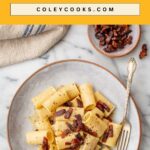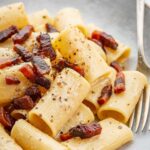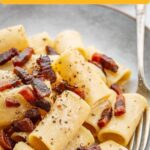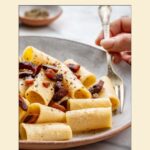
Pasta alla Gricia
Pasta alla Gricia is a classic Roman pasta dish made with just guanciale, Pecorino Romano and black pepper. With the right technique, these simple ingredients transform into a silky, savory sauce that coats the pasta beautifully. This easy, step-by-step recipe is packed with expert tips so you can make it perfectly every time, even on your first try.
This post may contain affiliate links.
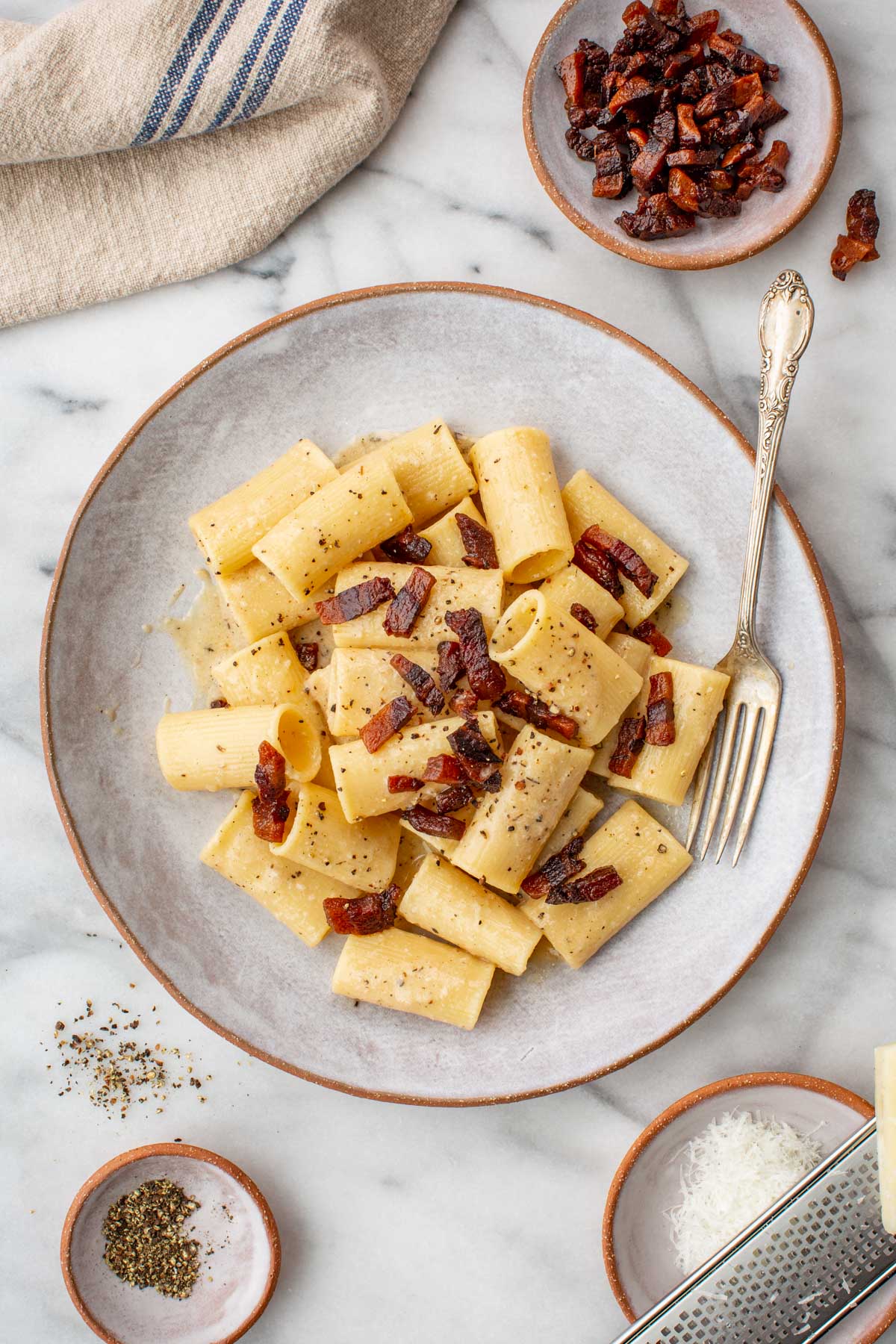
What is Pasta alla Gricia?
Pasta alla gricia is one of the four classic pastas of Rome. It consists of pasta tossed with a sauce of rendered guanciale, Pecorino Romano cheese and pasta water, seasoned with plenty of black pepper.
The other three classic Roman pastas have a lot of the same techniques and ingredients. Carbonara has a sauce of egg yolk, guanciale, pasta water, Pecorino Romano and black pepper. Cacio e pepe only has black pepper, Pecorino Romano and pasta water. While amatriciana has guanciale, tomato, Pecorino Romano, black pepper and white wine.
Pasta alla gricia is basically a carbonara without the eggs, or cacio e pepe with guanciale added. It's also similar to amatriciana, but creamy and without tomato or wine. They are all super punchy and depend on good emulsification for their texture.
Like the other Roman classics, gricia is one of the simplest pastas to make, requiring only four ingredients, but it can be a bit tricky to get it just right. It requires careful technique to blend the ingredients into a silky sauce.
I've been making pasta alla gricia for decades and have developed a few key methods to achieve my perfect version. It has a creamy texture without the cheese clumping up, while keeping the pasta perfectly al dente, the guanciale extra crispy and the final dish not too salty.
If you read this post carefully and follow all these tips, I can guarantee you pasta alla gricia perfection, even on your first try!
And remember, like most simple Italian recipes, the quality of ingredients really matters, especially when there are so few.
The Guanciale
A lot of recipes and restaurants in Rome do not crisp up the guanciale as much as I like. Personally, I find that sometimes it can be a bit chewy, so I like to cook it until it's extra crispy.
The best way to achieve that is to start it in a cold pan and let it cook slowly over low heat. This also allows it to release a lot more of its fat, which helps create a really nice creamy sauce.
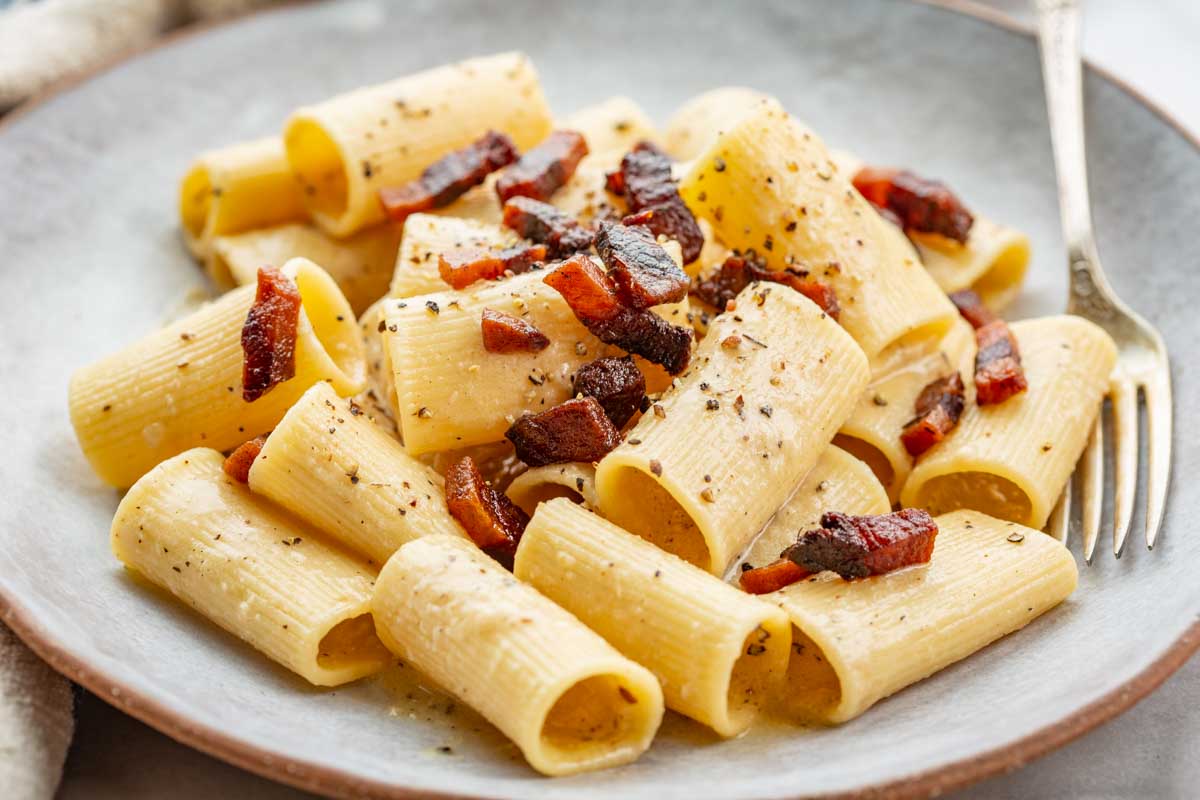
The Cheese
I like to first mix the grated Pecorino cheese with a little bit of hot pasta water. This helps to temper it a bit before adding it to the pan and keeps it from clumping up immediately.
It's also important to turn off the heat and let the pan cool down for a minute, otherwise the heat will cause the cheese to immediately melt and stick to the pan rather than blend smoothly into the sauce.
Emulsification and Final Steps
For proper emulsification, you need to toss vigorously and stir constantly to keep everything moving. This will also prevent the cheese from clumping. As soon as it looks glossy and creamy, it's done.
Transfer to a plate, top with the guanciale, and serve immediately. This pasta doesn't sit well or reheat well. It's meant to be eaten as soon as it's finished cooking.
For more simple classic pasta recipes, try this silky spaghetti aglio e olio, this easy and healthy pasta con broccoli or old school fresh pasta pomodoro.
Why This Recipe Works
- Made with only 4 ingredients and comes together in 20 minutes.
- Extremely simple to make and you only need a few key tips to make it perfect.
- Starting the guanciale in a cold pan and rendering over low heat makes it extra crispy and releases more fat for the sauce.
- Mixing grated cheese with hot pasta water tempers it to prevent clumping.
- Boiling the pasta just shy of al dente then finishing it in the pan guarantees a perfect texture.
- Tossing vigorously helps the sauce emulsify and cling to the pasta.
- Toasting the black pepper in guanciale fat brings out its flavor.
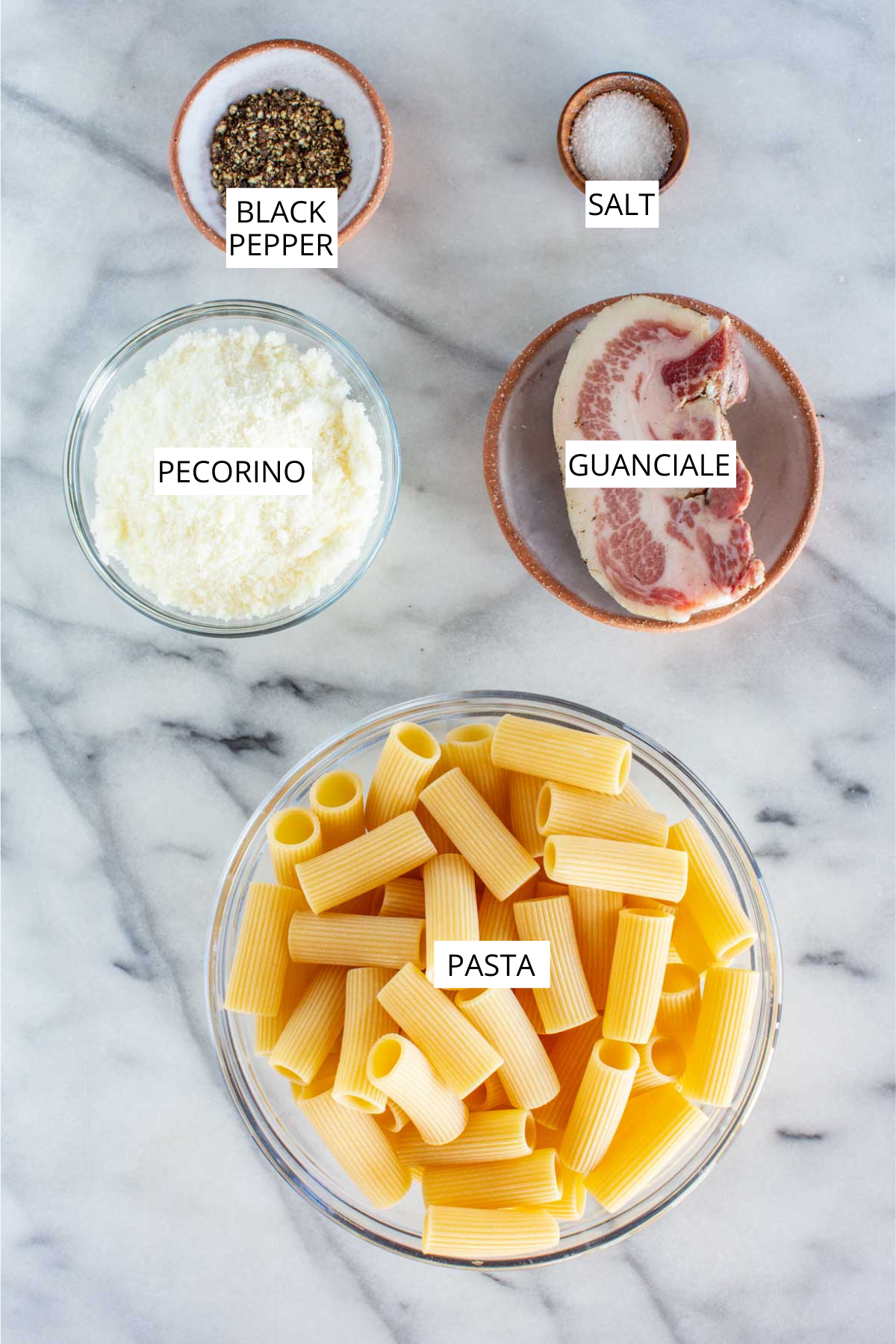
Ingredients for Pasta alla Gricia
Pasta - Gricia can be made with just about any pasta shape, long or short, but I really prefer it with a large tubular pasta like rigatoni. The ridges also help the sauce cling. Use a good quality brand that's been slow dried and bronze die extruded. Choosing the right pasta makes a big difference, and this Italian dried pasta guide will show you exactly what to look for.
Pecorino Romano - Good quality Pecorino Romano is absolutely crucial. I suggest Locatelli or any other DOP imported dry, salty Pecorino Romano. Avoid cheap domestic versions which will clump easier and will not blend as smoothly into a sauce. If you want to understand what sets them apart, this breakdown of Italian cheeses explains it clearly.
Guanciale - While not so easy to source in the United States, this Italian cured pork product is essential to make this recipe. Try to find it at an Italian supermarket or even order it online. Depending on the type and age of guanciale used, you may want to trim the outer layer since it can be tough and hard to chew. If needed, you can substitute pancetta or even smoked American bacon for a less traditional version with a different flavor.
Black pepper - The quality of pepper matters here. Use whole peppercorns that you grind up coarsely with an adjustable pepper mill, mortar and pestle or place them in a plastic bag and smash them with a meat mallet or rolling pin. Do not use pre-ground pepper, it will not have the same flavor. It also really helps to toast the pepper first to bring out its flavor. You can toast whole peppercorns in the oven in advance, or simply toast the ground pepper in the guanciale fat as you're cooking the sauce.
*Find the full ingredient list in the recipe card below!
Helpful Equipment
- Large pot
- Large skillet
- Slotted spoon
- Ladle
- Colander
- Microplane
How to Make Pasta alla Gricia
- Bring a large pot of water to a boil and season lightly with salt. Since both the guanciale and Pecorino Romano contain plenty of salt, it's important not to oversalt the pasta water.
Pro Tip: In classic Roman pasta recipes like cacio e pepe and gricia, cooking the pasta in less water will produce a more concentrated starchy pasta water. The low-water method increases the concentration of starch, which helps the sauce thicken and cling to the noodles even better. Add just enough salted boiling water to cover the pasta in a 12-inch skillet or a sauté pan instead of the regular large pot.
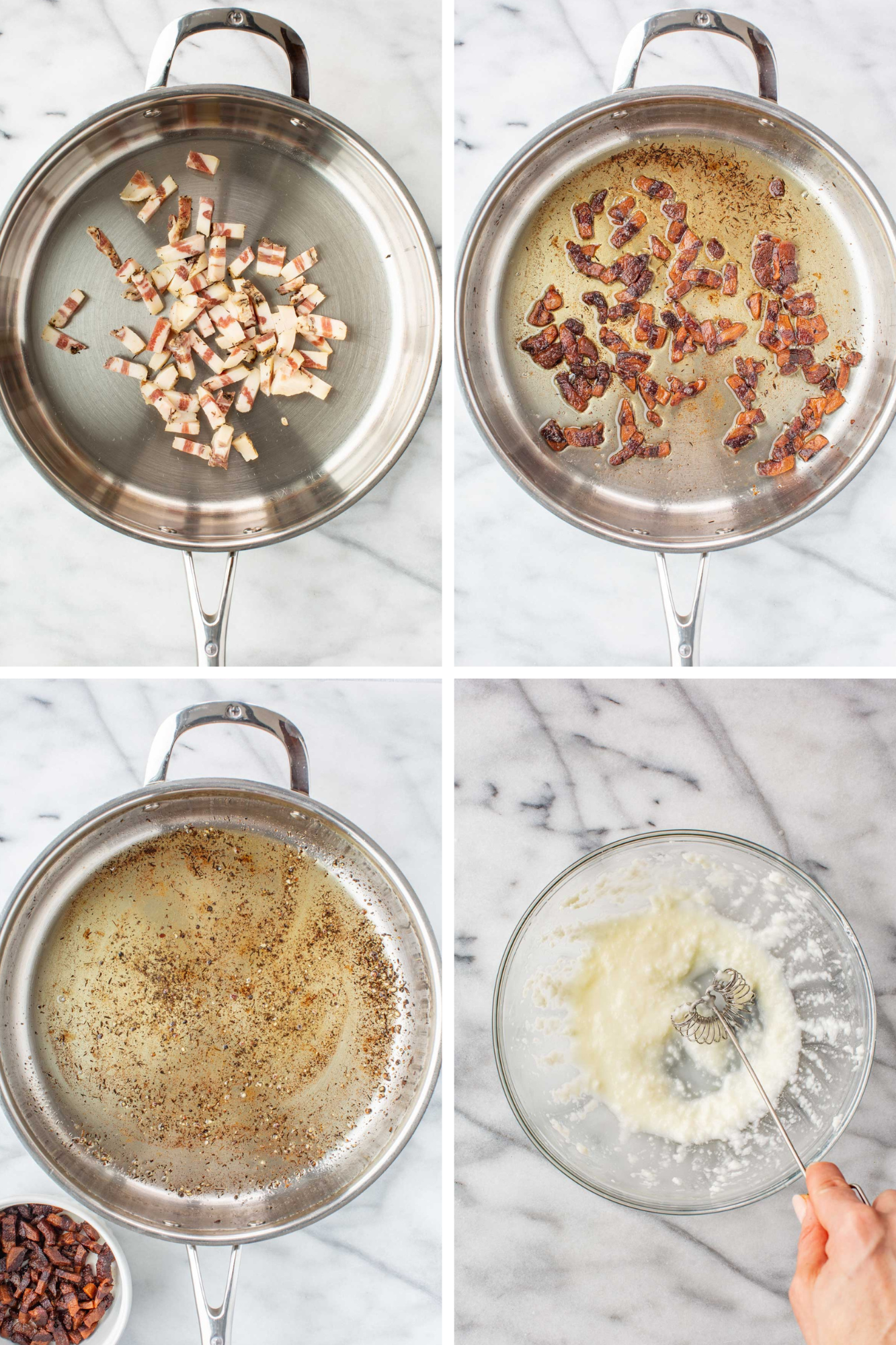
- Add the guanciale to a cold, large skillet in a single layer while the pan is still cold. Place over low heat and cook slowly, stirring occasionally, until the fat renders and the guanciale turns golden brown and crisp, about 8-10 minutes. Use a slotted spoon to transfer it to a plate, leaving the rendered fat in the pan. Turn off the heat.
- Add the pasta to the boiling water and cook until just shy of al dente, about 5-6 minutes, depending on the brand and shape. It will continue cooking in the pan, so be careful not to overcook it at this step.
- While the pasta cooks, place the Pecorino Romano in a medium bowl. Ladle in a small amount of hot pasta water and whisk until it forms a smooth, thick cream. Add a little more water as needed until the mixture is silky and pourable.
Pro Tip: Use very finely grated good quality Pecorino Romano to ensure it melts smoothly and doesn't clump. The best tool for this is a Microplane. You can also process it into a fine sand in the blender, being careful to not go too far and turn it into a paste.
- When the pasta is almost done cooking, place the pan with the rendered fat back over medium heat, then add the coarsely ground black pepper and let it toast for about 30 seconds. Do not let it burn.
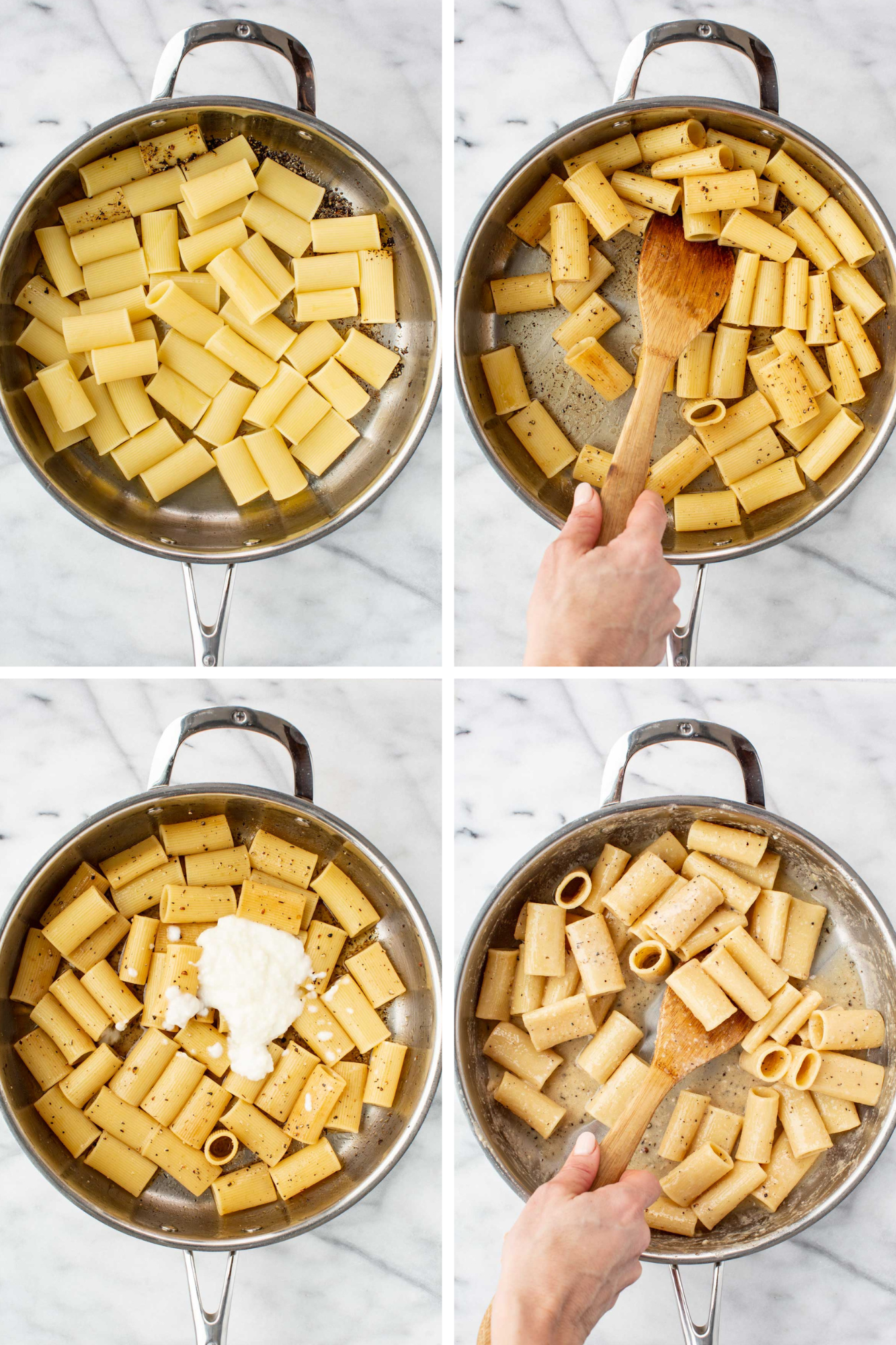
- Before draining the pasta, make sure you reserve plenty of pasta water, then use a spider or slotted spoon to transfer the pasta to the pan along with about ½ cup of the water.
- Continue cooking the pasta in the skillet, adding small splashes of pasta water as needed, while you vigorously toss and stir. The goal is to emulsify the pasta water with the fat to create a sauce.
- Continue cooking until the pasta is perfectly al dente and there is still a small amount of liquid in the pan. Turn off the heat and let the pan cool slightly. If the pan is too hot, the cheese will seize up rather than form a creamy sauce.
- Add the Pecorino cream and immediately toss the pasta vigorously until the sauce becomes glossy, creamy and clings to the pasta. If the sauce looks too thick, add a small splash of pasta water and continue tossing.
- Taste and adjust with more black pepper and a pinch of salt only if needed.
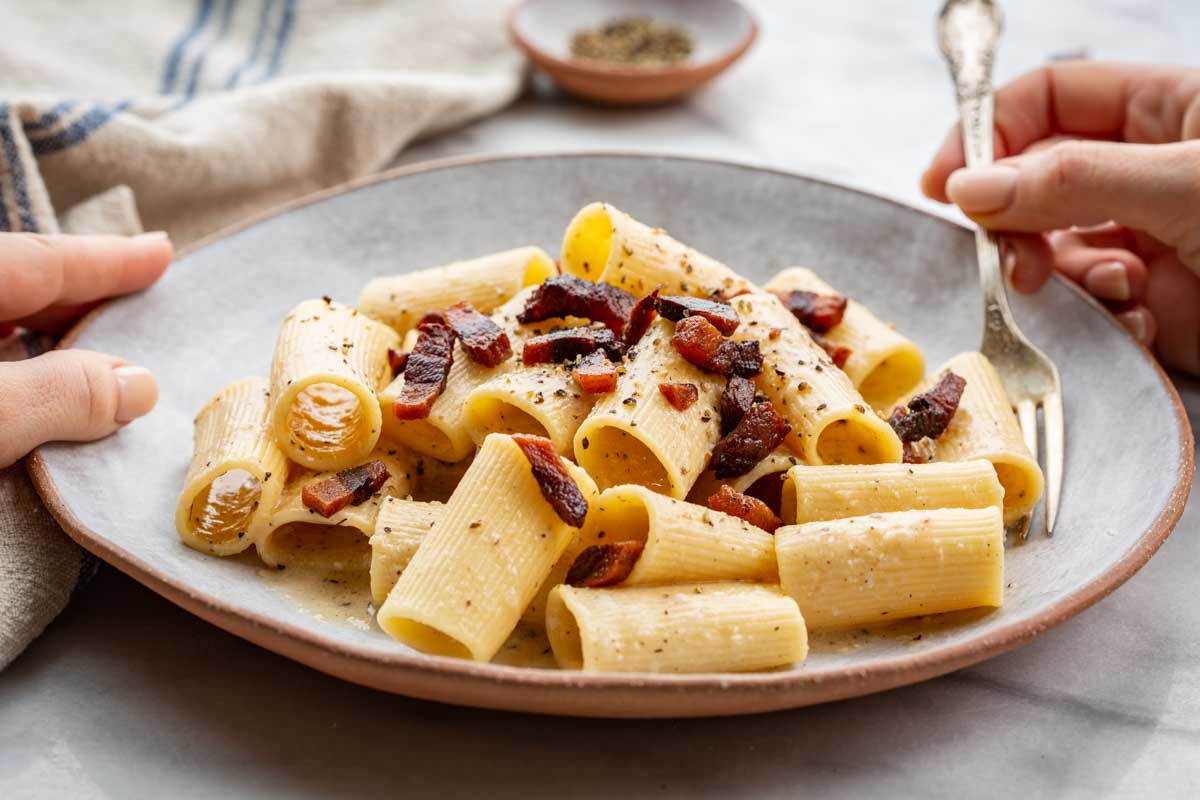
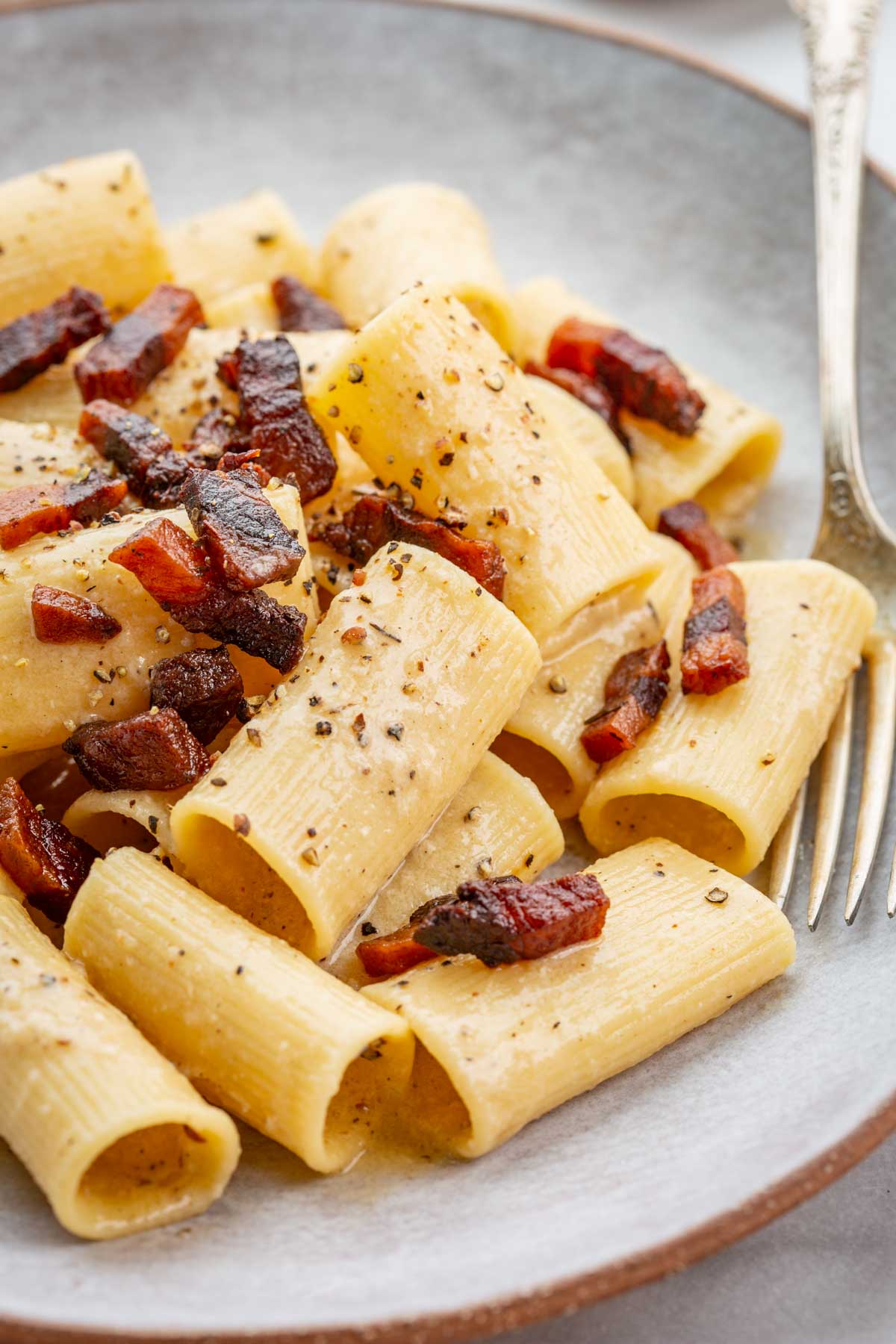
- Divide the pasta between bowls, then spoon the crispy guanciale over the top and serve immediately with extra grated cheese and black pepper on the side.
Coley's Tips For Success
- Cutting the guanciale into lardons or small batons ensures that there's an even distribution of fat and meat in almost every piece.
- Start the guanciale in a cold pan and keep the heat low. Slowly rendering the fat keeps the meat tender and allows the fat to fully melt out.
- Blooming the pepper in the guanciale fat wakes up its flavor and spreads it evenly through the sauce. Don't skip it!
- Save plenty of pasta water when draining. The starch in the water is essential for creating the silky sauce.
- Pasta brands vary widely in cook time. The goal is to transfer the pasta about 2-3 minutes before the package's suggested al dente time, then finish cooking it in the pan with the guanciale fat and pasta water. This allows it to absorb flavor and release starch that helps emulsify the sauce.
- Cool down the pan before adding the cheese. High heat will cause Pecorino to clump instead of melting smoothly.
- Toss vigorously. The motion helps emulsify the cheese, fat and pasta water into a glossy sauce.
Pasta alla Gricia Variations
- While it's more classic to serve gricia with short tube-shaped pasta, it's also delicious with longer shapes like classic spaghetti, linguine or bucatini. Something fun like Garofalo's long fusilli would also be excellent.
- If you really can't find guanciale, use pancetta or American bacon. Guanciale has a funkier, more complex and stronger flavor, while pancetta is milder and sweeter, and bacon is smokier.
- Pecorino Romano's tangy and salty flavor stands up to the intense guanciale and black pepper. For a milder, less traditional version of gricia, you can substitute with Parmigiano Reggiano or Grana Padano.
What to Serve with Gricia Pasta
This is a rich, hearty pasta dish that's best paired with veggies or a salad. Try this easy sautéed broccoli rabe with garlic or my punchy escarole greens with olives and capers.
You can't go wrong with a classic tableside Caesar salad recipe, a simple arugula salad with Parmigiano, or a basic mixed greens salad with a homemade balsamic vinaigrette.
Don't forget to serve with a hunk of crusty bread or a slice of fluffy homemade focaccia to mop up all that delicious gricia sauce.
How to Store and Reheat Pasta alla Gricia
This pasta doesn't sit or reheat well. It's meant to be eaten on the spot for the best texture and flavor. This recipe only takes a few minutes to toss together, so try to only make as much as you need and eat it fresh for the best experience.
If you have leftovers, store it in an airtight container in the fridge for up to 3 days. Reheat in a skillet over low heat with a splash of water while covered. When hot, toss vigorously to bring the sauce together again.
FAQs
Gricia, cacio e pepe, amatriciana and carbonara are the four classic Roman pastas.
Guanciale is an Italian cured meat product made from pork cheek that is air-dried. It has a high fat content and a very intense salty flavor that is essential for Italian pasta recipes like carbonara, gricia and amatriciana.
It's not recommended. Guanciale is specific to this recipe and brings a crunchy texture and salty, funky pork flavor while rendering plenty of fat that is emulsified into the sauce. You can always use pancetta or even smoked bacon, but it will not be the same.
They're both classic Roman pastas made with Pecorino Romano, guanciale and black pepper. The main difference is that carbonara has the addition of eggs or egg yolks, while Gricia is emulsified with only the rendered fat, cheese and pasta water.
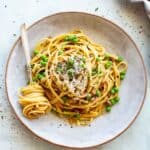
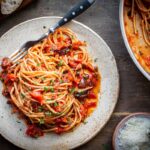

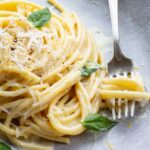
Did you LOVE this recipe? Please leave a star ⭐️ rating and comment and tag your creations @ColeyCooks on Instagram!
Want to Save This Recipe?
Enter your email & I'll send it to your inbox.
By submitting this form, you consent to receive emails from Coley Cooks.
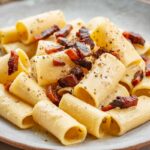
Traditional Pasta alla Gricia
Ingredients
- ½ pound rigatoni or any other pasta shape
- 4 ounces guanciale cut into short strips or small cubes
- 1 to 1 ½ teaspoons black pepper coarsely ground
- ⅔ cup Pecorino Romano very finely grated, Locatelli recommended
- kosher salt sparingly, as needed
Instructions
- Bring a large pot of water to a boil and season lightly with salt. Since both the guanciale and Pecorino Romano contain plenty of salt, it's important not to oversalt the pasta water.
- Add the guanciale to a cold, large skillet in a single layer while the pan is still cold. Place over low heat and cook slowly, stirring occasionally, until the fat renders and the guanciale turns golden brown and crisp, about 8-10 minutes. Use a slotted spoon to transfer it to a plate, leaving the rendered fat in the pan. Turn off the heat.4 ounces guanciale
- Add the pasta to the boiling water and cook until just shy of al dente, about 5-6 minutes, depending on the brand and shape. It will continue cooking in the pan, so be careful not to overcook it at this step.½ pound rigatoni
- While the pasta cooks, place the Pecorino Romano in a medium bowl. Ladle in a small amount of hot pasta water and whisk until it forms a smooth, thick cream. Add a little more water as needed until the mixture is silky and pourable.⅔ cup Pecorino Romano
- When the pasta is almost done cooking, place the pan with the rendered fat back over medium heat, then add the coarsely ground black pepper and let it toast for about 30 seconds. Do not let it burn.1 to 1 ½ teaspoons black pepper
- Before draining the pasta, make sure you reserve plenty of pasta water, then use a spider or slotted spoon to transfer the pasta to the pan along with about ½ cup of the water.
- Continue cooking the pasta in the skillet, adding small splashes of pasta water as needed, while you vigorously toss and stir. The goal is to emulsify the pasta water with the fat to create a sauce.
- Continue cooking until the pasta is perfectly al dente and there is still a small amount of liquid in the pan. Turn off the heat and let the pan cool slightly. If the pan is too hot, the cheese will seize up rather than form a creamy sauce.
- Add the Pecorino cream and immediately toss the pasta vigorously until the sauce becomes glossy, creamy and clings to the pasta. If the sauce looks too thick, add a small splash of pasta water and continue tossing.
- Taste and adjust with more black pepper and a pinch of salt only if needed.kosher salt
- Divide the pasta between bowls, then spoon the crispy guanciale over the top and serve immediately with extra grated cheese and black pepper on the side.
Notes
- In classic Roman pasta recipes like cacio e pepe and gricia, cooking the pasta in less water will produce a more concentrated starchy pasta water. The low-water method increases the concentration of starch, which helps the sauce thicken and cling to the noodles even better. Add just enough salted boiling water to cover the pasta in a 12-inch skillet or a sauté pan instead of the regular large pot.
- Use very finely grated good quality Pecorino Romano to ensure it melts smoothly and doesn't clump. The best tool for this is a microplane. You can also process it into a fine sand in the blender, being careful to not go too far and turn it into a paste.
- Cutting the guanciale into lardons or small batons ensures that there's an even distribution of fat and meat in almost every piece.
- Start the guanciale in a cold pan and keep the heat low. Slowly rendering the fat keeps the meat tender and allows the fat to fully melt out.
- Blooming the pepper in the guanciale fat wakes up its flavor and spreads it evenly through the sauce. Don't skip it!
- Save plenty of pasta water when draining. The starch in the water is essential for creating the silky sauce.
- Pasta brands vary widely in cook time. The goal is to transfer the pasta about 2-3 minutes before the package's suggested al dente time, then finish cooking it in the pan with the guanciale fat and pasta water. This allows it to absorb flavor and release starch that helps emulsify the sauce.
- Cool down the pan before adding the cheese. High heat will cause Pecorino to clump instead of melting smoothly.
- Toss vigorously. The motion helps emulsify the cheese, fat and pasta water into a glossy sauce.