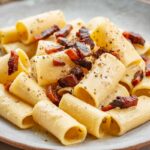
Traditional Pasta alla Gricia
Pasta alla Gricia is a classic Roman pasta dish made with just guanciale, Pecorino Romano and black pepper. With the right technique, these simple ingredients transform into a silky, savory sauce that coats the pasta beautifully. This easy, step-by-step recipe is packed with expert tips so you can make it perfectly every time, even on your first try.
Servings: 2
Calories: 958kcal
Ingredients
- ½ pound rigatoni or any other pasta shape
- 4 ounces guanciale cut into short strips or small cubes
- 1 to 1 ½ teaspoons black pepper coarsely ground
- ⅔ cup Pecorino Romano very finely grated, Locatelli recommended
- kosher salt sparingly, as needed
Instructions
- Bring a large pot of water to a boil and season lightly with salt. Since both the guanciale and Pecorino Romano contain plenty of salt, it’s important not to oversalt the pasta water.
- Add the guanciale to a cold, large skillet in a single layer while the pan is still cold. Place over low heat and cook slowly, stirring occasionally, until the fat renders and the guanciale turns golden brown and crisp, about 8-10 minutes. Use a slotted spoon to transfer it to a plate, leaving the rendered fat in the pan. Turn off the heat.4 ounces guanciale
- Add the pasta to the boiling water and cook until just shy of al dente, about 5-6 minutes, depending on the brand and shape. It will continue cooking in the pan, so be careful not to overcook it at this step.½ pound rigatoni
- While the pasta cooks, place the Pecorino Romano in a medium bowl. Ladle in a small amount of hot pasta water and whisk until it forms a smooth, thick cream. Add a little more water as needed until the mixture is silky and pourable.⅔ cup Pecorino Romano
- When the pasta is almost done cooking, place the pan with the rendered fat back over medium heat, then add the coarsely ground black pepper and let it toast for about 30 seconds. Do not let it burn.1 to 1 ½ teaspoons black pepper
- Before draining the pasta, make sure you reserve plenty of pasta water, then use a spider or slotted spoon to transfer the pasta to the pan along with about ½ cup of the water.
- Continue cooking the pasta in the skillet, adding small splashes of pasta water as needed, while you vigorously toss and stir. The goal is to emulsify the pasta water with the fat to create a sauce.
- Continue cooking until the pasta is perfectly al dente and there is still a small amount of liquid in the pan. Turn off the heat and let the pan cool slightly. If the pan is too hot, the cheese will seize up rather than form a creamy sauce.
- Add the Pecorino cream and immediately toss the pasta vigorously until the sauce becomes glossy, creamy and clings to the pasta. If the sauce looks too thick, add a small splash of pasta water and continue tossing.
- Taste and adjust with more black pepper and a pinch of salt only if needed.kosher salt
- Divide the pasta between bowls, then spoon the crispy guanciale over the top and serve immediately with extra grated cheese and black pepper on the side.
Notes
- In classic Roman pasta recipes like cacio e pepe and gricia, cooking the pasta in less water will produce a more concentrated starchy pasta water. The low-water method increases the concentration of starch, which helps the sauce thicken and cling to the noodles even better. Add just enough salted boiling water to cover the pasta in a 12-inch skillet or a sauté pan instead of the regular large pot.
- Use very finely grated good quality Pecorino Romano to ensure it melts smoothly and doesn’t clump. The best tool for this is a microplane. You can also process it into a fine sand in the blender, being careful to not go too far and turn it into a paste.
- Cutting the guanciale into lardons or small batons ensures that there’s an even distribution of fat and meat in almost every piece.
- Start the guanciale in a cold pan and keep the heat low. Slowly rendering the fat keeps the meat tender and allows the fat to fully melt out.
- Blooming the pepper in the guanciale fat wakes up its flavor and spreads it evenly through the sauce. Don’t skip it!
- Save plenty of pasta water when draining. The starch in the water is essential for creating the silky sauce.
- Pasta brands vary widely in cook time. The goal is to transfer the pasta about 2–3 minutes before the package’s suggested al dente time, then finish cooking it in the pan with the guanciale fat and pasta water. This allows it to absorb flavor and release starch that helps emulsify the sauce.
- Cool down the pan before adding the cheese. High heat will cause Pecorino to clump instead of melting smoothly.
- Toss vigorously. The motion helps emulsify the cheese, fat and pasta water into a glossy sauce.
Nutrition
Calories: 958kcal | Carbohydrates: 87g | Protein: 32g | Fat: 53g | Saturated Fat: 22g | Polyunsaturated Fat: 1g | Monounsaturated Fat: 3g | Cholesterol: 95mg | Sodium: 893mg | Potassium: 301mg | Fiber: 4g | Sugar: 3g | Vitamin A: 147IU | Calcium: 385mg | Iron: 2mg
