
Asparagus Ricotta Frittata
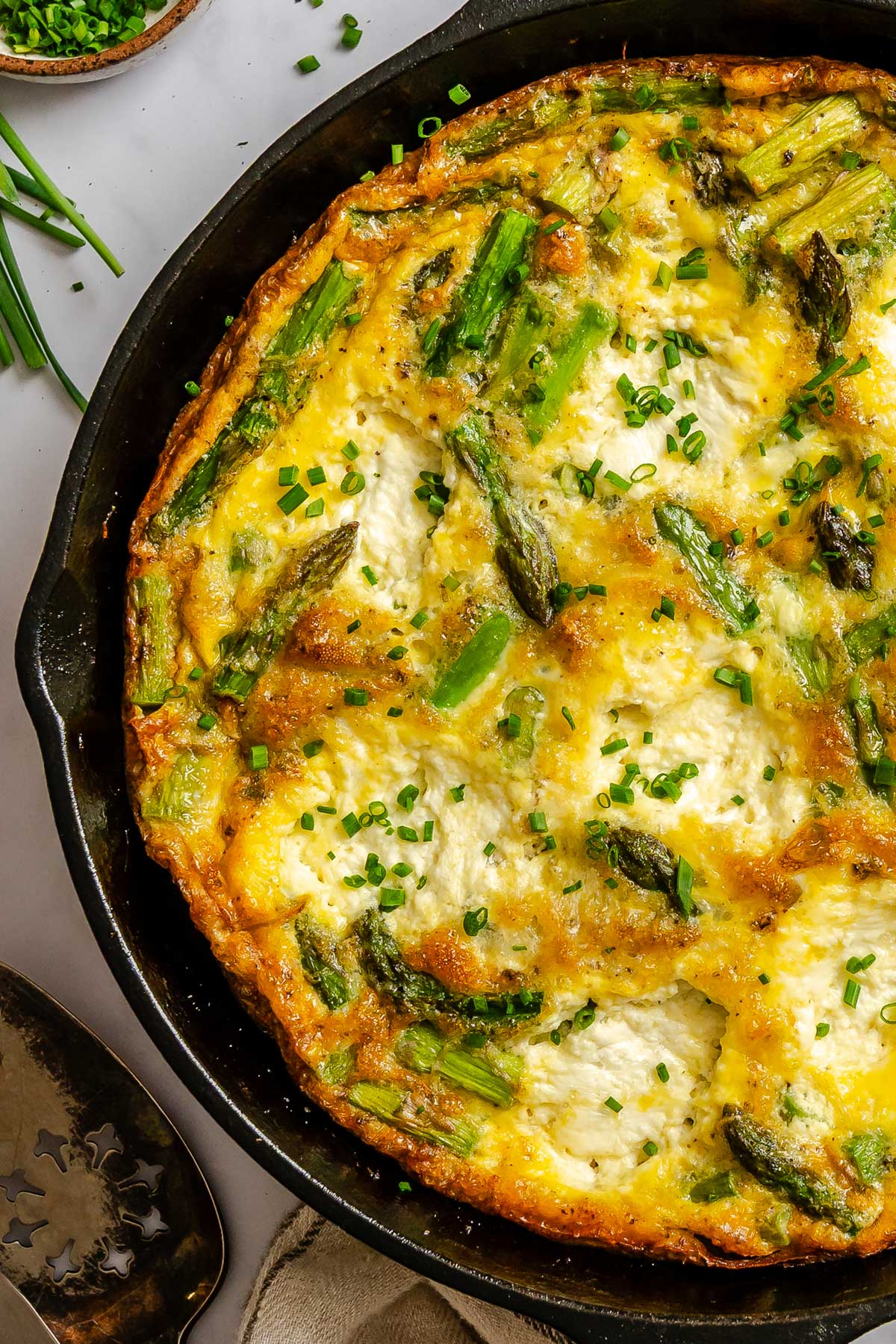
This easy asparagus frittata is a delicious and low-maintenance seasonal recipe that's light, simple, and so satisfying. Made with just a handful of ingredients, it comes together quickly for an unfussy, spring meal that can be served any time of day!
This post may contain affiliate links.
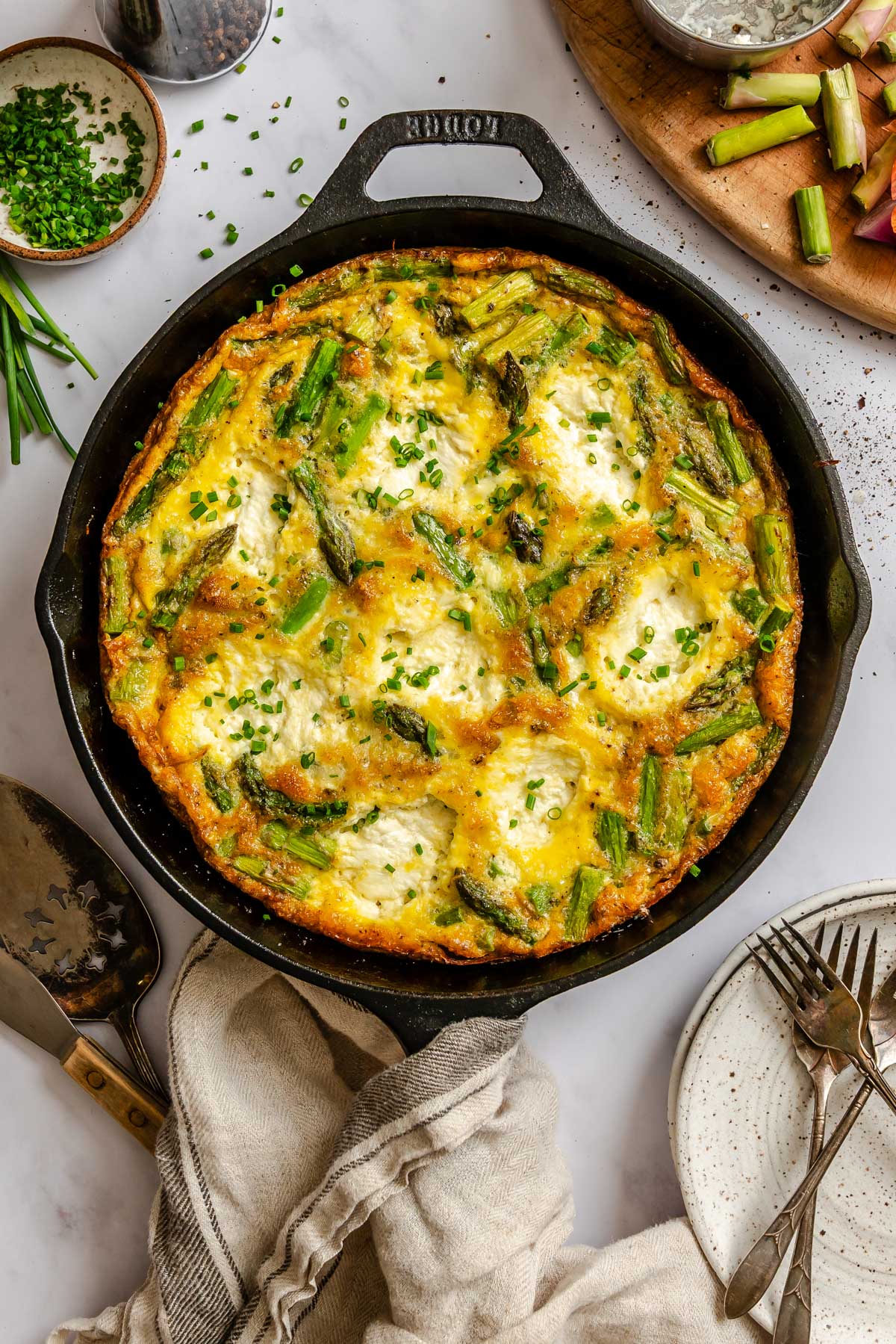
As soon as asparagus comes into season each spring, I start adding it to nearly every dish I make.
Here in New Jersey, asparagus season typically runs from early April through late May, and during that time I cook it as often as I can.
Asparagus might not be the first thing that comes to mind for breakfast, but I absolutely love it with eggs. It pairs beautifully with both eggs and ricotta, and this frittata brings them together in one simple, satisfying dish.
The great thing about frittatas is that they're great served any time of day, not just for breakfast. It's incredibly easy to make, and unlike quiche, it doesn't even require a crust!
It's also a really easy recipe to riff on. Swap out the ricotta for goat cheese or feta, use different herbs like parsley, dill or tarragon, mix in some cooked potatoes or pasta for bulk, or add a few extra eggs if feeding more people.
It's an extremely forgiving recipe.
While this recipe works with any asparagus, I prefer it with slightly thicker stalks, as I find the super pencil-thin spears to be a little bit stringy and not as tender and juicy.

It's also crucial to use really good quality eggs and ricotta cheese. Make sure your ricotta is thick and creamy, rather than runny, or it can make the frittata a bit watery. If necessary, drain it for 20-30 minutes in a strainer lined with cheesecloth, a tea towel, or even a paper towel before using.
I love making this asparagus frittata for a simple midweek lunch or having it as a light dinner with a good salad and crusty bread.
It's also a fantastic addition to brunch, especially on Easter morning, Mother's Day, or any other spring celebration. Throw in a few baked goods, some breakfast meats, and mimosas of course, and you have yourself a lovely little brunch worthy of any occasion!
For more delicious asparagus recipes, try this easy shaved asparagus salad with Pecorino, this beautiful asparagus quiche with goat cheese or a rich and creamy spring vegetable risotto with asparagus and peas.
Why This Recipe Works
- Ricotta and eggs perfectly complement the fresh, grassy and mildly sweet flavor of asparagus.
- Easy to make with only six ingredients plus salt and pepper.
- Comes together in under 30 minutes with only 10 minutes of active prep.
- Can be served any time of day for breakfast, brunch, lunch or dinner.
- A delicious seasonal recipe for spring gatherings like Easter, Passover, or Mother's Day!
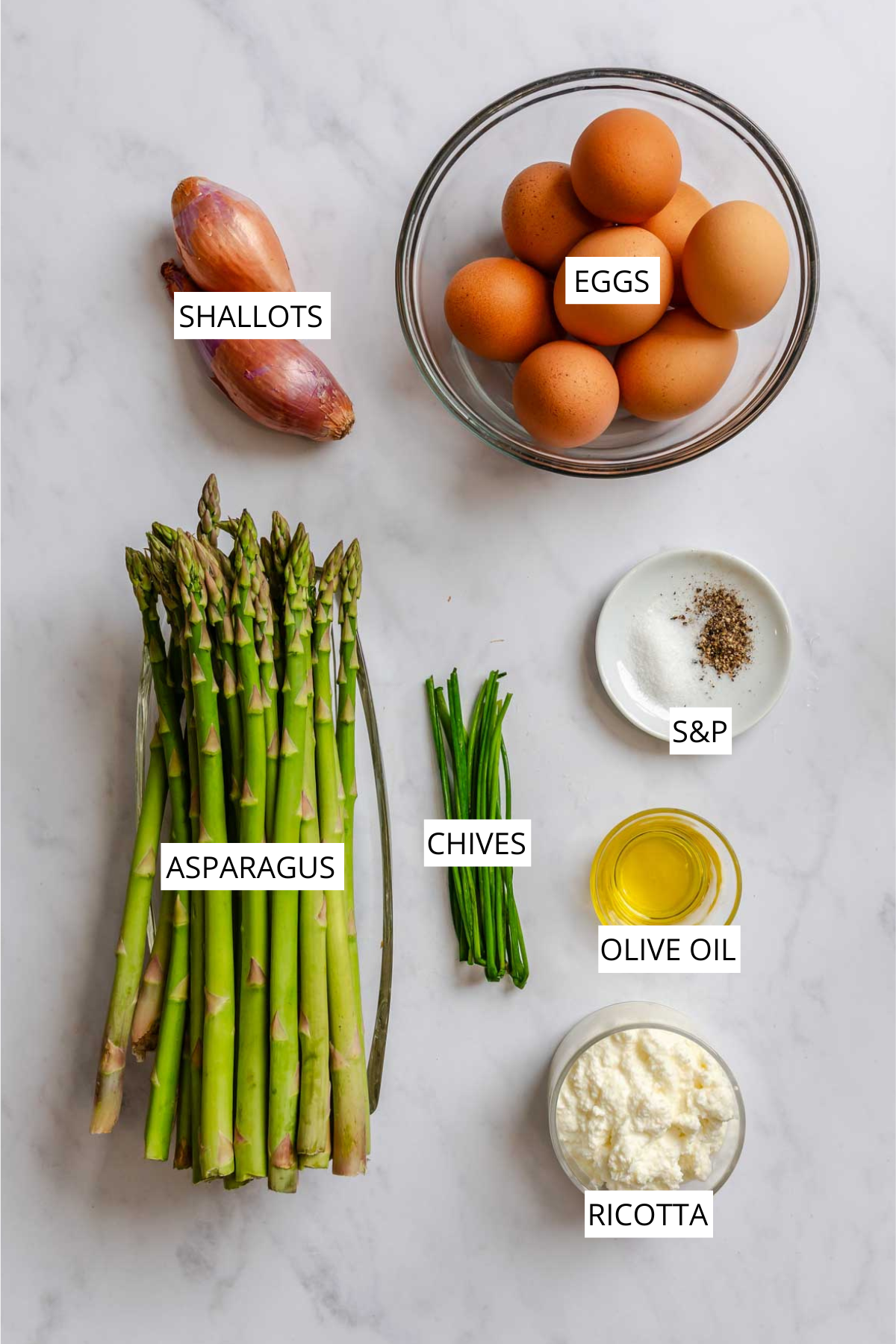
Ingredients for Asparagus Frittata
Asparagus - Look for medium-sized asparagus stalks for a tender and juicy texture. Use the most seasonal and fresh asparagus you can get.
Eggs - A frittata is only as good as the eggs it's made with. Use large, fresh pasture-raised, organic eggs if possible.
Ricotta - Use high-quality whole milk ricotta cheese that has been strained first for best results. You can also use my homemade ricotta cheese recipe, which is easy to make and adds a special touch.
Olive oil - Use extra virgin olive oil (learn how to choose good quality olive oil in my guide) for sautéing the shallots and cooking the asparagus.
Salt - I used Diamond Crystal Kosher Salt, which is less salty than other kinds, so you may need to use less if using iodized table salt.
*Find the full ingredient list in the recipe card below!
Helpful Equipment
- Oven
- 10-inch cast iron skillet
How to Make Asparagus Frittata
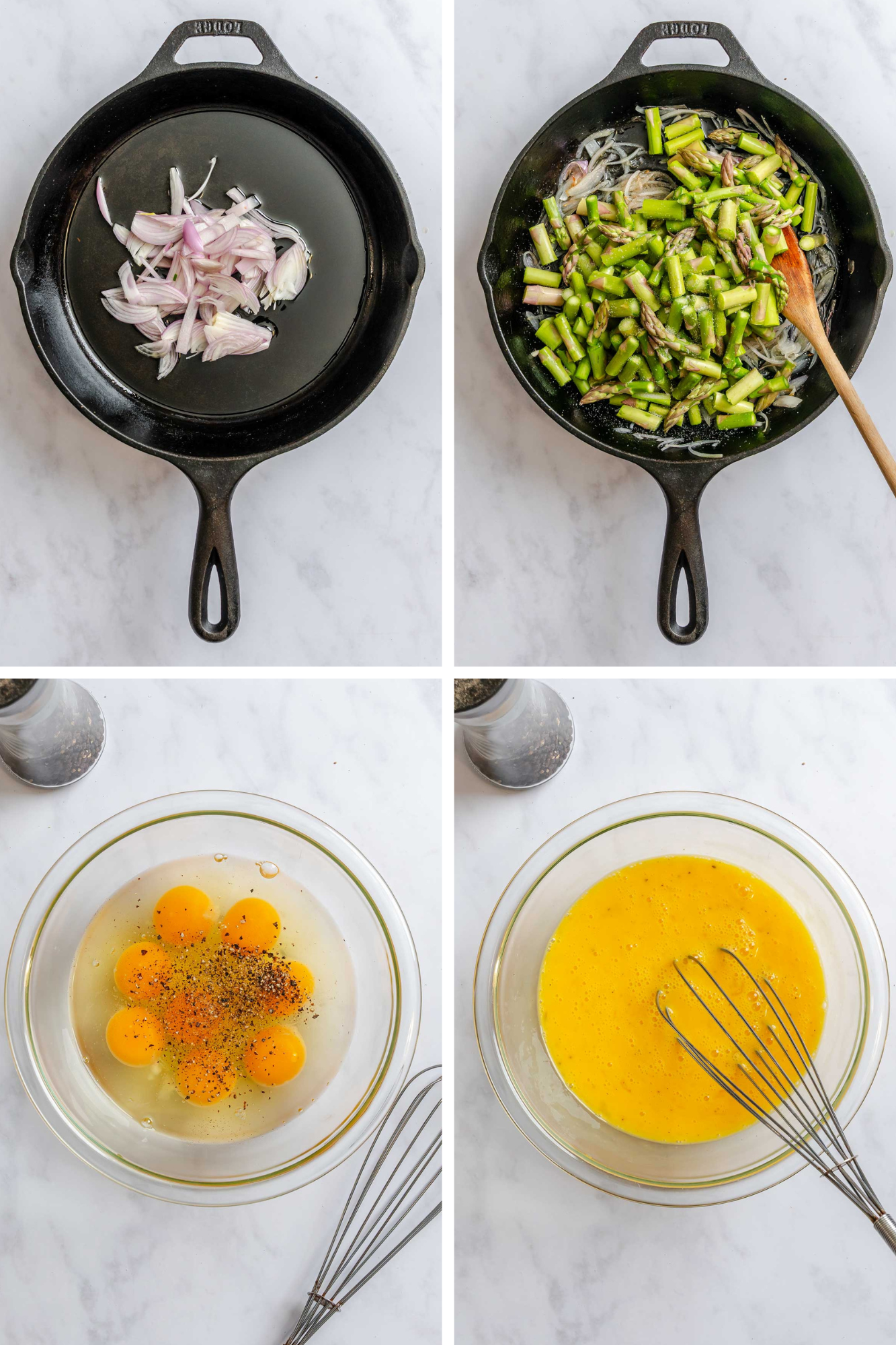
- Preheat the oven to 375°F.
- Heat the olive oil in a 10-inch cast iron skillet over medium heat.
- Add the shallots with a small pinch of salt and cook, stirring occasionally, until softened but not browned, about 3-4 minutes.
- Add the asparagus and cook for another 3-4 minutes until bright green and just beginning to soften. Season lightly with salt.
- In a medium bowl, beat the eggs with the ¾ teaspoon salt and plenty of black pepper.
Pro Tip: You might be tempted to overwhip the eggs, but you should beat them just enough to blend the whites and yolks. Overbeating will incorporate too much air and can result in a spongy texture, causing the frittata to puff up too much in the oven and then collapse like a soufflé, taking away from the custardy texture it should have.
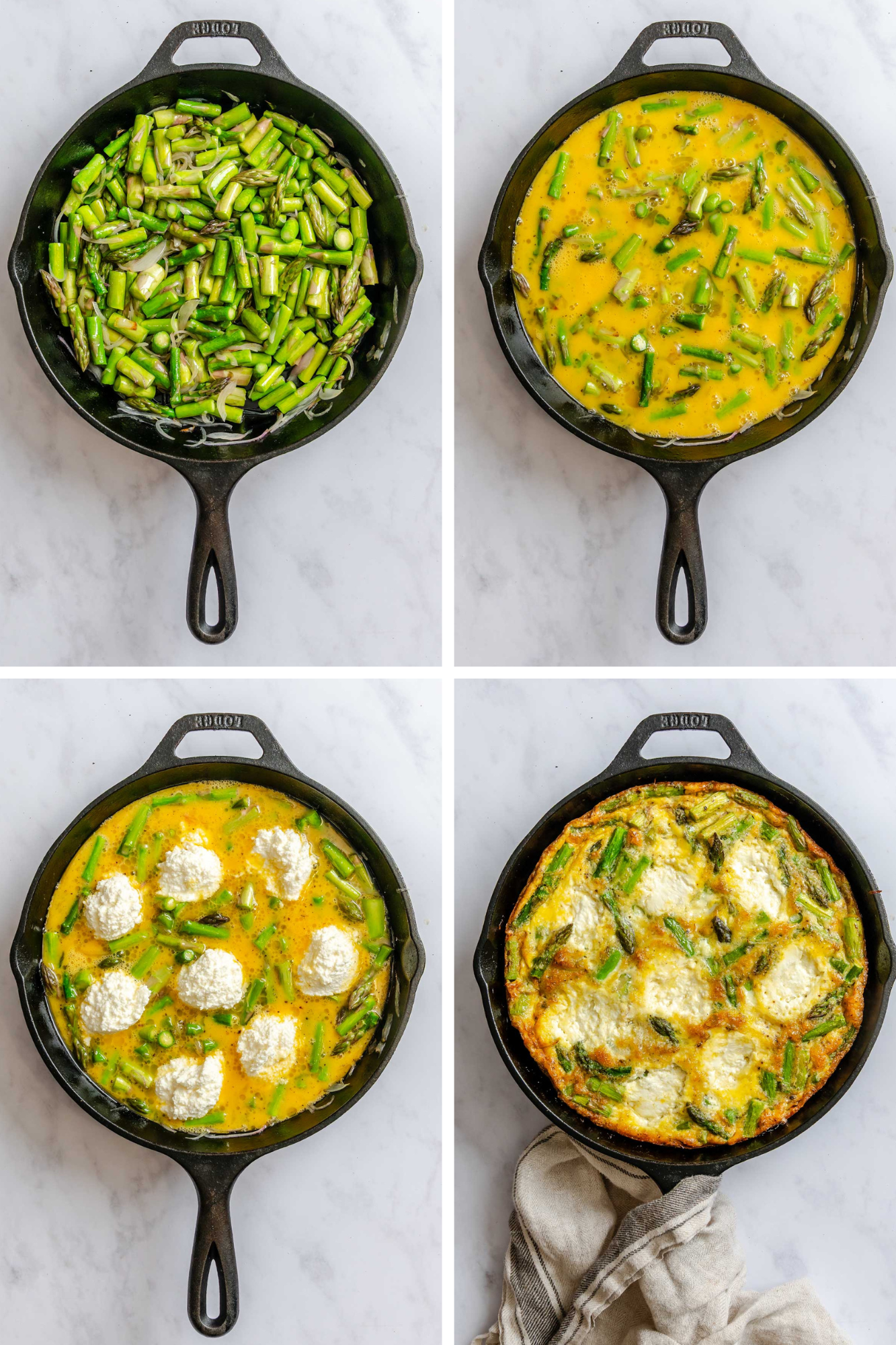
- Pour the eggs evenly over the vegetables in the skillet and gently stir to distribute everything evenly.
- Dot the top with large spoonfuls of ricotta, about 2 tablespoons each. Do not mix them in.
Pro Tip: If your ricotta seems a bit runny, place it in a strainer lined with a few layers of paper towels and let it drain for about 20-30 minutes before adding it to the frittata. This will ensure it doesn't release any excess water and gets nice and firm in the oven.
- Cook on the stovetop for 1-2 minutes until the edges begin to set.
- Transfer the skillet to the oven and bake until the frittata is only slightly puffed and just set in the center, about 10-15 minutes. It should no longer jiggle but still look tender.
- Remove from the oven and let cool for 5 minutes. Sprinkle with chives before slicing and serving.
Coley's Tips For Success
- Avoid very thick or very pencil-thin asparagus. Shoot for medium sized stalks.
- Keep a close eye on the frittata in the oven. Overcooked eggs turn dry and rubbery. Remove it from the oven when the center is just set.
- This recipe is very flexible and scales easily. You can add a few more eggs to serve a larger group without increasing the vegetables.
- A cast iron skillet gives you those crisp, golden edges, but any oven-safe skillet works. You can also transfer the sautéed vegetables and eggs to a well-greased baking dish and bake it that way.
Asparagus Frittata Variations
- Substitute the ricotta with goat cheese or feta. Or add a handful of grated Pecorino Romano or Parmigiano Reggiano to the egg mixture.
- Swap the chives for other herbs like parsley, dill, tarragon, basil or a mix.
- Use other spring vegetables like peas, artichoke hearts, leeks or any precooked spring greens.
- Add cooked cubed potatoes or sweet potatoes.
- Add a swirl of any kind of pesto, like classic pesto Genovese or spinach walnut pesto.
- Incorporate some meats like bacon, cooked ham, pancetta or even prosciutto.
- Add a cup of leftover cooked pasta to your frittata for added texture!

What to Serve with Asparagus Frittata
This delicious frittata is perfect for breakfast, brunch or even a dinner party! Serve it with crusty bread, toast, chewy homemade focaccia or even crostini.
For something a bit more unique, try serving it with these Italian chickpea flour pancakes called farinata or these easy muffin tin popovers.
Round out the meal with a classic arugula salad or some simple mixed greens tossed with an easy homemade vinaigrette.
How to Store and Reheat Asparagus Frittata
Store any leftover frittata in an airtight container or wrapped in plastic wrap in the fridge for up to 4 days.
You can eat this frittata cold, room temperature or reheated. To reheat, pop it in a 300°F oven until warmed through, or microwave gently in 20-second intervals. Be careful not to overheat or it will turn rubbery.

FAQs
You can, but a larger skillet will yield a thinner frittata and will require less cooking time. Check it after 7 minutes to avoid it turning rubbery.
A nonstick skillet will ensure your frittata doesn't stick to the bottom, but not all nonstick pans are oven-safe. Make sure yours is oven-safe before you begin.
This frittata is great without any milk or cream, but if you want a more custardy texture, I recommend adding ½ cup of half and half or heavy cream to the mixture. Whole milk works too, but avoid lower fat dairy or non-dairy milks.
This frittata is easily customizable with any cheeses, veggies or meats you choose. It's also a blank canvas for using any leftovers you have at home, such as potatoes or even pasta! Just make sure anything you add has been previously cooked, so it doesn't release moisture into the eggs and alter the texture.



Did you LOVE this recipe? Please leave a star ⭐️ rating and comment and tag your creations @ColeyCooks on Instagram!
Want to Save This Recipe?
Enter your email & I'll send it to your inbox.
By submitting this form, you consent to receive emails from Coley Cooks.

Asparagus Frittata with Ricotta
Ingredients
- 2 tablespoons extra virgin olive oil
- 1 large shallot or 2 small shallots, thinly sliced
- 1 pound asparagus tough ends snapped off, cut into 1-inch pieces
- 8 large eggs
- ¾ teaspoon kosher salt plus more to season
- freshly cracked black pepper
- 1 cup whole milk ricotta cheese
- 1 tablespoon fresh chives finely minced
Instructions
- Preheat the oven to 375°F.
- Heat the olive oil in a 10-inch cast iron skillet over medium heat.2 tablespoons extra virgin olive oil
- Add the shallots with a small pinch of salt and cook, stirring occasionally, until softened but not browned, about 3-4 minutes.1 large shallot
- Add the asparagus and cook for another 3-4 minutes until bright green and just beginning to soften. Season lightly with salt.1 pound asparagus
- In a medium bowl, beat the eggs with the ¾ teaspoon salt and plenty of black pepper.8 large eggs, ¾ teaspoon kosher salt, freshly cracked black pepper
- Pour the eggs evenly over the vegetables in the skillet and gently stir to distribute everything evenly.
- Dot the top with large spoonfuls of ricotta, about 2 tablespoons each. Do not mix them in.1 cup whole milk ricotta cheese
- Cook on the stovetop for 1-2 minutes until the edges begin to set.
- Transfer the skillet to the oven and bake until the frittata is only slightly puffed and just set in the center, about 10-15 minutes. It should no longer jiggle but still look tender.
- Remove from the oven and let cool for 5 minutes. Sprinkle with chives before slicing and serving.1 tablespoon fresh chives
Notes
- If your ricotta seems a bit runny, place it in a strainer lined with a few layers of paper towels and let it drain for about 20-30 minutes before adding it to the frittata. This will ensure it doesn't release any excess water and gets nice and firm in the oven.
- You might be tempted to overwhip the eggs, but you should beat them just enough to blend the whites and yolks. Overbeating will incorporate too much air and can result in a spongy texture, causing the frittata to overpoof in the oven and then collapse like a soufflé, taking away from the custardy texture it should have.
- Avoid very thick or very pencil-thin asparagus. Shoot for medium sized stalks.
- Keep a close eye on the frittata in the oven. Overcooked eggs turn dry and rubbery. Remove it from the oven when the center is just set.
- This recipe is very flexible and scales easily. You can add a few more eggs to serve a larger group without increasing the vegetables.
- A cast iron skillet gives you those crisp, golden edges, but any oven-safe skillet works. You can also transfer the sautéed vegetables and eggs to a well-greased baking dish and bake it that way.