Italian Sausage Stuffing
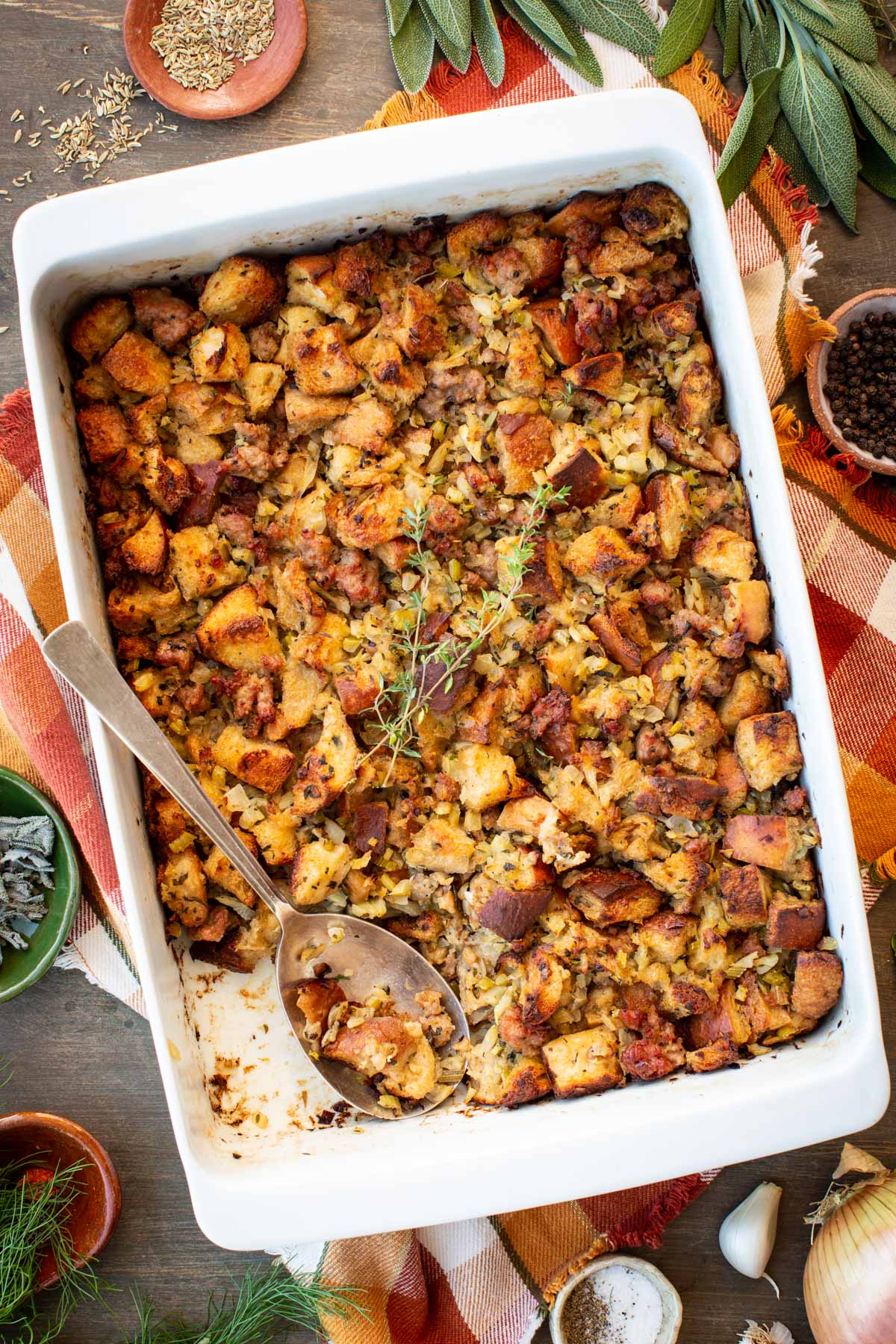
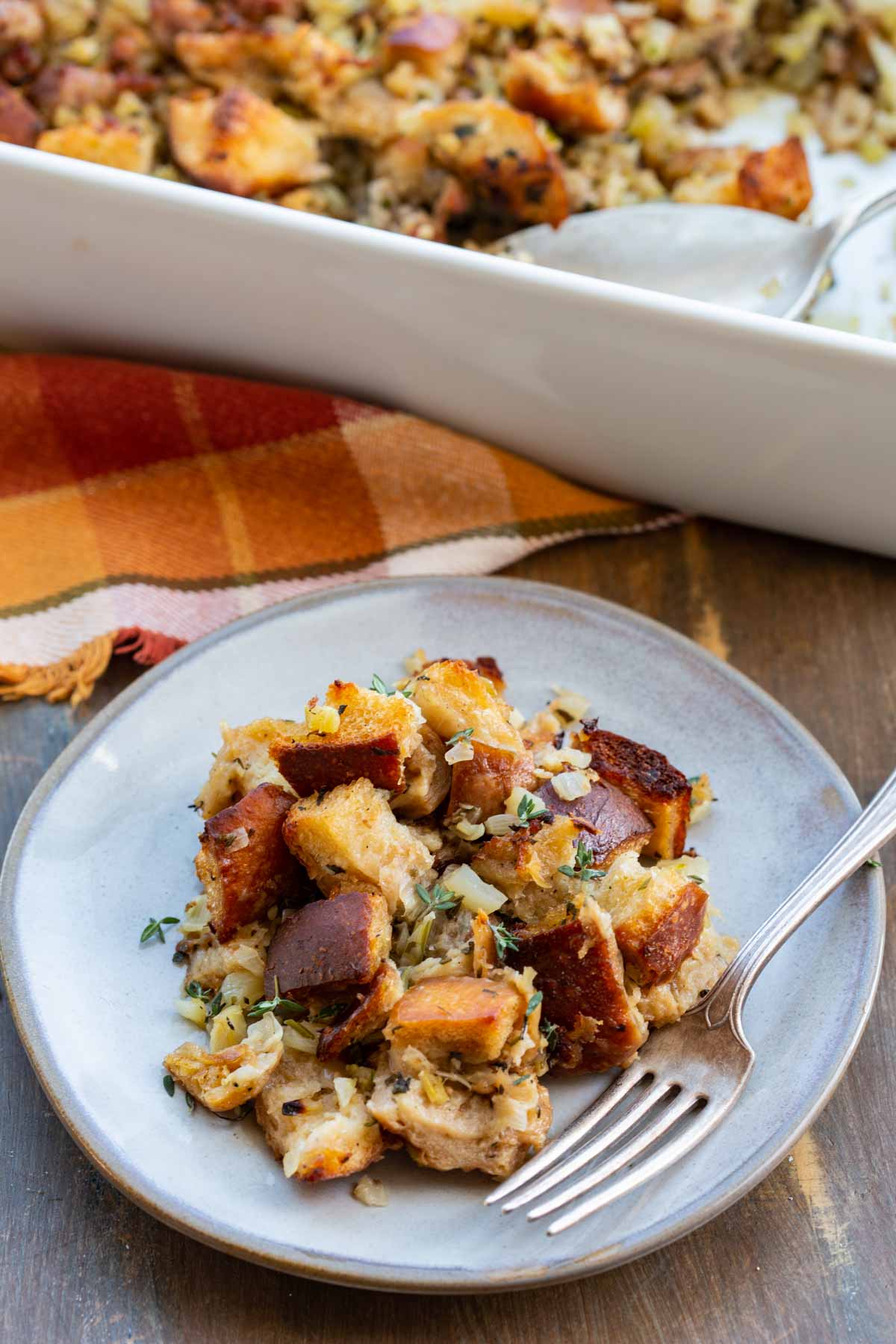
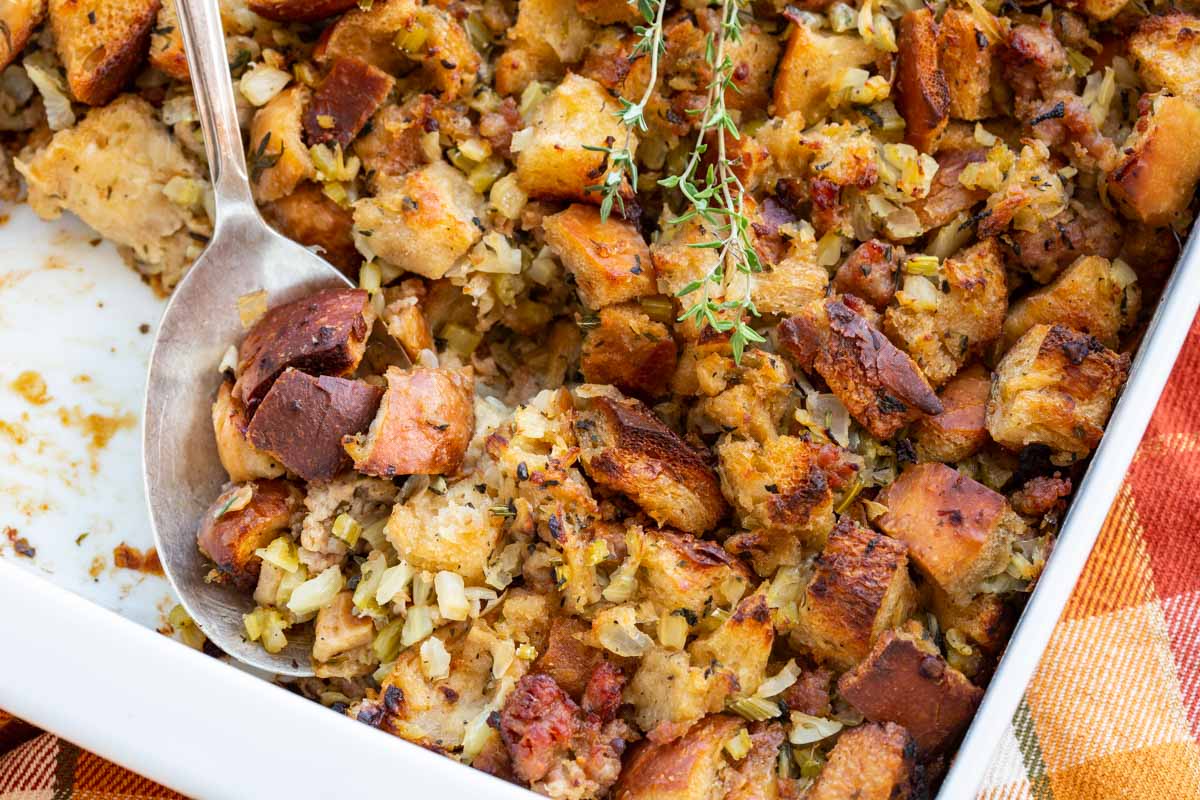
This homemade Italian sausage stuffing is flavorful, moist, and tender on the inside with a golden, buttery crust on top. Rich Italian sausage, good turkey stock, buttery bread cubes, aromatics, and plenty of fresh herbs come together to make a mouthwatering version of this classic side dish for Thanksgiving or Christmas dinner. Truly nothing says the holidays like this recipe!
This post may contain affiliate links.
Why this Italian Sausage Stuffing Recipe Works
- Thoroughly dried bread cubes soak up the stock without becoming soggy or gummy.
- Baking covered keeps the center tender, while finishing uncovered creates a crisp, golden brown top.
- Good-quality homemade stock adds a rich flavor that tastes like it was cooked inside the bird.
- Works baked in a casserole dish or stuffed inside your turkey.
Stuffing is easily my favorite Thanksgiving side and always has been. Unlike mashed potatoes, it's something I usually only eat on Thanksgiving, which makes it extra special.
This is my ultimate version of Italian sausage stuffing. It's made with fresh Italian bread, celery, onion, and fennel, plus plenty of fresh herbs and, of course, sweet Italian sausage.
Funny enough, my Sicilian-American side of the family never puts sausage in the Thanksgiving stuffing, but Aunt Colleen on my Irish side puts it in hers. It's such a delicious and easy addition that adds so much flavor. My Italian side doesn't know what they're missing!
Both sides of my family love cooking stuffing the way it was intended - stuffed inside the turkey. This recipe was developed to be baked in a casserole dish, but if you want to stuff it inside your turkey, that works too! Just make sure it's cooled down before stuffing, and use a thermometer to make sure it reaches 165°F inside.
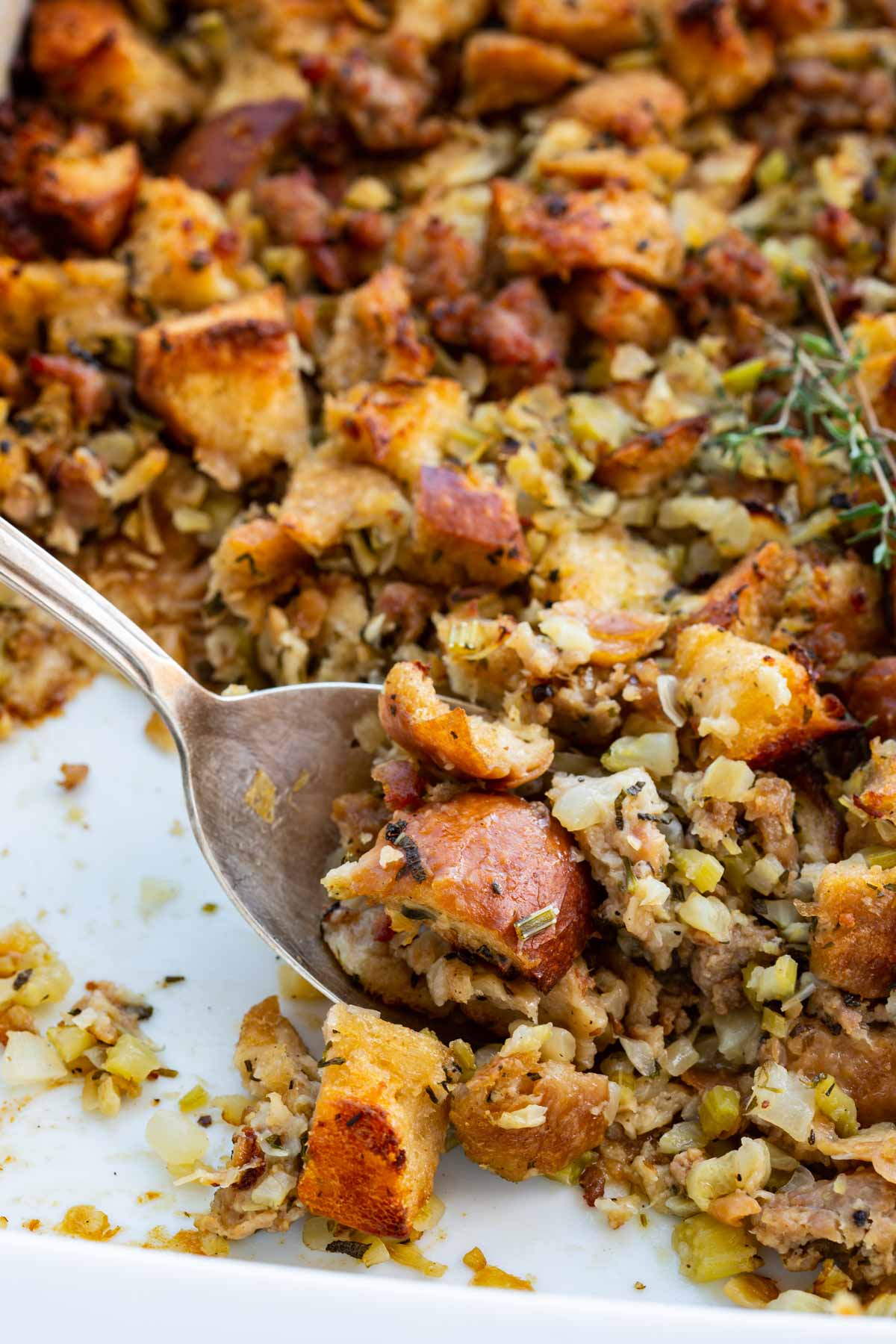
Cooking stuffing inside the bird really does produce the best flavor, so to mimic that it's important to use homemade turkey stock or chicken stock to make your stuffing. It adds a deep, rich flavor that can be lacking in store-bought stock, but store-bought stock will work in a pinch.
The most important tip I can give you for making any homemade stuffing is to make sure your bread cubes are thoroughly dried inside and out!! If there's even a little bit of moisture, they will turn gummy and have an unappealing texture.
Since different types of bread absorb liquid differently, you may need to add more stock. Add it gradually as needed to avoid liquid pooling underneath. Adding too much stock will make your stuffing mushy and wet.
I like to simmer the stock with herbs, aromatics, and the fond from browning the sausage so all those flavors have time to infuse before mixing it with the bread.
The stuffing is first baked covered to trap moisture, then uncovered to crisp the surface. This gives you the best mix of textures: a super moist and tender interior with an ultra-crisp, buttery top.
Want more Italian sausage recipes? Try this classic orecchiette with broccoli rabe and sausage, easy baked Italian sausage and peppers, or hearty sausage, white bean, and escarole stew.
Ingredients For Sausage Stuffing
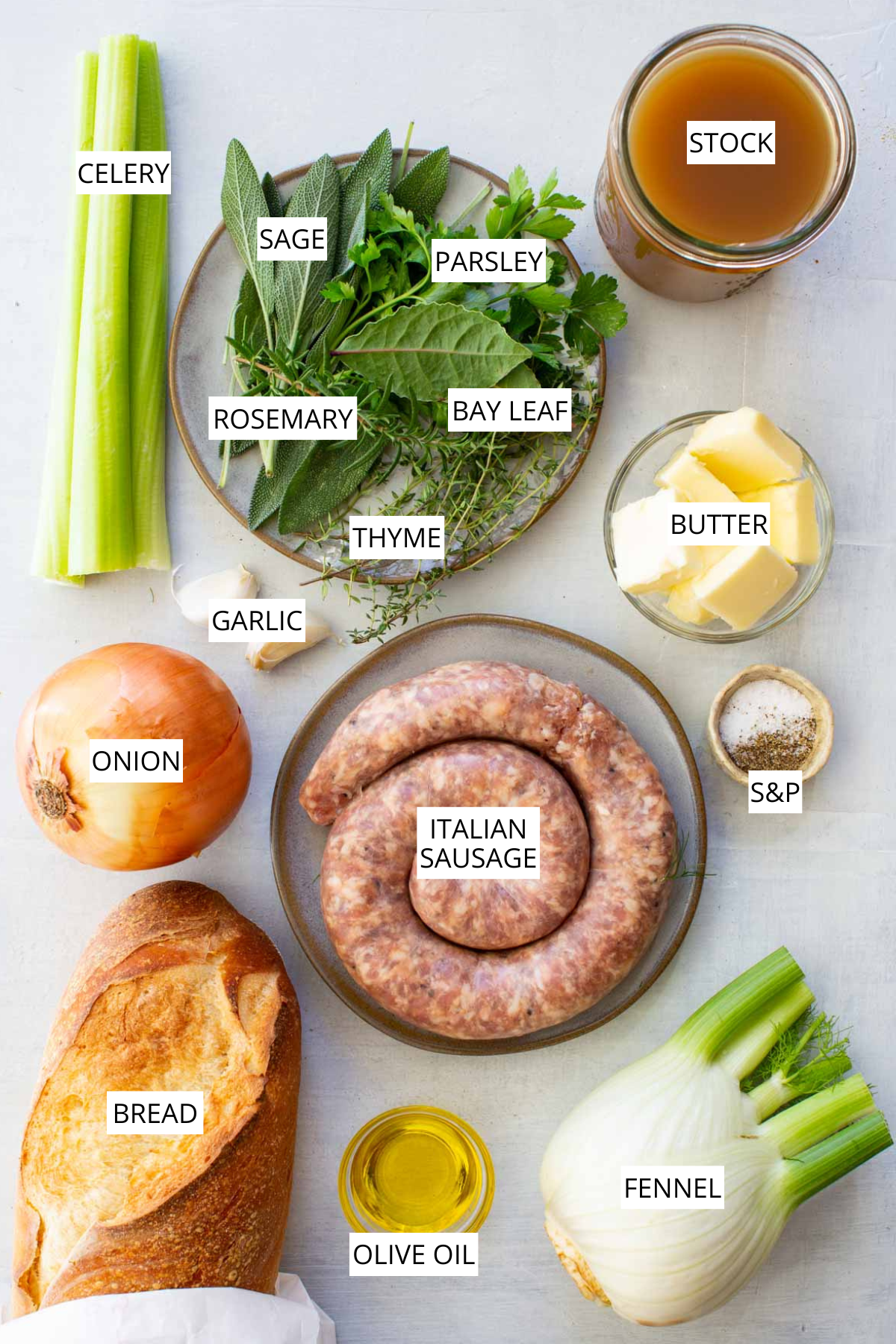
Bread - You can use any type of Italian bread, but I like to use one that's not too crusty and chewy. Look for something on the lighter and softer side to keep it tender, unless you prefer a more textured stuffing. Trim off any hard crusts, like the ends and bottom of the loaf, especially if they're covered in cornmeal or semolina. Cut your cubes roughly the same size, about ¾ - 1 inch.
Sausage - Use a high-quality sweet Italian sausage, casings removed. Look for it at Italian markets or your local butcher shop for the best flavor.
Stock - Use turkey or chicken stock, preferably homemade, like my easy Thanksgiving homemade turkey stock. Otherwise, look for a high-quality store-bought option that's low-sodium.
Herbs - A mix of sage, thyme, rosemary, parsley, and bay leaves. Fresh herbs make all the difference, but dried bay leaves can be used.
Celery, Onion, and Garlic - Celery and onion are classic in Thanksgiving stuffing, while garlic adds an extra pop of Italian flavor to go along with the sausage.
Fennel - I love using fennel in my stuffing to play with the fennel in the sausage, but you can skip it if you're not a fan. If you love fennel or want to bump up the sausage flavor even more, add a teaspoon of fennel seed as you sauté the vegetables.
*Find the full ingredient list in the recipe card below!
Helpful Equipment
- Bread knife
- Oven
- Sheet pans
- Large skillet
- Slotted spoon
- 9x13-inch baking dish
- Foil
- Instant-read thermometer
How to Make Italian Sausage Stuffing
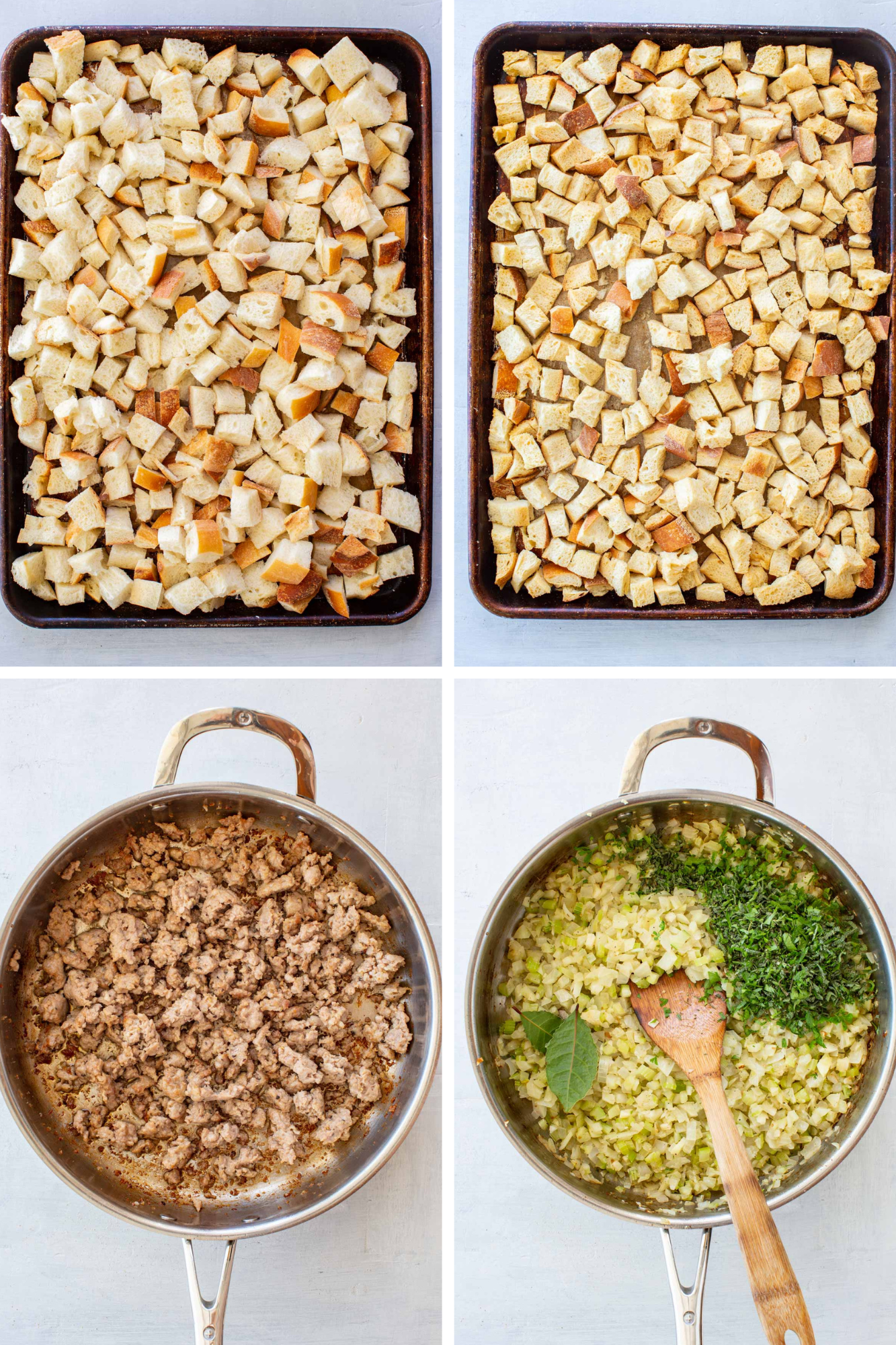
- Preheat the oven to 250°F. Spread the bread cubes in a single layer across one or two sheet pans. Bake until dry throughout with little browning, about 25-40 minutes, stirring and rotating the pans halfway through. Break open a cube to check that the center is dry. Remove from the oven and increase the temperature to 350°F.
- While the bread dries, heat the olive oil in a large skillet over medium-high heat. Add the sausage and break it into small crumbles. Cook until browned and cooked through, about 8-10 minutes. Transfer to a plate with a slotted spoon, leaving behind any rendered fat in the pan.
- Reduce the heat to medium. Add the onion, celery, fennel, salt, and pepper. Cook, stirring occasionally, until the vegetables are very soft, about 12-15 minutes. If the pan becomes dry, add a small splash of stock or water. Add the garlic and cook until softened, about 1 minute.
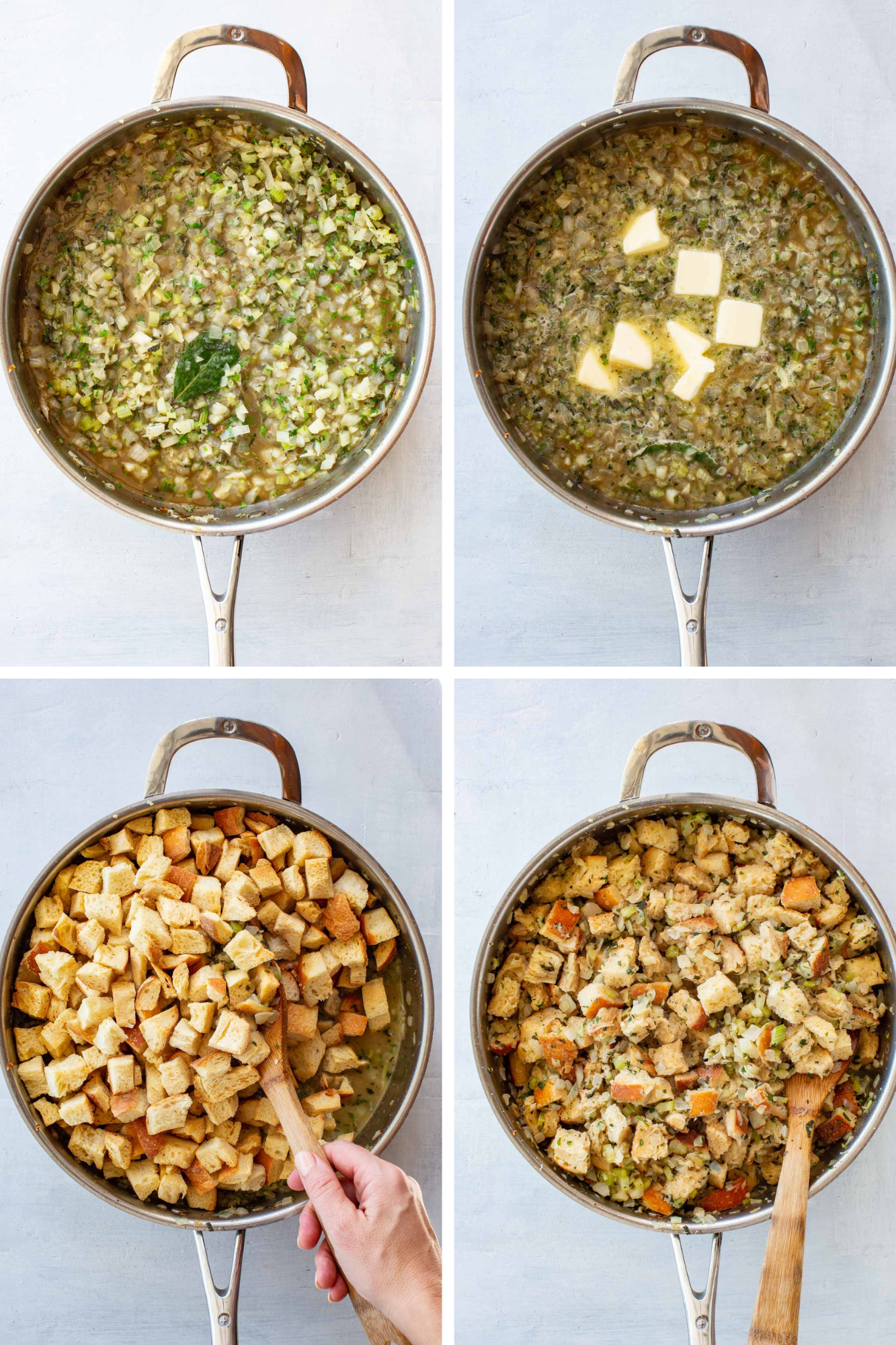
- Add the sage, thyme, rosemary, parsley, bay leaves, and 3 cups of stock. Scrape up any browned bits from the bottom of the skillet. Bring to a gentle simmer and cook until the stock takes on the flavor of the herbs, about 5 minutes. Remove from the heat and discard the bay leaves.
- Stir in 5 tablespoons of butter until melted, then add the dried bread cubes and gently mix to combine. Let stand for 5 minutes so the bread can absorb the liquid. The bread should feel soft throughout while still holding its shape, with no liquid pooling at the bottom. If any pieces still have dry centers, add a little bit more warm stock, ¼ cup at a time, allowing it to absorb between additions.
Pro Tip: You may need a little bit more or less stock depending on your bread, since different types will absorb liquid differently. After tossing, let the bread absorb the liquid before assessing it. Break open or gently squeeze a cube. The center should be soft and hydrated while the piece retains its shape.
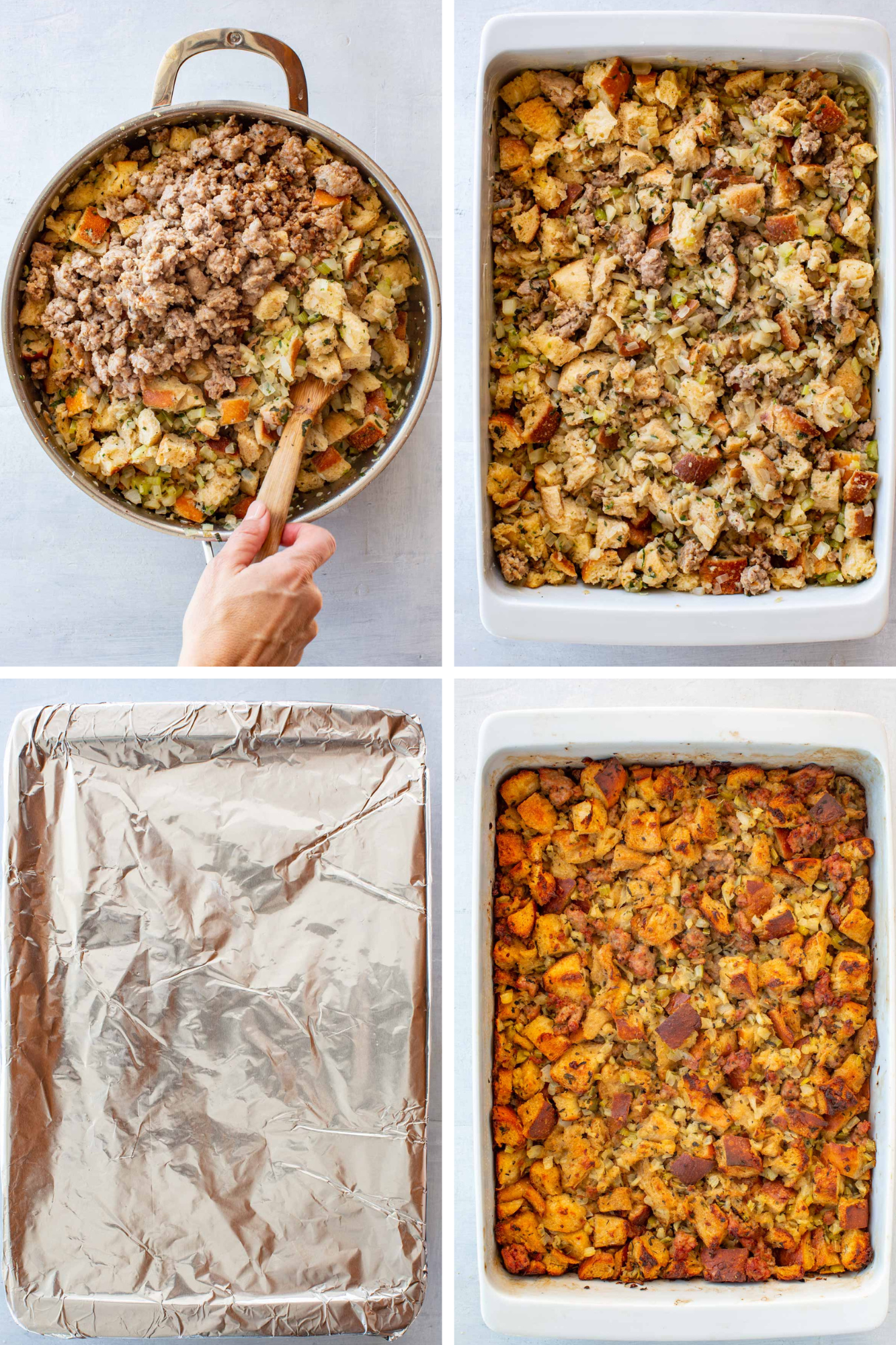
- Add the sausage and gently fold it in. Taste and adjust the salt and pepper as needed.
- Butter a 9x13-inch baking dish. Transfer the stuffing and spread into an even layer without packing it down.
- Cut the remaining 1 tablespoon of butter into small pieces and scatter over the top. Butter the underside of a sheet of foil and cover the dish tightly, with the buttered side facing the stuffing.
- Bake covered for 25 minutes. Remove the foil and continue baking until the top is golden and crisp and the center reaches 165°F, about 10-15 minutes longer. Begin checking after 10 minutes uncovered to avoid drying out the stuffing.
- Let rest for 10 minutes before serving.
Tips For Making Sausage Stuffing
- Measure the bread cubes loosely without pressing them into the measuring cup. Trim very thick or hard crusts before cubing and measuring. One large Italian loaf will usually yield about 10 cups.
- Stock absorption varies with the bread and how thoroughly it has been dried. Start with 3 cups and keep additional stock available. Add enough to soften the centers of the bread cubes.
- Fold the bread cubes gently. Overmixing might break them and lead to a pasty texture.
- For extra richness and crunch, add a few extra pats of butter on top before baking.
How to Prep Sausage Stuffing Ahead for Thanksgiving
To prepare ahead, dry the bread and prepare the sausage and vegetable-stock mixture a day in advance. Store the cooled bread airtight at room temperature and refrigerate the cooked components in shallow containers. Reheat the stock mixture before tossing everything together, then assemble and bake.
You can also make the stuffing without baking, then cool it and store in the fridge the day before. Bring to room temperature, then bake according to the recipe, adding another 5-10 minutes as needed.
Rewarm fully cooked stuffing in a 300°F oven, covered with foil, until the center reaches 165°F before serving. You can broil it uncovered for about a minute to restore the crisp top.
What to Serve with Italian Sausage Thanksgiving Stuffing
Serve this sausage stuffing with a full Thanksgiving spread, including an Italian-style herb roasted turkey or juicy dry brined turkey breast with an easy homemade turkey gravy.
For extra sides, try these buttery green beans amandine, a rich cheesy corn casserole, a silky brown butter squash puree, or creamy mascarpone mashed potatoes.
And don't forget a tangy homemade balsamic cranberry sauce to balance the richness!
How to Store and Reheat Thanksgiving Stuffing
Store the leftover cooled stuffing in an airtight container for up to 3 days in the fridge or for up to 3 months in the freezer.
If frozen, thaw overnight first. Reheat covered with foil in a 300°F oven until it reaches 165°F in the center, and broil for a minute to restore the crisp top. Keep an eye on it because it can burn quickly.
FAQs
Yes, I don't use eggs in my recipe. They can help bind stuffing and give it a firmer texture, but my family has never included them. I don't think they're necessary, and omitting them keeps the stuffing looser with less of a bread pudding texture.
You first need to bake your stuffing covered to trap moisture and then uncovered to crisp the surface. This results in a moist and creamy interior with a crunchy, buttery top.
Yes, but bread left out for a couple of days isn't necessarily dried all the way. Finish it in a 250°F oven for 10-15 minutes until the centers are fully dry.
Yes, if you want your stuffing to have some heat. You can also meet in the middle and do half hot and half sweet for a milder but still slightly spicy version.




Did you LOVE this recipe? Please leave a star ⭐️ rating and comment and tag your creations @ColeyCooks on Instagram!
Want to Save This Recipe?
Enter your email & I'll send it to your inbox along with my best Thanksgiving ideas and tips.
By submitting this form, you consent to receive emails from Coley Cooks.
Thanksgiving Stuffing with Italian Sausage
Ingredients
- 10 cups soft Italian bread sliced into ¾ - 1 inch cubes, measured before drying
- 1 tablespoon olive oil
- 1 pound sweet Italian sausage casings removed
- 1 yellow onion large, finely diced, about 1 ½ cups
- 3 celery ribs finely diced, about 1 cup
- 1 fennel bulb trimmed, cored and finely diced
- 1 teaspoon kosher salt plus more to taste
- freshly ground black pepper to taste
- 2 garlic cloves minced
- 1 tablespoon fresh sage finely chopped
- 1 teaspoon fresh thyme leaves
- 1 teaspoon fresh rosemary finely chopped
- ¼ cup flat-leaf parsley chopped
- 2 bay leaves
- 3 cups turkey stock low-sodium, or chicken stock, plus more as needed
- 6 tablespoons unsalted butter divided, plus more for greasing the baking dish and foil
Instructions
- Preheat the oven to 250°F. Spread the bread cubes in a single layer across one or two sheet pans. Bake until dry throughout with little browning, about 25-40 minutes, stirring and rotating the pans halfway through. Break open a cube to check that the center is dry. Remove from the oven and increase the temperature to 350°F.10 cups soft Italian bread
- While the bread dries, heat the olive oil in a large skillet over medium-high heat. Add the sausage and break it into small crumbles. Cook until browned and cooked through, about 8-10 minutes. Transfer to a plate with a slotted spoon, leaving behind any rendered fat in the pan.1 tablespoon olive oil, 1 pound sweet Italian sausage
- Reduce the heat to medium. Add the onion, celery, fennel, salt, and pepper. Cook, stirring occasionally, until the vegetables are very soft, about 12-15 minutes. If the pan becomes dry, add a small splash of stock or water. Add the garlic and cook until softened, about 1 minute.1 yellow onion, 3 celery ribs, 1 fennel bulb, 1 teaspoon kosher salt, freshly ground black pepper , 2 garlic cloves
- Add the sage, thyme, rosemary, parsley, bay leaves, and 3 cups of stock. Scrape up any browned bits from the bottom of the skillet. Bring to a gentle simmer and cook until the stock takes on the flavor of the herbs, about 5 minutes. Remove from the heat and discard the bay leaves.1 tablespoon fresh sage, 1 teaspoon fresh thyme leaves, 1 teaspoon fresh rosemary, ¼ cup flat-leaf parsley, 2 bay leaves, 3 cups turkey stock
- Stir in 5 tablespoons of butter until melted, then add the dried bread cubes, and gently mix to combine. Let stand for 5 minutes so the bread can absorb the liquid. The bread should feel soft throughout while still holding its shape, with no liquid pooling at the bottom. If any pieces still have dry centers, add a little bit more warm stock, ¼ cup at a time, allowing it to absorb between additions.6 tablespoons unsalted butter
- Add the sausage and gently fold it in. Taste and adjust the salt and pepper as needed.
- Butter a 9x13-inch baking dish. Transfer the stuffing and spread into an even layer without packing it down.
- Cut the remaining 1 tablespoon of butter into small pieces and scatter over the top. Butter the underside of a sheet of foil and cover the dish tightly, with the buttered side facing the stuffing.
- Bake covered for 25 minutes. Remove the foil and continue baking until the top is golden and crisp and the center reaches 165°F, about 10-15 minutes longer. Begin checking after 10 minutes uncovered to avoid drying out the stuffing.
- Let rest for 10 minutes before serving.
Notes
- Measure the bread cubes loosely without pressing them into the measuring cup. Trim very thick or hard crusts before cubing and measuring. One large Italian loaf will usually yield about 10 cups.
- You may need a little bit more or less stock depending on your bread, since different types will absorb liquid differently. After tossing, let the bread absorb the liquid before assessing it. Break open or gently squeeze a cube. The center should be soft and hydrated while the piece retains its shape.
- Stock absorption varies with the bread and how thoroughly it has been dried. Start with 3 cups and keep additional stock available. Add enough to soften the centers of the bread cubes.
- Fold the bread cubes gently. Overmixing might break them and lead to a pasty texture.
- For extra richness and crunch, add a few extra pats of butter on top before baking.