Grilled Ribeye Steak
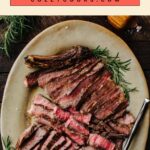
This grilled ribeye steak recipe gives you thick, juicy steaks with a smoky, caramelized crust, a buttery-tender center, and just the right amount of char. Starting with quality meat, seasoning ahead of time, grilling over high heat, flipping frequently, and using an instant-read thermometer are the secrets to an incredible steak that rivals anything from a steakhouse.
This post may contain affiliate links.
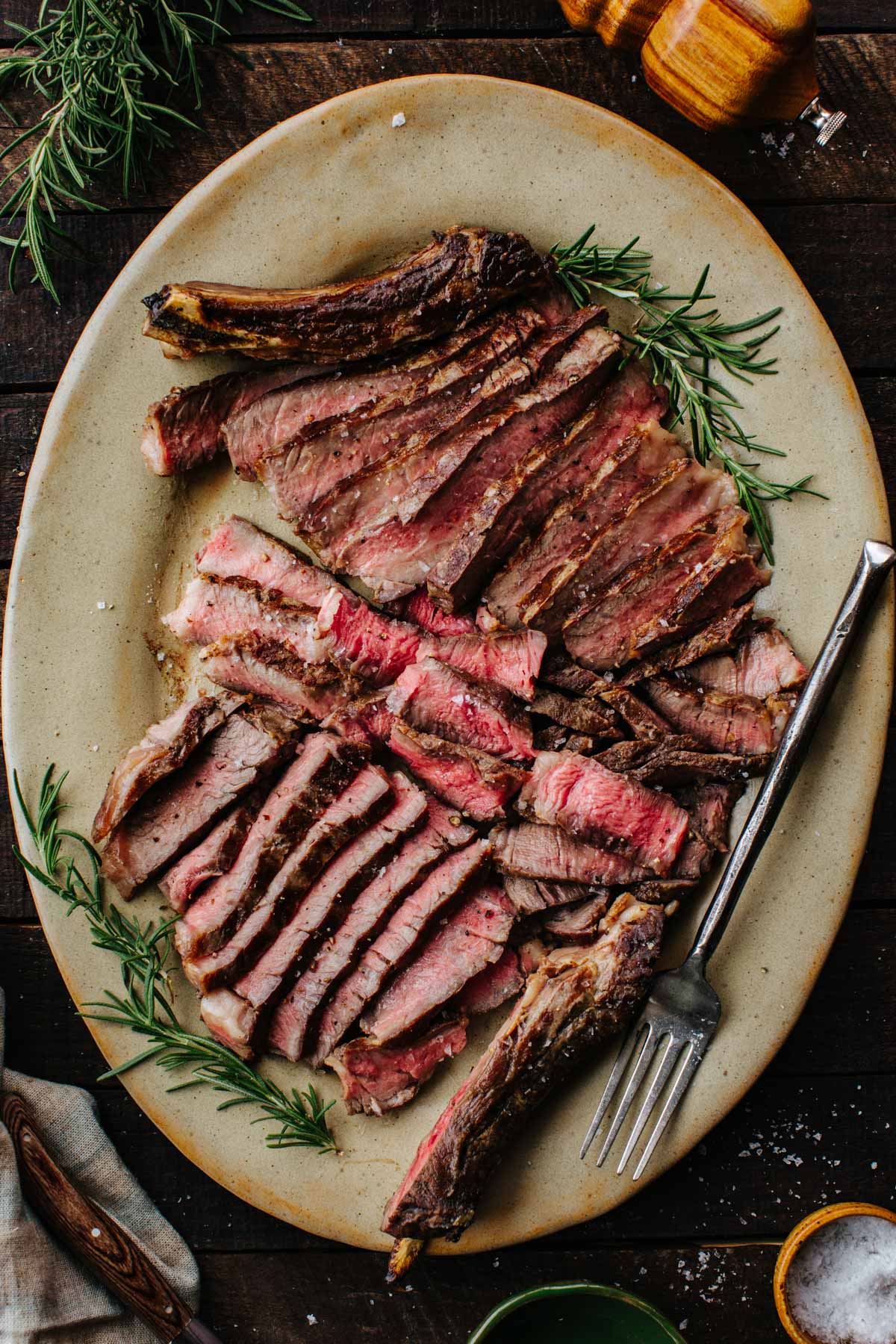
We love grilling steaks outside whenever the weather is nice enough to fire up the grill, and ribeyes are easily our favorite.
Grilling creates a gorgeous browned crust that locks in the juices and adds a rich, smoky flavor, especially if grilling over charcoal.
How to Grill the Perfect Ribeye Steak
With a good-quality, well-marbled steak, plenty of salt, and a very hot grill, the right technique is all you need for a deeply browned crust and a juicy, perfectly cooked center.
The key is starting with a thick steak, dry brining, getting the surface completely dry, and then searing over high heat.
It's a myth that you should only flip your steaks once when grilling. You should actually flip them often, about every minute or so, for the most even cooking.
Flare-ups inevitably happen as the fat renders and hits the hot surface beneath. Move the steaks to a cooler part of the grill until the flare-ups subside so the steaks don't taste burnt.
Always use a thermometer to determine doneness. Time and touch aren't always reliable. An instant-read thermometer is the only way to accurately know the temperature.
What is Dry Brining?
Dry brining means salting the steaks well ahead of time, which seasons the meat throughout and helps create a better crust. The salt draws moisture to the surface, where it dissolves, then gets reabsorbed into the meat.
For best results, salt and refrigerate the steaks uncovered for 8-24 hours. If you're short on time, even 30-60 minutes helps.
I add freshly cracked black pepper only after grilling to keep it from burning over high heat. This prevents any off flavors and preserves the pepper's aroma.
How Long to Grill Ribeye Steak
If you want to ensure your steaks are grilled to the perfect doneness every time, it's essential to use a thermometer and not rely on time.
There are too many variables to use time as an accurate way to determine doneness. Thickness, heat, marbling, and other factors can all affect how quickly a steak cooks.
A thick ribeye generally takes about 10-15 minutes over high heat, depending on factors like thickness and heat. For consistent results, always use an instant-read thermometer.
Grill your steaks over direct high heat, flipping every 1-2 minutes until well browned and cooked to your desired internal temperature (see chart below). Frequent flipping cooks the steak more evenly and builds a beautiful, flavorful crust.
Close the lid between flips to maintain high, consistent heat. Open it as needed to flip the steaks, check their temperature, and control flare-ups.
If there's a thick fat cap, hold the steak upright with tongs for 30-60 seconds to render and brown the edge.
Resting and Serving Steak
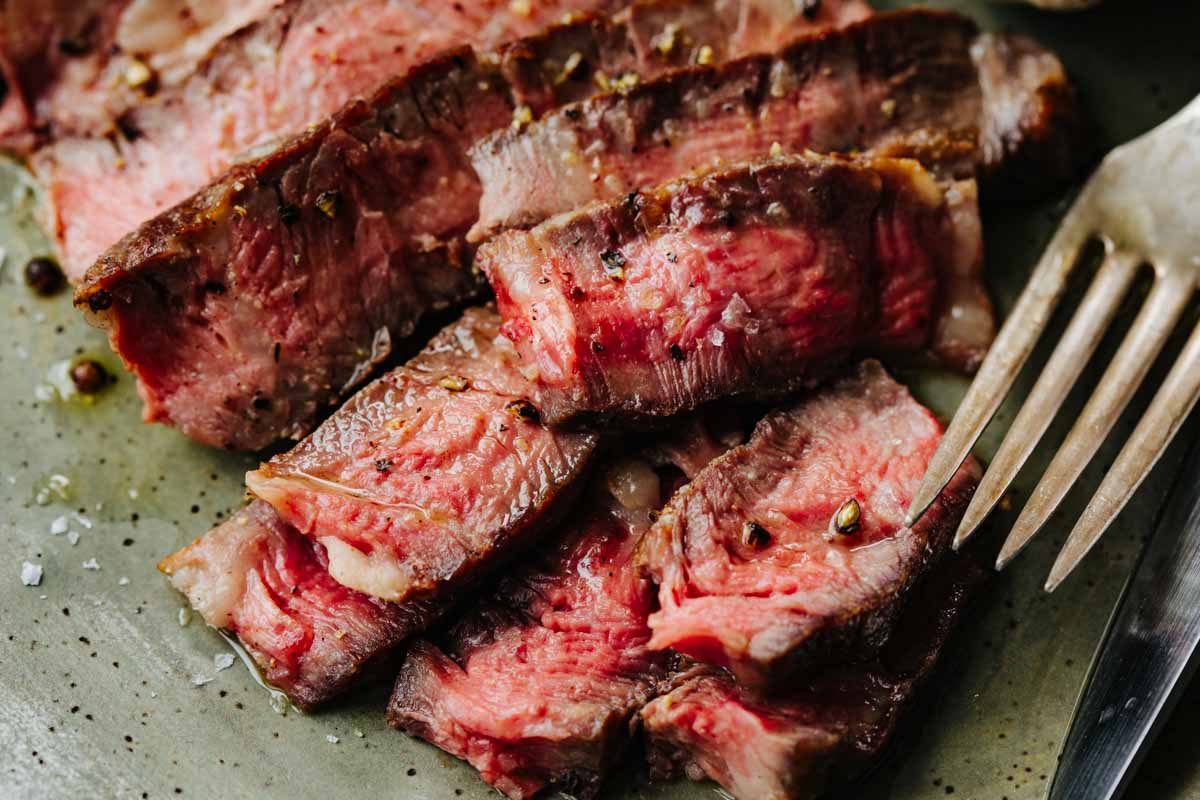
Remove the steaks from the grill about 5-10 degrees before your desired final temperature to account for carryover cooking. The hotter your grill, the more the temperature will rise while resting, so keep that in mind. Rest for about 10 minutes before slicing and serving.
I actually prefer ribeye closer to medium than medium-rare, since it allows the fat to soften and render while keeping the meat juicy.
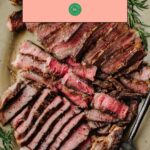
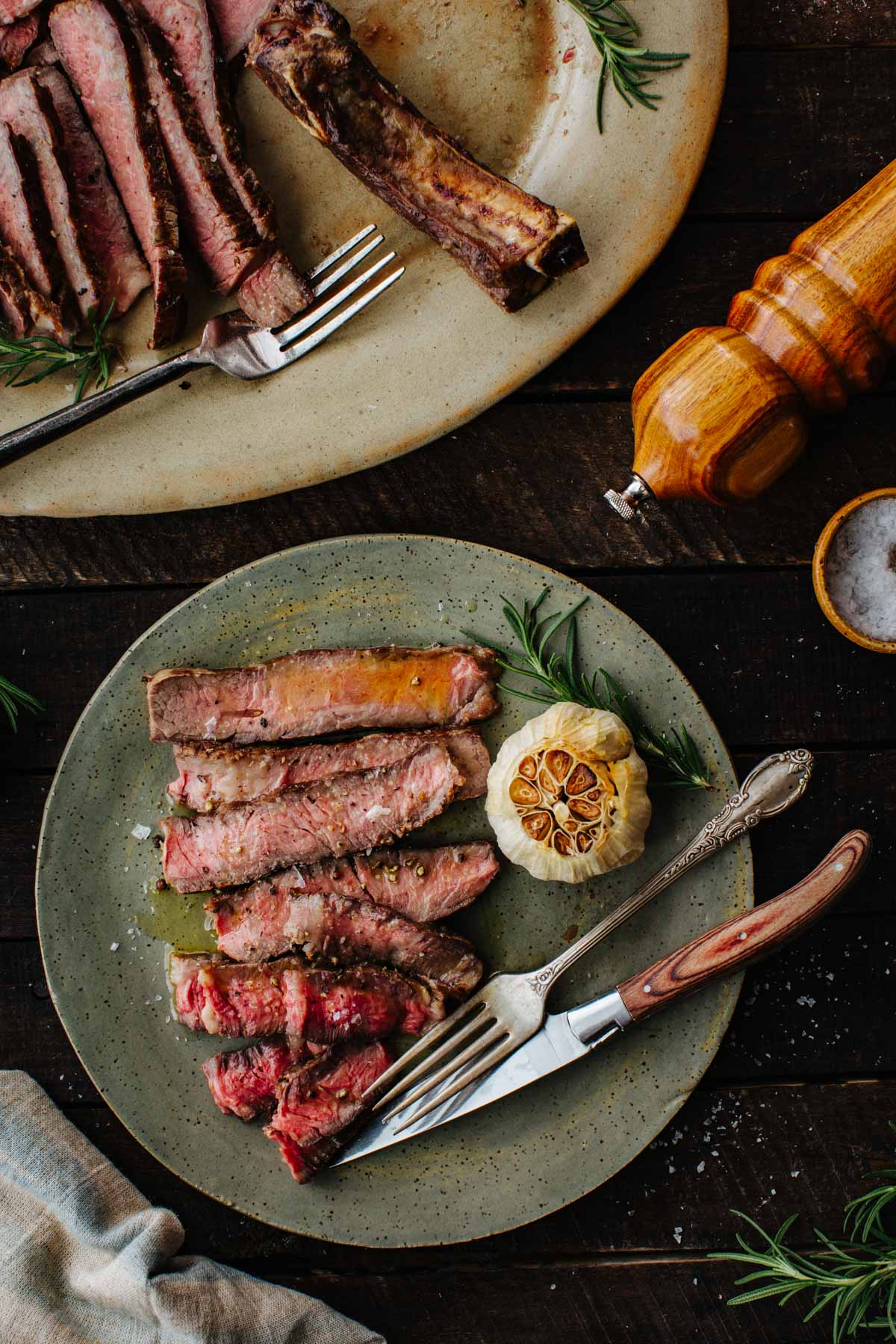
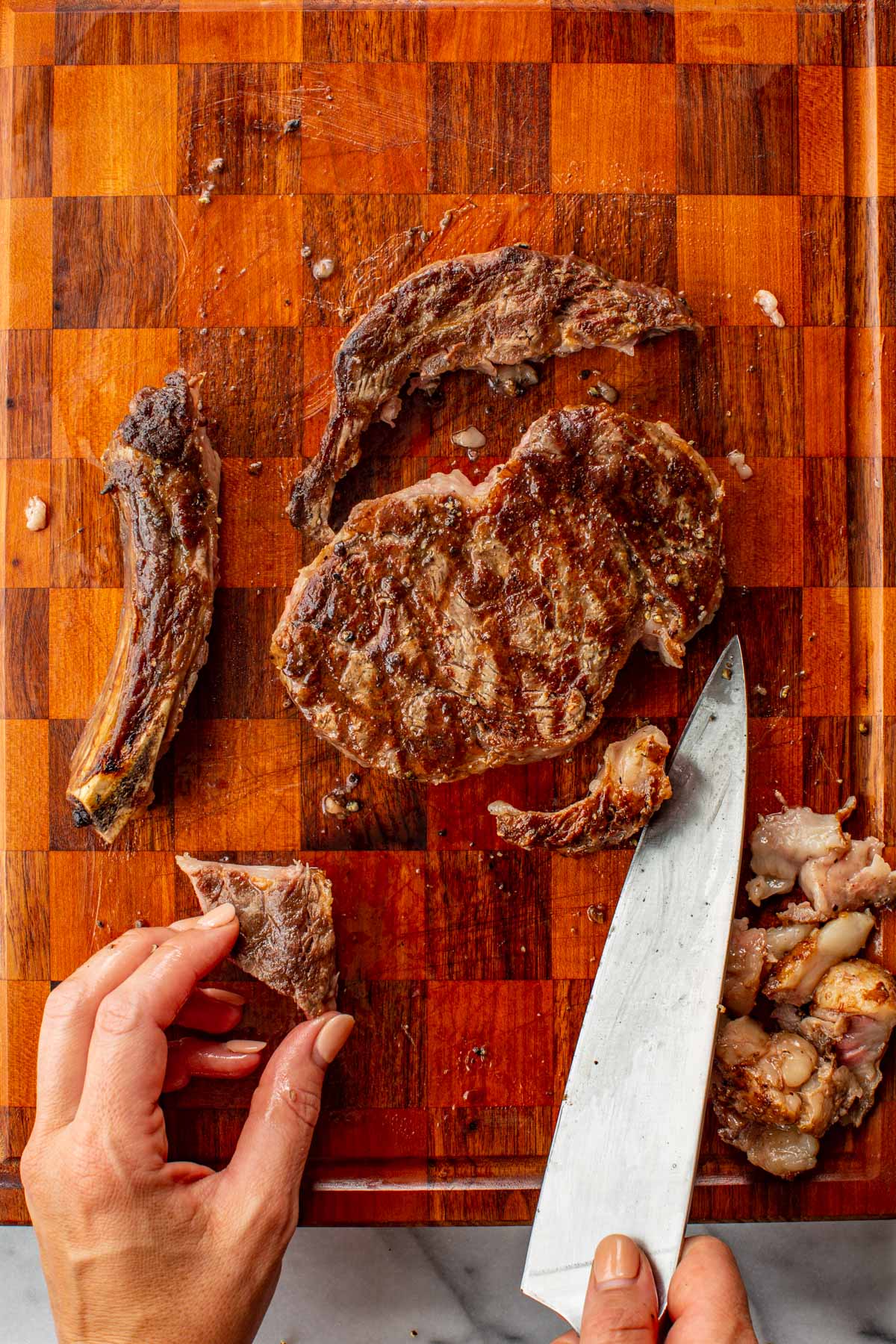
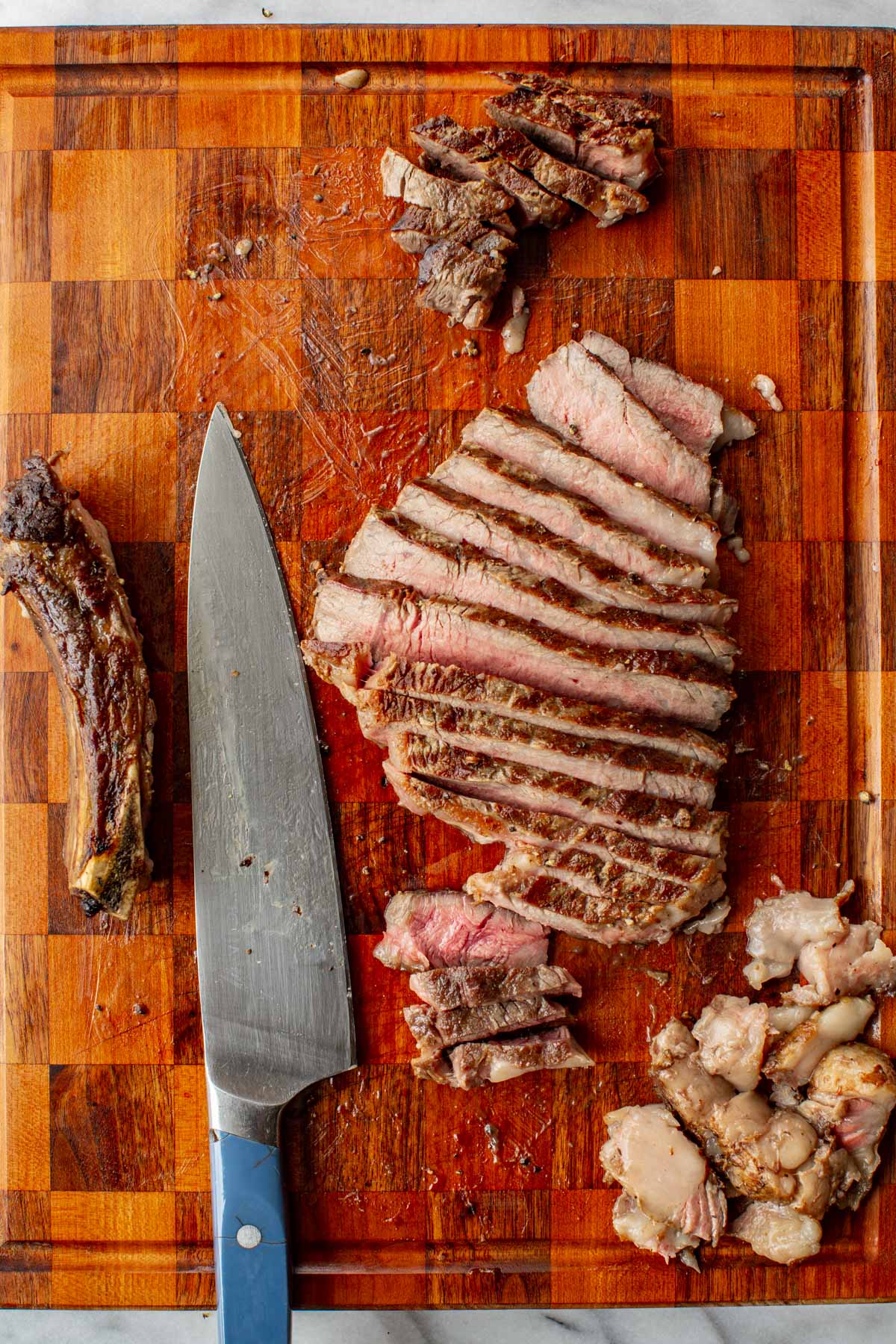
For the most tender meat, always slice against the grain. Since a ribeye contains several sections with the grain running in different directions, separate them first, then slice each section against its grain.
To do this, first remove the bone if it has one, then follow the steak's natural lines and areas of fat to separate into 3 pieces.
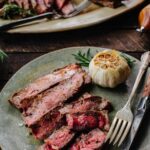
Thinly slice each section against the grain, then serve with flaky sea salt, freshly cracked pepper, and a drizzle of extra virgin olive oil or one of the sauces below.
Want more delicious red meat recipes? Try this perfectly seared filet mignon, impressive oven roasted whole beef tenderloin, or juicy marinated grilled lamb chops.
Why this Grilled Ribeye Steak Recipe Works
- Grilling creates a gorgeous browned crust that locks in juices and adds a rich, smoky flavor.
- Using high-quality meat with plenty of marbling ensures better flavor and texture.
- Salting ahead of time seasons the meat throughout and creates a better crust.
- Flipping the steaks often and moving them away from flare-ups promotes even cooking and browning.
- Using an instant-read thermometer helps cook the steaks precisely to your preferred doneness.
Ingredient Notes
Choosing the Best Ribeye Steak
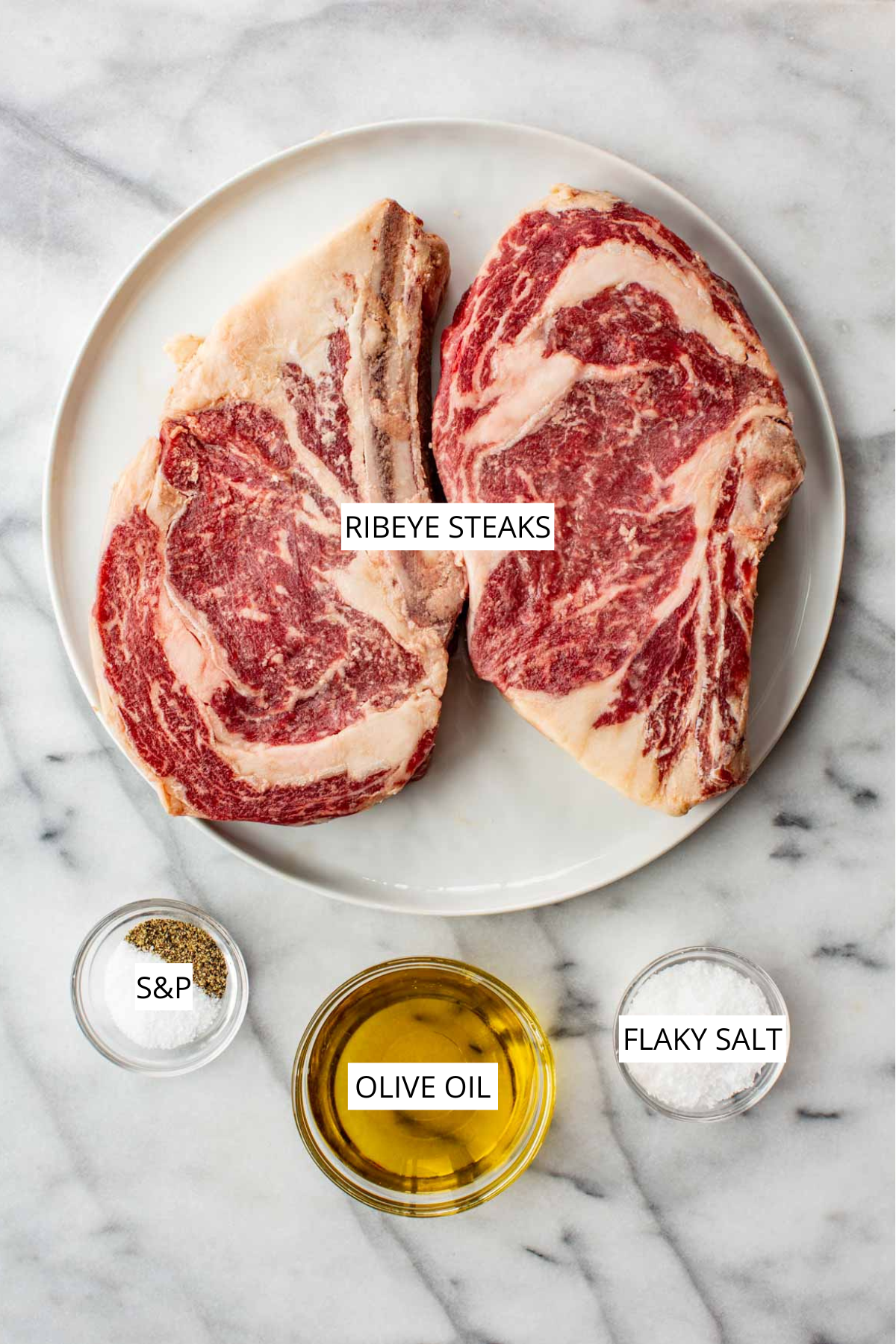
For the best grilled ribeye steak, it's essential to start with good-quality meat. Look for dry-aged ribeyes with plenty of fine white marbling throughout the meat.
If shopping at the grocery store, look for USDA Prime, which will generally have the most marbling, but a well-marbled USDA Choice ribeye is also excellent.
We purchase all of our beef from a local farm, which I highly recommend. We love Triple C Angus!
Bone-in vs Boneless Ribeye
Both bone-in and boneless ribeyes are great. Just make sure they are at least 1½ inches thick, ideally closer to 2 inches. People say that bone-in steaks have more flavor than boneless, but I personally don't find there to be a noticeable difference.
Some boneless ribeyes are also sold as Delmonico steaks, although the term "Delmonico" is not standardized and can refer to different cuts depending on the butcher.
Bone-in ribeyes may take slightly longer to cook, so always rely on internal temperature rather than time.
Salt - I always use kosher salt to season or dry brine the steaks and flaky sea salt, such as Maldon, for finishing.
Oil - Use any vegetable oil of your choice to lightly coat the steaks before grilling. Olive oil has a lower smoke point, so it will smoke more on the grill. I always drizzle my steaks with good extra virgin olive oil right before serving.
Black pepper - Freshly ground black pepper is all you need to season these gorgeous steaks. Add it after cooking so it doesn't burn on the grill and remains fresh and aromatic.
*Find the full ingredient list in the recipe card below!
Helpful Equipment
- Charcoal grill or gas grill
- Paper towels
- Grill tongs
- Instant-read thermometer or meat thermometer
How to Grill Ribeye Steak
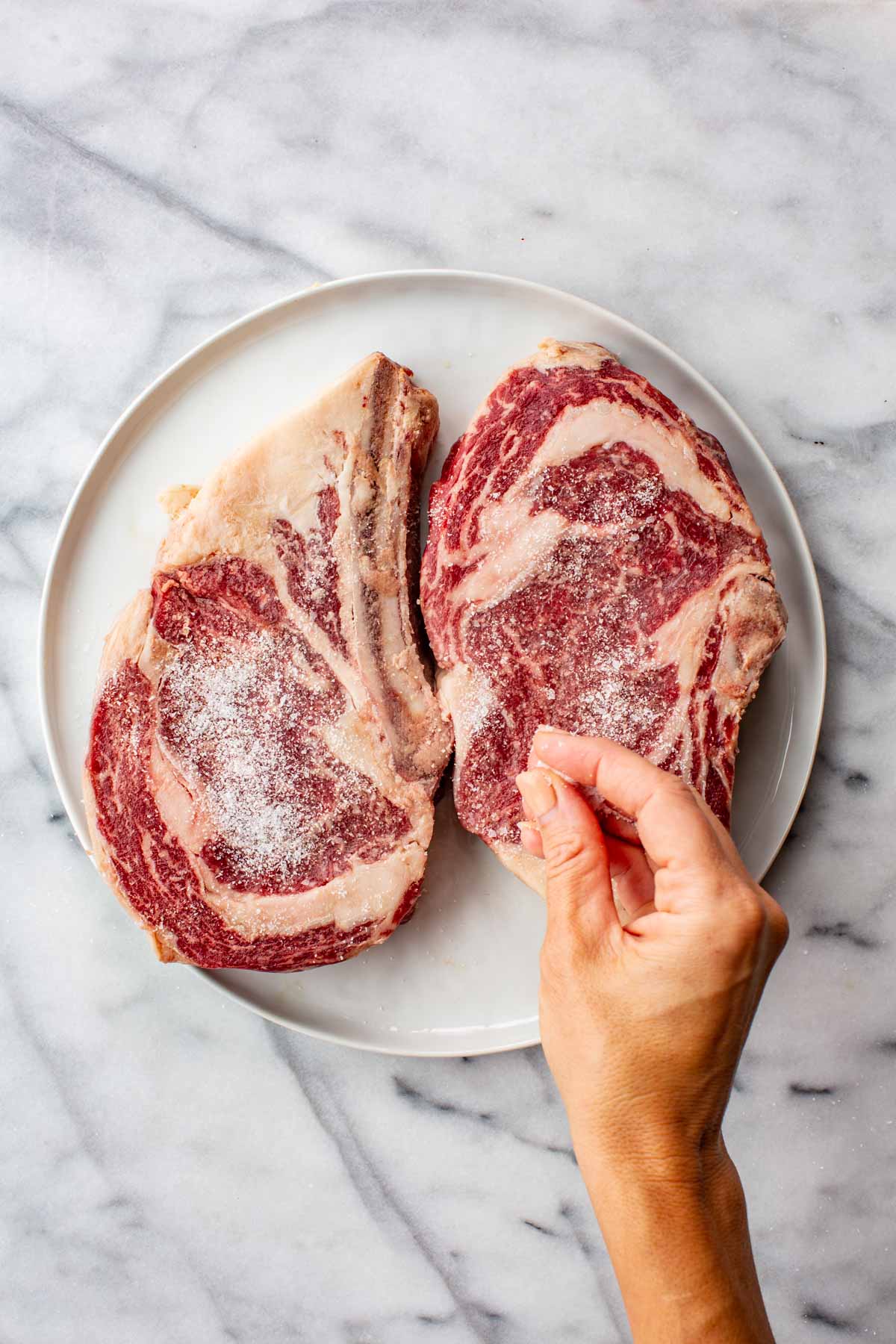
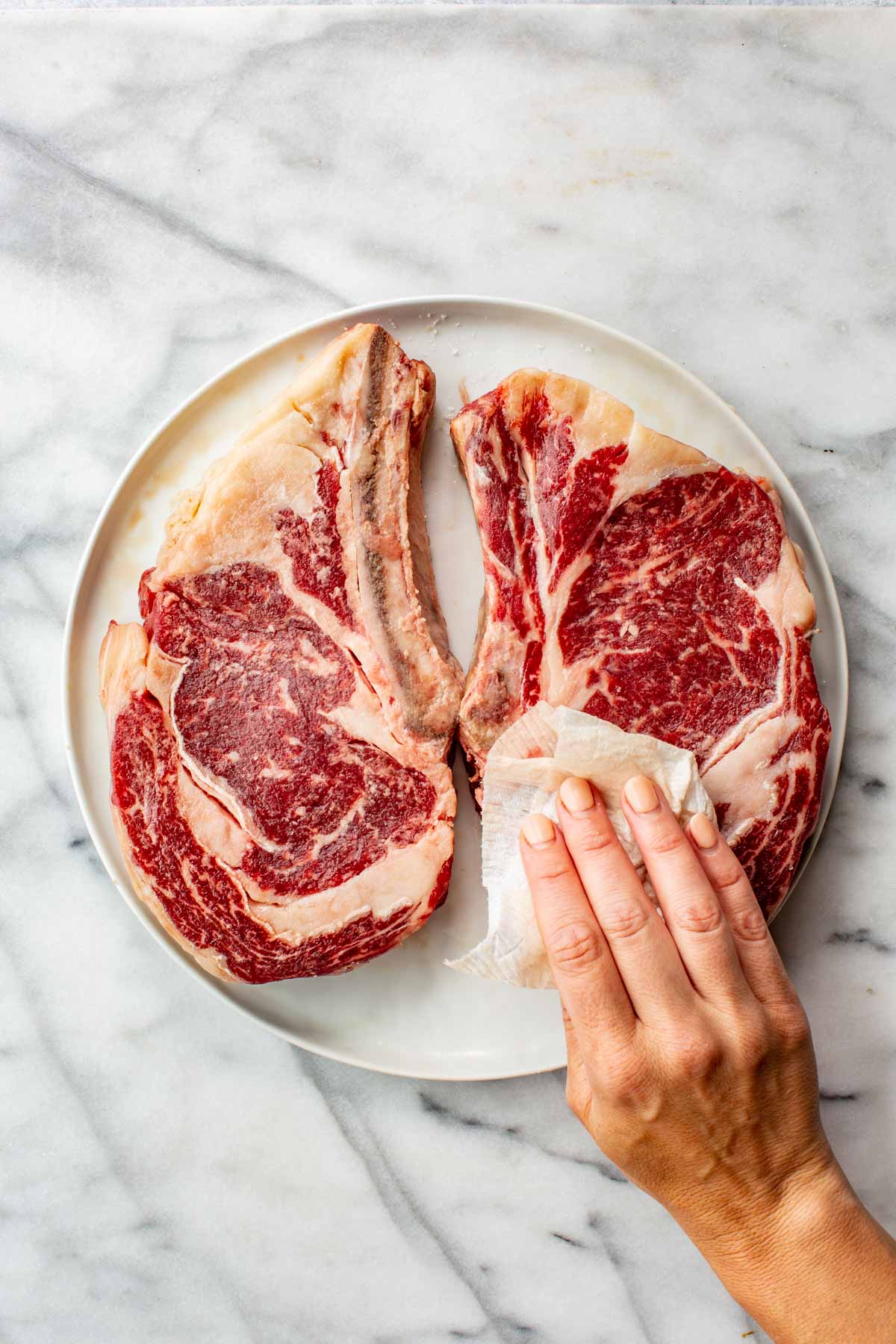
- Pat the steaks dry, then season generously on all sides with kosher salt. If time allows, refrigerate uncovered for up to 24 hours to dry brine. Otherwise, let sit at room temperature for 30-60 minutes. If previously refrigerated, remove the steaks from the fridge 30-60 minutes before grilling so they cook more evenly.
- Preheat a gas grill to high heat or prepare a charcoal grill with a hot direct cooking zone and a cooler zone for managing flare-ups. Clean the grates thoroughly once hot.
Pro Tip: A very clean, well-preheated grill and a light coating of oil on the steaks help prevent them from sticking to the grates.
- Pat the steaks very dry with paper towels, even if they were dry brined. Lightly coat both sides with the oil.
- Place the steaks over direct high heat. Close the lid and cook for about 1 minute, then flip. Continue flipping and rotating every 1-2 minutes, keeping the lid closed between flips, until the steaks develop a rich brown crust.
Pro Tip: Flare-ups are normal, but if flames become excessive, move the steaks to the cooler side of the grill until the flames subside, then return them to the hot side.
- If your steaks have a thick fat cap along one edge, use tongs to hold them upright over the heat for 30-60 seconds to render and crisp the fat.
- Continue cooking, flipping every 1-2 minutes, until an instant-read thermometer inserted into the thickest part registers:
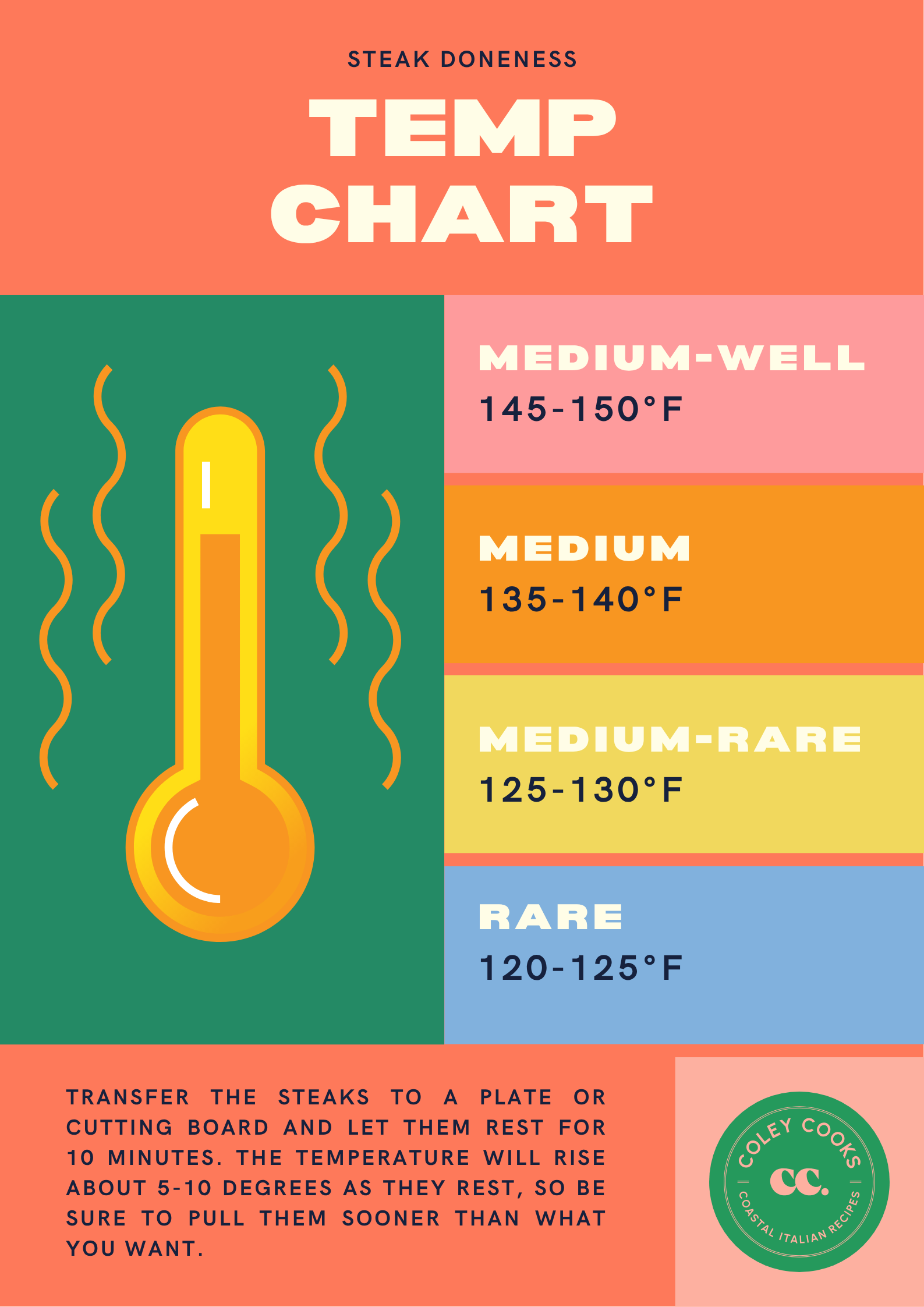
- 120-125°F for rare
- 125-130°F for medium-rare
- 135-140°F for medium
- 145-150°F for medium-well
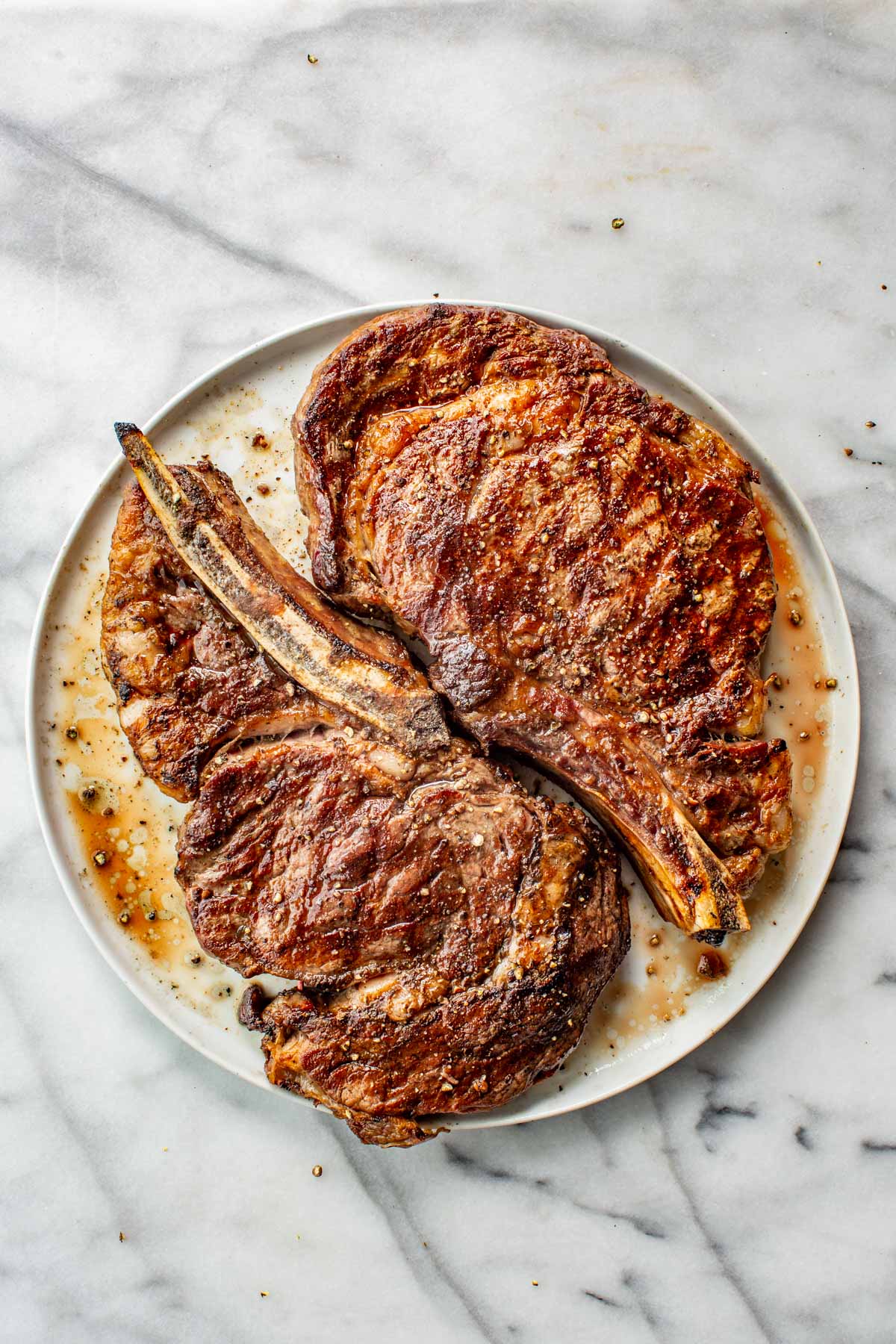
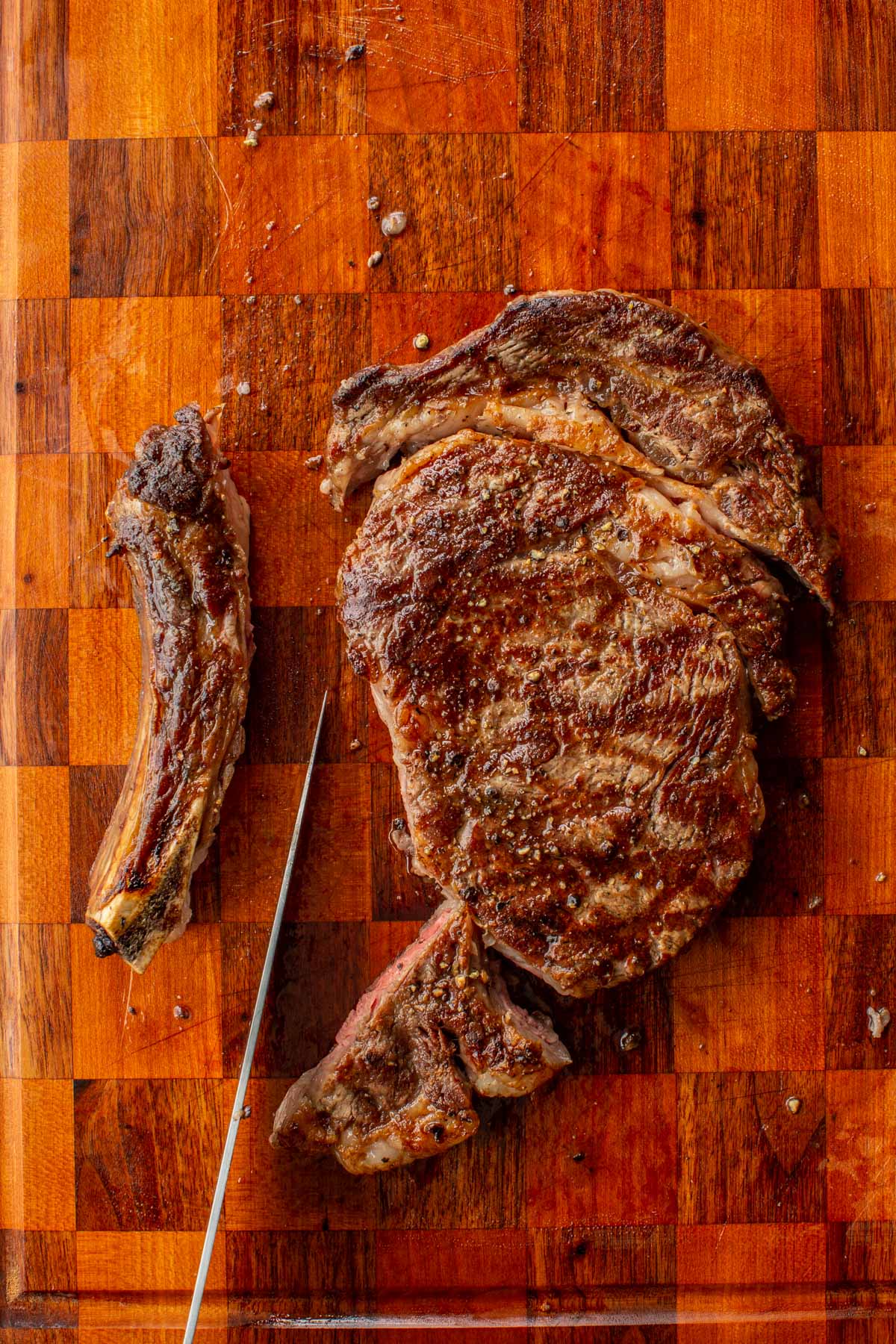
- Transfer the steaks to a plate or cutting board and let them rest for 10 minutes. The temperature will rise about 5-10 degrees as they rest, so be sure to pull them before they reach your desired final temperature.
- Thinly slice against the grain, then finish with freshly ground black pepper, flaky sea salt, and a drizzle of good extra virgin olive oil.
Grilled Ribeye Temperature Guide
The most accurate way to determine doneness is to use an instant-read thermometer. Use the following guidelines to reach your desired doneness.
Coley's Tips For the Best Ribeye Steaks
- Choose well-marbled ribeye steaks that are at least 1½ inches thick. Thicker steaks are much easier to grill without overcooking.
- Dry brining overnight will improve flavor, tenderness, and browning, but even 30-60 minutes makes a noticeable difference.
- An instant-read thermometer is the most reliable way to cook steak perfectly. Every grill cooks differently, so temperature is more dependable than time.
- Avoid pressing on the steaks while they cook, which can squeeze out flavorful juices.
- To cut against the grain, you will need to first divide the meat into sections, since there are a few different grain directions on a ribeye steak. You can easily identify the sections by looking at the grain direction and natural separation. Remove the bone if using bone-in steaks.
What to Serve with Grilled Steak
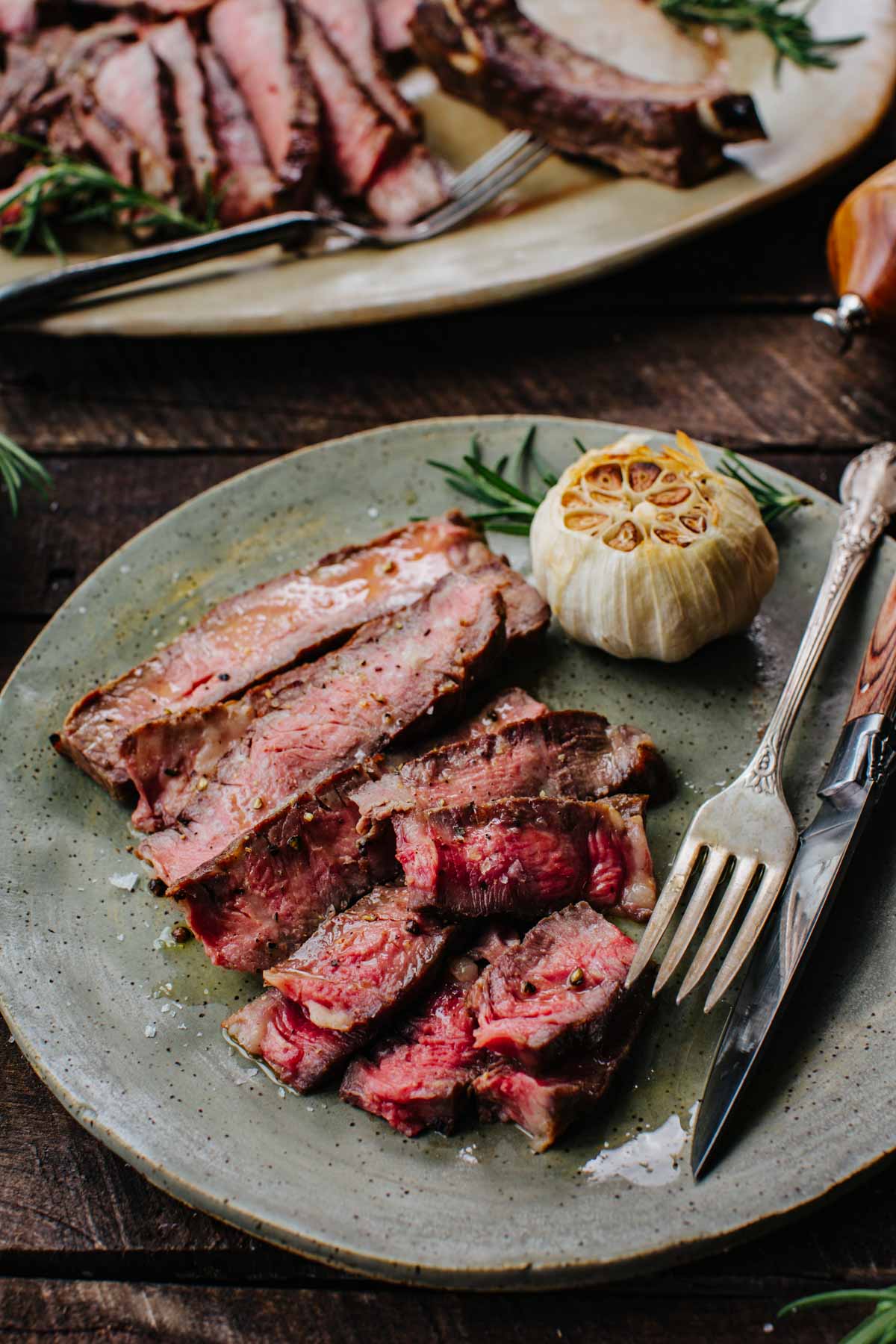
Juicy grilled ribeye steaks are delicious on their own, but even better paired with a sauce!
Try a bold chimichurri, a zesty Italian salsa verde, or bright Sicilian salmoriglio for something herbaceous and acidic to cut through the richness.
For something more decadent, go with a silky red wine bordelaise sauce, a creamy horseradish sauce, or a fresh basil compound butter.
You can also try a syrupy balsamic reduction, slow-roasted cherry tomato confit, or homemade caramelized onions for a pop of added sweetness.
For sides, you can't go wrong with these classic green beans amandine, easy grilled asparagus with anchovy walnut salsa verde, crispy roasted fingerling potatoes, or rustic mascarpone red skin mashed potatoes.
Use your leftover steak to make these easy but impressive steak crostini appetizers.
How to Store and Reheat Grilled Ribeye
Store leftover steaks in an airtight container in the fridge for up to 3 days.
To reheat, place in a 250°F oven for about 10 minutes just to warm through. Then quickly sear them in an oiled skillet over high heat to restore their crust.
If the steak has already been sliced, enjoy it cold, room temperature, or heat it very quickly in the microwave just to warm through.
FAQs
The finger test can help: Touch your thumb and index finger together. The flesh at the base of your thumb feels like rare steak. The middle finger is medium-rare, the ring finger is medium, and the pinky finger is well-done. Compare this to how the steak feels when pressed.
It's likely your grill wasn't well preheated, you skipped oiling the grill grates or steaks, or didn't wait at least 1 minute before flipping. Make sure to follow these steps to prevent sticking.
Contrary to popular belief, resting isn't really about sealing in juices. Resting is better understood as a way to manage carryover cooking and control the steak's final temperature, rather than a method for retaining moisture. In short, it lets the heat even out through the meat before you cut into it, so you land closer to your target doneness.
Yes. This same technique works well for other thick-cut steaks like NY strip, filet mignon, sirloin, or porterhouse. Just keep in mind that leaner cuts can go from perfectly cooked to overdone faster than a well-marbled ribeye, so lean on your thermometer rather than time.
A gas grill absolutely works just fine! Charcoal adds an extra layer of smoky flavor, but a gas grill is still great for this recipe.


Did you LOVE this recipe? Please leave a star ⭐️ rating and comment and tag your creations @ColeyCooks on Instagram!
Want to Save This Recipe?
Enter your email & I'll send it to your inbox along with my best Thanksgiving ideas and tips.
By submitting this form, you consent to receive emails from Coley Cooks.
Perfect Grilled Ribeye Steak
Ingredients
- 2 ribeye steaks bone in or boneless, 1½-2 inches thick
- 2 teaspoons kosher salt plus more if needed
- 1 tablespoon oil any kind
- freshly ground black pepper
- flaky sea salt for finishing (optional)
Instructions
- Pat the steaks dry, then season generously on all sides with kosher salt. If time allows, refrigerate uncovered for up to 24 hours to dry brine. Otherwise, let sit at room temperature for 30-60 minutes. If previously refrigerated, remove the steaks from the fridge 30-60 minutes before grilling so they cook more evenly.2 ribeye steaks, 2 teaspoons kosher salt
- Preheat a gas grill to high heat or prepare a charcoal grill with a hot direct cooking zone and a cooler zone for managing flare-ups. Clean the grates thoroughly once hot.
- Pat the steaks very dry with paper towels, even if they were dry brined. Lightly coat both sides with the oil.1 tablespoon oil
- Place the steaks over direct high heat. Close the lid and cook for about 1 minute, then flip. Continue flipping and rotating every 1-2 minutes, keeping the lid closed between flips, until the steaks develop a rich brown crust.
- If your steaks have a thick fat cap along one edge, use tongs to hold them upright over the heat for 30-60 seconds to render and crisp the fat.
- Continue cooking, flipping every 1-2 minutes, until an instant-read thermometer inserted into the thickest part registers: 120-125°F for rare, 125-130°F for medium-rare, 135-140°F for medium, 145-150°F for medium-well
- Transfer the steaks to a plate or cutting board and let them rest for 10 minutes. The temperature will rise about 5-10 degrees as they rest, so be sure to pull them before they reach your desired final temperature.
- Thinly slice against the grain, then finish with freshly ground black pepper, flaky sea salt, and a drizzle of good extra virgin olive oil.freshly ground black pepper, flaky sea salt
Notes
- A very clean, well-preheated grill and a light coating of oil on the steaks help prevent them from sticking to the grates.
- Flare-ups are normal, but if flames become excessive, move the steaks to the cooler side of the grill until the flames subside, then return them to the hot side.
- Choose well-marbled ribeye steaks that are at least 1½ inches thick. Thicker steaks are much easier to grill without overcooking.
- Dry brining overnight will improve flavor, tenderness and browning, but even 30-60 minutes makes a noticeable difference.
- An instant-read thermometer is the most reliable way to cook steak perfectly. Every grill cooks differently, so temperature is more dependable than time.
- Avoid pressing on the steaks while they cook, which can squeeze out flavorful juices.
- To cut against the grain, you will need to first divide the meat into sections, since there are a few different grain directions on a ribeye steak. You can easily identify the sections by looking at the grain direction and natural separation. Remove the bone if using bone-in steaks.