
Pesce all’Acqua Pazza (Fish in Crazy Water)
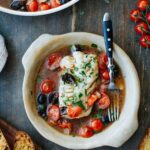
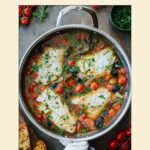
This classic pesce all'acqua pazza recipe takes a handful of simple ingredients and turns them into an unforgettable meal. Firm white fish fillets gently poach in a light tomato broth with garlic, white wine, olives, and capers, resulting in perfectly tender, flavorful, and juicy fish. It's impressive enough for company, yet simple enough for a weeknight, and can be on your table in 30 minutes.
This post may contain affiliate links.
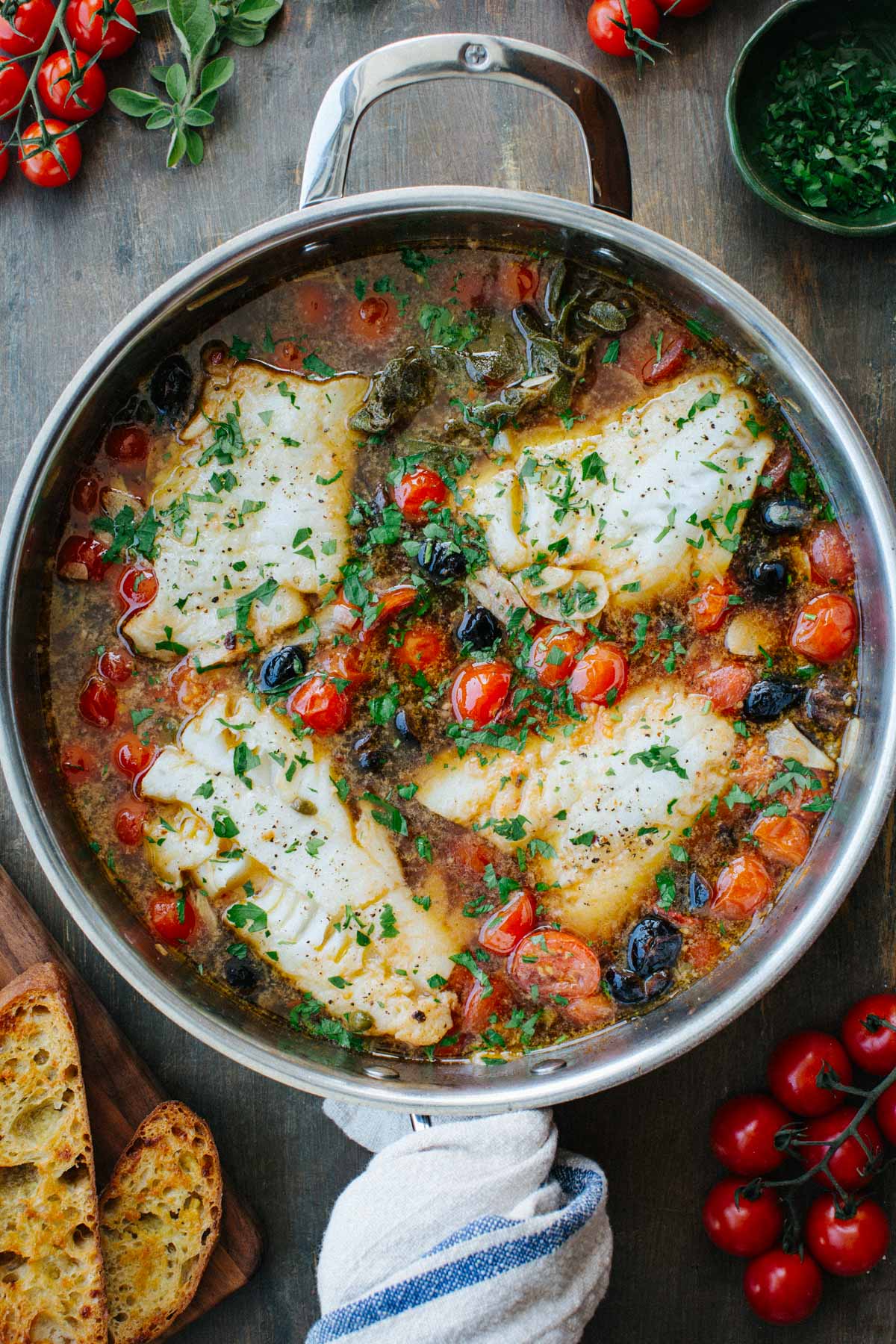
What Is Acqua Pazza?
Acqua pazza means "crazy water" in Italian and refers to a traditional dish from Naples where fishermen would poach their fresh catch in a simple broth of seawater, garlic, and olive oil.
Today you'll find different versions that include tomatoes, white wine, and other aromatics, but the original was quite basic.
It's a light, simple, and rustic dish that's incredibly flavorful, but still allows the fish to shine. The gentle poaching method keeps the fish succulent and juicy, and works with many different types of fish.
The broth that's used to poach the fish is similar to a French court bouillon. Fresh garlic, tomatoes, and white wine are really all you need, but a few other ingredients can add even more depth.
I love using olives and capers because they give the broth a salty brininess that's reminiscent of the seawater originally used.
I prefer using oil-cured black olives in this recipe, which are ripe, fully matured black olives that have been dry-cured in salt rather than brined. The olives plump up as they cook and become less salty while adding a rich, fruity flavor to the broth.
Other olives such as Gaeta, Taggiasca, Castelvetrano, Cerignola, or Kalamata also work well if you prefer something milder.
I use just a small amount of capers along with some of their brine to season the poaching liquid without taking over. Skip salt-packed capers for this recipe, since you'll also be adding some of the flavorful liquid to the broth.
Be sure to taste your broth and adjust the seasoning accordingly, which will depend on the saltiness of your olives.
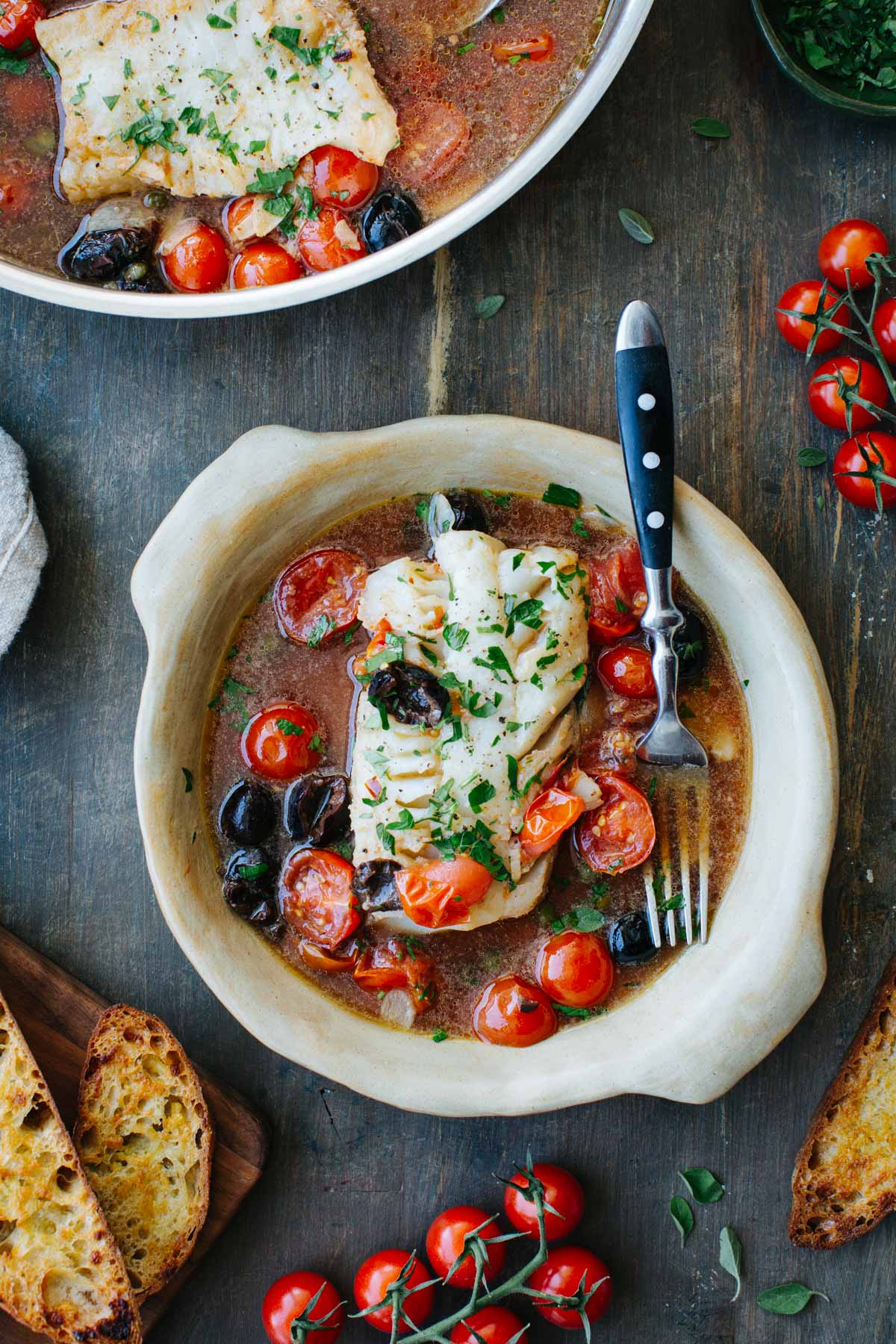
The Best Fish for Acqua Pazza
I made this recipe with cod, but it works beautifully with any firm white fish such as halibut, sea bass, grouper, tilefish, mahi mahi, snapper, or whatever's the fresh catch of the day.
Look for thicker fillets and avoid delicate fish like flounder or sole, which can fall apart while simmering.
Frozen fish is also a great option, just be sure to thaw it completely and pat it very dry before cooking.
This is a truly easy and forgiving cooking method that just about anyone can master on the first try. It's perfect for dinner parties, the holidays, or an elevated weeknight dinner!
Want more delicious Italian fish recipes? Try this easy lemon caper fish piccata, classic baked flounder oreganata, or our family recipe for flounder francaise.
Why This Recipe Works
- The gentle poaching method creates perfectly tender fish in a flavorful broth.
- Works beautifully with a variety of fresh or frozen firm white fish fillets.
- Olives and capers add rich, briny flavor to the classic garlic, tomato, and white wine broth.
- Ready in under 30 minutes with just 10 minutes of active prep!
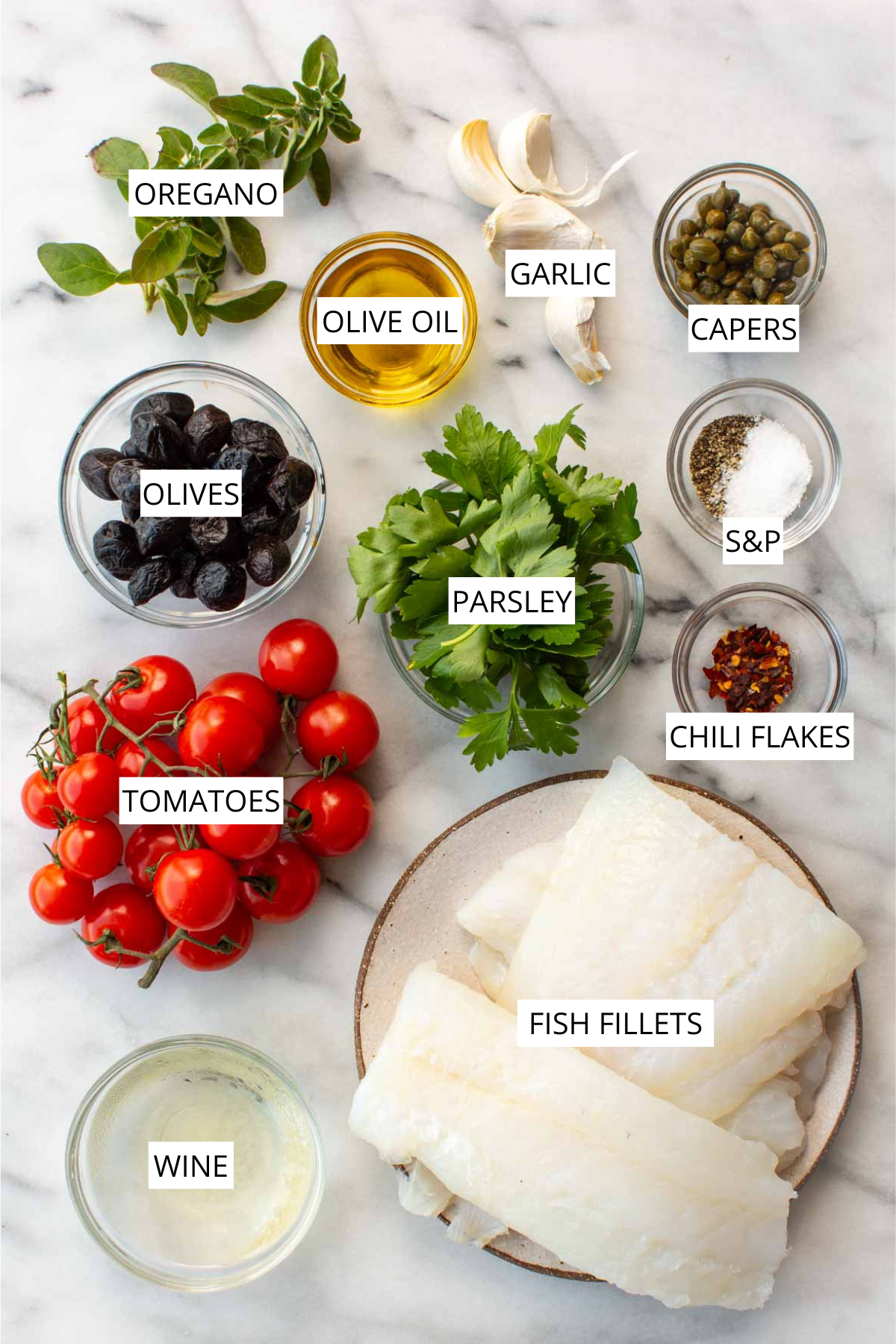
Ingredients for Acqua Pazza
Fish - This recipe works best with firm white fish fillets, such as cod, halibut, sea bass, grouper, tilefish, mahi, or snapper. Look for thicker fillets, about 1 ½ inches thick. Always choose sustainably caught, local fish from your seafood market. High-quality frozen fish fillets also work well, just defrost them fully first and pat them very dry before using.
Olive oil - Use a high-quality extra virgin olive oil to sauté the garlic. A drizzle before serving is also a nice touch!
Garlic - Garlic is the flavor base of this recipe, so don't be shy. You can add even more if you want.
Wine - Choose an unoaked, dry white wine that you would drink, such as a pinot grigio or sauvignon blanc.
Tomatoes - Use the freshest and sweetest you can find at your farmer's market. You can also use larger tomatoes, diced, if that's all you have.
Olives - Oil-cured olives are intensely salty and have a deeper, fruitier flavor, but any other olive can also be used. Kalamata or Castelvetrano olives are great options if you want something milder. You can also use a mix.
Capers - Use brined capers rather than salted so you can use some of the brine to season the broth.
Herbs - I add a sprig of fresh oregano or thyme to flavor the poaching liquid, but you can use a little bit of dried oregano instead. Fresh parsley is essential for finishing the dish. Don't use dried parsley, but you can substitute fresh basil instead.
*Find the full ingredient list in the recipe card below!
Helpful Equipment
- Paper towels
- Large skillet
How to Make Fish Acqua Pazza
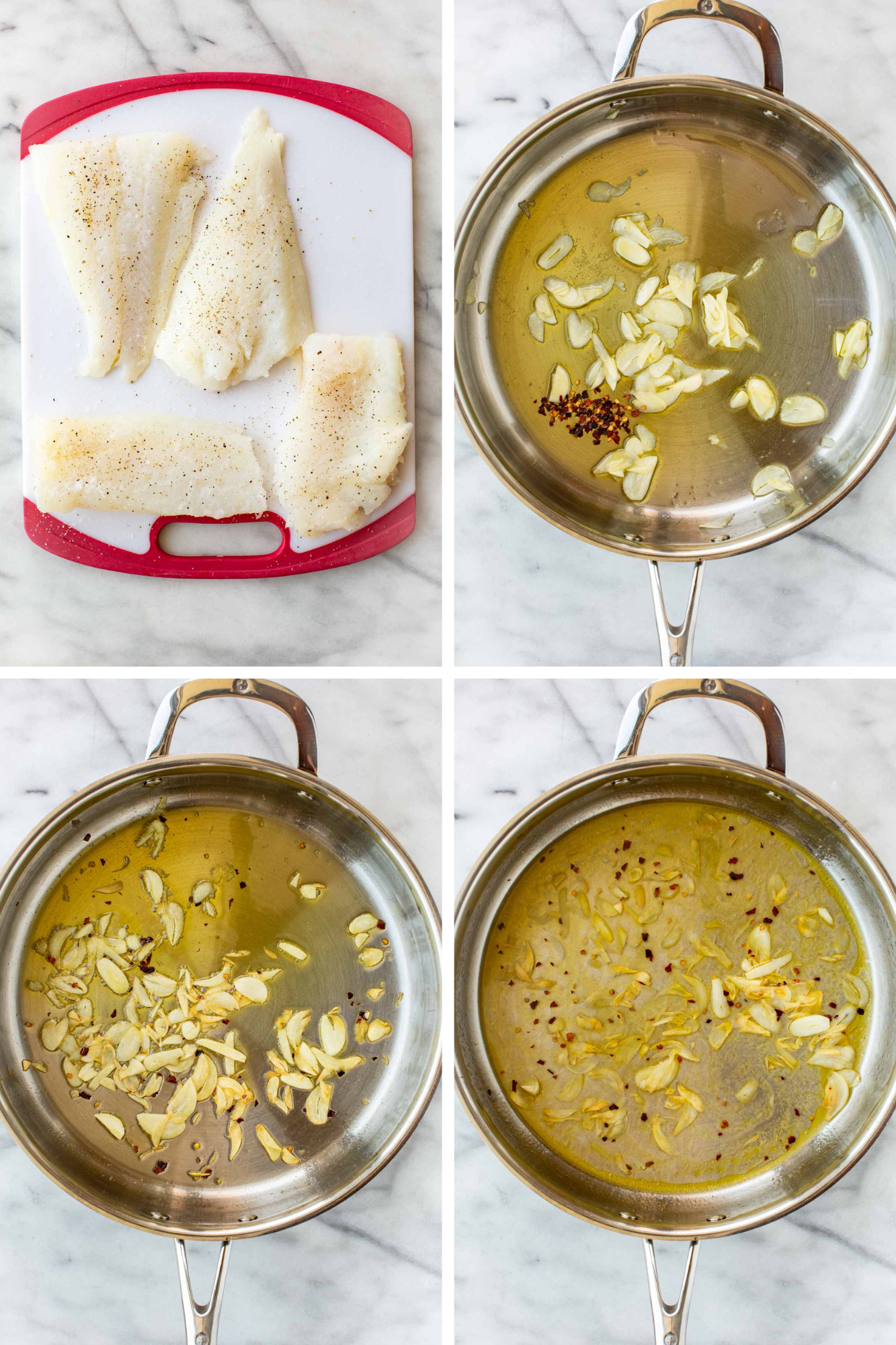
- Pat the fish dry, then season generously with salt and pepper on both sides. Let it sit at room temperature while you prepare the cooking liquid.
- Heat the olive oil in a large skillet with a lid over medium heat. Add the garlic and cook until fragrant, about 30 seconds, then add the red pepper flakes and cook until the garlic is just starting to turn golden around the edges, about 1-2 minutes.
Pro Tip: Don't allow the garlic to brown too much or it will turn the sauce bitter. It should just be starting to turn lightly golden around the edges.
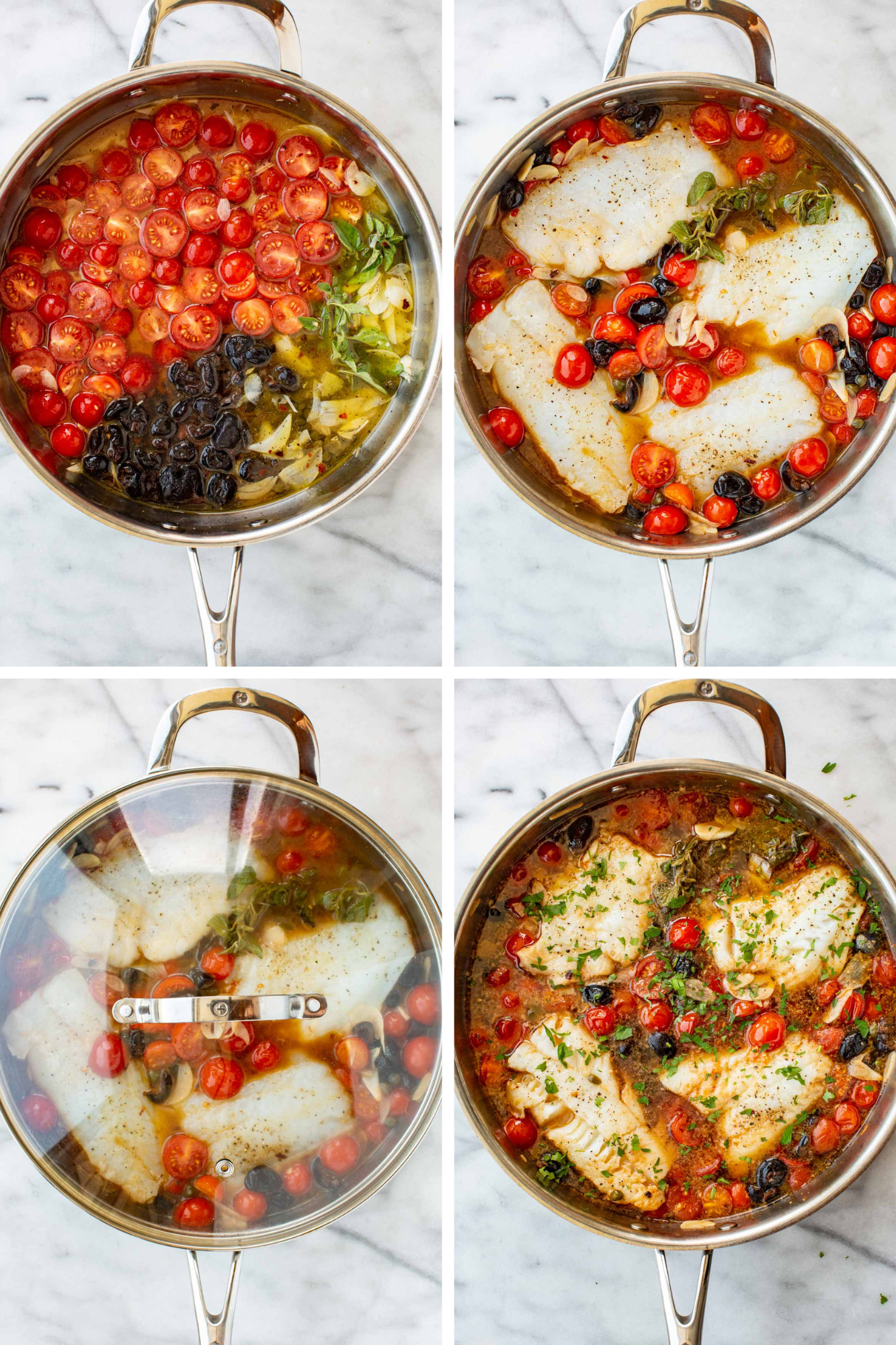
- Pour in the wine and simmer for 2-3 minutes to reduce slightly, then add the water, tomatoes, olives, capers, and oregano sprig. Mix everything together, then season to taste with salt and pepper and bring to a simmer.
Pro Tip: You can make the poaching liquid ahead and store in the refrigerator for up to 3 days. When ready to cook, just heat up the broth and follow the same method.
- Nestle the fish fillets into the sauce, then cover and gently simmer until the fish is opaque and flakes easily, about 6-8 minutes depending on thickness.
- Remove from the heat and sprinkle with parsley.
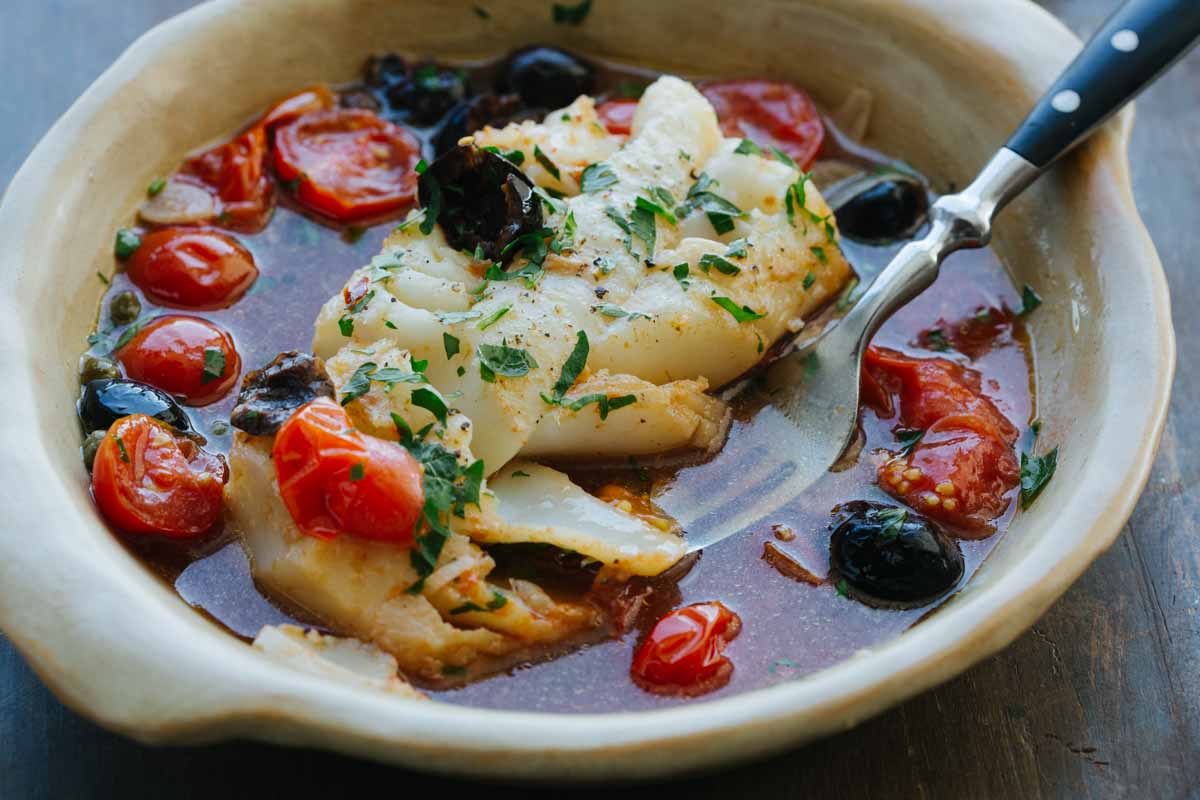
- Serve immediately with plenty of crusty bread or crostini for soaking up the broth.
Tips for Perfect Acqua Pazza
- If your fillets are uneven in thickness, tuck the thinner side underneath so they all cook in the same amount of time.
- Taste the cooking liquid before adding salt since the olives and capers can be quite salty.
- Avoid overcooking. The fish is done when it flakes easily or reaches 130-135°F in the center. Test by inserting a butter knife or skewer into the center. If there's any resistance, the fish still needs another minute or two. If it goes in easily, the fish is done.
- The fish will continue cooking in the hot broth after removing it from the heat. Serve immediately or remove the fish from the broth to prevent overcooking.
- If your tomatoes aren't very sweet, a small pinch of sugar will help to balance the acidity.
Variations
- Use a mix of pitted black olives such as Kalamata, Gaeta, or Taggiasca olives. Or try green olives instead, like mild Sicilian Castelvetrano olives or extra large Cerignola olives.
- Finish the dish with torn basil leaves instead of parsley.
- Use a richer fish such as salmon, tuna, or swordfish for a more substantial texture.
- Make this with other kinds of seafood such as shrimp, clams, mussels, or lobster tails.
- Use high-quality, canned tomatoes if fresh tomatoes are not in season.
What to Serve with Pesce all'Acqua Pazza
This fish acqua pazza only needs a few simple sides to be a full meal.
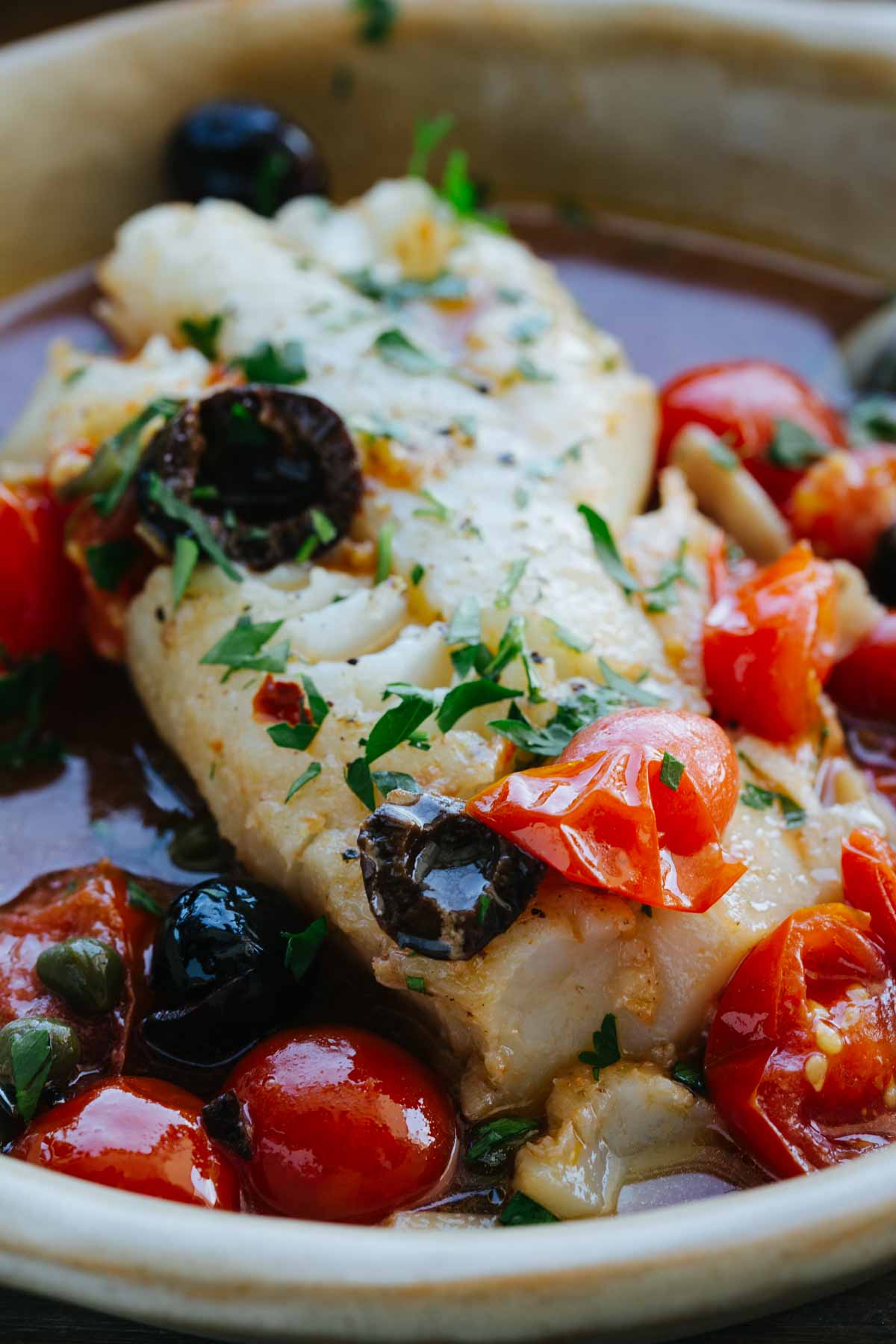
Most importantly, serving with plenty of fresh crusty bread, fluffy homemade focaccia, or crispy homemade crostini is a must to soak up the sauce. You can also serve with some crisp roasted fingerling potatoes or these simple buttered parsley potatoes instead.
To round out the meal with some veggies, serve with this easy roasted asparagus with parmesan breadcrumbs, these flavorful sauteed green beans with shallots and pancetta, Neapolitan escarole with olives and capers, or zucchini alla Scapece, another classic side from Naples.
How to Store and Reheat Fish
This dish is best eaten fresh, but any leftovers can be stored in an airtight container in the refrigerator for up to 3 days.
To reheat, place fish with sauce in a covered oven-safe container and heat for about 15 minutes at 275°F.
FAQs
Yes, you can replace wine with another liquid like fish stock with a small dash of white wine vinegar or lemon juice for acidity. While still flavorful, it will result in a less complex and bright sauce.
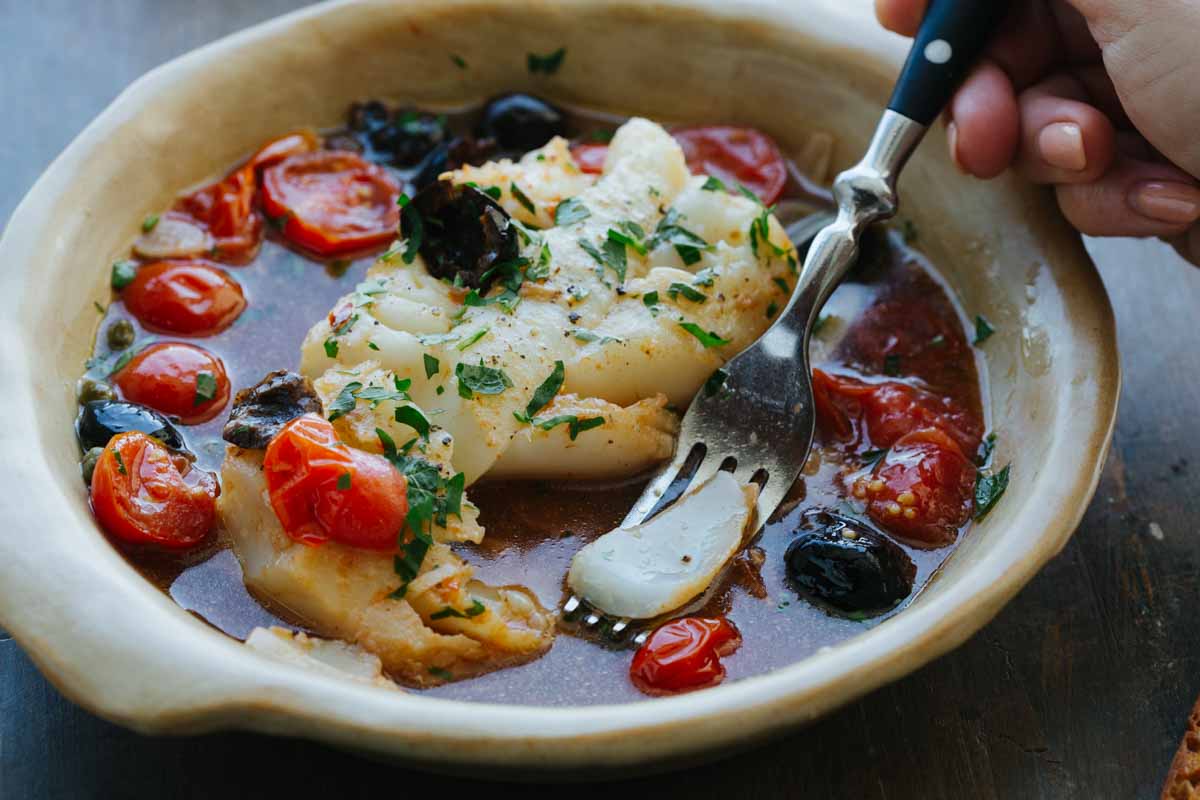
Fish should be opaque and flake easily when done. Insert a butter knife or skewer into the center of the thickest part. If it glides in easily, it's done, but if there's any resistance, it still needs a little more time. If using a thermometer, the internal temperature should reach 130-135°F at the thickest part.
Fresh herbs are strongly recommended, especially for finishing the dish. Dried oregano works in the sauce, but only use fresh parsley or basil at the end.


Did you LOVE this recipe? Please leave a star ⭐️ rating and comment and tag your creations @ColeyCooks on Instagram!
Want to Save This Recipe?
Enter your email & I'll send it to your inbox.
By submitting this form, you consent to receive emails from Coley Cooks.
Fish Acqua Pazza Recipe
Ingredients
- 1 ½ pounds white fish firm fish such as cod, grouper, halibut or seabass, cut into 4 portions
- kosher salt and freshly cracked black pepper
- 3 tablespoons extra virgin olive oil
- 4 garlic cloves very thinly sliced
- ¼ teaspoon crushed red pepper flakes or more to taste
- ½ cup dry white wine
- ¾ cup water
- 1 pint cherry tomatoes halved
- ½ cup oil-cured black olives pitted and torn
- 1 tablespoon capers with brine
- 1 sprig fresh oregano or thyme
- 2 tablespoons fresh parsley chopped
Instructions
- Pat the fish dry, then season generously with salt and pepper on both sides. Let it sit at room temperature while you prepare the cooking liquid.1 ½ pounds white fish, kosher salt and freshly cracked black pepper
- Heat the olive oil in a large skillet with a lid over medium heat. Add the garlic and cook until fragrant, about 30 seconds, then add the red pepper flakes and cook until the garlic is just starting to turn golden around the edges, about 1-2 minutes.3 tablespoons extra virgin olive oil, 4 garlic cloves, ¼ teaspoon crushed red pepper flakes
- Pour in the wine and simmer for 2-3 minutes to reduce slightly, then add the water, tomatoes, olives, capers, and oregano sprig. Mix everything together, then season to taste with salt and pepper and bring to a simmer.½ cup dry white wine, ¾ cup water, 1 pint cherry tomatoes, ½ cup oil-cured black olives, 1 tablespoon capers , 1 sprig fresh oregano
- Nestle the fish fillets into the sauce, then cover and gently simmer until the fish is opaque and flakes easily, about 6-8 minutes depending on thickness.
- Remove from the heat and sprinkle with parsley.2 tablespoons fresh parsley
- Serve immediately with plenty of crusty bread or crostini for soaking up the broth.
Notes
- If your fillets are uneven in thickness, tuck the thinner side underneath so they all cook in the same amount of time.
- Don't allow the garlic to brown too much or it will turn the sauce bitter. It should just be starting to turn lightly golden around the edges.
- Taste the cooking liquid before adding salt since the olives and capers can be quite salty.
- Avoid overcooking. The fish is done when it flakes easily or reaches 130-135°F in the center. Test by inserting a butter knife or skewer into the center. If there's any resistance, the fish still needs another minute or two. If it goes in easily, the fish is done.
- The fish will continue cooking in the hot broth after removing it from the heat. Serve immediately or remove the fish from the broth to prevent overcooking.
- If your tomatoes aren't very sweet, a small pinch of sugar will help to balance the acidity.
- You can make the poaching liquid ahead and store in the refrigerator for up to 3 days. When ready to cook, just heat up the broth and follow the same method.




Another Coley winner
Thanks Fred!! I'm so glad you made the recipe and enjoyed it! 😀
I tried this recipe the other day and it was delicious! The meal came together quickly without any hard-to-find ingredients. A great summertime weeknight meal! I paired this with a homemade sourdough loaf to sop up all the juices. Can’t wait to try this again… maybe with a different fish!! Thanks, Coley!!
Amazing! I'm so happy it turned out well for you. I bet the homemade sourdough put it over the top! What could be better than that? Thanks for taking the time to leave a review!