Lemon Caper Fish Piccata
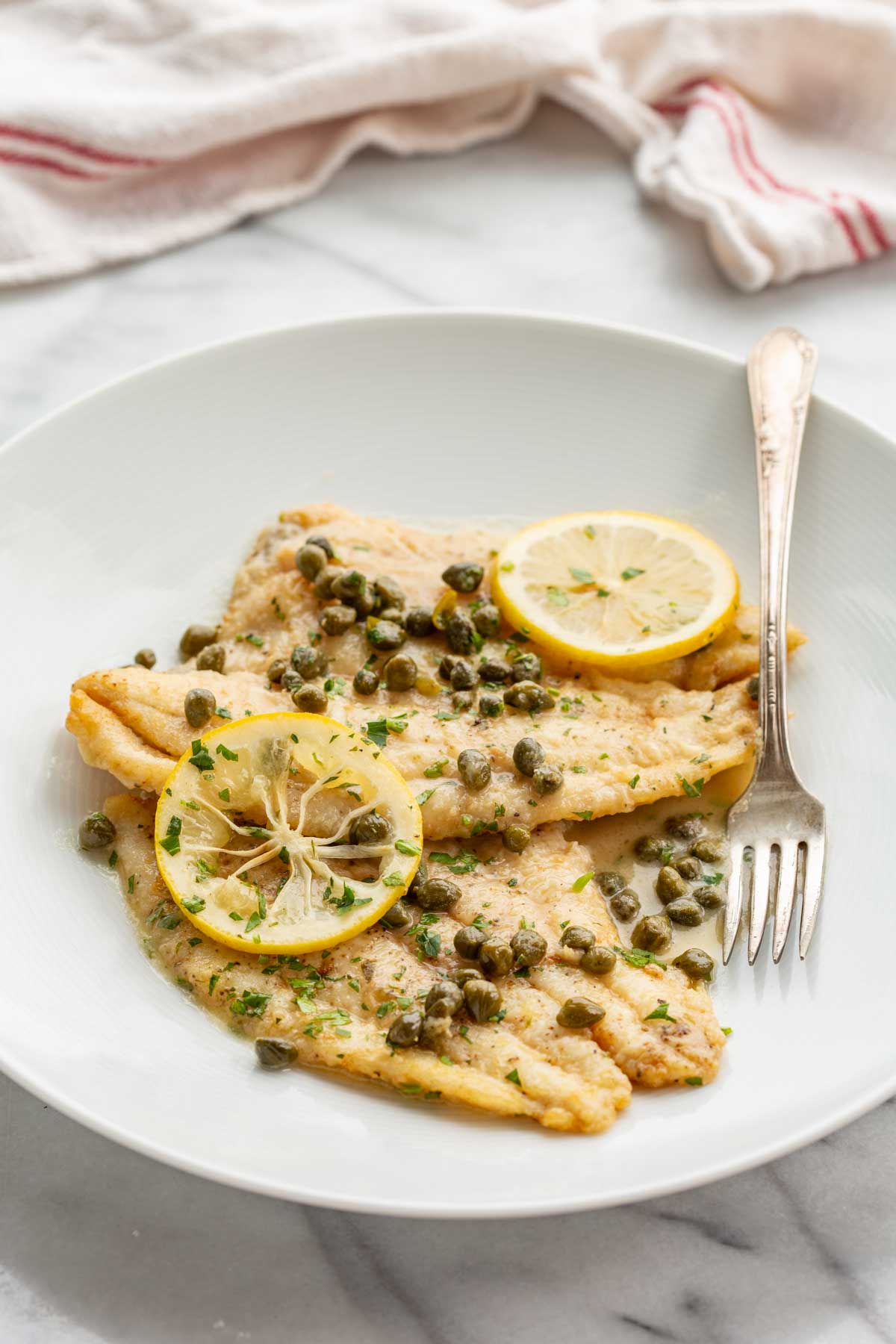
This easy fish piccata is a restaurant-worthy weeknight dinner that can be on your table in only 20 minutes! Delicate fish fillets are lightly pan-seared until golden, then finished in a bright, buttery, lemon, white wine, and caper sauce that conveniently comes together right in the same pan. It's a quick and delicious way to elevate a simple fish dinner!
This post may contain affiliate links.
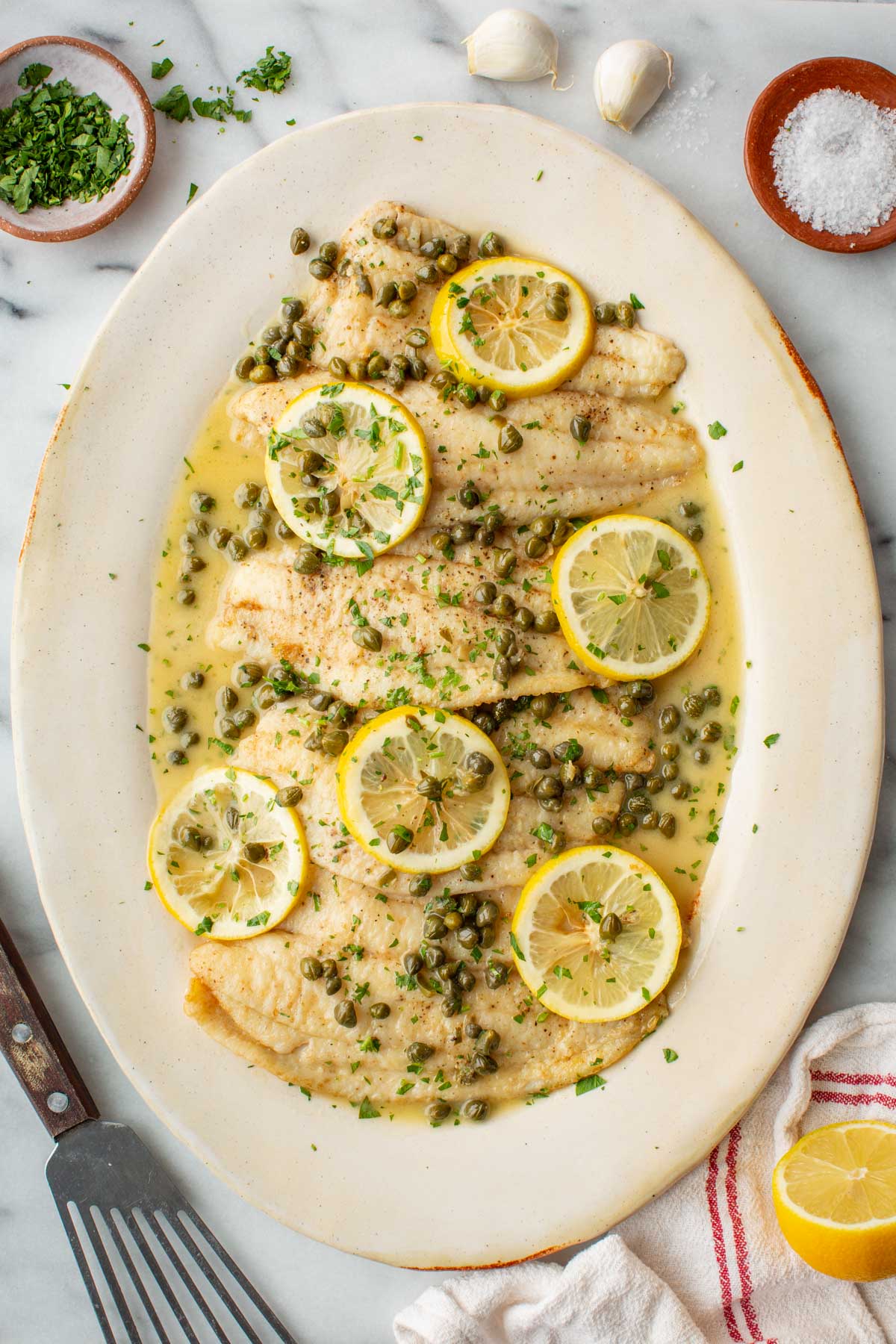
This is one of the fastest, yet most flavorful ways to cook delicate white fish like flounder, sole, or branzino. It tastes like it came from a restaurant, but truly could not be easier to make at home.
If you're looking for a simple, reliable fish dinner that feels a little special, this is one to keep on repeat!
What Is Fish Piccata
Piccata is a classic Italian preparation that most often uses veal or chicken, but it also works really well with fish.
Thin fillets are lightly coated in flour, quickly sautéed, then finished in a bright lemon, white wine, and caper sauce that comes together right in the same pan. The fillets cook in just a few minutes and soak up the sauce beautifully.
The key to this recipe is to dredge the fillets very lightly so the coating stays nice and thin - otherwise it can be heavy and gummy. Make sure the fish is dry before dredging and tap off any excess before sautéing. Avoid moving it too soon in the pan. Let it set and develop a light crust before flipping.
The sauce is built in layers, starting with wine, then lemon, then finished with cold butter right at the end for a smooth, glossy texture.
In addition to the lemon juice, I love adding a few thin lemon slices to the pan to add even more flavor. You can skip this if you want, but we love ours extra lemony, and it makes a gorgeous presentation.
The Best Fish for Piccata
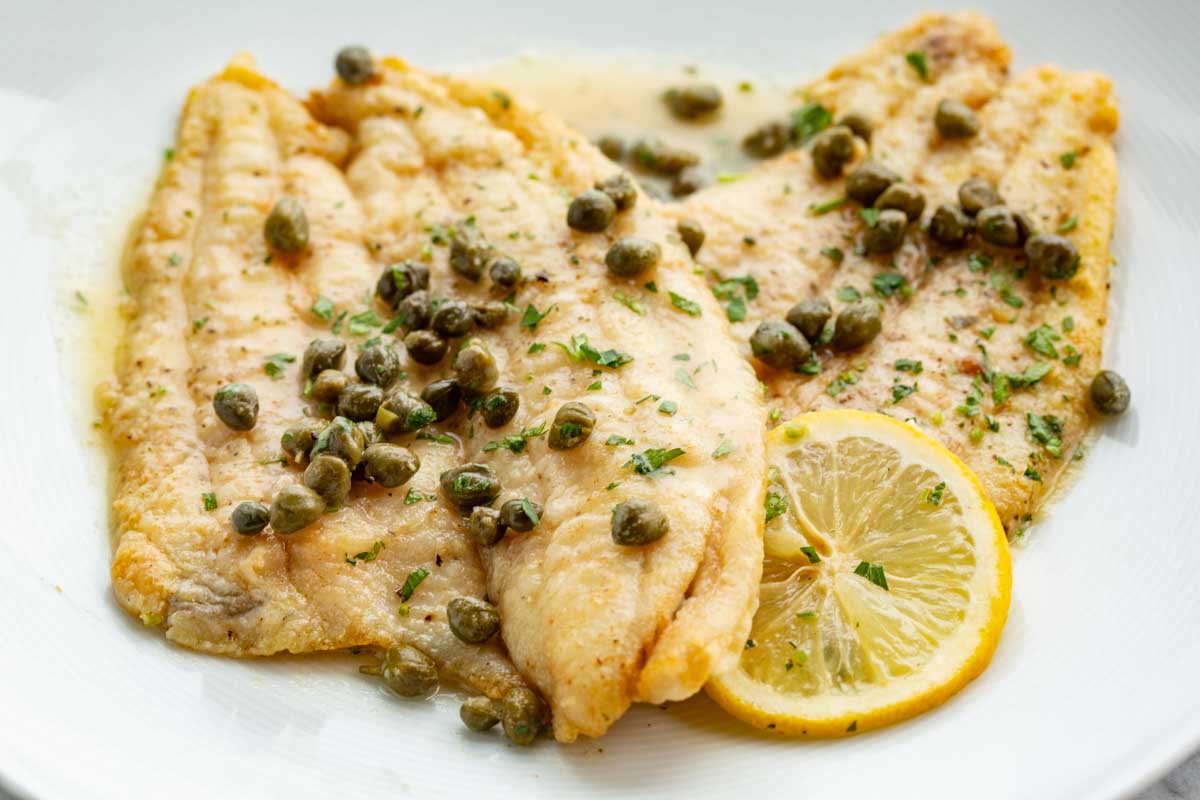
Living at the Jersey Shore, we catch a ton of fluke, also known as summer flounder, so it's a fish I cook with often. That said, this recipe is super versatile and works with any type of fish. Just be sure to select something that's high-quality, sustainably sourced, and fresh.
Flounder and fluke are especially well suited because their fillets are naturally thin and cook in just a few minutes. They stay tender and delicate, which is exactly what you want for this style of dish.
Sole is the closest substitute and works almost identically. Thin cod or haddock fillets can also be used, though they are slightly thicker and may need an extra minute of cooking. Snapper or sea bass can work as well, but will feel a bit more substantial.
Want more easy fish recipes? Try this classic flounder meuniere, a quick and basic lemon butter fish, or this simple Italian baked flounder oreganata.
Why This Flounder Piccata Works
- Comes together quickly in 20 minutes or less using a single pan.
- Can be made with any delicate white fish fillets you have.
- The light dredging creates a thin coating that isn't heavy or gummy.
- Whisking in cold unsalted butter balances the acidity and makes the sauce emulsified and glossy.
- It's a simple recipe that's easy to make at home, but still feels special and restaurant-worthy!
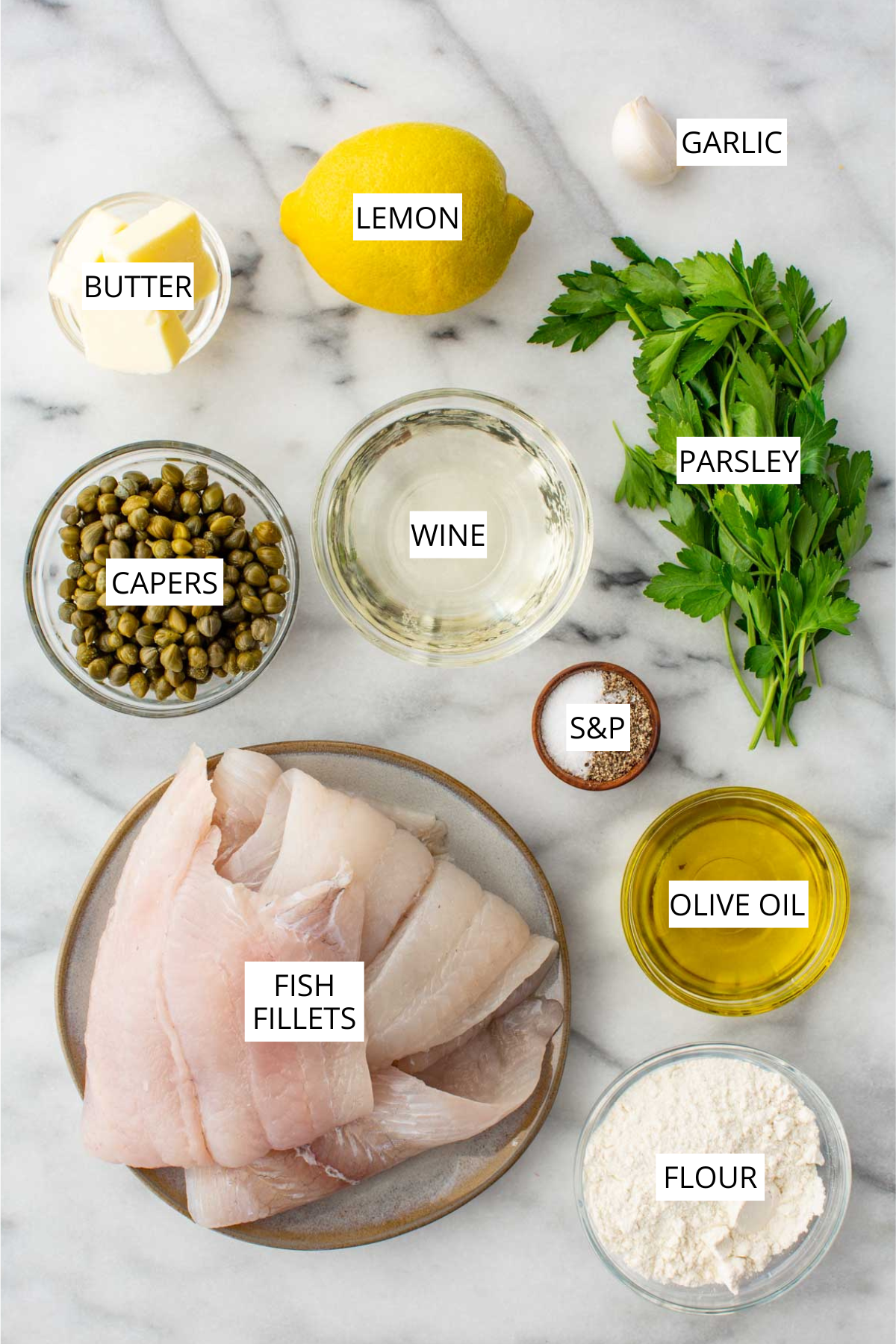
Fish Piccata Ingredients
Fish fillets - This recipe can be made with just about any type of fish. I recommend going for delicate white fish fillets like flounder, fluke, sole or branzino, which are naturally thin and cook quickly, but feel free to try other varieties. Just be sure to select something that's high-quality, sustainably sourced, and fresh.
Butter - Cold unsalted diced butter is best to manage the salt level and help emulsify the sauce without the risk of it splitting.
White wine - Use any neutral, unoaked white wine like sauvignon blanc. If you prefer not to use wine, substitute with chicken broth, though the flavor will be a bit less complex.
Lemon - Both lemon juice and lemon slices are used to add even more flavor and aroma. This recipe is extra lemony but you can cut down by skipping the slices if you want.
Capers - Any capers will work here, just soak or rinse them if they are salt-packed or brined. Small nonpareil capers will be sharper and more complex, while large capote capers are milder and meatier. Both are delicious!
Garlic - I add a smashed clove of garlic to infuse the sauce with just a hint of flavor since I don't want it to overpower the delicate fish. However, you can finely mince the garlic if you prefer a stronger, more pronounced garlic flavor.
*Find the full ingredient list in the recipe card below!
Helpful Equipment
- Paper towels
- Large skillet
- Fish spatula
- Lemon squeezer
How to Make Fish Piccata
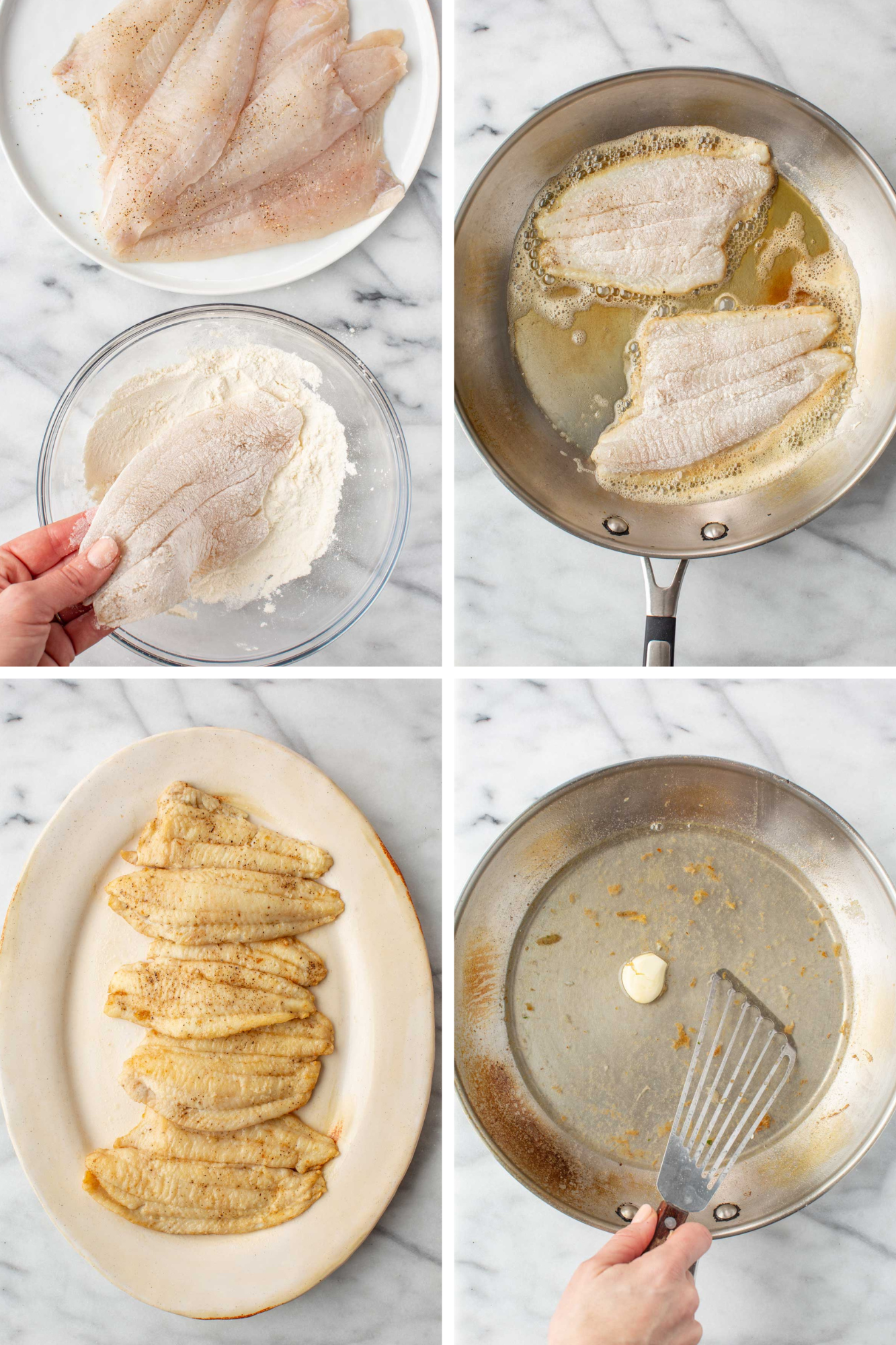
- Pat the fish dry with paper towels. Cut larger fillets into smaller pieces if needed.
- In a shallow dish, combine the flour, salt and pepper. Lightly dredge the fish and shake off excess flour.
- Heat the olive oil and 1 tablespoon butter in a large skillet over medium heat.
- Add the fish and cook until lightly golden and just cooked through, about 2 to 3 minutes per side. Transfer to a plate, then repeat with the remaining fillets. Cover to keep warm while you make the pan sauce.
Pro Tip: I don't return the fish to the pan like I do with other proteins, like chicken, since it's so delicate. Unless your fish is very firm, it can easily fall apart at this step. It can also easily overcook, so I just keep it warm on a plate, then pour the hot sauce over the top right before serving.
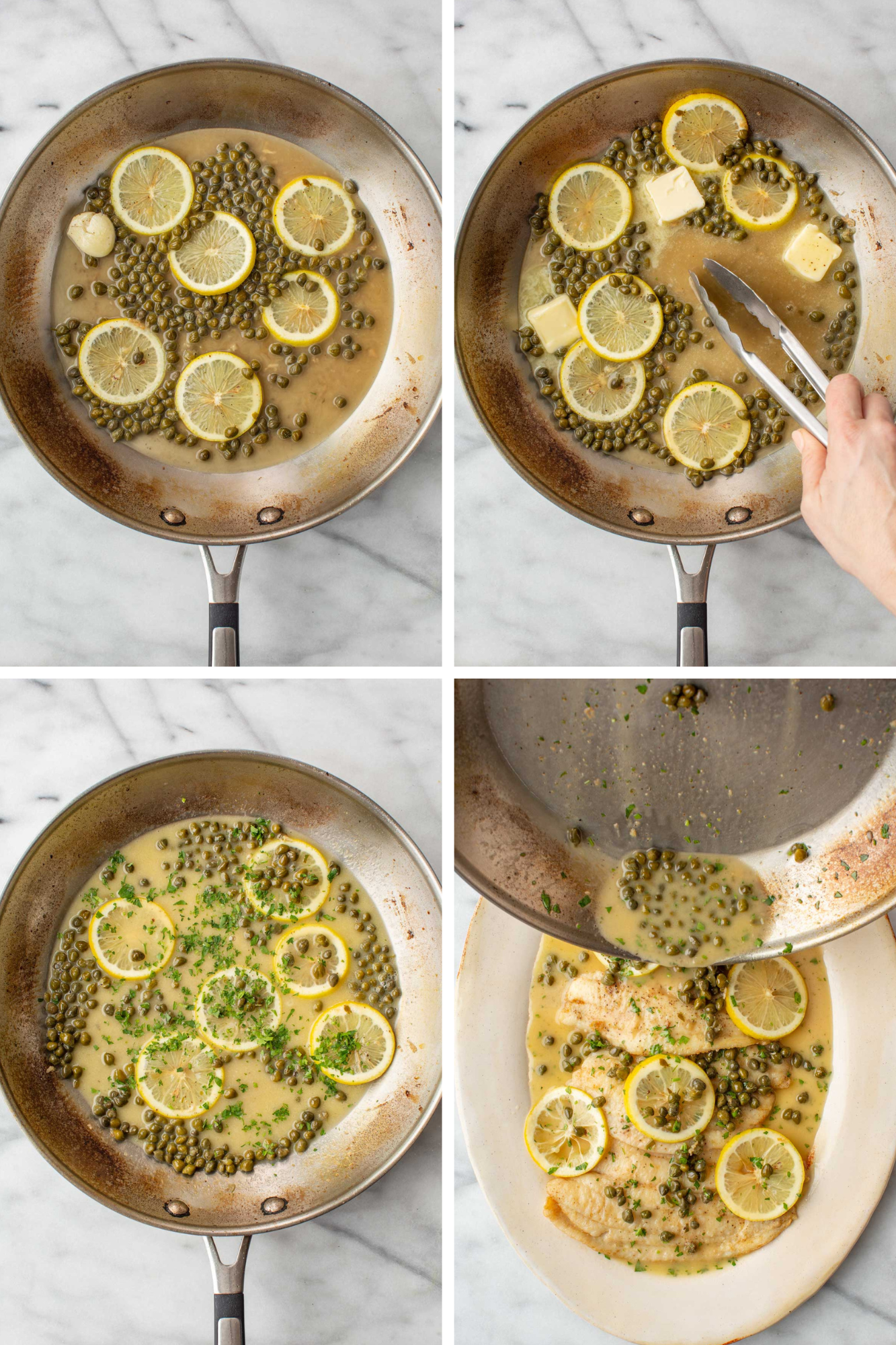
- Add the white wine and garlic clove to the skillet and scrape up any browned bits. Simmer for about 2-3 minutes to burn off the alcohol and reduce slightly.
- Stir in the lemon juice, lemon slices, and capers, then simmer for another 1-2 minutes. Remove the garlic clove, then taste and adjust the seasoning as needed.
- Whisk in the remaining butter over low heat until the sauce becomes glossy. Stir in the parsley, then pour the sauce over the fish.
Pro Tip: Make sure your butter is cold and added gradually over very low heat. This is what helps the sauce stay smooth instead of separating.
Tips for Perfect Fish Piccata
- This recipe works with any variety of fish, only you'll need to adjust the cooking time based on the thickness.
- Make sure you pat the fish very dry before dredging, especially if it was frozen and defrosted.
- You can tell if the fish is done if it flakes easily with a fork. You can also try poking a skewer or toothpick gently into the thickest part of the flesh. If it goes through with no resistance, it's fully cooked. If there's resistance, it needs another minute or two.
- If needed, you can keep the fish warm in a 200°F oven, covered, for up to 30 minutes, but no more, or it can overcook and dry out.
- If the sauce becomes too sharp from the lemon, whisk in a little bit of water plus a small additional knob of butter.
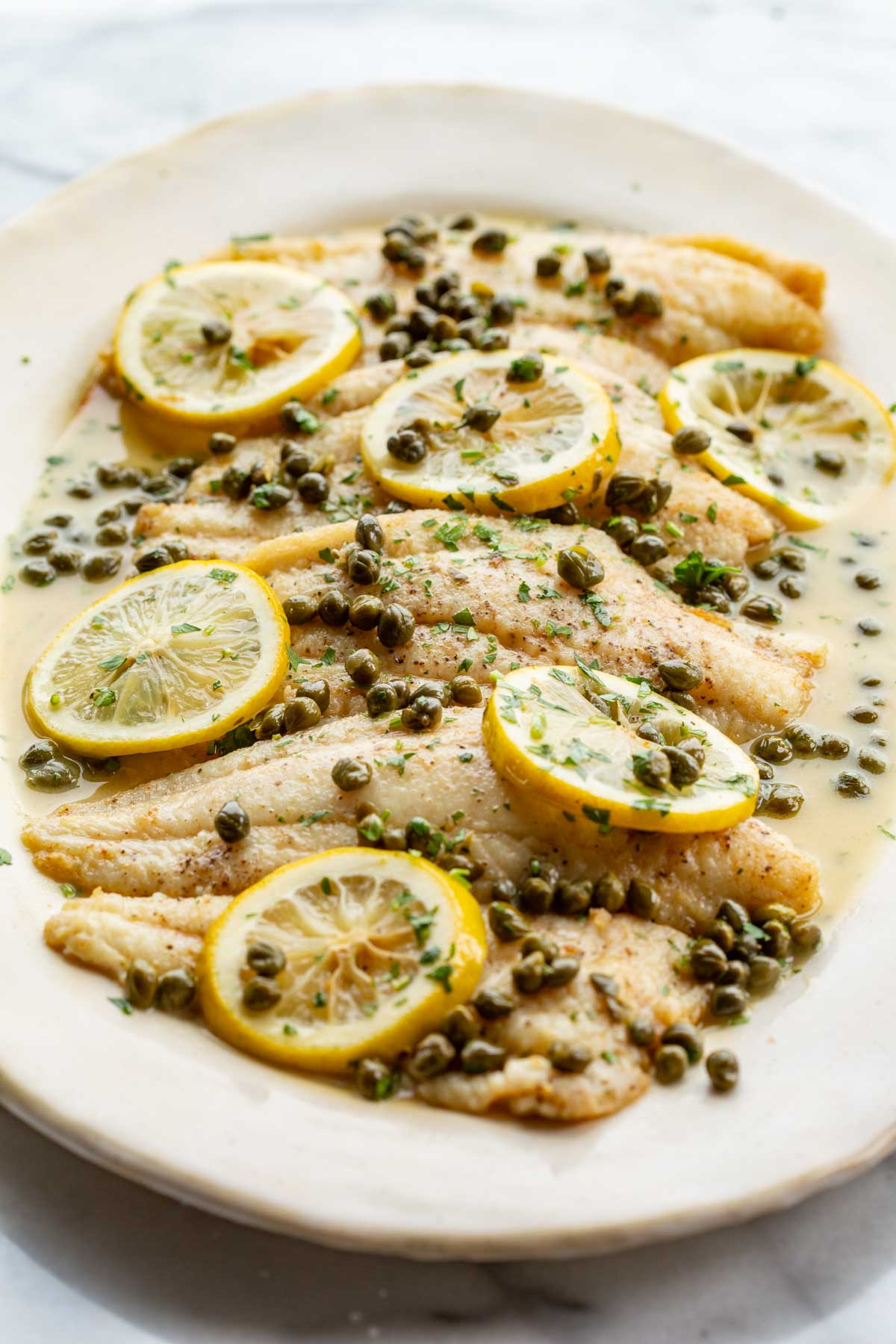
Variations and Substitutions
- Substitute fluke or flounder with sole, branzino, thin cod, or haddock fillets.
- Try grouper, snapper, and sea bass for something more substantial.
- Substitute white wine with chicken broth for a simpler, less acidic flavor.
- Try different fresh herbs, like cilantro, basil, tarragon, or thyme.
- Try using oranges instead of lemons for a different finish, more similar to my easy roasted fish with orange recipe.
- Add some minced shallots to the pan along with the garlic for even more flavor.
What to Serve With Fish Piccata
Serve this punchy fish piccata with a few delicious sides, like these crispy roasted fingerling potatoes, a creamy parmesan polenta, or rich red skin mascarpone mashed potatoes.
Include some beautiful veggies like this shaved fennel salad with olives and hazelnuts, some simple sauteed green beans with shallots and pancetta, or this easy roasted asparagus with crispy parmesan breadcrumbs.
How to Store and Reheat Flounder Piccata
This dish is best eaten fresh, but any leftovers can be stored in an airtight container in the refrigerator for 2-3 days. To reheat, place fish with sauce in a covered oven-safe container and heat for about 15 minutes at 275°F.
FAQs
Yes, you can replace wine with another liquid like chicken or fish stock with a small dash of white wine vinegar. While still flavorful, it will result in a less complex and bright sauce.
Make sure the fish does not overcook. Allow the light dredging to form a crust in the pan before moving or flipping. Then transfer to a hot plate with a fish spatula rather than tongs, which might damage the meat. To serve, do not move fillets back into the pan, just pour the hot sauce over the top.
Dredge the fillets in flour very lightly, then shake or tap off the excess so the coating stays nice and thin. Then, make sure the fish is properly seared before moving out of the pan.
Yes, fish piccata can be made with frozen fish but you'll need to defrost it first for best results. If you don't have access to high-quality fresh seafood, good quality frozen fillets are an excellent option!


Did you LOVE this recipe? Please leave a star ⭐️ rating and comment and tag your creations @ColeyCooks on Instagram!
Want to Save This Recipe?
Enter your email & I'll send it to your inbox.
By submitting this form, you consent to receive emails from Coley Cooks.
Easy Fish Piccata Recipe
Ingredients
- 1 ½ pounds flaky white fish fillets like flounder, sole, branzino, grouper or sea bass
- ½ cup all purpose flour
- 1 teaspoon kosher salt
- ½ teaspoon black pepper freshly ground
- 3 tablespoons extra virgin olive oil plus more as needed
- 1 clove garlic smashed
- 4 tablespoons butter unsalted, divided
- ½ cup dry white wine
- ¼ cup lemon juice freshly squeezed
- ½ lemon very thinly sliced into rounds
- 3 tablespoons capers drained
- ¼ cup fresh parsley chopped
Instructions
- Pat the fish dry with paper towels. Cut larger fillets into smaller pieces if needed.1 ½ pounds flaky white fish fillets
- In a shallow dish, combine the flour, salt and pepper. Lightly dredge the fish and shake off excess flour.½ cup all purpose flour, 1 teaspoon kosher salt, ½ teaspoon black pepper
- Heat the olive oil and 1 tablespoon butter in a large skillet over medium heat.3 tablespoons extra virgin olive oil, 4 tablespoons butter
- Add the fish and cook until lightly golden and just cooked through, about 2 to 3 minutes per side. Transfer to a plate, then repeat with the remaining fillets. Cover to keep warm while you make the pan sauce.
- Add the white wine and garlic clove to the skillet and scrape up any browned bits. Simmer for about 2-3 minutes to burn off the alcohol and reduce slightly.1 clove garlic, ½ cup dry white wine
- Stir in the lemon juice, lemon slices, and capers, then simmer for another 1-2 minutes. Remove the garlic clove, then taste and adjust the seasoning as needed.¼ cup lemon juice, ½ lemon, 3 tablespoons capers
- Whisk in the remaining butter over low heat until the sauce becomes glossy. Stir in the parsley, then pour the sauce over the fish.¼ cup fresh parsley
Notes
- I don't return the fish to the pan like I do with other proteins, like chicken, since it's so delicate. Unless your fish is very firm, it can easily fall apart at this step. It can also easily overcook, so I just keep it warm on a plate, then pour the hot sauce over the top right before serving.
- This recipe works with any variety of fish, only you'll need to adjust the cooking time based on the thickness.
- Make sure you pat the fish very dry before dredging, especially if it was frozen and defrosted.
- You can tell if the fish is done if it flakes easily with a fork. You can also try poking a skewer or toothpick gently into the thickest part of the flesh. If it goes through with no resistance, it's fully cooked. If there's resistance, it needs another minute or two.
- If needed, you can keep the fish warm in a 200°F oven, covered, for up to 30 minutes, but no more, or it can overcook and dry out.
- Make sure your butter is cold and added gradually over very low heat. This is what helps the sauce stay smooth instead of separating.
- If the sauce becomes too sharp from the lemon, whisk in a little bit of water plus a small additional knob of butter.