Spaghetti with Clams and Pistachio Pesto
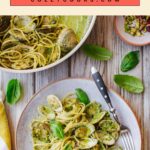
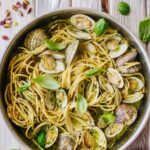
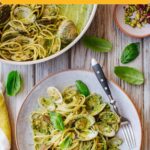
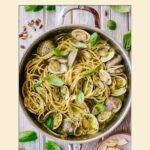
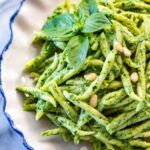
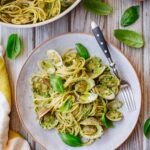
This pasta with clams and pistachio pesto is a fresh twist on classic spaghetti alle vongole. Tender littleneck clams are tossed with homemade pistachio pesto, white wine, a splash of cream, and perfectly al dente spaghetti for a rich, yet fresh seafood pasta that's ready in about 30 minutes. If you're looking for a unique Italian pasta recipe that's simple enough for a weeknight but impressive enough for guests, this one is hard to beat!
This post may contain affiliate links.
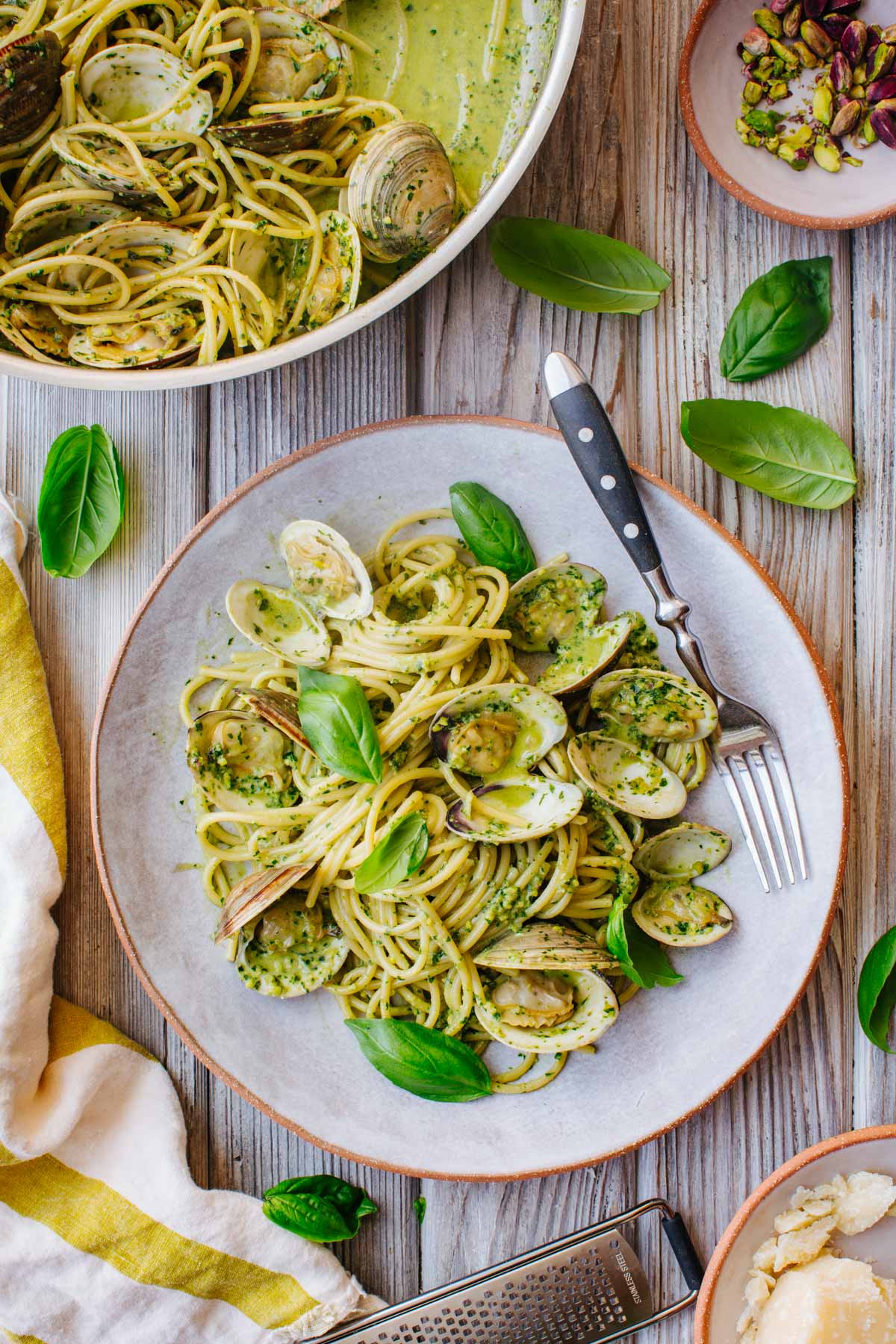
Spaghetti alle Vongole Meets Sicilian Pistachio Pesto
This is my recreation of a dish I had at a restaurant on the island of Favignana off the western coast of Sicily. It was easily one of the best things I ate on my entire trip, and maybe my entire life! I've been dreaming about it ever since.
Linguine alle Vongole is one of my favorite pasta dishes and I also love pasta with pesto of any sort, so putting them together in the same dish is truly genius. Pesto + pasta + clams = match made in heaven!
While you could technically make this with any type of pesto, I think it goes particularly well with pistachio pesto. The richness and creaminess of the pistachios mellow out the brininess of the clams and the flavors just work well together.
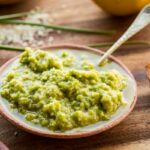
I make the pesto for this recipe slightly different from my traditional pistachio pesto. The main difference is that I use Parmigiano Reggiano instead of Pecorino Romano. Pecorino is very salty, and when combined with the clams, it can be a bit too much. Parmigiano, on the other hand, is sweeter, nuttier and pairs much better with the briny clams.
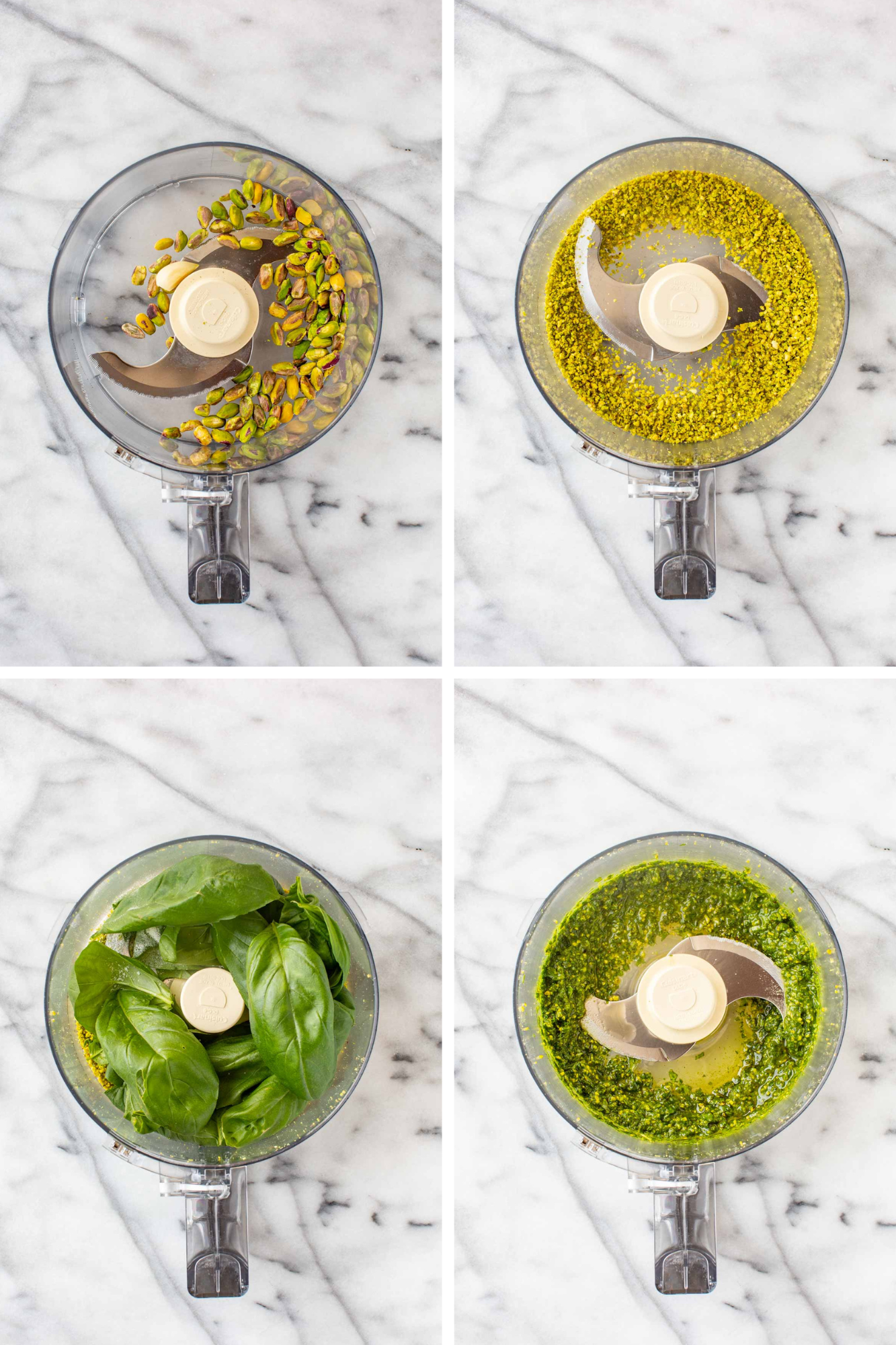
I like to blend up the garlic and pistachios together first to make sure they're nicely broken down before adding the basil and olive oil so it doesn't need to blend as long. This will help preserve a nice green color since the basil doesn't bruise as much.
I also mix the cheese in at the end, which helps it stay nice and creamy. While you could technically make this with store-bought pesto or pesto that's been sitting in your fridge or freezer, it's going to be significantly better if you make it from scratch right before cooking. It tastes fresher, looks better and makes all the difference!
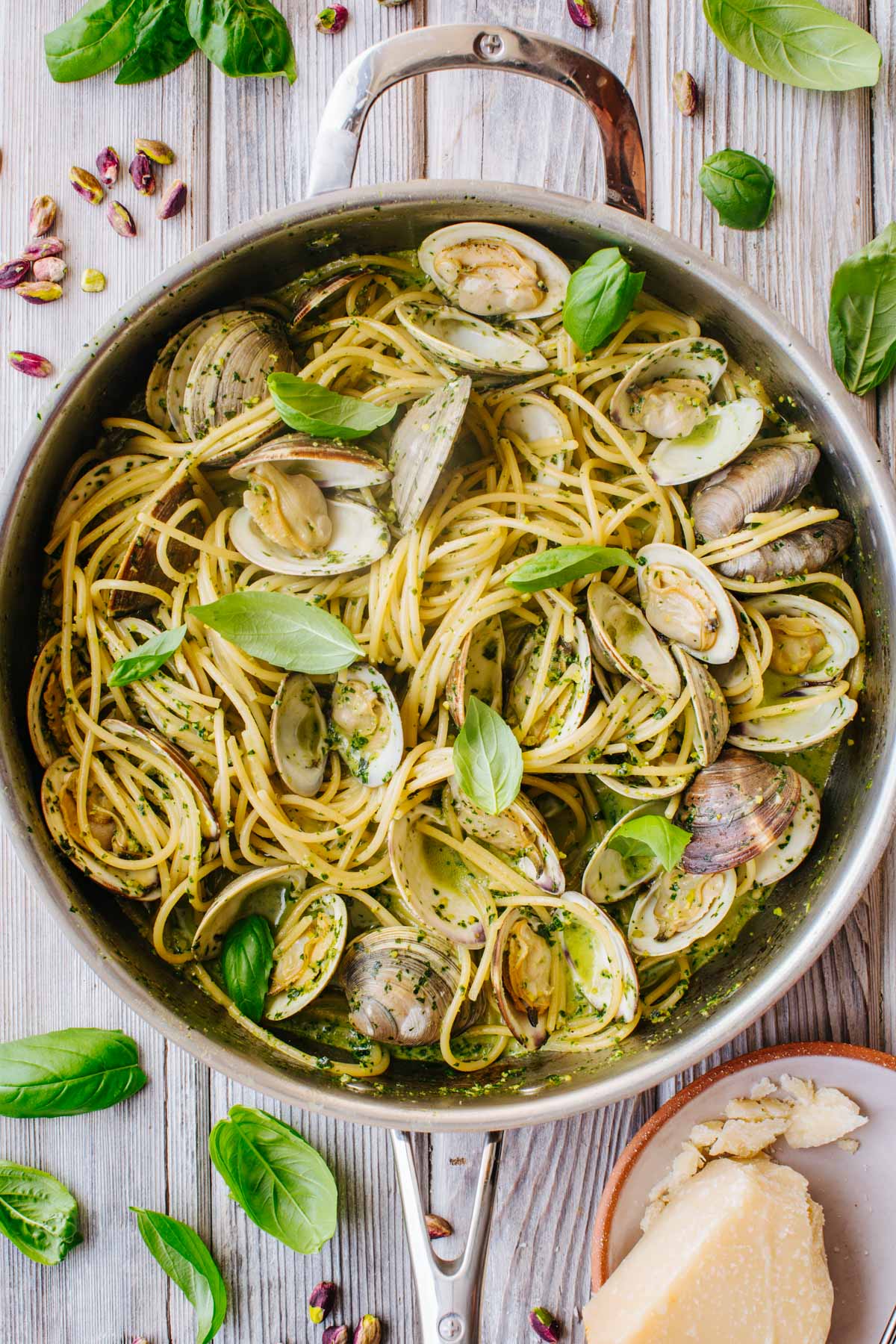
I tried this recipe a few different ways before settling on this version. I tried it finished with just the pesto, clam broth, and pasta water, but it lacked the creaminess that I remembered.
Next, I tried adding a few knobs of butter at the end, like I do in my classic pasta with clams recipe. But again, it just wasn't what I was going for.
On my last try, I added in a splash of cream instead, and it was just what it needed! It's not enough to make this a true cream sauce, but it lightens the pesto just enough and enhances its natural creaminess. It also tempers the saltiness of the clams significantly, which is helpful if your clams are especially salty.
The clams that we get in NJ are very salty, so I don't salt my pasta water at all for this dish; otherwise it can go overboard fast. I also don't salt my pesto. I just give it a taste at the end and adjust with some salt if needed.
Sometimes a little pinch is all it needs to bring out more flavor, but sometimes it doesn't need any at all. Depending on the saltiness of your clams, it may need a bit more. It's always best to go with less at first, since you can't remove it once it's there.
However, if your dish is tasting a bit too salty, a little extra heavy cream can help.
I also experimented with some lemon, but ultimately decided to leave it out. The wine provides enough acidity to balance the richness; any more takes away from the other flavors. A little bit of lemon zest can be added if you want a bit of lemony flavor, but I prefer it without.
Want more delicious clam recipes? Try these easy steamed clams with white wine and garlic, classic baked clams oreganata, or a creamy homemade New England clam chowder.
Why This Recipe Works
- A fun mashup of two Italian classics, pesto and spaghetti alle vongole, that are surprisingly perfect together.
- Rich, creamy pistachios balance the briny fresh clams.
- Using Parmigiano instead of Pecorino keeps the dish from becoming overly salty.
- Blending the garlic and pistachios before adding the basil helps preserve its fresh flavor and bright green color.
- Removing the clams as soon as they open keeps them tender and juicy.
- A small splash of cream ties everything together, tempering the saltiness and creating a silky sauce.
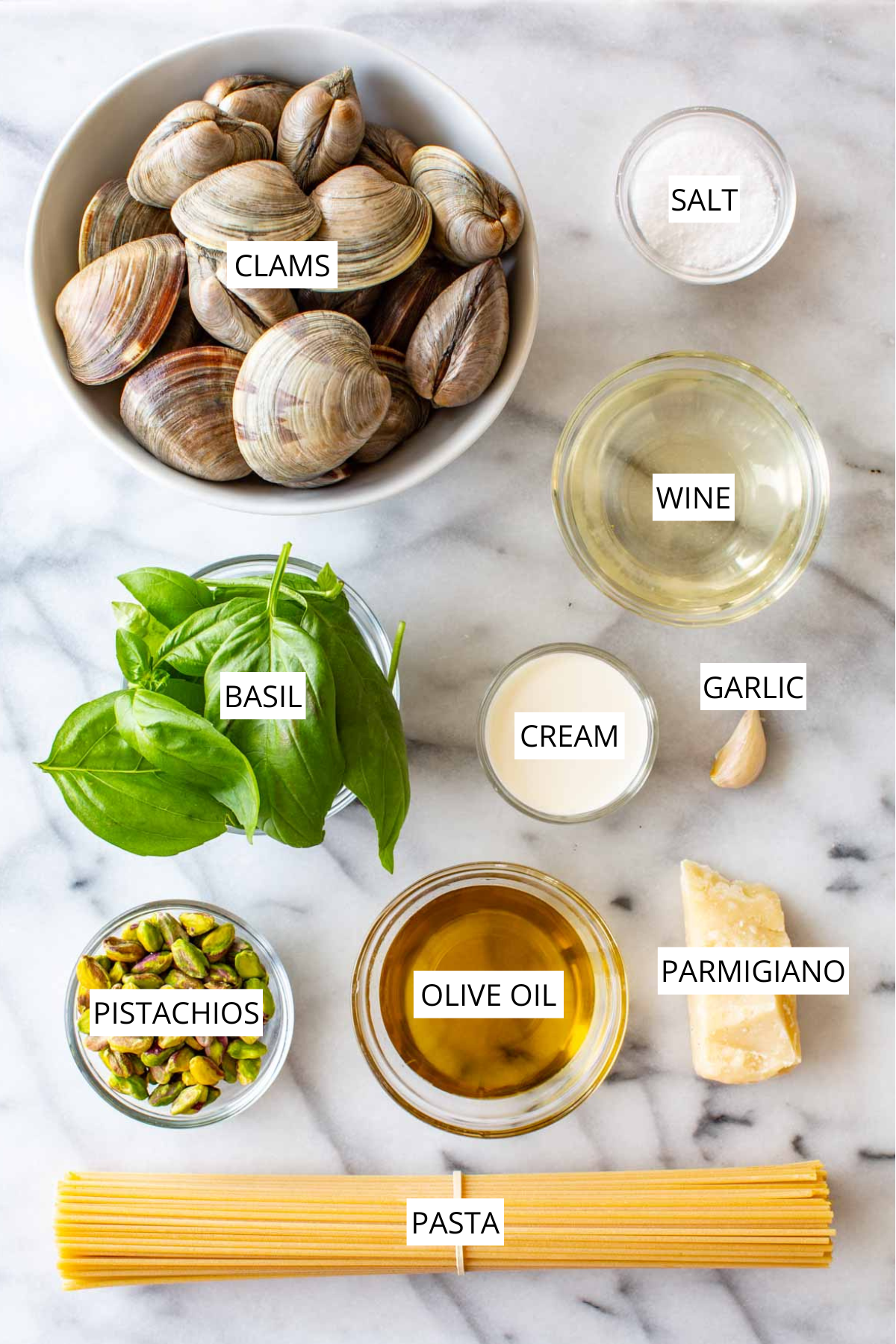
Ingredients for Pistachio Clam Pasta
Pistachios - Use shelled, unsalted pistachios. Look for Sicilian Bronte pistachios for the best color and flavor. Toast them for a few minutes in the oven or a dry skillet to bring out their natural oils. Just a few minutes to crisp up, don't let them brown. Allow to cool before using.
Clams - Use 1 dozen littleneck clams or manila clams per person. Make sure to clean and purge them before cooking, and carefully discard any dead clams.
Basil - Use the freshest Italian or Genovese basil you can find for best results. This is best made in the summer when basil is in season and most fragrant.
Olive oil - High-quality extra virgin olive oil is a must for any good pesto. Learn how to choose the right bottle in my guide to Italian olive oils.
Parmigiano - This pesto uses Parmigiano Reggiano for its sweet, nutty profile. You can also replace it with a good Grana Padano. Avoid Pecorino Romano which can make this overly salty.
Wine - A dry, unoaked, white wine, like sauvignon blanc or pinot grigio, is ideal. Stick to something with a neutral profile and medium acidity.
Pasta - Use spaghetti, linguine or any long pasta shape of your choice. For best results, look for a 100% semolina pasta that's been slow-dried and bronze-die extruded.
Cream - A little heavy cream helps smooth out the pesto sauce in the end and gives a luscious texture.
*Find the full ingredient list in the recipe card below!
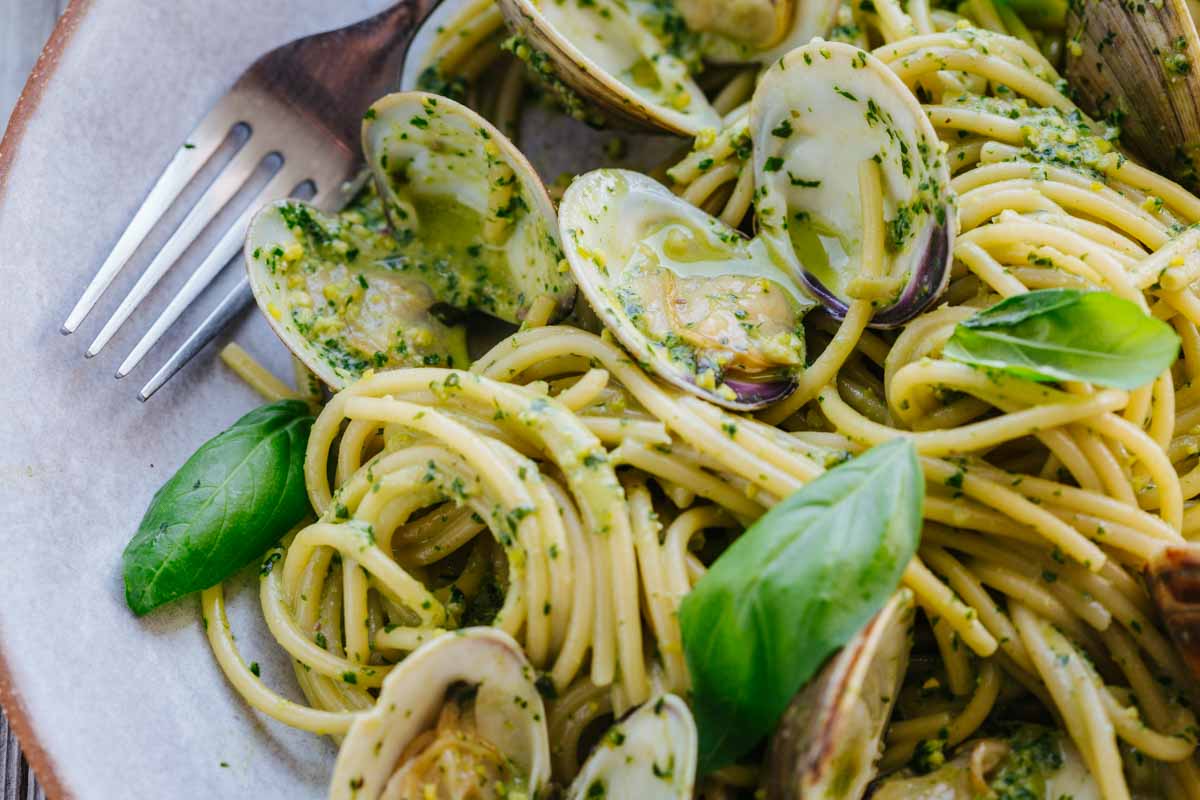
Choosing the Best Clams for Pasta
Always try to buy fresh clams from a reputable seafood store. They should look clean, moist, with the shells tightly closed, and feel heavy for their size. Littlenecks, manila, or cockles are best.
If the shells are partially open, give them a quick tap to determine whether or not they're alive. If they are, they will quickly snap shut, and if they're not, they will remain open.
Do not purchase or cook dead clams, and don't be afraid to ask your fishmonger questions like where the clams were sourced and when they were caught.
How to Clean and Purge Clams
Rinse clams under cool water and scrub the clam shells with a stiff brush to remove grit and debris.
To purge clams, place them in a bowl of cold salted water with about ¼ cup of salt per gallon, or enough to taste like seawater. Let them soak for about 20-30 minutes. Give them a good rinse with fresh water before cooking.
For this recipe, clams get steamed in a little bit of white wine just until they pop open. I remove them one by one as they open so that they don't overcook and get rubbery. Clams always open at different intervals, so this is the best way to make sure they're all cooked perfectly.
Discard any clams that don't open, but give them plenty of time first. Some clams are just stubborn and take significantly longer than the rest. Don't give up on them!
Close the lid and give them a few more minutes. More often than not, they will eventually open, but if it's been more than 15 minutes, you can say goodbye.
Helpful Equipment
- Large pot
- Food processor, blender or hand blender
- Cheese grater or microplane
- Tongs
- Colander
How to Make Spaghetti with Clams and Pistachio Pesto
- Bring a large pot of water to a boil. Salt lightly or not at all if your clams are very salty (ours always are).
- Add the pistachios and garlic to the bowl of a food processor and pulse until finely chopped.
- Add the basil, then blend and slowly drizzle in the olive oil with the motor running. Scrape down the sides as needed and continue blending until smooth.
Pro Tip: For an extra bright green pesto, blanch the basil leaves for 30 seconds in the same boiling water you'll use for pasta and then immediately transfer to ice water to cool. Press against a sieve to release excess moisture before processing in the pesto. This is especially helpful if your basil isn't looking very fresh.
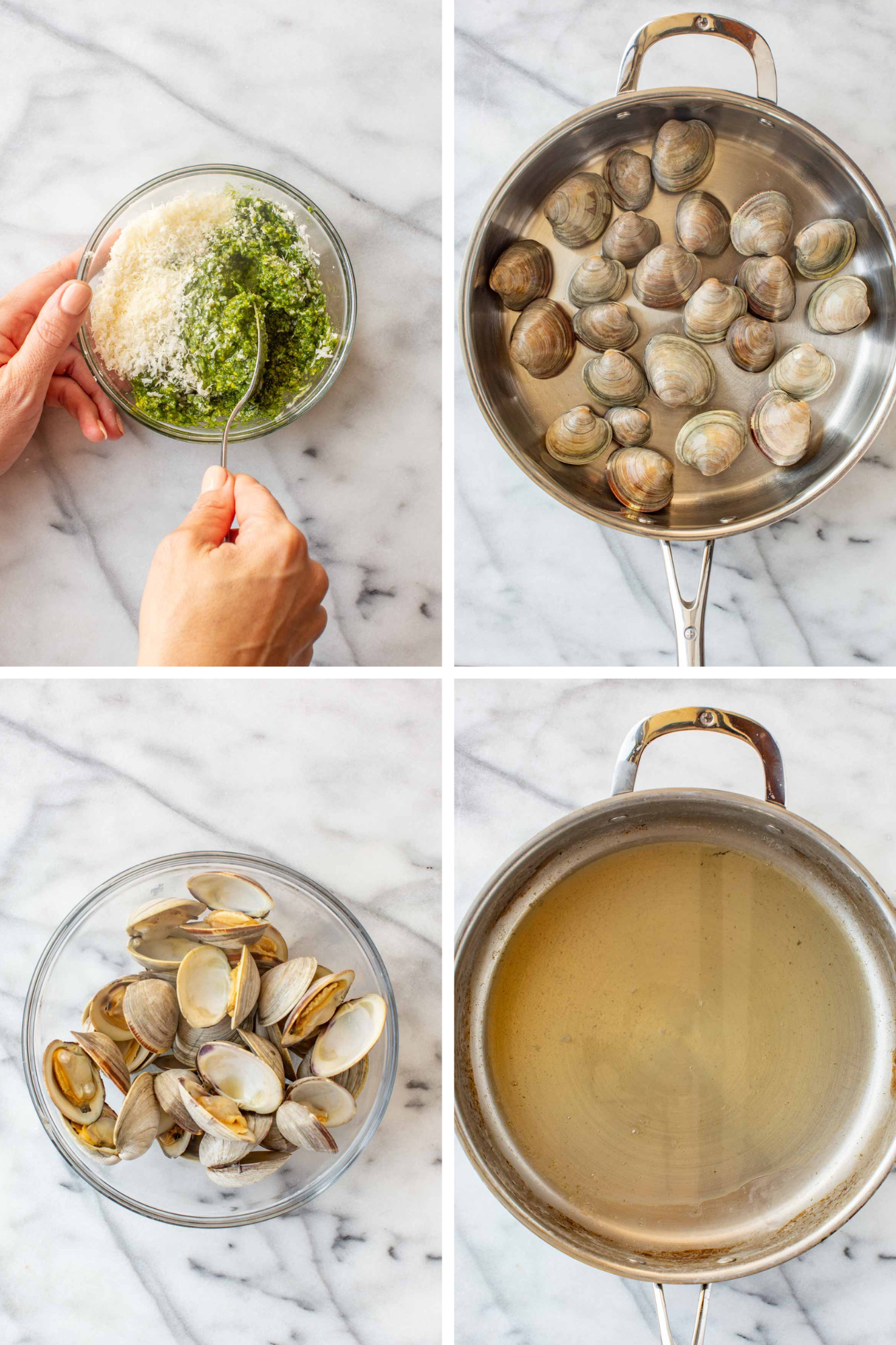
- Transfer to a bowl and stir in the grated Parmigiano.
- Add the white wine to a large skillet with a lid over medium-high heat and bring up to a boil.
- Add the clams, then cover and cook for 3-5 minutes, shaking the pan once or twice, until they start to open. Transfer the clams one by one to a bowl as soon as they pop open, then cover and continue cooking as needed. If any don't open after 15 minutes, discard them.
Pro Tip: Pop your clams in the freezer for 10 minutes right before adding them to the pan. Getting them extra cold right before steaming makes them open quicker and stay tender.
- Cook the spaghetti until just shy of al dente. Reserve 1-2 cups of the pasta cooking water before draining.
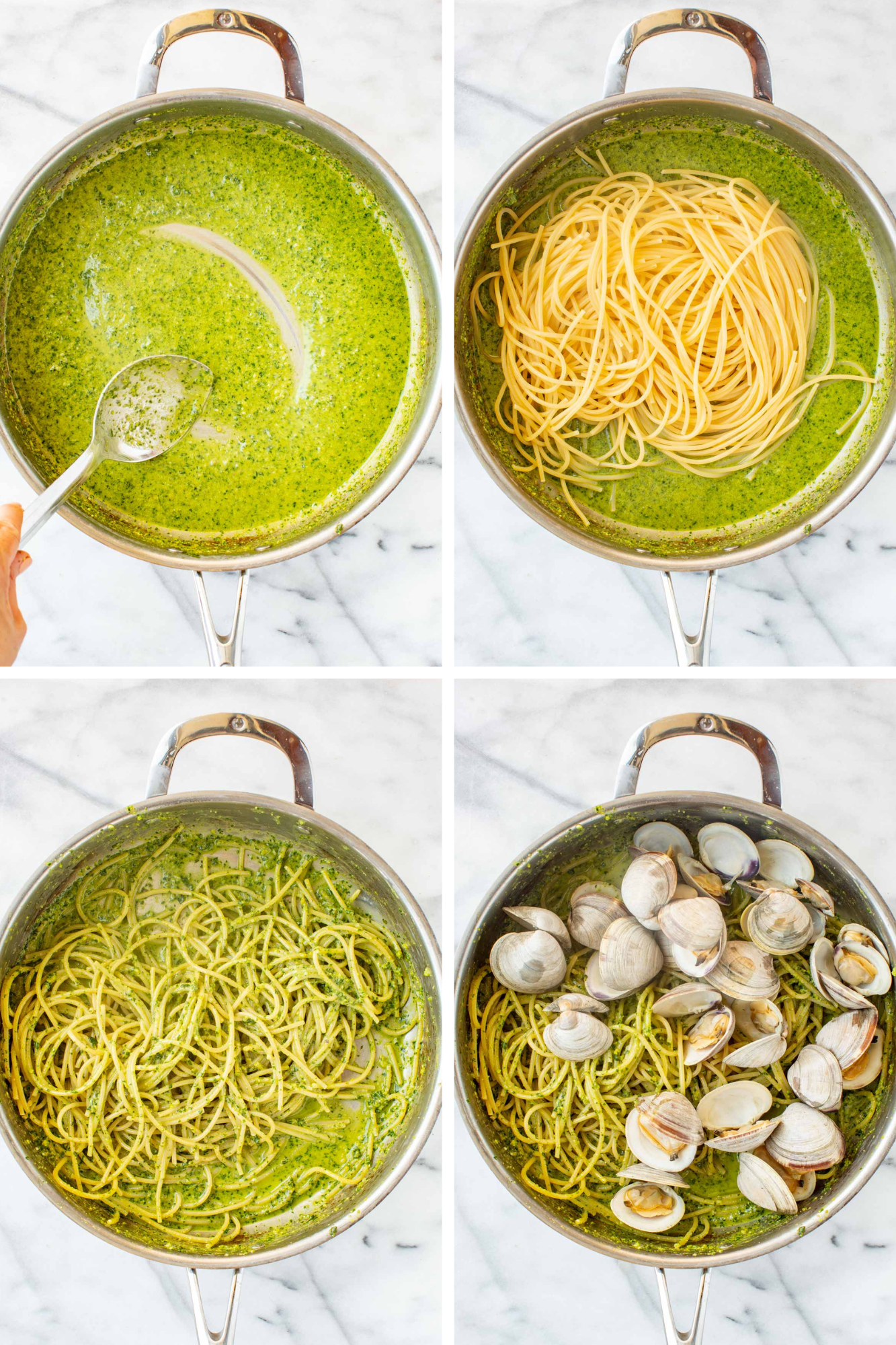
- Add the pistachio pesto and cream to the clam cooking liquid and mix until smooth, then reduce the heat to medium-low.
Pro Tip: Do not overdo it with the cream; it isn't meant to be a cream sauce. It's only aiding the pesto and clam liquid to bind, emulsify and balance their salt levels.
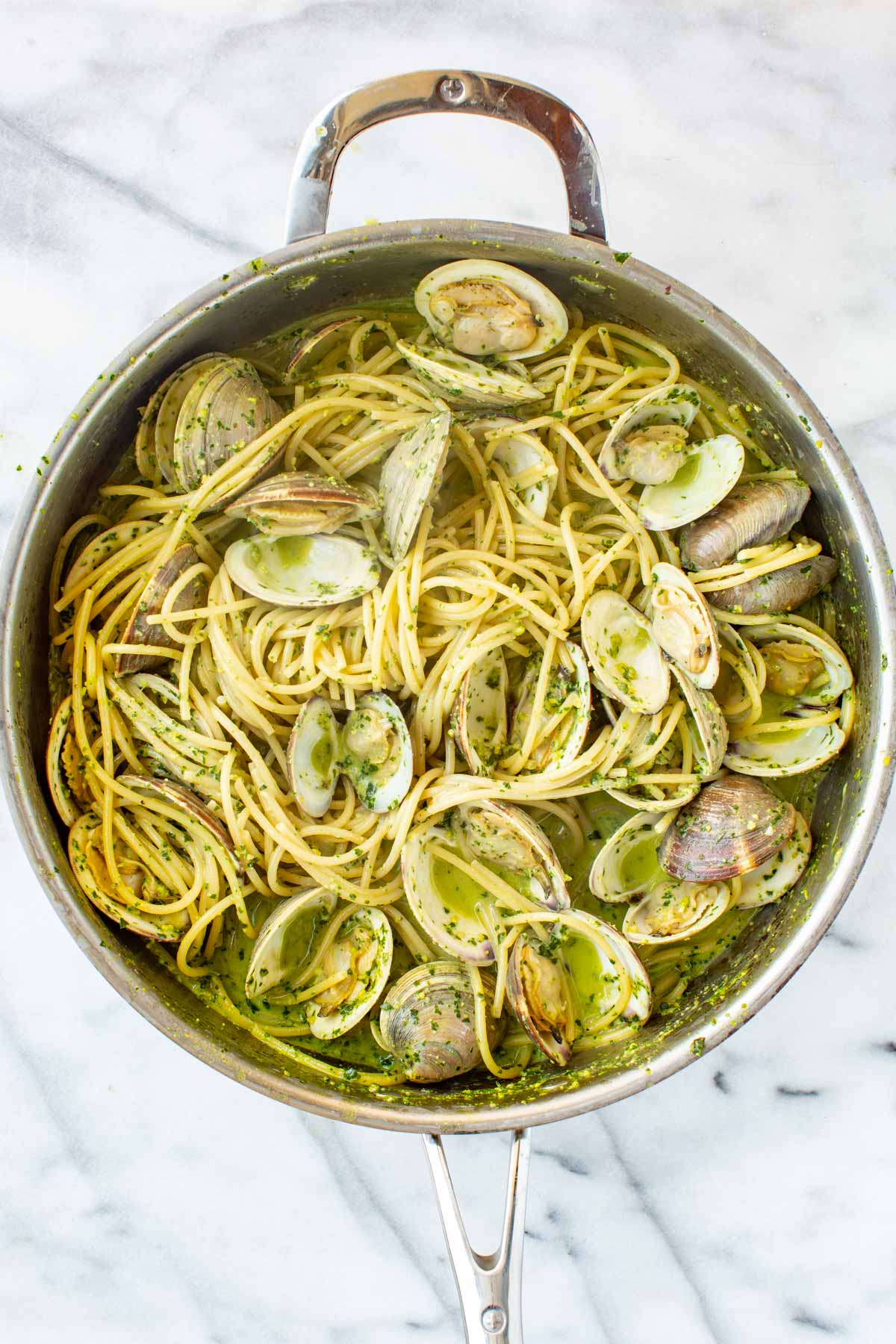
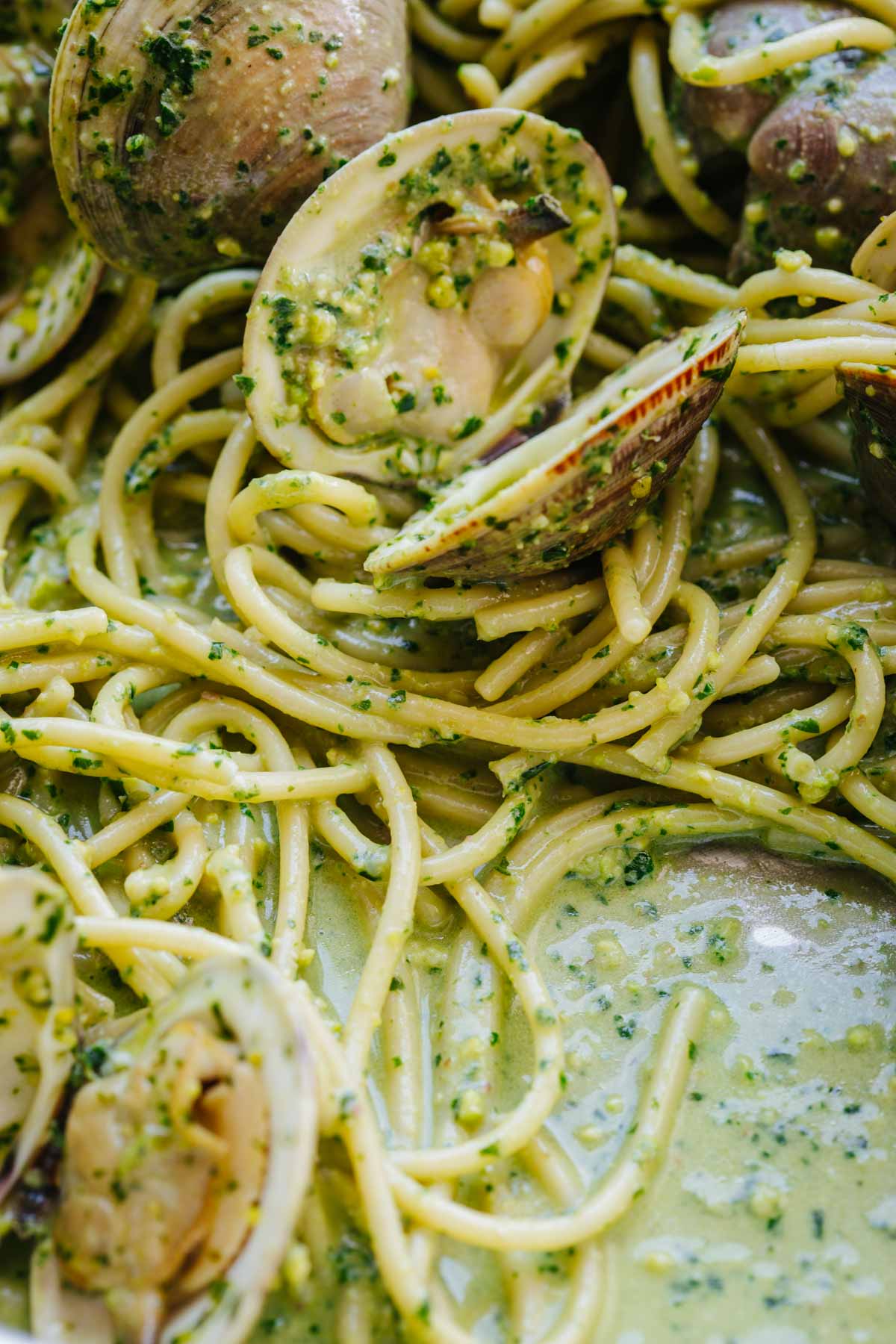
- Add the drained spaghetti and toss until evenly coated, adding a few splashes of pasta water at a time until the sauce becomes smooth, glossy, and lightly coats each strand of pasta.
- Return the clams to the pan and toss gently just until heated through and coated with sauce. Taste and add more salt if needed. Serve immediately.
Tips for the Best Pasta with Clams and Pistachio Pesto
- Be careful salting your pasta water. If your clams are very salty, any additional salt can put this over the edge. Our clams in New Jersey are quite salty, so I never salt my pasta water for this dish.
- Make sure your clams are purged and scrubbed very clean. If you notice any grit or sand in your pan after cooking the clams, strain the liquid through a fine-mesh sieve lined with a coffee filter, paper towel, or cheesecloth, then return it to the skillet.
- Remove the clams as soon as they open so they stay tender. Some may be stubborn and need extra time, so be patient.
- Don't boil the pesto after adding it to the pan. Keep the heat low to medium-low, and add the pasta shortly after adding the cream and pesto. Boiling will cause it to turn brown and separate.
Variations
- Use almonds, walnuts, or pine nuts instead of pistachios.
- Replace clams with mussels, shrimp, lobster, crab, or scallops.
- Try different kinds of herbs or greens instead of basil, like parsley, spinach, arugula, kale, carrot tops, or use a mix!
- Add some ripe cherry tomatoes or sun-dried tomatoes to the pesto for a nod to my Sicilian pesto alla Trapanese.
What to Serve with Pistachio Pesto Pasta and Clams
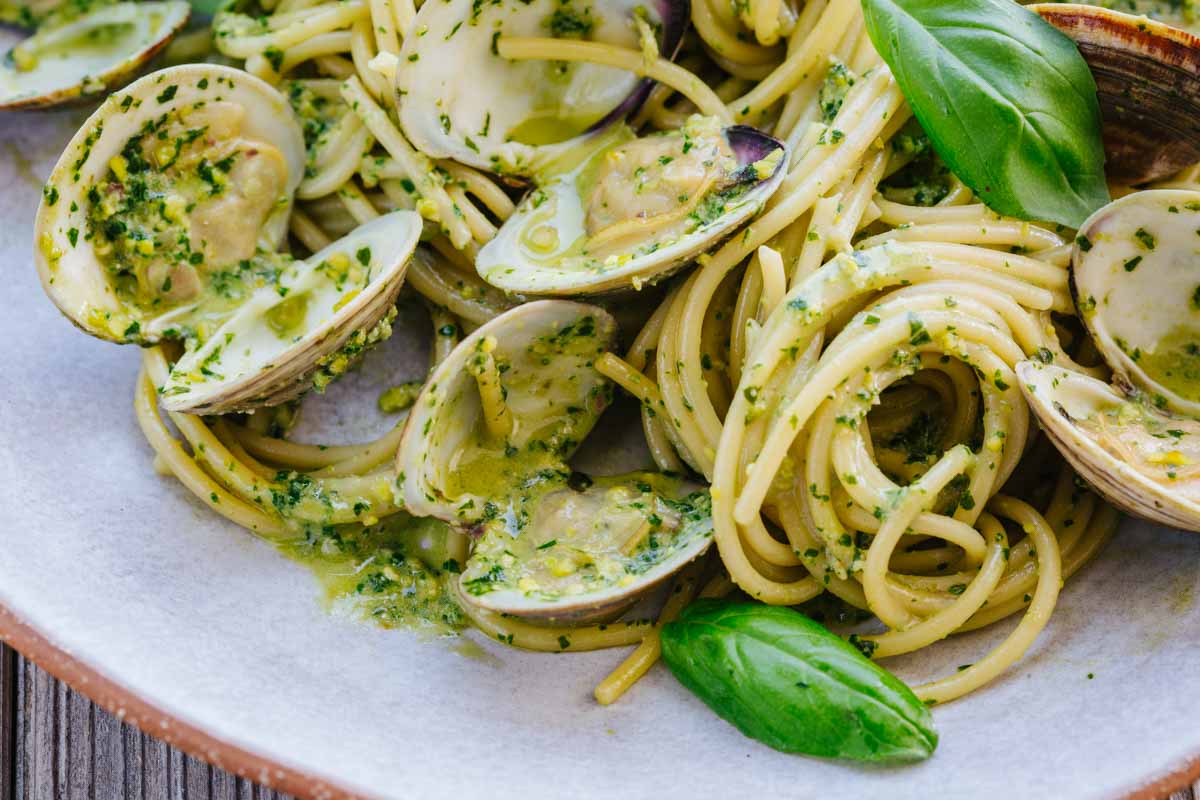
This ingenious seafood pasta recipe only needs a couple of easy veggie sides to complete the meal.
Try it with a classic authentic caprese salad, a simple arugula salad, or a sweet and sour Sicilian eggplant caponata.
Or go for some smoky grilled marinated eggplant or charred zucchini with balsamic, parmesan and pine nuts if you're out on the grill.
Always have a nice basket of crusty bread or fluffy homemade focaccia on hand to mop up all that creamy sauce off the plate. Scarpetta is essential with this dish!
How to Store and Reheat
This dish is best prepared and served on the spot to preserve the integrity of the pesto, the al dente pasta, and the tenderness of the clams. If you have leftovers, store them in an airtight container in the fridge for up to two days.
Reheat pasta with sauce over medium-low heat until warm to avoid boiling the pesto, which can cause it to separate. Add a splash of water and toss to bring the sauce back together. Only add the clams to the pan a minute before serving to avoid turning them rubbery.
FAQs
I highly recommend fresh clams whenever possible. Frozen clams may not open properly and can become tough when steamed.
Yes, canned clams are the next best thing after fresh. Use two 6.5-ounce cans of clams along with their juices. Drain the liquid into the pan with the white wine and allow them to reduce for 3-5 minutes, then add canned clams, pesto, cream, and pasta. Since canned clams are precooked, you don't want to add them too early or they can turn rubbery.
Store fresh clams in the refrigerator in a breathable container like a mesh bag, colander, or open bowl over ice. Cover them with a damp cloth to maintain humidity. If they are carefully kept this way, they can last up to 7 days in the fridge. Never seal them in plastic or submerge them in fresh water, as this will kill them. Drain the water and replace the ice regularly. Always test that they are still alive before cooking by tapping any open shells to see if they close.
Did you LOVE this recipe? Please leave a star ⭐️ rating and comment and tag your creations @ColeyCooks on Instagram!
Want to Save This Recipe?
Enter your email & I'll send it to your inbox.
By submitting this form, you consent to receive emails from Coley Cooks.
Pasta with Clams and Pistachio Pesto
Ingredients
- ⅓ cup pistachios shelled and unsalted
- 1 garlic clove
- 2 cups fresh basil leaves packed
- ¼ cup extra virgin olive oil
- 1 ½ ounces Parmigiano Reggiano cheese finely grated (about ⅓ cup)
- ½ cup dry white wine
- 2 dozen littleneck clams scrubbed and purged
- 8 ounces spaghetti linguine or any long pasta
- 3 tablespoons heavy cream
- kosher salt as needed
Instructions
- Bring a large pot of water to a boil. Salt lightly or not at all if your clams are very salty (ours always are).
- Add the pistachios and garlic to the bowl of a food processor and pulse until finely chopped.⅓ cup pistachios, 1 garlic clove
- Add the basil, then blend and slowly drizzle in the olive oil with the motor running. Scrape down the sides as needed and continue blending until smooth.2 cups fresh basil leaves, ¼ cup extra virgin olive oil
- Transfer to a bowl and stir in the grated Parmigiano.1 ½ ounces Parmigiano Reggiano cheese
- Add the white wine to a large skillet with a lid over medium-high heat and bring up to a boil.½ cup dry white wine
- Add the clams, then cover and cook for 3-5 minutes, shaking the pan once or twice, until they start to open. Transfer the clams one by one to a bowl as soon as they pop open, then cover and continue cooking as needed. If any don't open after 15 minutes, discard them.2 dozen littleneck clams
- Cook the spaghetti until just shy of al dente. Reserve 1-2 cups of the pasta cooking water before draining.8 ounces spaghetti
- Add the pistachio pesto and cream to the clam cooking liquid and mix until smooth, then reduce the heat to medium-low.3 tablespoons heavy cream
- Add the drained spaghetti and toss until evenly coated, adding a few splashes of pasta water at a time until the sauce becomes smooth, glossy, and lightly coats each strand of pasta.
- Return the clams to the pan and toss gently just until heated through and coated with sauce. Taste and add more salt if needed. Serve immediately.kosher salt
Notes
- Be careful salting your pasta water. If your clams are very salty, any additional salt can put this over the edge. Our clams in New Jersey are quite salty, so I never salt my pasta water for this dish.
- Make sure your clams are purged and scrubbed very clean. If you notice any grit or sand in your pan after cooking the clams, strain the liquid through a fine-mesh sieve lined with a coffee filter, paper towel or cheesecloth, then return it to the skillet.
- Remove the clams as soon as they open so they stay tender. Some may be stubborn and need extra time, so be patient.
- Don't boil the pesto after adding it to the pan. Keep the heat low to medium-low, and add the pasta shortly after adding the cream and pesto. Boiling will cause it to turn brown and separate.
- For an extra bright green pesto, blanch the basil leaves for 30 seconds in the same boiling water you'll use for pasta and then immediately transfer to ice water to cool. Press against a sieve to release excess moisture before processing in the pesto. This is especially helpful if your basil isn't looking very fresh.
- Pop your clams in the freezer for 10 minutes right before adding them to the pan. Getting them extra cold right before steaming makes them open quicker and stay tender.
- Do not overdo it with the cream; it isn't meant to be a cream sauce. It's only aiding the pesto and clam liquid to bind, emulsify and balance their salt levels.