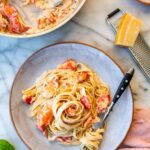
The Best Lobster Pasta
This recipe for creamy lobster pasta is so simple to make, but tastes like it came from a fine dining restaurant. Sweet, tender lobster is tossed with perfectly al dente pasta and an alfredo-inspired sauce that’s rich and luxurious, yet delicate enough to let the lobster shine. After years of cooking professionally and testing lobster recipes, I have every tip you need to make the ultimate lobster pasta at home in under 40 minutes!
Servings: 4
Calories: 848kcal
Ingredients
- kosher salt to taste
- 4 tablespoons unsalted butter
- 1 shallot finely minced
- 1 garlic clove finely minced
- ½ cup dry white wine
- 1¼ cups heavy cream
- 1 small sprig fresh tarragon basil or a bay leaf, optional
- 12 ounces fettuccine linguine, tagliatelle, or any long pasta
- 1 pound cooked lobster meat cut into large chunks*
- freshly cracked black pepper to taste
- ½ cup Parmigiano Reggiano freshly grated, plus more for serving
- 1 tablespoon parsley finely chopped, or chives, tarragon, or basil leaves
Instructions
- Bring a large pot of well-salted water to a boil.
- Melt the butter in a large skillet over medium-low heat. Add the shallots and garlic, and cook until softened and fragrant, about 3-5 minutes. Adjust the heat as needed so the garlic doesn’t brown.4 tablespoons unsalted butter, 1 shallot, 1 garlic clove
- Pour in the white wine. Increase the heat slightly and simmer until reduced by about half and no longer smells sharp, about 3-4 minutes.½ cup dry white wine
- Lower the heat and add the cream along with the sprig of tarragon. Let it gently simmer, stirring occasionally, until it’s thick enough to leave a line in the pan after dragging a spoon through it, about 3-5 minutes.1¼ cups heavy cream, 1 small sprig fresh tarragon
- While the cream is simmering, cook the fettuccine until just shy of al dente, then reserve at least 1 cup of the pasta water before draining.12 ounces fettuccine
- Once the cream has reduced, remove the tarragon and discard. Stir in the lobster meat, then season lightly with salt and black pepper.kosher salt, 1 pound cooked lobster meat, freshly cracked black pepper
- Add the drained pasta directly to the pan along with a splash of the reserved pasta water. Toss continuously until the sauce loosens and coats the noodles evenly.
- Turn off the heat, then add the grated Parmigiano Reggiano and continue tossing until melted and emulsified. Add more pasta water as needed to keep the sauce silky and fluid.½ cup Parmigiano Reggiano
- Finish with chopped parsley, then serve immediately.1 tablespoon parsley
Notes
- Drain the pasta 2 minutes before your package’s al dente mark. This will guarantee that you have the perfect pasta texture after you finish it in the sauce.
- Incorporating the cheese off the heat will prevent it from seizing and clumping. Make sure it’s freshly and finely grated for best results.
- Since this recipe does not use shells, you can purchase pre-cooked and shelled lobster meat to use. Otherwise, you will need to first cook and de-shell your lobster. Whole live lobsters and frozen lobster tails both work great. See the section in the post titled “The Best Lobster Meat to Use for Pasta” and “How to Cook Lobster for Pasta” for more details.
- The key to tender lobster is to avoid overcooking. Since it’s already cooked, it only needs to be warmed through at the very end. Overcooking will make it rubbery and dry.
- Don’t skip adding the pasta water. It helps emulsify the sauce and keeps it from becoming too thick or heavy.
- The sauce should lightly cling to the pasta, not sit thickly in the pan. Add pasta water as needed to loosen it.
Nutrition
Calories: 848kcal | Carbohydrates: 66g | Protein: 38g | Fat: 46g | Saturated Fat: 28g | Polyunsaturated Fat: 3g | Monounsaturated Fat: 12g | Trans Fat: 1g | Cholesterol: 338mg | Sodium: 723mg | Potassium: 586mg | Fiber: 3g | Sugar: 5g | Vitamin A: 1704IU | Vitamin C: 3mg | Calcium: 339mg | Iron: 2mg
