
Italian Meatloaf (Polpettone)
This recipe for Italian meatloaf, or polpettone, is how my family always made it. It's like a giant meatball that gets baked free-form on a sheet pan with a thin layer of tomato paste on top. The outside gets a nice golden crust, while the inside stays tender and easy to slice. It's simple, nostalgic, and comes together quickly for an easy, old-school Italian weeknight dinner.
This post may contain affiliate links.
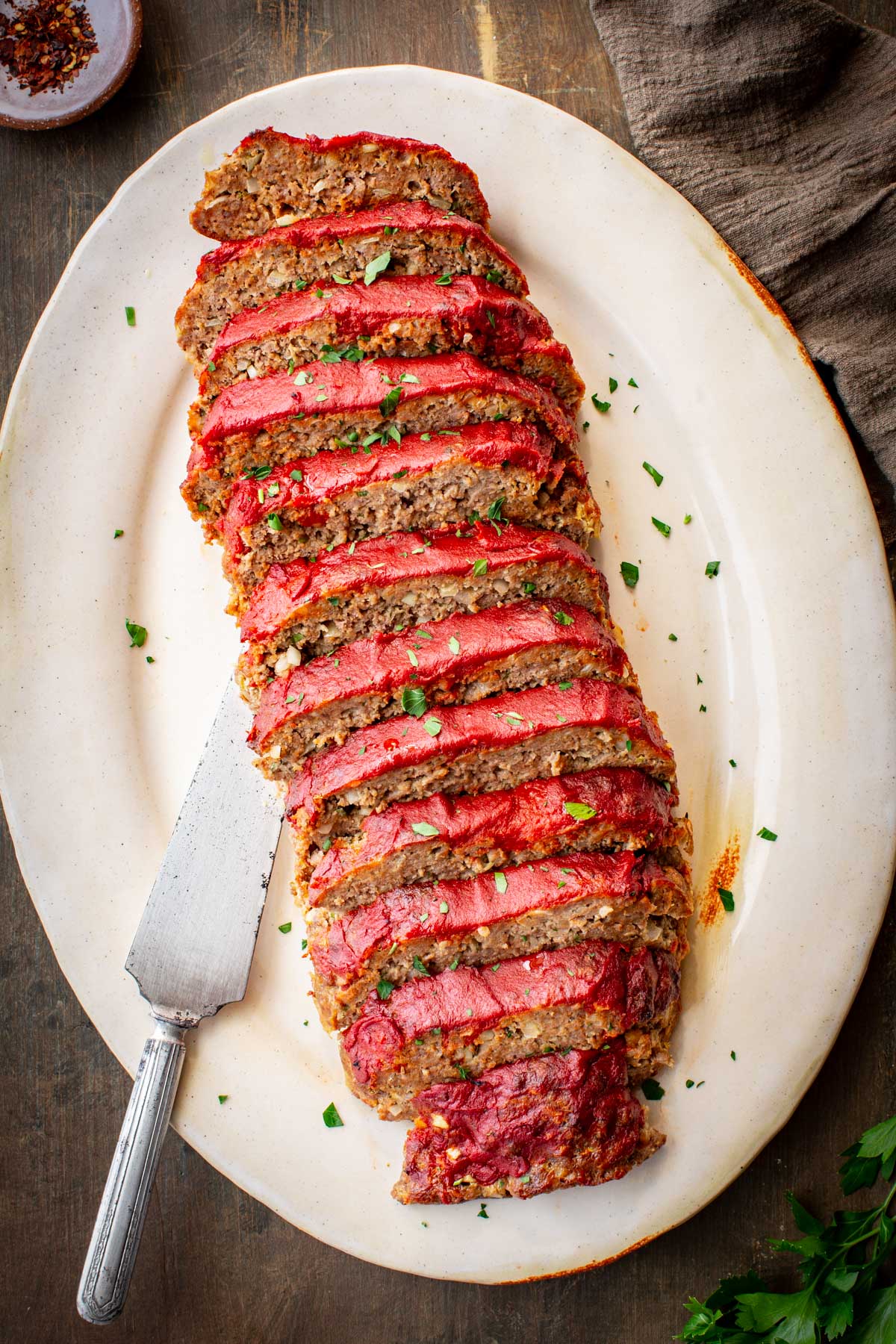
Growing up, we had meatloaf for dinner all the time, as most American families do, but ours was always a little different.
My mom's meatloaf was basically like a giant meatball that got baked and finished with a thin layer of tomato paste on top. In Italy, this dish is known as Polpettone.
What is Polpettone?
Polpettone is basically a large oversized Italian meatball made with a mixture of ground meats, breadcrumbs, egg and cheese. In Italy, you'll often find it stuffed with hard-boiled eggs, Italian cured meats or cheeses like mozzarella. Sometimes it's covered with a tomato sauce like marinara, but other times it's served plain.
Why This Italian Meatloaf Is Different
My version of polpettone is based on my classic Italian meatball recipe, with just a few small differences to make it work better as a loaf. It's slightly firmer, easier to slice and baked free-form so the outside develops a nice golden crust.
My mom usually made her meatloaf with all beef, but I like to use a mix of beef, pork and veal, which is typically sold as meatloaf mix or meatball mix in grocery stores.
You can also do half beef and half pork, or any mix of meats, including ground chicken or turkey. Pork and veal will make it extra tender and flavorful, but it's really up to you and what your family will like best.
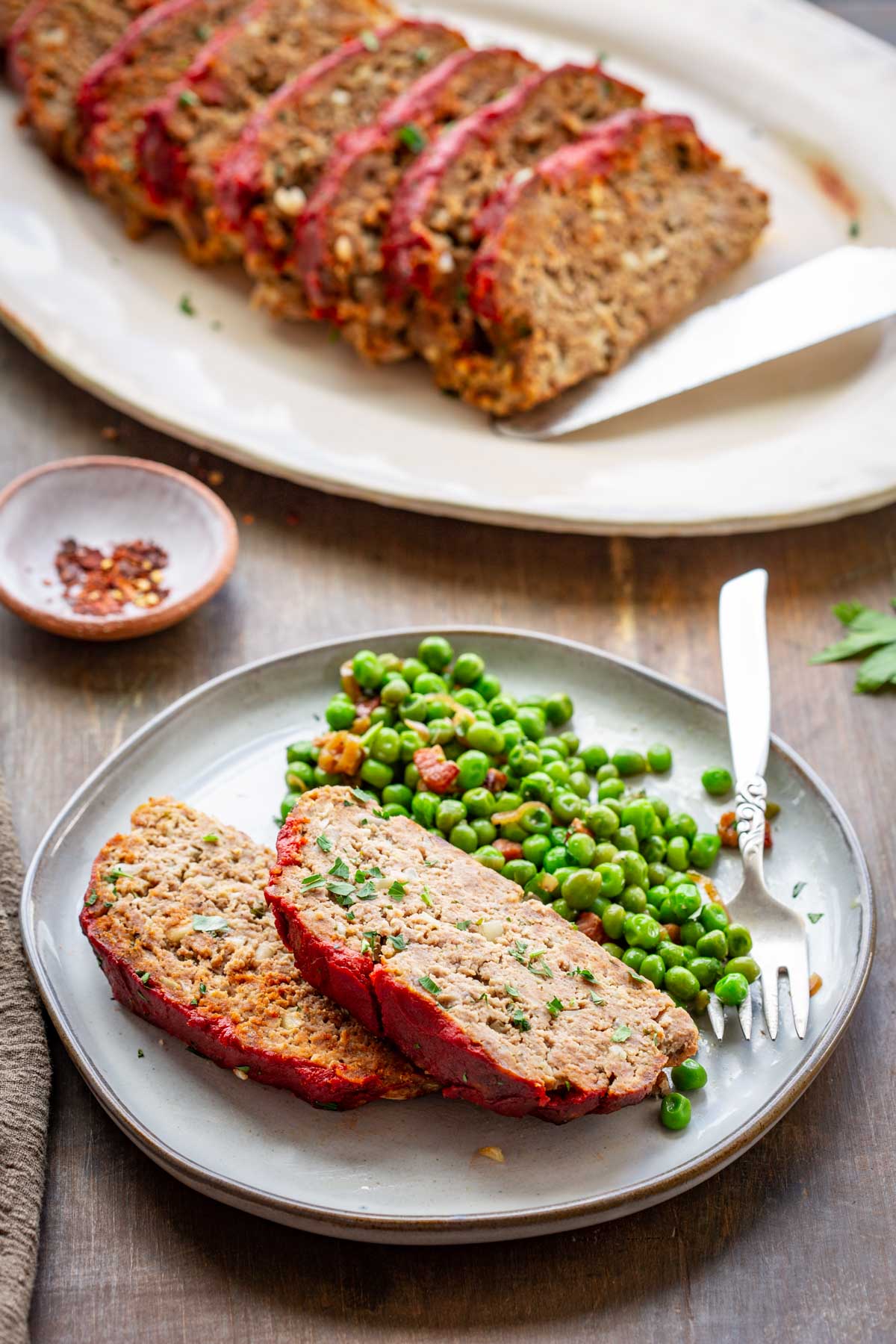
Sheet Pan vs Loaf Pan Meatloaf
Baking the meatloaf on a sheet pan rather than using a loaf pan allows the outside to brown and develop more flavor, which I prefer. It also allows excess fat to render off instead of collecting around the loaf.
Loaf pans trap moisture and cause the meat to steam. While that can keep it soft, it often prevents the outside from browning properly.
Shaping the meatloaf lower and wider on the sheet pan also helps it cook evenly and prevents the center from staying underdone while the outside overcooks. Try to flatten the top a bit and make sure it's not too tall.
Why Tomato Paste Works Better Than Ketchup
I don't really see many recipes that just use tomato paste on meatloaf, but it works really well. American meatloaf is usually topped with ketchup or ketchup mixed with brown sugar and spices, while a lot of Italian meatloaf recipes use marinara sauce.
Tomato paste has a more concentrated flavor and depth. It has a denser consistency and less sugar, so it's less likely to burn in the oven and develops a thicker glaze that clings to the meatloaf.
If you don't want to go the tomato paste route, ketchup or marinara sauce would also work well. But for me, the tomato paste topping is super nostalgic and I wouldn't have it any other way!
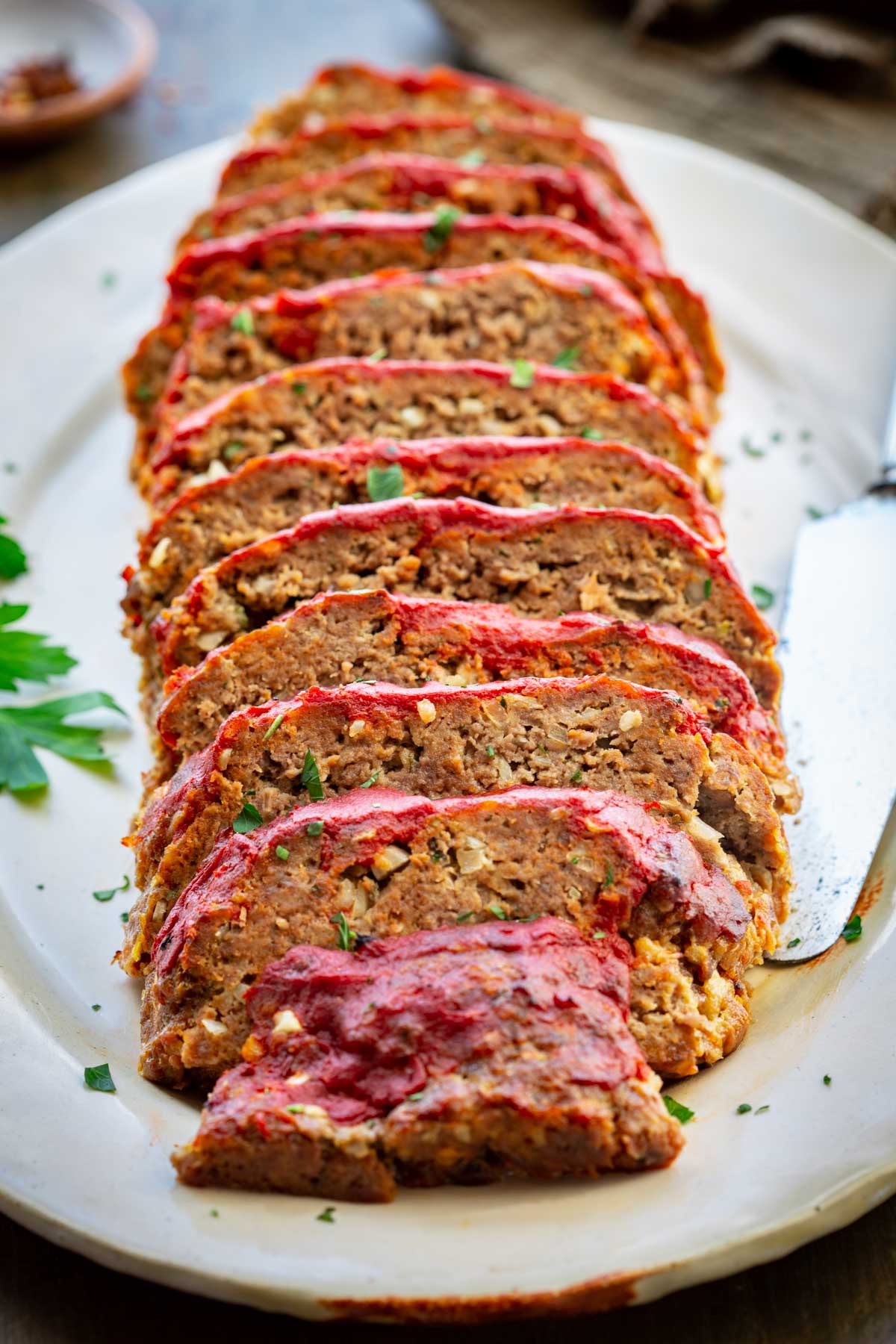
Common Mistakes to Avoid
Grating the garlic on a microplane helps distribute it evenly through the meat mixture. For the onion, I like having little bits studded throughout for texture and bite. Just make sure the pieces are as finely minced as possible. If the onion pieces are too big, they can remain too al dente and cause the meatloaf to fall apart.
If you prefer your onions to be softer, you can either grate the onion instead (I do this for my meatballs) or saute it in olive oil for a few minutes before adding to the meat mixture (make sure it's cooled down first).
It's important to not overmix the meat or else it will get tough and dense. That's why I like to first hydrate the panko with the milk, then mix in all of the seasonings, and then mix in the meat last.
This ensures everything is well incorporated without having to overmix. Your hands work best (wear food-safe gloves if you prefer), but I find a fork does a good job too.
The key to keeping your meatloaf moist is to make sure it doesn't overcook. The best way to do this is by using an instant-read thermometer and making sure it doesn't go above 160°F.
Keep in mind that the meatloaf will continue cooking for a bit after removing it from the oven. I usually take it out at about 150-155°F and let the carryover cooking bring it up to 160°F.
Always let your meatloaf rest at least 10 minutes before slicing so it stays intact and juicy!
Want more classic Italian American recipes? Try this foolproof chicken francaise, this restaurant-worthy chicken parm, or a hearty pasta e fagioli.
Why This Recipe Works
- Comes together easily with only 20 minutes of active prep.
- Baking the meatloaf free-form in a sheet pan creates a golden crust and keeps it moist yet firm, so it's easy to slice.
- Topping with tomato paste creates a glaze with a more complex flavor than ketchup.
- Can be made with any kind of ground meat or a blend, not just beef.
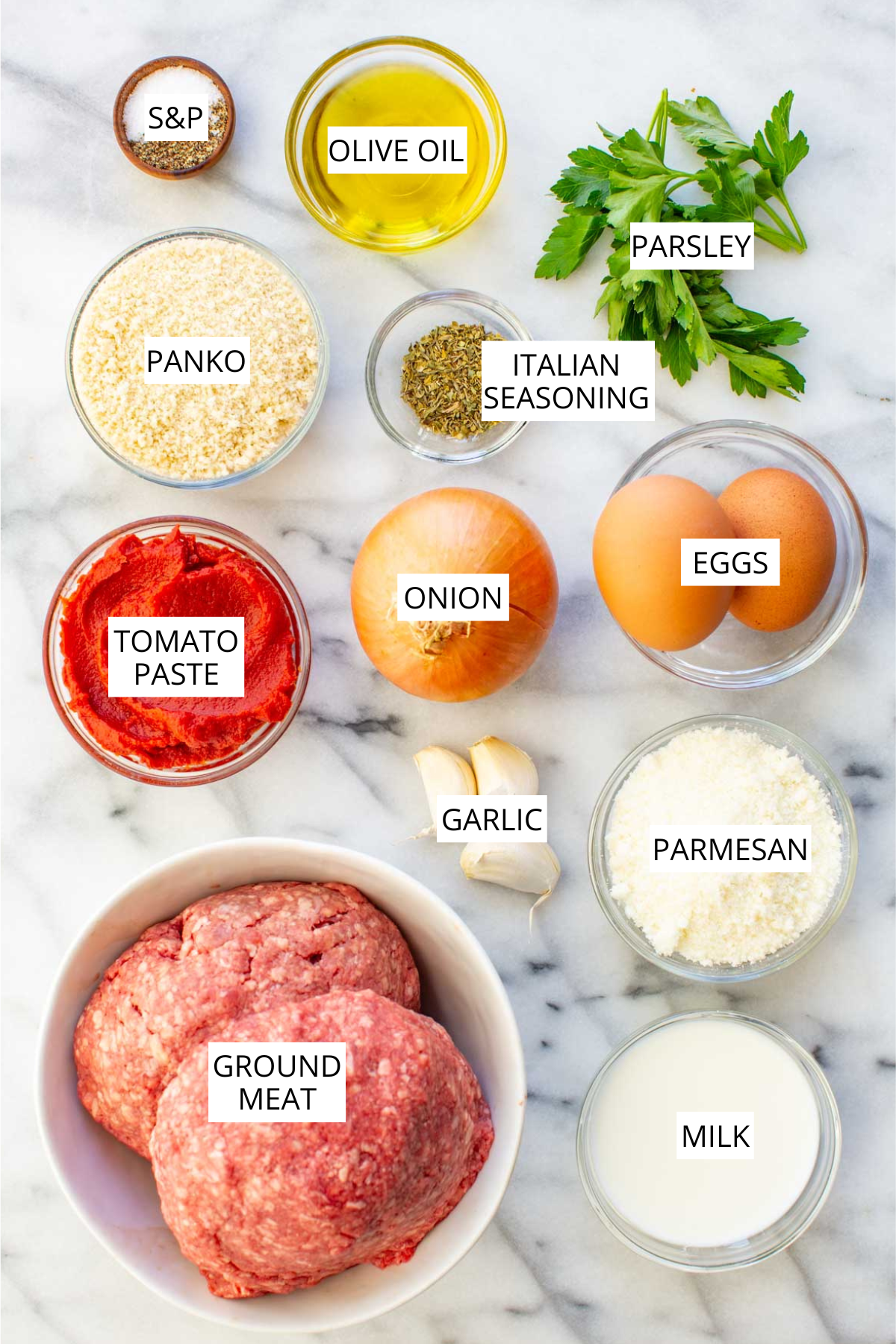
Italian Meatloaf Ingredients
Ground meat - This recipe can use beef or a mix of beef, pork and veal, which is usually sold as meatloaf mix or meatball mix. You can also do half beef and half pork or a pork and veal mix to yield extra tender and flavorful results.
Panko - Panko breadcrumbs create an airy, light texture rather than mealy. The next best option is to use a few slices of stale bread, or you can still use regular breadcrumbs if that is what you have.
Pecorino Romano - Pecorino and other hard Italian cheeses add a lot of flavor and improve the texture. Substitute Parmigiano Reggiano or Grana Padano for a milder flavor.
Tomato paste - This tomato concentrate has a strong tomato, umami flavor, that adds depth and complexity. Try to get a high-quality tomato paste for best results.
Seasonings - Garlic, onion, Italian seasoning, parsley, salt and black pepper all go into the mix. You can play around with the proportions or add other seasonings of your choice. I use Diamond Crystal Kosher Salt, which is less salty than other brands, so you may need to adjust your amount.
*Find the full ingredient list in the recipe card below!
Helpful Equipment
- Oven
- Parchment paper
- Sheet pan
How to Make Italian Meatloaf Step by Step
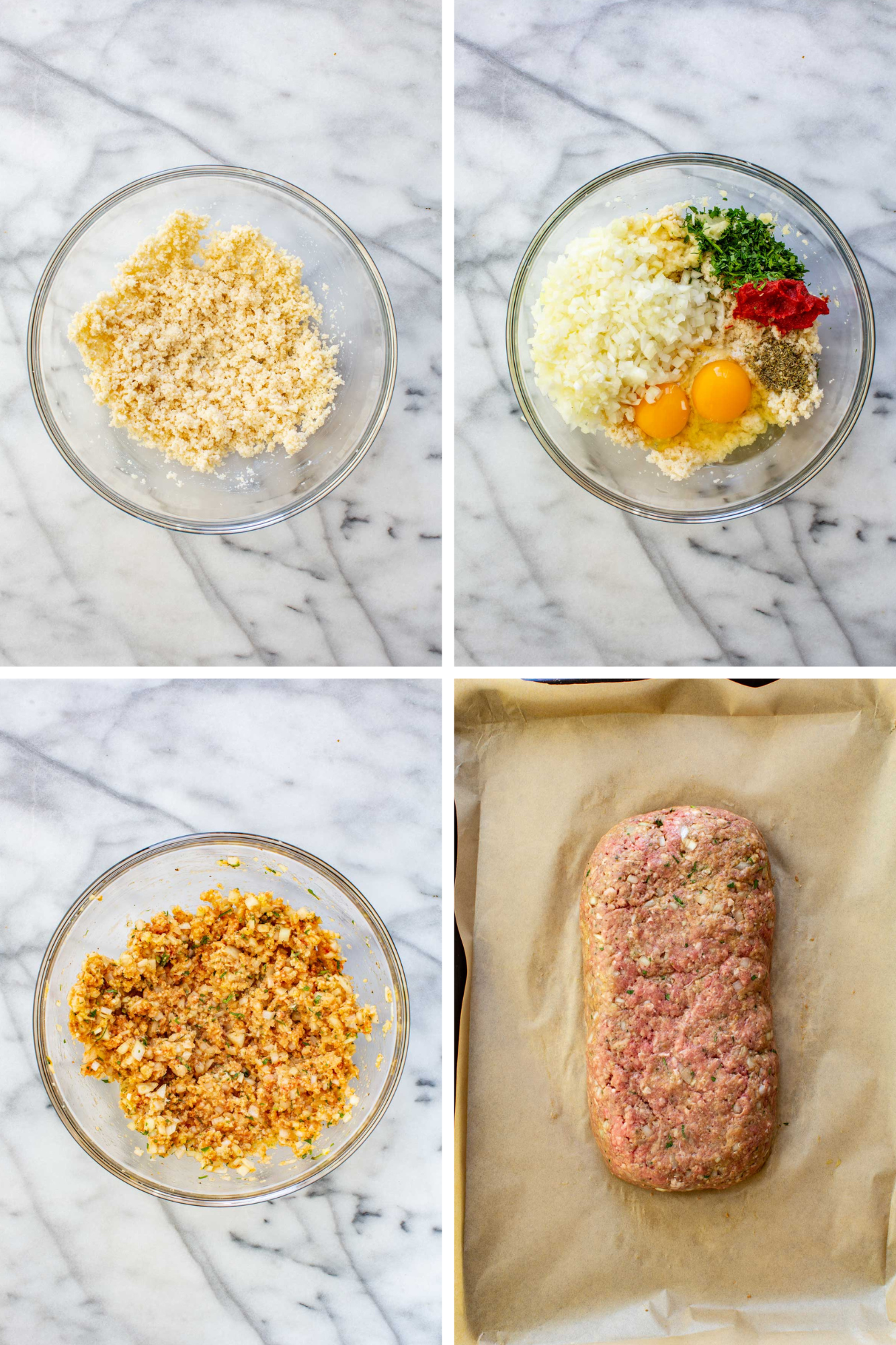
- Preheat the oven to 375°F and line a sheet pan with parchment paper and drizzle with 1 tablespoon of olive oil.
- In a small bowl, combine the panko breadcrumbs and milk. Stir and let sit for a few minutes so the breadcrumbs absorb the liquid.
- In a large bowl, combine the soaked breadcrumbs, minced onion, grated garlic, Pecorino Romano, Italian seasoning, parsley, egg, tomato paste, salt and pepper, then mix until evenly combined.
Pro Tip: Don't skip the milk soak. Letting the panko properly absorb the milk before mixing with the beef will keep the polpettone tender rather than dense.
- Add the ground meat and gently mix with your hands or a fork just until everything is incorporated. Avoid overmixing or the meatloaf can become dense.
- Transfer the mixture to the prepared sheet pan, drizzle all over with the remaining tablespoon of olive oil and shape it into a wide oval loaf about 2½ inches tall. Smooth the surface so it cooks evenly.
Pro Tip: A wide and low meatloaf, rather than tall and narrow, allows it to cook evenly and create a wider area for that golden glazed crust - aka the best part!
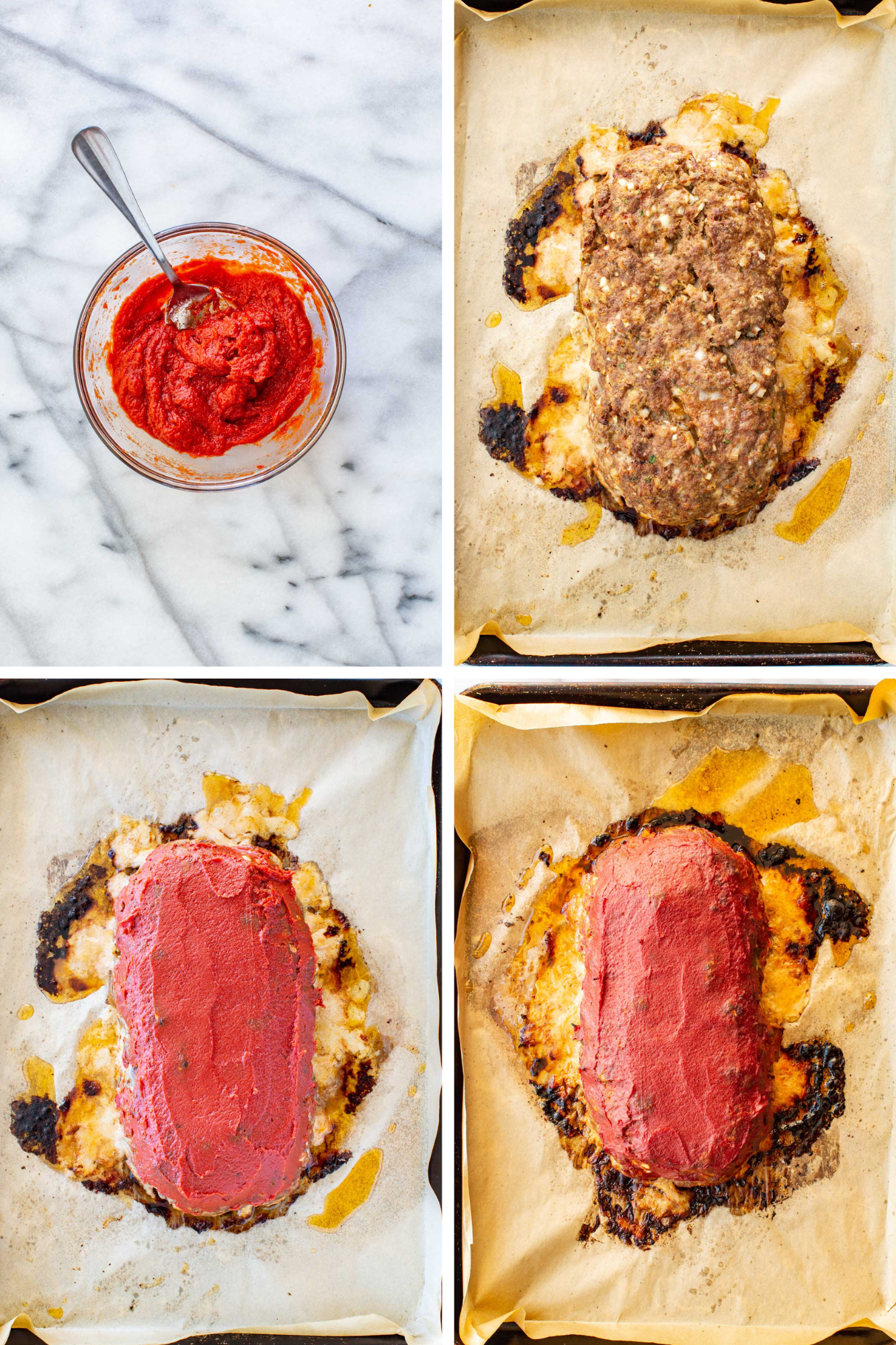
- Bake uncovered for about 30 minutes.
- In a small bowl, stir together the tomato paste, olive oil, and salt.
- Spread the sauce evenly over the top of the meatloaf in a thin layer, then return to the oven and bake for an additional 15-20 minutes or until browned and the internal temperature reaches about 155-160°F.
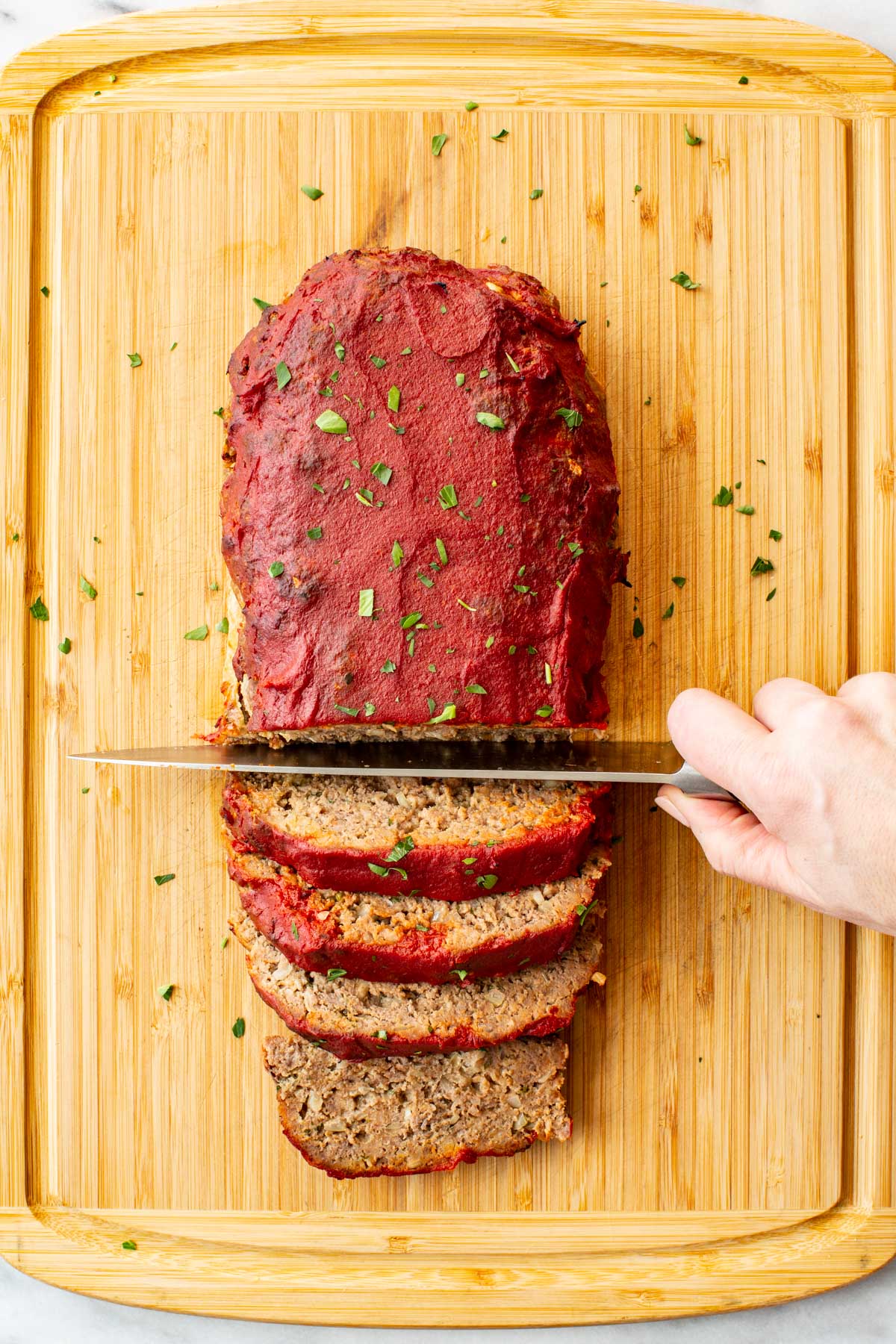
- Let the meatloaf rest for at least 10 minutes before slicing so it holds together nicely.
Tips for a Tender, Sliceable Meatloaf
- Mince the onions as finely as you can for the best texture. If you prefer your onions softer, sauté them over medium-low heat in a little bit of olive oil for 5-8 minutes first.
- Be careful not to overmix. You want the meat just incorporated with the panko and milk mixture, but don't keep mixing after that or the meatloaf will get tough.
- The best tool for mixing the meat is your hands, but a fork works well too. Wear a pair of food-safe gloves if needed.
- Letting the meatloaf rest before slicing is important so it stays intact, don't skip it.
Polpettone Variations and Substitutions
- Add other classic polpettone seasonings such as nutmeg or fennel seeds, or add fresh oregano, basil, or fennel sprigs instead of parsley.
- Use a mix of ground meats, not just beef. Try using pork and veal for extra tender results, or ground chicken or turkey for something leaner.
- Swap out the pecorino Romano for Grana Padano, Parmigiano Reggiano, caciocavallo, or even a sharp cheddar.
- Stuff your meatloaf with cubes of mozzarella or a few whole hard-boiled eggs for a more interesting presentation and flavor.
- Add some finely minced pancetta or bacon to the mixture for added salty depth.
- Serve with marinara sauce instead of the tomato paste for a more meatball-like experience.
What to Serve with Italian Meatloaf
Polpettone is great with a simple pasta like spaghetti aglio e olio or pasta pomodoro; or with a creamy starch like parmesan polenta.
Italian meatloaf also goes perfectly with potatoes. Try it with these comforting mascarpone mashed potatoes, crispy roasted potatoes with rosemary or these easy roasted fingerling potatoes.
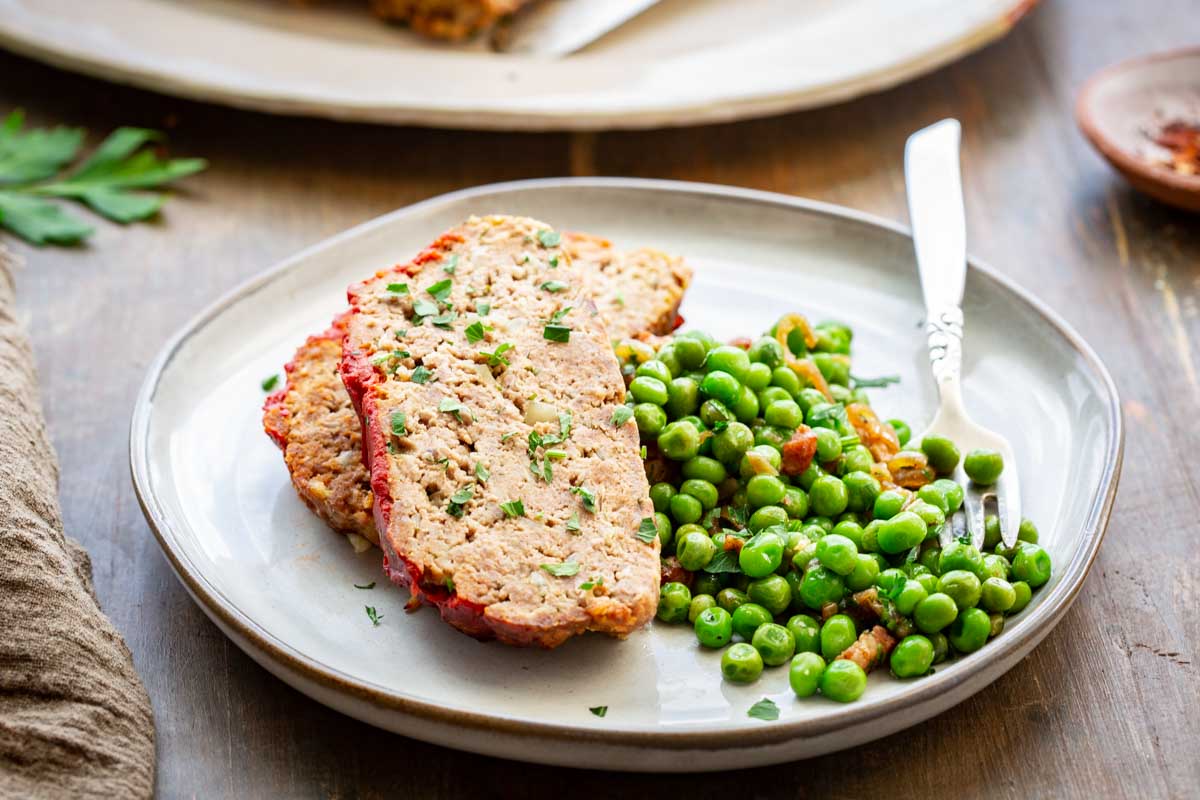
For vegetables, these salty and sweet peas with pancetta or these bright green beans with shallots and pancetta are perfect for rounding out the meal.
How to Store, Reheat and Freeze
If you have leftovers, store in an airtight container in the fridge for up to 3-4 days. To reheat, cut into slices if they haven't been cut, and place in the oven with a drizzle of water or stock at 350°F for 15-20 minutes or until warm to the touch.
If stored in the freezer, meatloaf will last for up to 3 months if wrapped tightly. Thaw first before reheating.
Frequently Asked Questions
Yes, you can mix and shape the loaf the night before, cover and refrigerate until ready to bake. Let sit at room temperature for about 15 minutes before baking to ensure it cooks evenly.
It's likely the onion pieces were too large, the meat was overmixed or you didn't allow it to rest for at least 10 minutes before slicing.
Yes, just make two separate loaves rather than one large one. Both can be baked on the same oven rack or on separate racks simultaneously, just rotate them halfway through. Add 5-10 minutes of cooking time and check that their internal temperature reaches about 155-160°F.



Did you LOVE this recipe? Please leave a star ⭐️ rating and comment and tag your creations @ColeyCooks on Instagram!
Want to Save This Recipe?
Enter your email & I'll send it to your inbox.
By submitting this form, you consent to receive emails from Coley Cooks.
Italian Meatloaf Recipe (Polpettone)
Ingredients
- 2 tablespoons extra virgin olive oil divided
- ¾ cup panko breadcrumbs
- ⅓ cup whole milk
- 1 yellow onion small, very finely minced
- 3 garlic cloves finely grated
- ½ cup Pecorino Romano finely grated
- 1 teaspoon Italian seasoning
- 2 tablespoons fresh Italian parsley finely chopped
- 2 eggs large
- 1 tablespoon tomato paste
- 1 teaspoon kosher salt
- freshly cracked black pepper to taste
- 2 pounds ground beef or a mix of beef, pork and veal
For the Topping
- ¼ cup tomato paste
- 1 tablespoon extra virgin olive oil
- ¼ teaspoon kosher salt
Instructions
- Preheat the oven to 375°F and line a sheet pan with parchment paper and drizzle with 1 tablespoon of olive oil.2 tablespoons extra virgin olive oil
- In a small bowl, combine the panko breadcrumbs and milk. Stir and let sit for a few minutes so the breadcrumbs absorb the liquid.¾ cup panko breadcrumbs, ⅓ cup whole milk
- In a large bowl, combine the soaked breadcrumbs, minced onion, grated garlic, Pecorino Romano, Italian seasoning, parsley, eggs, tomato paste, salt and pepper, then mix until evenly combined.1 yellow onion, 3 garlic cloves, ½ cup Pecorino Romano, 1 teaspoon Italian seasoning, 2 tablespoons fresh Italian parsley, 2 eggs, 1 tablespoon tomato paste, 1 teaspoon kosher salt, freshly cracked black pepper
- Add the ground meat and gently mix with your hands or a fork just until everything is incorporated. Avoid overmixing or the meatloaf can become dense.2 pounds ground beef
- Transfer the mixture to the prepared sheet pan, drizzle all over with the remaining tablespoon of olive oil and shape it into a wide oval loaf about 2½ inches tall. Smooth the surface so it cooks evenly.
- Bake uncovered for about 30 minutes.
- In a small bowl, stir together the tomato paste, olive oil, and salt.¼ cup tomato paste, 1 tablespoon extra virgin olive oil, ¼ teaspoon kosher salt
- Spread the sauce evenly over the top of the meatloaf in a thin layer, then return to the oven and bake for an additional 15-20 minutes or until browned and the internal temperature reaches about 155-160°F.
- Let the meatloaf rest for at least 10 minutes before slicing so it holds together nicely.
Notes
- Mince the onions as finely as you can for the best texture. If you prefer your onions softer, sauté them over medium-low heat in a little bit of olive oil for 5-8 minutes first.
- Don't skip the milk soak. Letting the panko properly absorb the milk before mixing with the beef will keep the polpettone tender rather than dense.
- Be careful not to overmix. You want the meat just incorporated with the panko and milk mixture, but don't keep mixing after that or the meatloaf will get tough.
- The best tool for mixing the meat is your hands, but a fork works well too. Wear a pair of food-safe gloves if needed.
- A wide and low meatloaf, rather than tall and narrow, allows it to cook evenly and create a wider area for that golden glazed crust - aka the best part!
- Letting the meatloaf rest before slicing is important so it stays intact, don't skip it.






I cut the reciepe in half but kept some of the spices the same. I cheated and used leftover marinara sauce from a previous dinner..
I also coated the outside with planko crumbs to give it a crust.. then topped with the sauce.
Turned out very good.
Amazing! I'm so glad you loved the recipe. Thanks so much for leaving a review!
Great!
Thanks Buddy!