
Roasted Salmon with Orange and Fennel
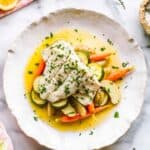
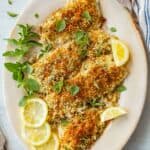
This roasted salmon with orange and fennel is a light and bright dish that's simple to prepare and tastes as good as it looks. The slow roasted salmon turns soft and buttery, while the crisp fennel orange salad cuts through the richness. It's a perfectly balanced, delicious and easy weeknight meal!
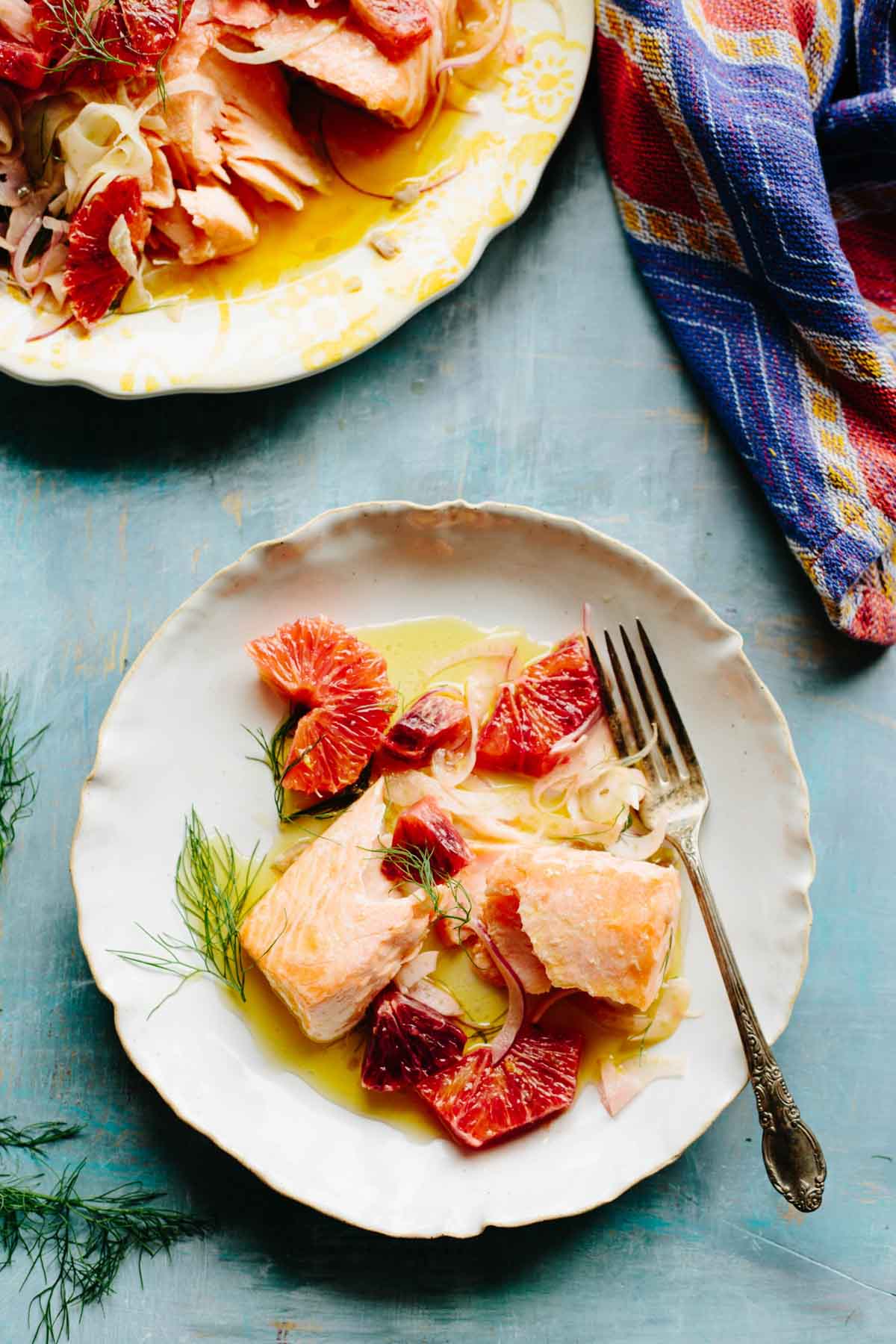
This method has become my favorite way to cook salmon. The salmon cooks low and slow, almost like it's gently poaching in olive oil. This way, the fish turns incredibly tender, buttery and moist, and it tastes wonderful on its own or with the fennel orange salad.
That said, the fennel orange salad really does bring this dish to the next level. It's bright, crisp, acidic and refreshing, which is exactly what the tender, fatty salmon needs.
Want more great salmon recipes? Try my Italian Baked Salmon Recipe, this smoky Cedar Planked Salmon or my quick 20 Minute Maple Soy Glazed Salmon.
Why This Recipe Works
- The low and slow cooking method keeps the salmon moist.
- It works with other types of fish but shines with rich, fatty salmon.
- The olive oil gently poaches the fish to create a tender, buttery texture.
- Works with or without the fennel orange salad.
- Adaptable for different varieties of oranges, herbs and fresh veggies.
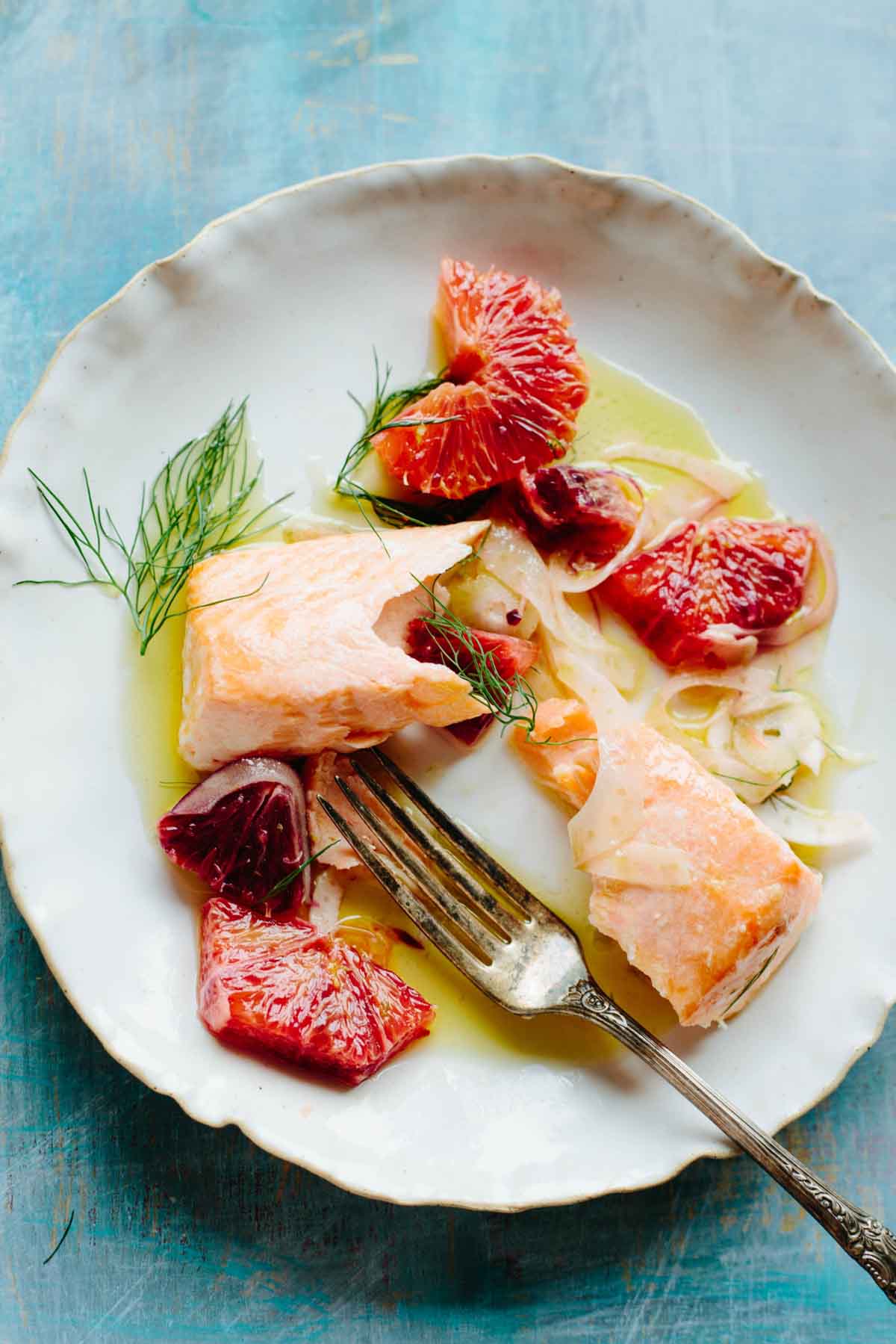
Ingredients for Roasted Salmon
Salmon - Use good quality, sustainably sourced salmon. If you can't find great fresh salmon locally, consider purchasing from a reputable source online. There are a lot of excellent quality frozen salmon options available and defrosting it yourself right might be fresher than what's available at the fish counter.
Orange - Use any variety of oranges. I love using cara cara and blood oranges for their beautiful color and unique flavors, but just use the best, juciest and most flavorful oranges you can find.
Fennel - If you don't love fennel you can skip it. If you do love it, add a few fennel seeds for even more intensity.
Olive oil - Use really good extra virgin olive oil. For more guidance, check out my guide to Italian Olive Oil.
Lemon - Meyer lemons are wonderful here, but a regular lemon works just fine.
*Find the full ingredient list in the recipe card below!
Helpful Equipment
- Sheet pan
- Parchment paper
- Sharp knife
- Cutting board
- Small bowl
- Citrus juicer
- Fish spatula
- Instant read thermometer
How to Make Slow Roasted Salmon

- Preheat the oven to 275°F.
- Thinly slice one lemon and one orange, then arrange the slices on a large piece of parchment paper set over a sheet pan or baking dish. Place the salmon on top of the citrus, then tuck a few sprigs of rosemary around and underneath if using. Pour ⅓ cup olive oil over the salmon, then season generously with salt and pepper. Fold the parchment paper up around the edges to form a loose seal. It does not have to be fully enclosed.
- Place the sheet pan in the oven and roast until just cooked through, about 25 to 40 minutes depending on the size of your salmon. If using individual fillets, they will cook quicker.
- While the salmon roasts, make the topping. Slice the top and bottom off the two remaining oranges. Place them cut side down, then use your knife to slice down the sides to remove the peel and as much pith as possible. Turn the oranges on their sides and slice into rounds. Cut each round into halves or quarters and remove any large pieces of membrane.
- Add the orange segments to a bowl with the shaved fennel, red onion and a few fennel fronds. Season with salt and pepper, squeeze the remaining Meyer lemon over top and drizzle with a little olive oil. Mix, then set aside until the salmon is ready.
- To serve, use a spoon to break the salmon into big pieces and distribute among the plates, leaving the citrus and rosemary sprigs behind. Spoon some of the olive oil from cooking over top along with the fennel orange salad.
- Garnish with more fennel fronds and serve immediately.
Pro Tip: If the sides of the salmon release a bit of white stuff during cooking, don't worry. It is just albumin, a protein, and is totally normal.
Tips for Success
- Pat the salmon dry with a paper towel to remove excess moisture so it roasts evenly. Even a quick pat helps the heat distribute more evenly in the olive oil.
- Stick to lower temperatures for the most tender texture and to avoid overcooking.
- An instant read thermometer removes the guesswork when checking internal temperature. Aim for 120°F to 125°F for a tender, silky result.
- Use a large piece of fish when serving a crowd since it makes dinner party prep almost effortless.
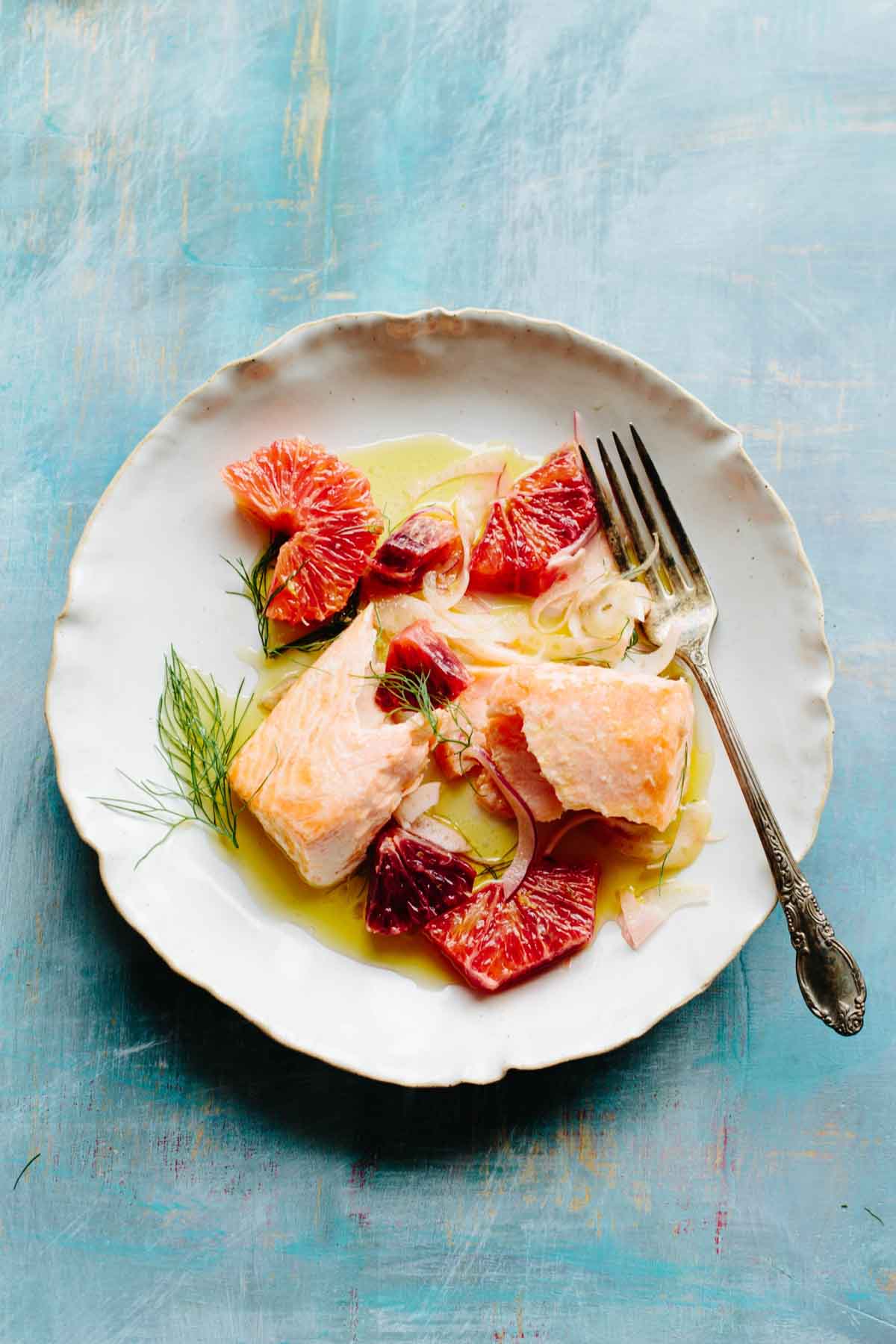
Variations
- Use fresh herbs like dill, thyme or parsley instead of rosemary.
- Add a finely minced garlic clove to the topping for more depth.
- Try this method with other already fatty fish like Arctic char, steelhead trout or sablefish for a similar texture.
- Add a spoonful of dijon mustard to the salad dressing for more tang.
- For extra citrus flavor, serve with more lemon juice and lemon zest on top.
What to Serve with Roasted Salmon
Serve this as part of a classic Feast of the Seven Fishes spread for your Christmas Eve dinner!
This buttery salmon pairs beautifully with different sauces like a simple Beurre Blanc, my bright Sicilian Salmoriglio or an herb-packed Italian Salsa Verde.
For sides, try some crispy Roasted Potatoes with Onions, tender Rapini with Pine Nuts and Raisins or my simple Spinach Recipe with Parmigiano.
How to Store and Reheat
Leftover salmon can be stored in an airtight container in the refrigerator for up to 2 days. Keep the fennel orange salad in a separate small bowl so it stays crisp.
To reheat, warm the salmon at a low temperature in the oven so the buttery texture stays intact. You can also enjoy leftover salmon cold in salads.
FAQs
A lower oven temperature helps the fish cook gently and prevent it from drying out. Slow-roasted salmon is an easy recipe that avoids overcooking, especially if you are cooking salmon for the first time.
Use an instant read thermometer to check the internal temperature. Aim for 120°F to 125°F for a tender, silky result for any salmon recipe. If you don't have one, look for flesh that flakes gently when pressed with a spoon but still looks slightly translucent in the center.
A thin salmon fillets will have a shorter cooking time. Start checking earlier so it does not overcook.
Yes, but seek out high quality, sustainably sourced fish. Not all farmed salmon is good. Slow roasting works well with farm-raised salmon, or any fatty fish.
Leftover salmon is great flaked into salads, tucked into sandwiches or added to grain bowls for your next dinner party.

Did you LOVE this recipe? Please leave a star ⭐️ rating and comment and tag your creations @ColeyCooks on Instagram!
This post may contain affiliate links.
Want to Save This Recipe?
Enter your email & I'll send it to your inbox.
By submitting this form, you consent to receive emails from Coley Cooks.

Slow Roasted Salmon
Ingredients
- 1 - 1 ½ lb skinless salmon piece or 4 6-ounce salmon fillets
- ⅓ cup extra virgin olive oil plus more for drizzling
- salt and pepper
- 2 Meyer lemons or regular lemons
- 3 large oranges any variety
- 2-3 sprigs rosemary optional
- ½ large fennel bulb very thinly sliced, plus some fennel fronds for garnish
- ¼ small red onion very thinly sliced
Instructions
- Preheat the oven to 275℉.
- Thinly slice one lemon and one orange. Arrange the slices on a large sheet of parchment paper set over a sheet pan.2 Meyer lemons , 3 large oranges
- Place the salmon on top of the citrus. Tuck a few sprigs of rosemary around and underneath if using. Pour ⅓ cup olive oil over the salmon, then season generously with salt and pepper. Fold the parchment up around the edges to create a loose seal. It does not need to be fully enclosed.1 - 1 ½ lb skinless salmon piece, ⅓ cup extra virgin olive oil, 2-3 sprigs rosemary, salt and pepper
- Place the sheet pan in the oven and roast until just cooked through, about 25 to 40 minutes depending on the size of your salmon. Individual fillets will cook faster.
- While the salmon roasts, slice the top and bottom off the two remaining oranges. Place them cut side down and carefully slice down the sides to remove the peel and as much white pith as possible.
- Turn the peeled oranges on their sides and slice into rounds. Cut each round into halves or quarters, removing any large pieces of white membrane.
- Add the orange segments to a bowl along with the shaved fennel, red onion, and a few fennel fronds. Season with salt and pepper, squeeze the remaining Meyer lemon over top, then drizzle with a little olive oil. Mix and set aside until the salmon is ready.½ large fennel bulb, ¼ small red onion
- To serve, use a spoon to break the salmon into large pieces and divide among plates, leaving the citrus slices and rosemary behind. Spoon some of the cooking oil over top and add the fennel orange salad. Garnish with more fennel fronds and serve immediately.
Notes
- Pat the salmon dry with a paper towel to remove excess moisture so it roasts evenly. Even a quick pat helps the heat distribute more evenly in the olive oil.
- Stick to lower temperatures for the most tender texture and to avoid overcooking.
- An instant read thermometer removes the guesswork when checking internal temperature. Aim for 120°F to 125°F for a tender, silky result.
- Use a large piece of fish when serving a crowd since it makes dinner party prep almost effortless.
Nutrition

I've had this recipe bookmarked for years. This is tasty! I really enjoyed the salad. Made the recipe as-stated, using a mixture of navel and blood orange slices.
So glad you loved it, Nick! Thank you so much for leaving a review. I’ll have to try a mix of the blood orange and navel oranges next time. Sounds delicious, and probably had beautiful color!
I'm not a huge fan of seafood, but I do like salmon when it's cooked well and paired with fresh and bright flavors. This looks like something I'd love!
I've only got a little salmon left in my freezer and now I've got a recipe worthy of it.
It was a bad year for Florida citrus thanks to the hurricanes. There were hardly any oranges. Meyer lemons and calamondins are tough as nails, though! I'll send you a photo of how this turns out with them.