Homemade Fresh Basil Oil
This fresh homemade basil oil is one of the best ways to enjoy the fresh vibrant flavor of basil. It's a simple way to preserve an abundance of basil and adds a beautiful finishing touch to salads, seafood, pasta, cheeses, veggies, fruits and more. It's easy to make, keeps well, and has a striking green color that makes even the simplest dishes shine.
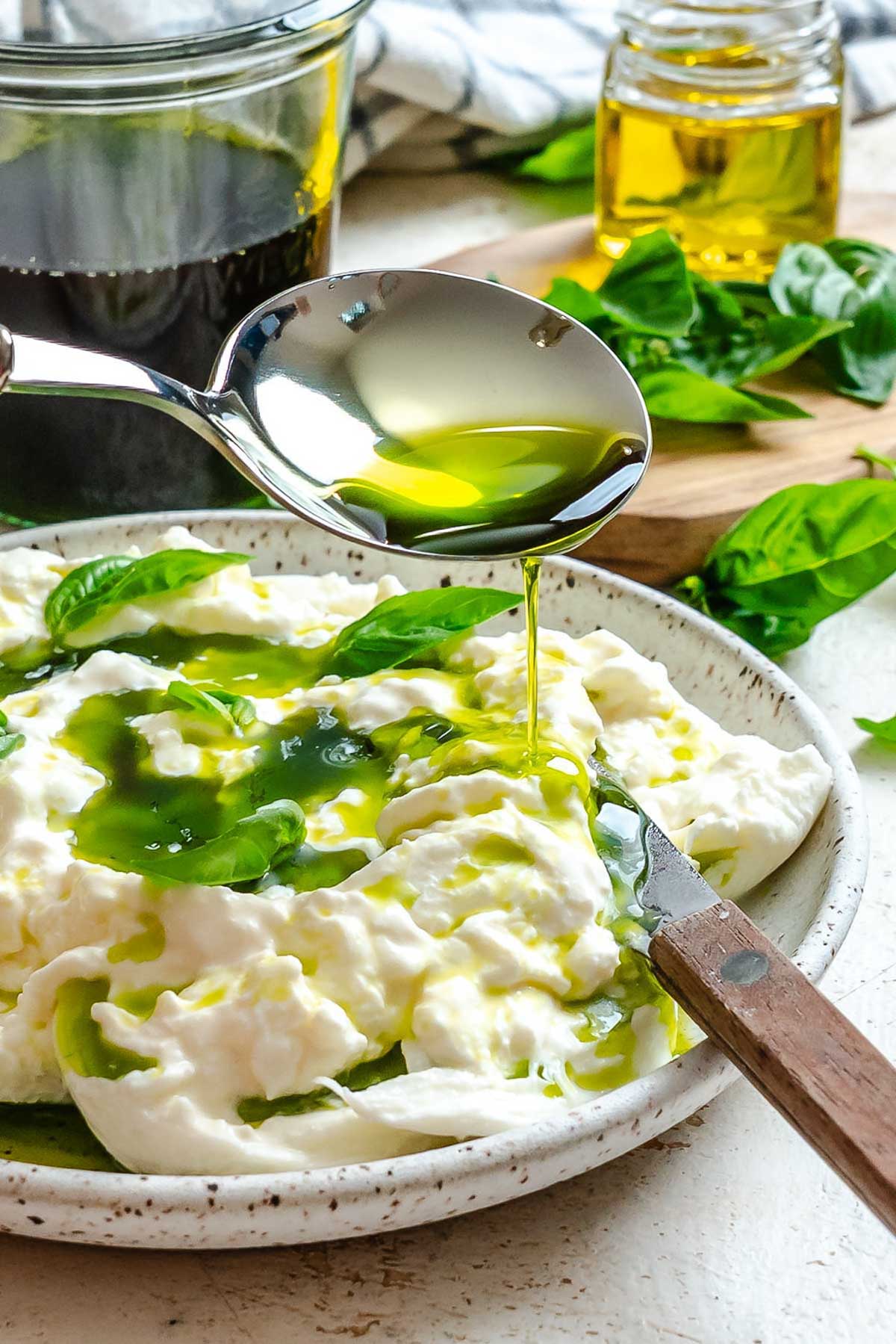
I'm always looking for different ways to preserve fresh basil in the summer when I have tons of it growing in my garden. This has become one of my favorite easy recipes to make since it uses a lot and lasts for up to a week!
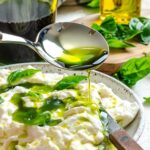
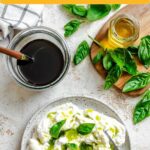
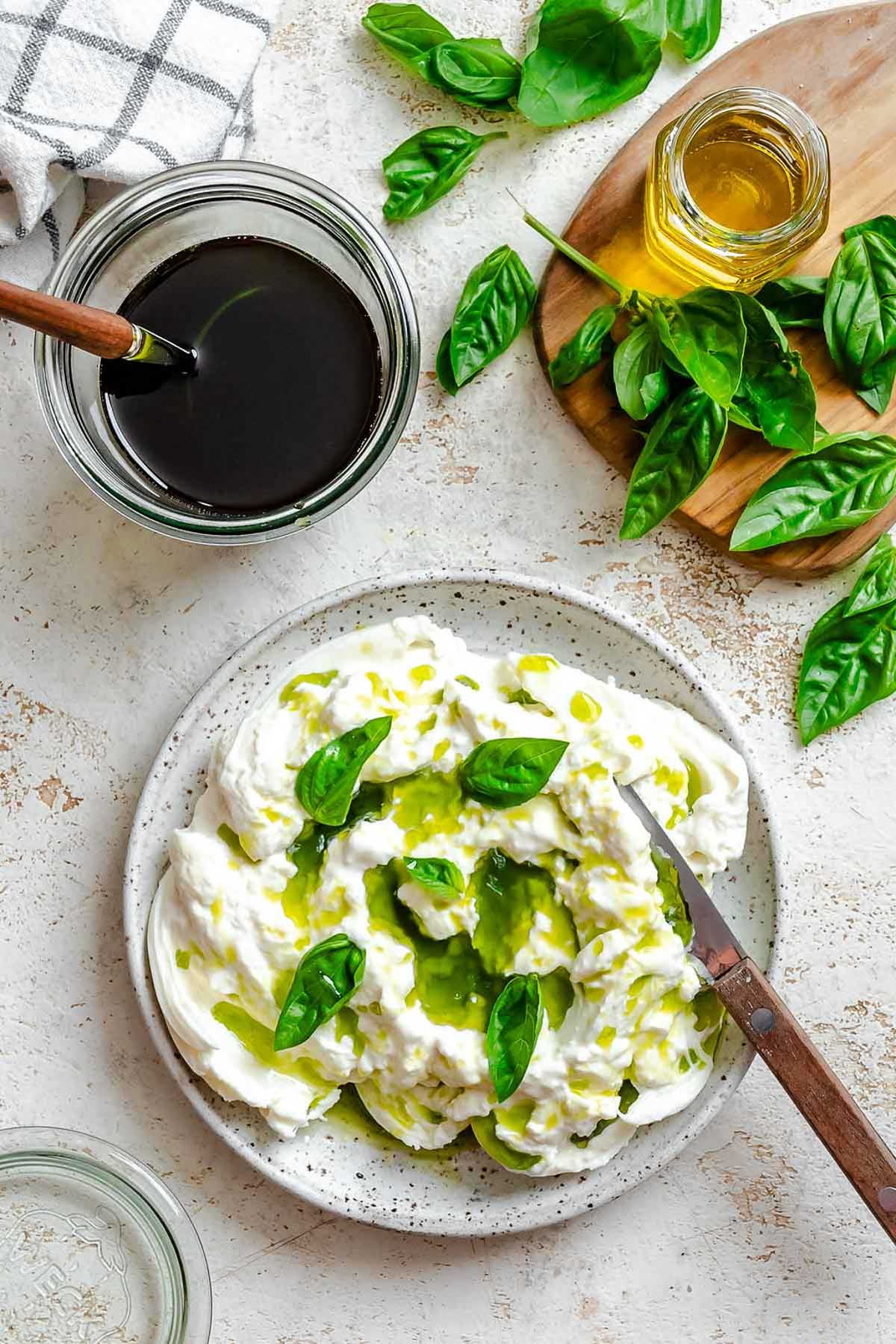
It's great drizzled over mozzarella cheese, burrata, ricotta, or a caprese salad and caprese sandwiches. I love it on tomatoes, melons, avocado toast, and stone fruit. It's amazing whisked into a salad dressing, used as dipping oil for homemade focaccia, or spooned over crudo.
It's a fantastic way to use up your basil plants, it's versatile and looks so pretty on the plate!
The Secret to Bright Green Basil Oil
The key to making bright, aromatic basil oil is first blanching basil leaves in salted water. This simple cooking process preserves its color and keeps the delicate flavor clean and fresh.
Blanched basil also freezes really well, so whenever I have a big harvest, I'll do just that. I make this basil oil recipe, a batch of pesto, and then freeze extra basil in freezer-safe bags for winter.
After the ice bath, it's important to remove as much moisture as possible from the basil. Any leftover water can cloud the oil and shorten its shelf life. To be safe, I take an extra step and gently heat the infused oil just to evaporate any lingering moisture. This keeps it clear, bright green and full of fresh basil flavor.
These few extra steps make all the difference. You'll be rewarded with a fresh, flavorful, herbal oil that captures the essence of basil, and it's absolutely worth the effort!
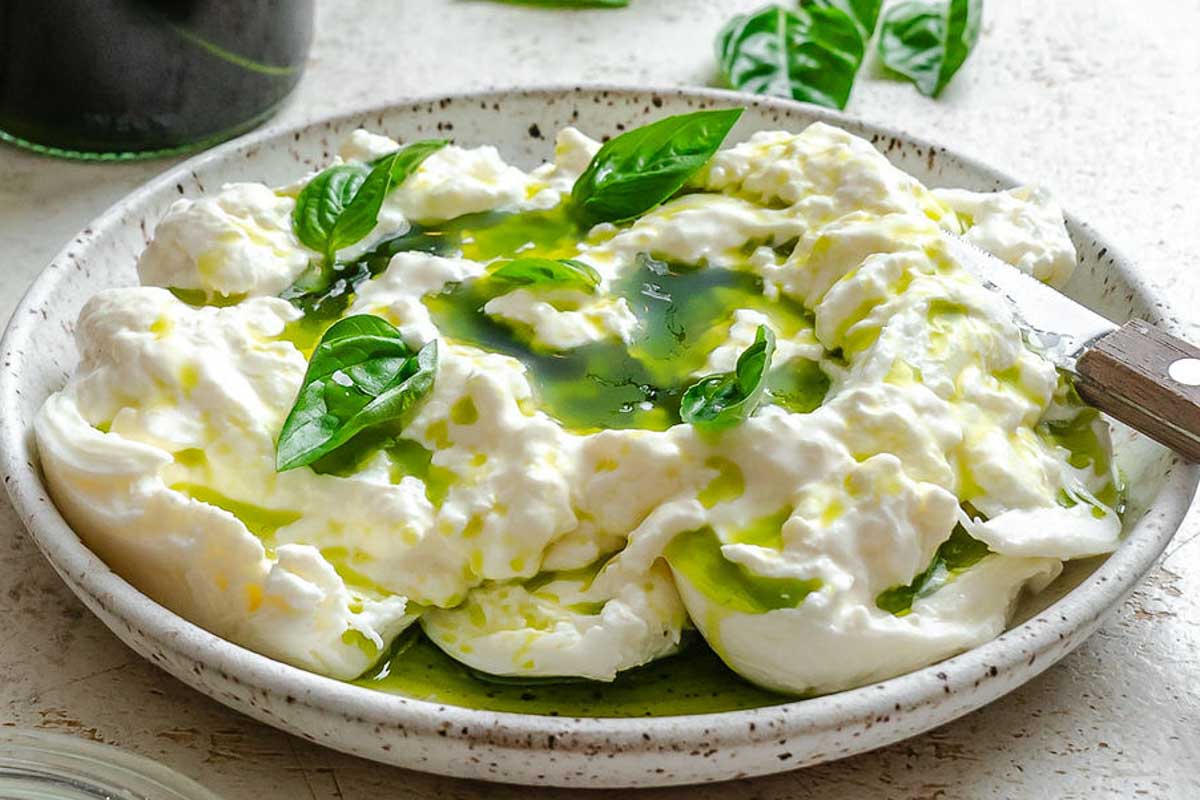
Want more fresh basil recipes? Try my herby Italian potato and green bean salad, this sweet-savory peach cherry burrata salad, or a classic basil pesto Genovese.
Why This Recipe Works
- Simple, precise steps guarantee an aromatic oil with a vibrant green color.
- Blanching basil preserves its falvor and prevents the oil from turning dark.
- The oil is versatile and works as a finishing touch for sweet and savory dishes.
- This method works with other herbs like parsley, cilantro, and chives.
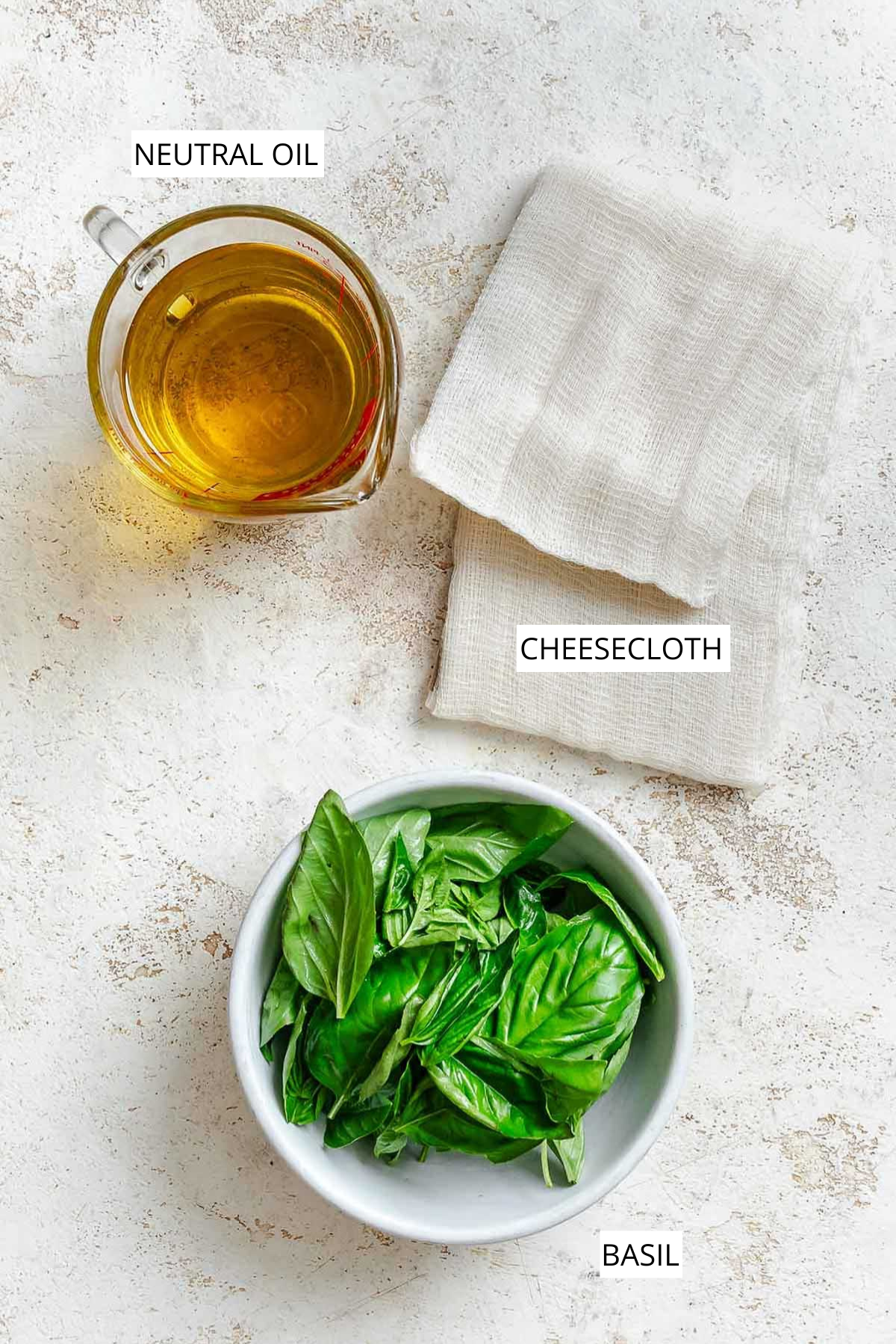
Ingredients Needed for Basil Oil
Basil leaves - Make sure your basil is fresh, with no brown spots. Pick the leaves right before making for the best flavor and color.
Neutral oil - Use a good quality neutral oil such as avocado, grapeseed, or sunflower.
Cheesecloth - Use several layers to strain the oil slowly and remove any particles for a clear, translucent finish.
Salted water - Salting the blanching water seasons the basil and helps set its color.
*Find the full ingredient list in the recipe card below!
Helpful Equipment
- High-powered blender or food processor
- Small saucepan
- Slotted spoon
- Fine sieve and cheesecloth
- Mixing bowl
- Ice cube trays (optional for freezing extra basil oil)
- Clean glass jar or bottle
- Paper towels or clean kitchen towels
How to Make Homemade Basil Oil
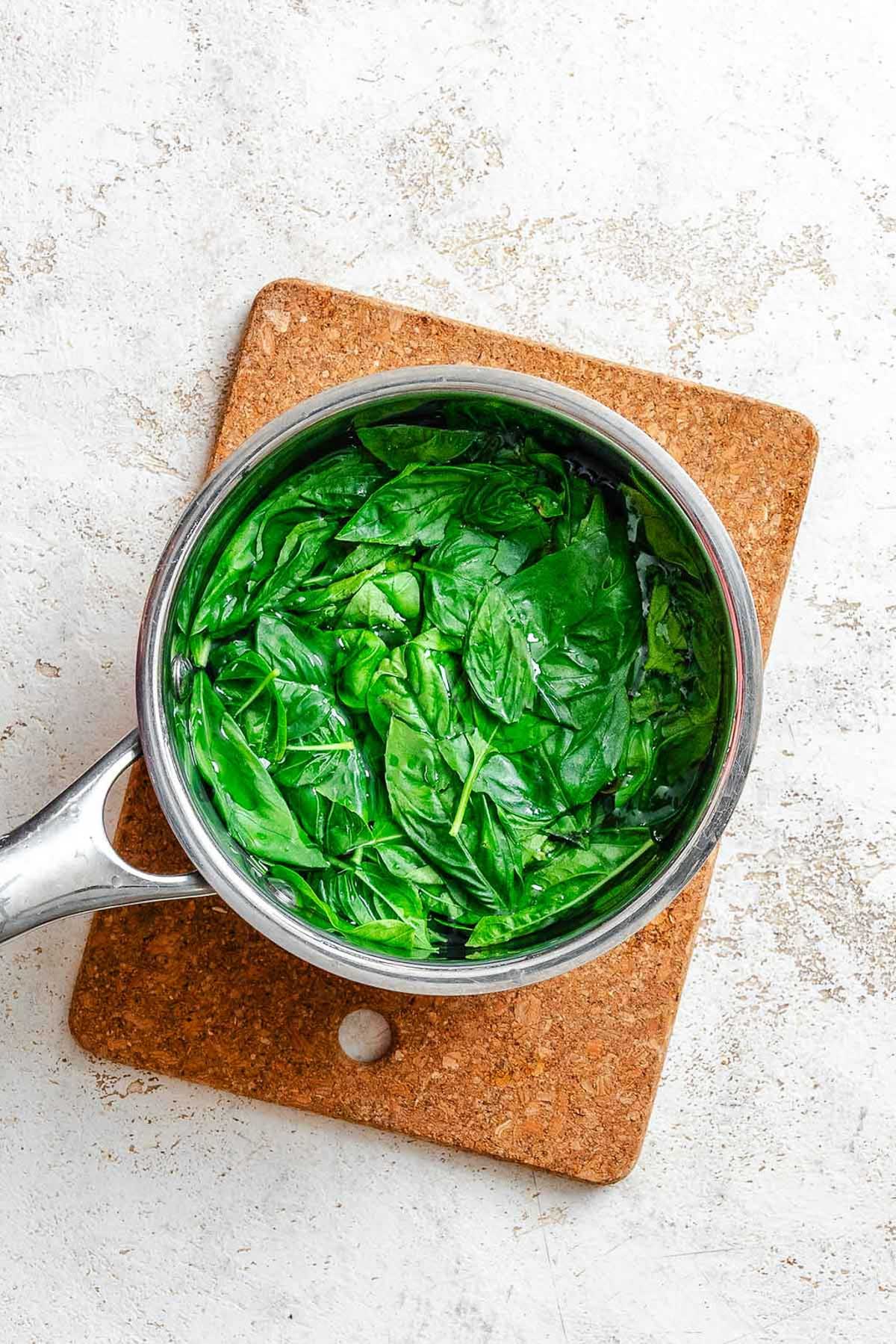
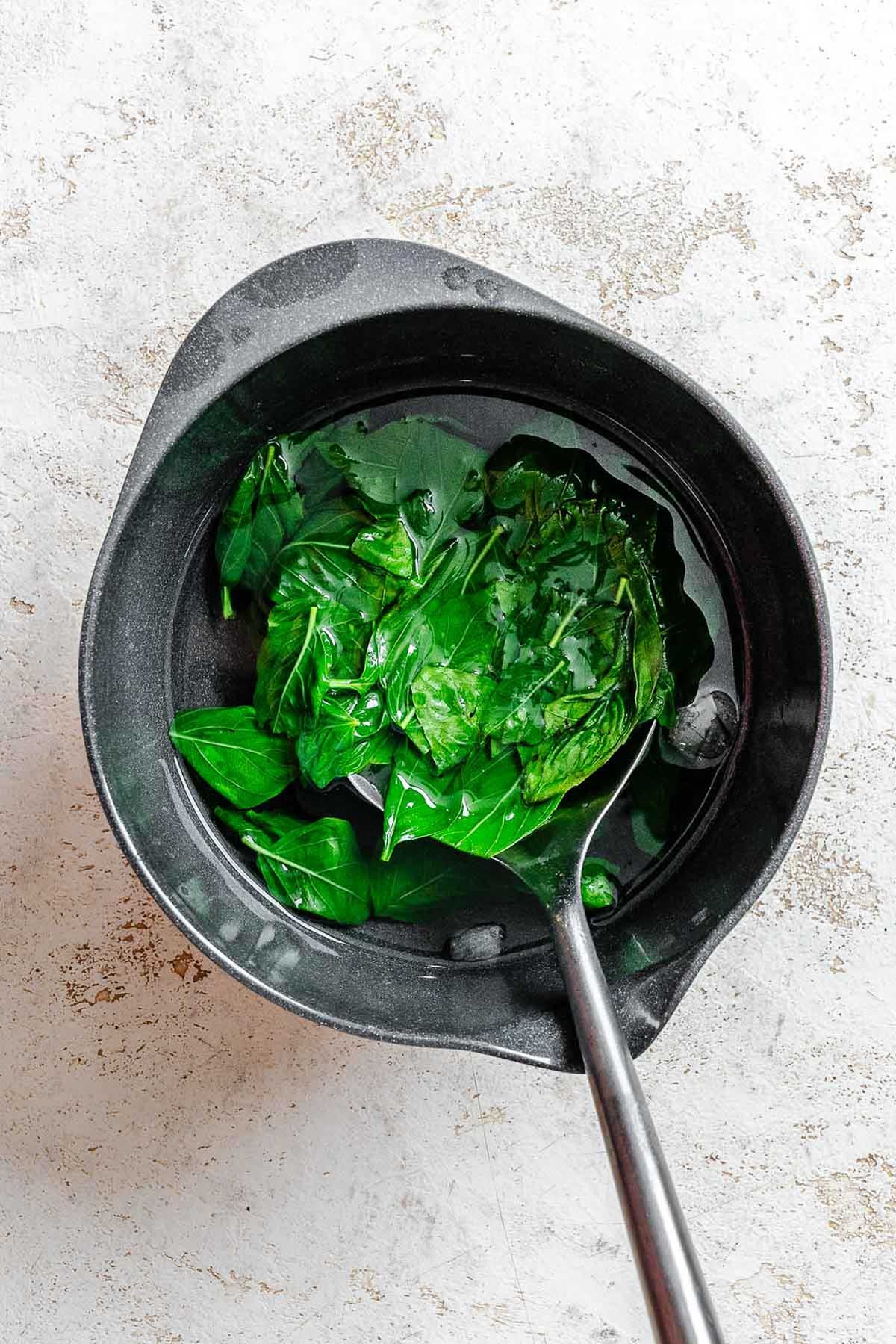
- Bring a small pot of salted water to a boil and prepare a bowl of ice water.
- Drop the basil leaves into the hot water for about 15 seconds, just until they turn bright green.
- Use a slotted spoon to transfer them immediately to the ice bath to stop the cooking process.
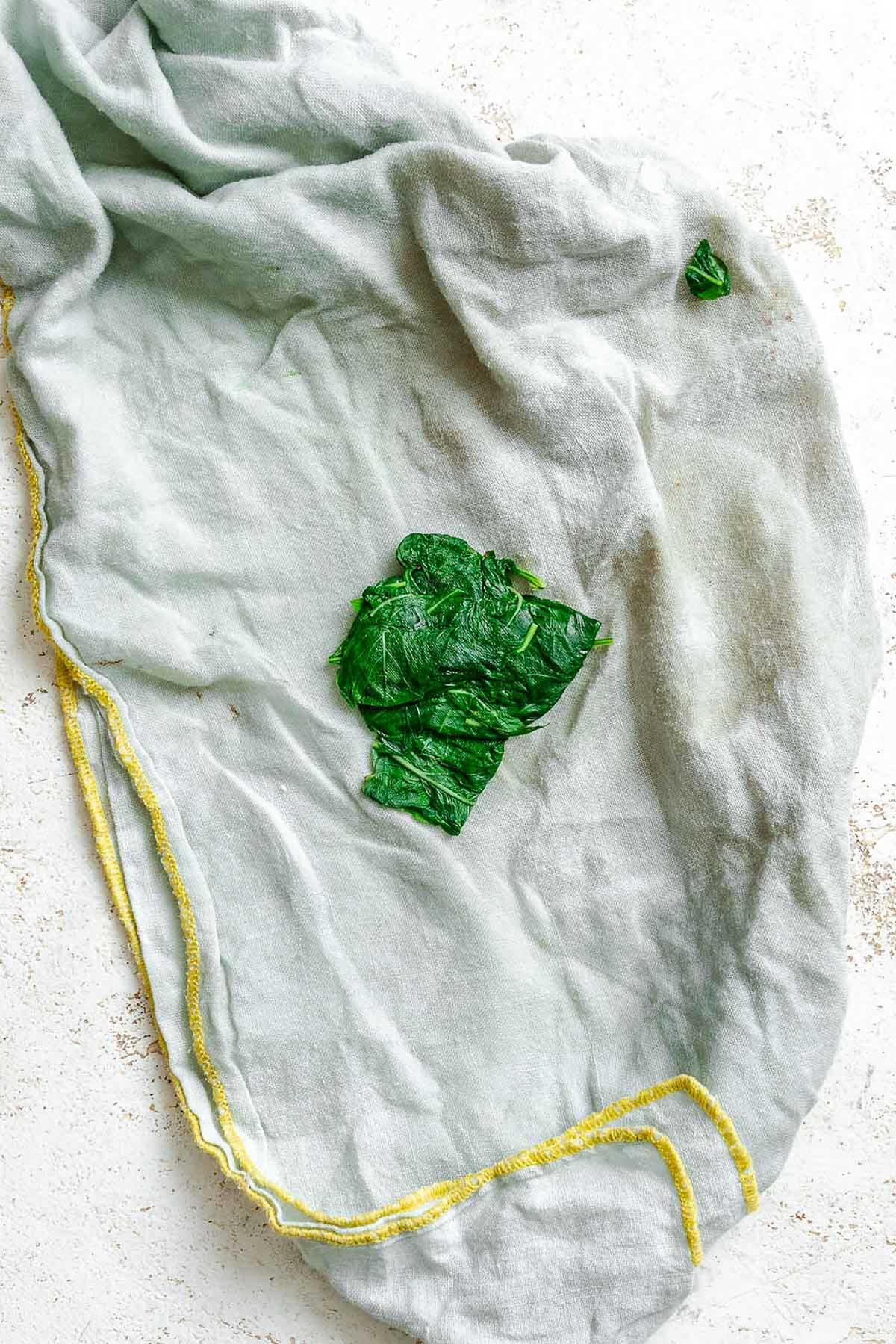
- Once cooled, remove from the cold water then spread the basil on a clean kitchen towel. Use another towel or paper towels to press and remove excess moisture.
Pro Tip: Removing every bit of moisture is key. Any leftover water will make the oil cloudy and shorten its shelf life.
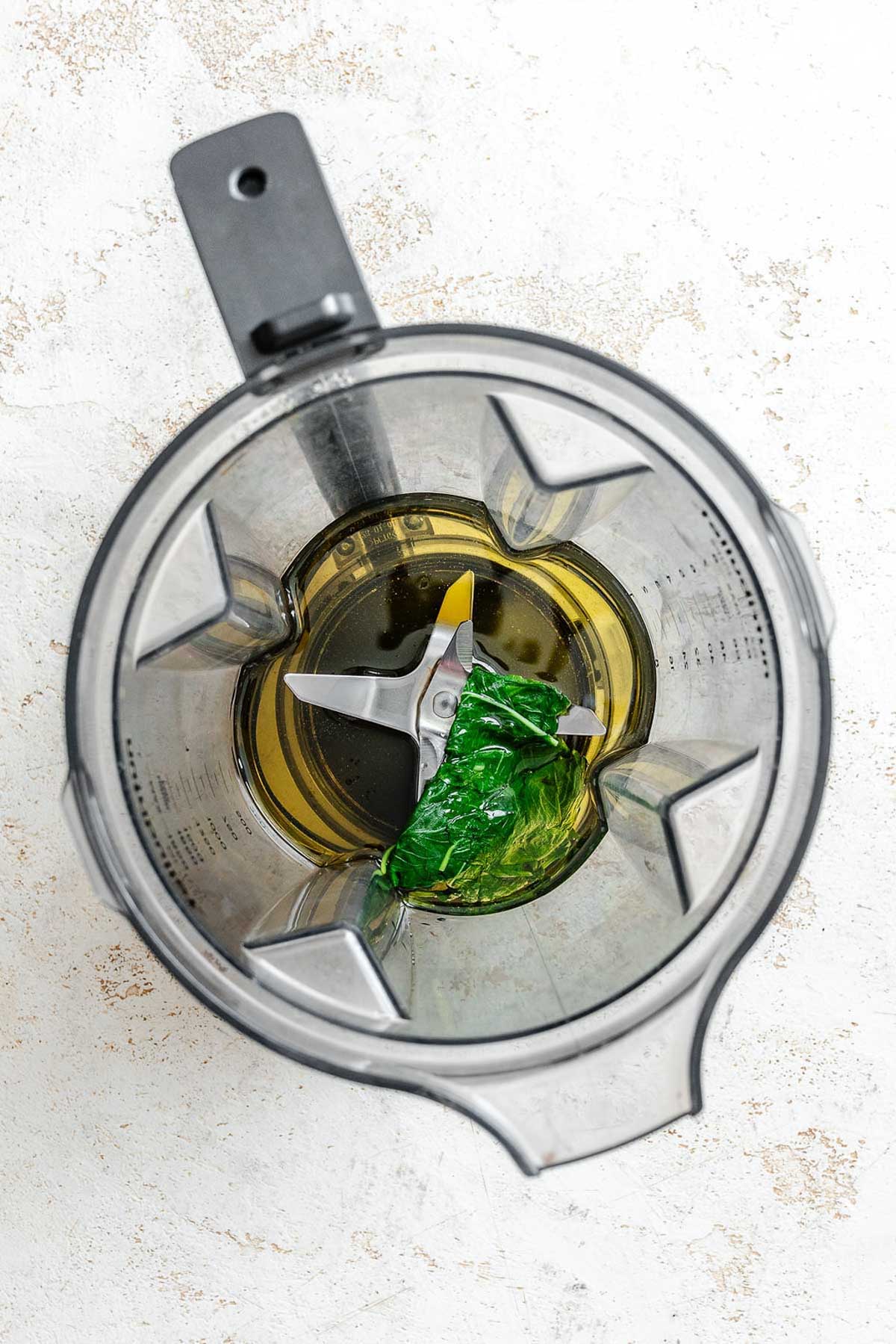
- Transfer the blanched basil to a high-powered blender or food processor with the oil. Blend until very smooth, about 30 seconds or more as needed.
- Transfer the blanched basil to a high-powered blender or food processor with the oil. Blend until very smooth, about 30 seconds or more as needed.
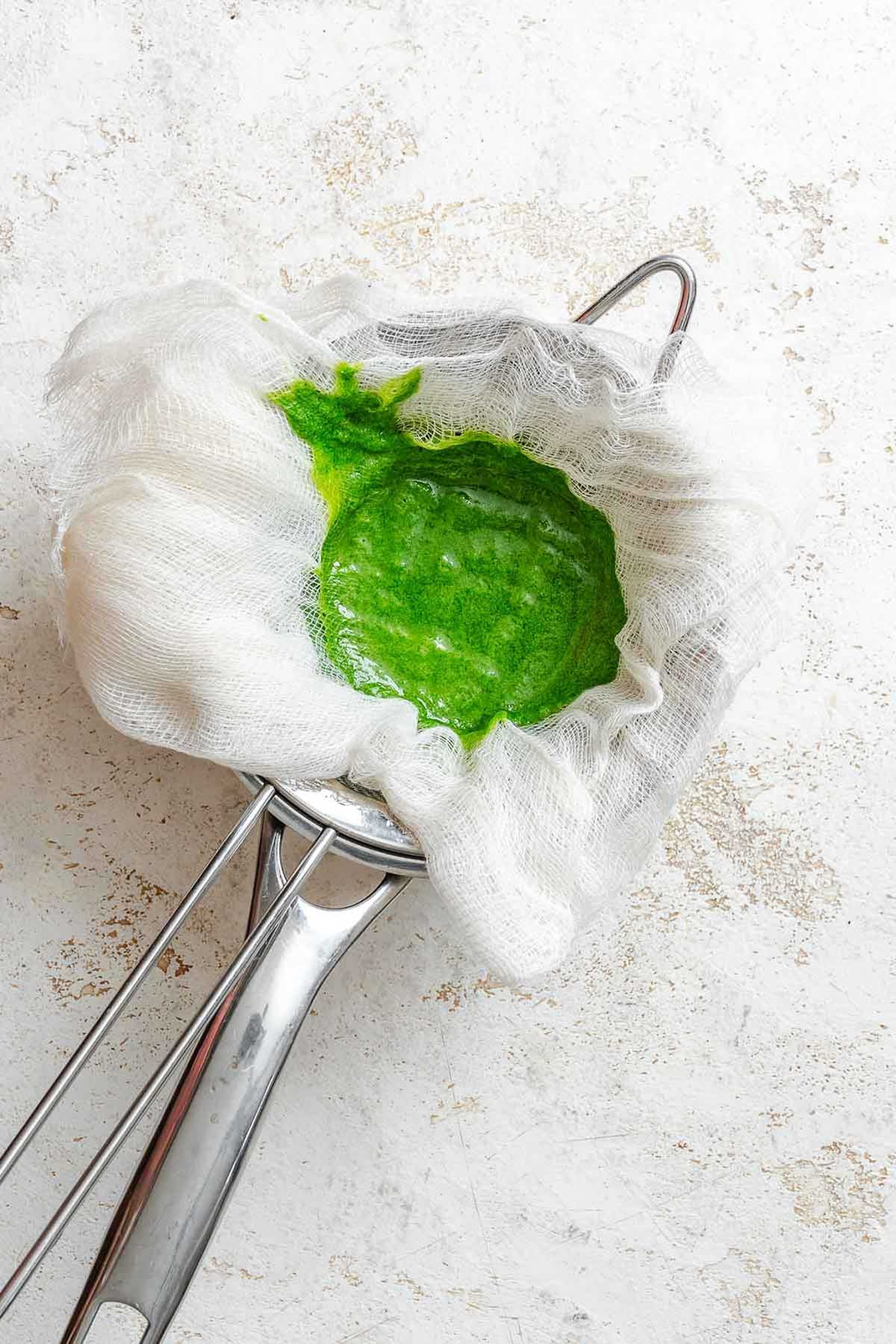
- Line a fine sieve or strainer with a few layers of cheesecloth and set it over a small saucepan. Pour the oil through and let it drip slowly without pressing.
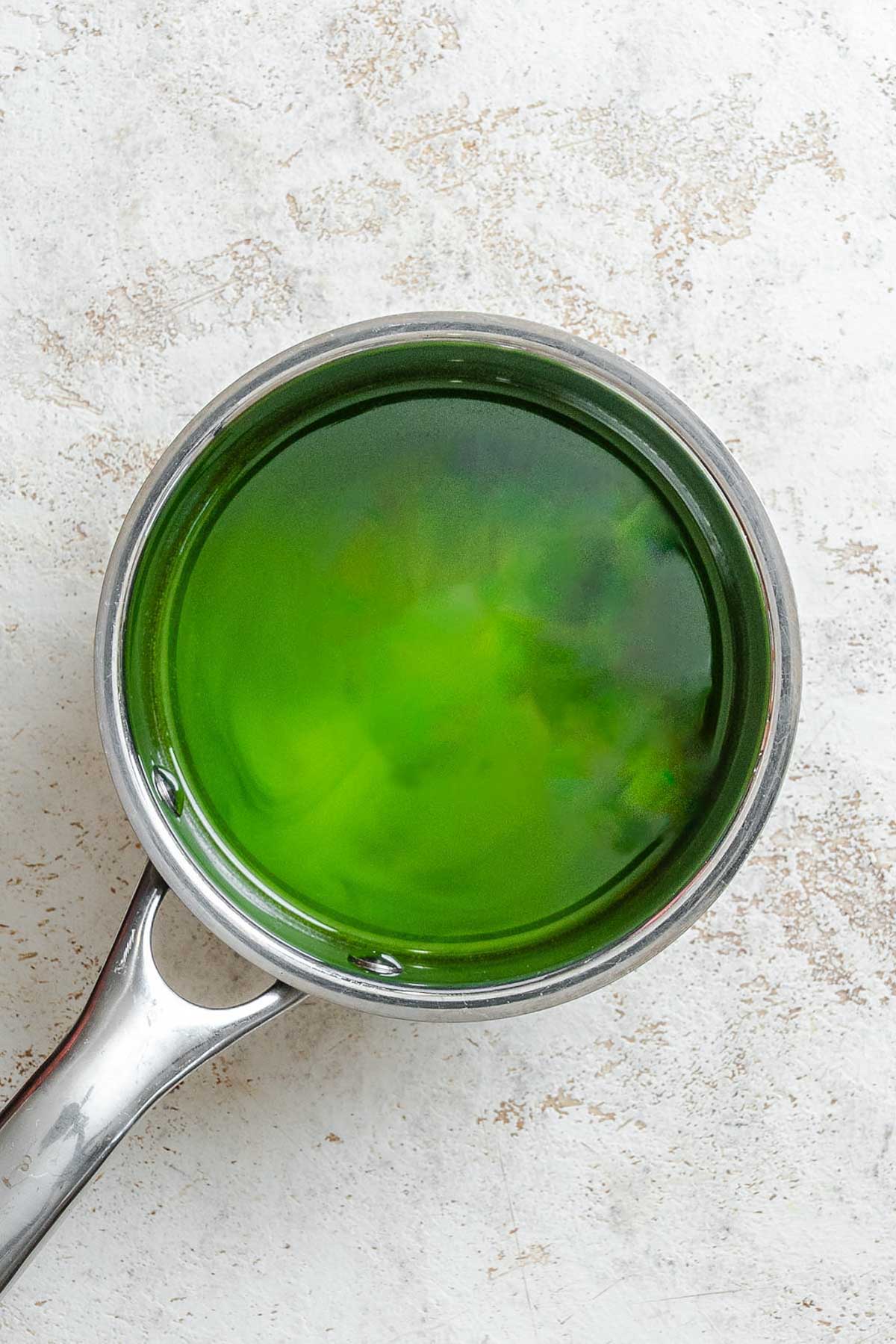
- Gently warm the strained oil over very low heat just until it turns a brighter green and becomes more transparent. The final step of evaporating with heat is important, but avoid cooking over high heat or allowing the oil to smoke, as this will ruin its flavor and color.
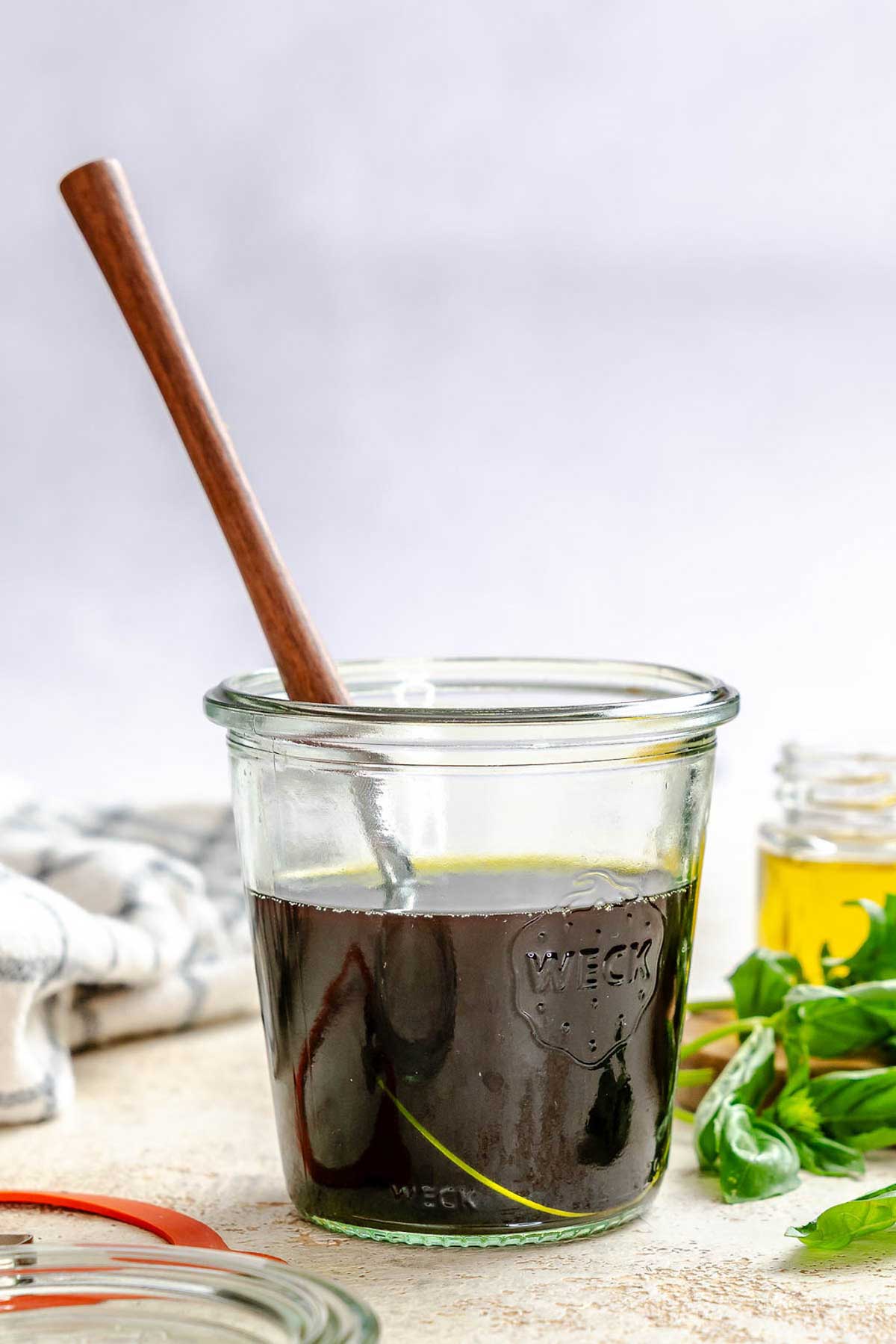
- Let the oil cool completely, then transfer to a clean glass jar or squeeze bottle. Refrigerate for up to one week.
Homemade Basil Oil Tips
- Use basil oil as a finishing drizzle, not for high-heat cooking.
- Gently heat the oil to evaporate water, but don't let it overheat or smoke, or the flavor and color will be lost.
- Extra blanched basil can be turned into pesto or frozen for future use.
Variations
- For a richer, more robust flavor, replace ¼ - ½ cup of oil with extra virgin olive oil.
- Make a mixed herb oil using parsley, cilantro, chives or a mix.
- Add a pinch of red pepper flakes for a subtle heat.
- Infuse over low heat with lemon peel to add a citrus note.
How to Use Basil Oil
Drizzle over warm, crusty bread like fluffy focaccia or use in place of olive oil in this simple vinaigrette. Spoon over seafood such as delicate tuna crudo, perfectly pan seared tuna steak, tender pan-seared scallops, or thinly sliced beef carpaccio.
It's great over smoky-sweet roasted red peppers, this juicy tomato confit or a classic Margherita pizza.
How to Store
Store in a glass jar or bottle in the refrigerator for up to 1 week. For longer storage, freeze in ice cube trays, then transfer cubes to freezer-safe bags. Thaw at room temperature before using.
FAQs
Yes, but the oil will not have the same vibrant green color and will darken quickly.
Cloudiness comes from excess moisture. Be sure to dry basil thoroughly and strain the oil through cheesecloth or a fine sieve.
No. It will lack the vibrant flavor of fresh basil and the finished oil will not be bright green.
Use a good quality neutral oil for a clean flavor, like vegetable oil, grapeseed oil, avocado oil, sunflower oil or canola oil. Or replace part with extra-virgin olive oil for a more robust taste.


Did you LOVE this recipe? Please leave a star ⭐️ rating and comment and tag your creations @ColeyCooks on Instagram!
Want to Save This Recipe?
Enter your email & I'll send it to your inbox along with my best Thanksgiving ideas and tips.
By submitting this form, you consent to receive emails from Coley Cooks.

How to Make Basil Oil
Ingredients
- 1 ½ cups fresh basil leaves packed, but not tightly
- 1 cup neutral oil like grapeseed, sunflower, or avocado
- Cheesecloths
Instructions
- Bring a small pot of salted water to a boil and prepare a bowl of ice water.
- Drop the basil leaves into the boiling water for about 15 seconds, just until they turn bright green.
- Use a slotted spoon to transfer them immediately to the ice water to stop the cooking.
- Once cooled, drain well, then spread the basil out on a clean kitchen towel, then use another towel or paper towels to gently press the leaves to remove as as much moisture as possible.
- Transfer the basil to a high powered blender with the oil and blend until very smooth, about 30 seconds or more as needed.
- Line a strainer with a few layers of cheesecloth then set it over a small saucepan or bowl.
- Pour the oil into the cheesecloth and let it drip through slowly without pressing. This will help to avoid excess water passing through.
- Gently warm the strained oil over very low heat just until it turns a brighter green and the remaining water fully evaporates. It should become more transparent and less cloudy.
- Let the oil cool completely, then transfer to a clean jar and refrigerate for up to a week.
Notes
- Removing every bit of moisture is key. Any leftover water will make the oil cloudy and shorten its shelf life.
- Use basil oil as a finishing drizzle, not for high-heat cooking.
- Gently heat the oil to evaporate water, but don't let it overheat or smoke, or the flavor and color will be lost.
- Extra blanched basil can be turned into pesto or frozen for future use.
Nutrition
This post may contain affiliate links.