Spring Vegetable Pasta Primavera
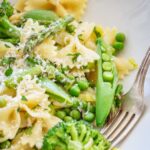
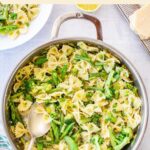
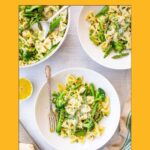
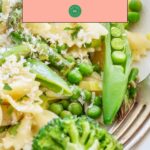
This simple recipe for pasta primavera is made the way it should be, with true spring vegetables! My version skips the bell peppers and zucchini and instead highlights the best of the season with a flavorful mix of asparagus, peas, broccoli and leeks. It all gets tossed with pasta and a garlicky lemon butter sauce for a fresh, vibrant spring dinner that comes together in 40 minutes or less!
This post may contain affiliate links.
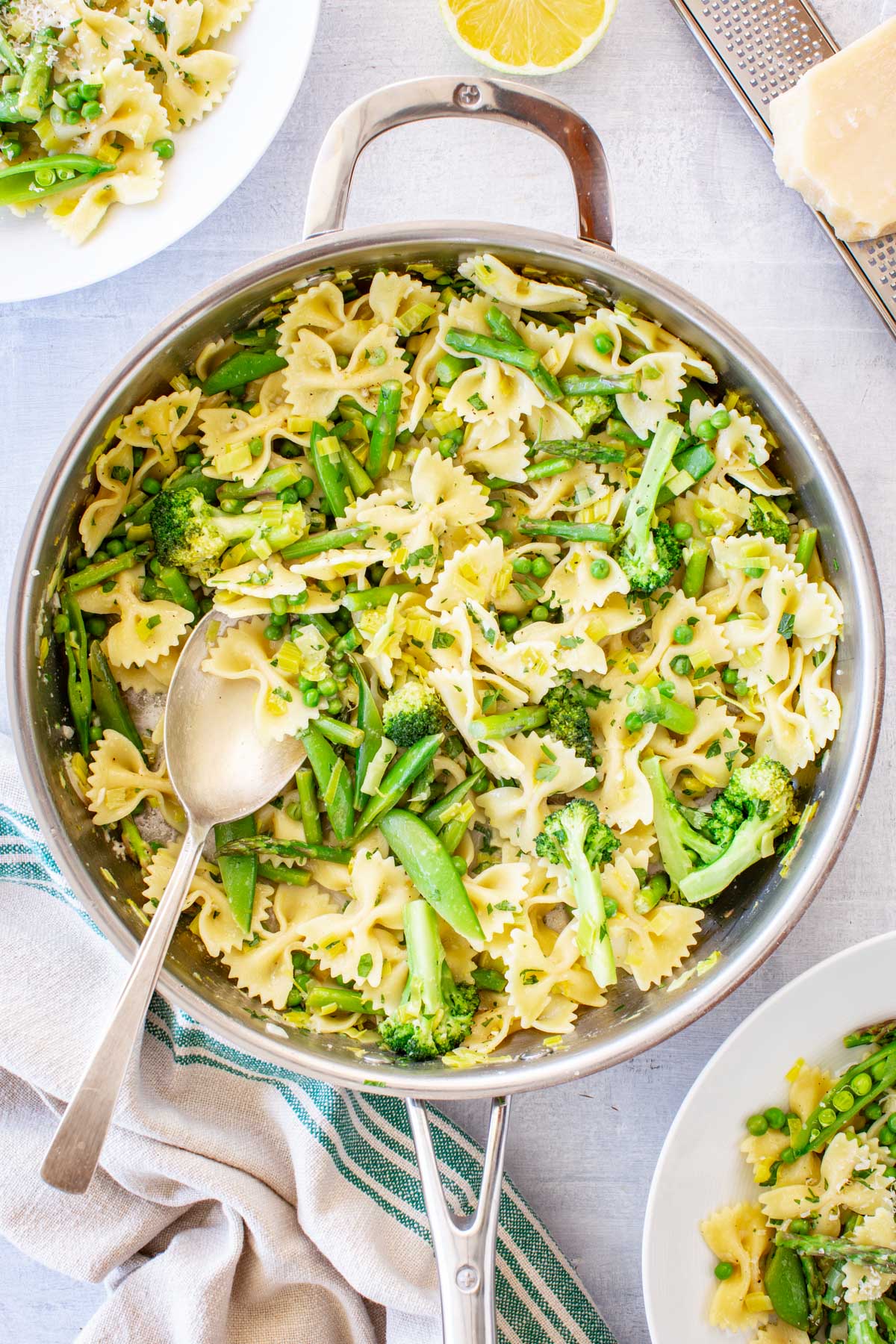
Pasta Primavera Recipe
One of my readers requested a recipe for pasta primavera, but since there are so many recipes for the classic out there, I wanted to make a true springtime version of the dish.
Since primavera means "spring" in Italian, I created a recipe that uses exclusively green spring vegetables, and the results did not disappoint!
This version of pasta primavera is a light, easy spring dinner that's perfect when the weather starts getting a little warmer and the days a little longer.
What Is Pasta Primavera?
Pasta primavera is an old-school Italian American dish that's typically an assortment of different vegetables tossed with pasta and a white wine, butter or cream sauce. It was popularized at the restaurant Le Cirque in New York City in the 1970's, and always reminds me of my mom since it was one of her favorites.
Despite its name, pasta primavera doesn't typically include classic spring vegetables. Most of them have bell peppers, zucchini and cherry tomatoes, which all grow in the summer.
I think about cooking very seasonally and shape a lot of my recipes around the phrase "what grows together, goes together." It refers to terroir and location, but also the time of year.
Ingredients that grow in the same climate and season almost always play well with each other on a plate, and this recipe is proof.
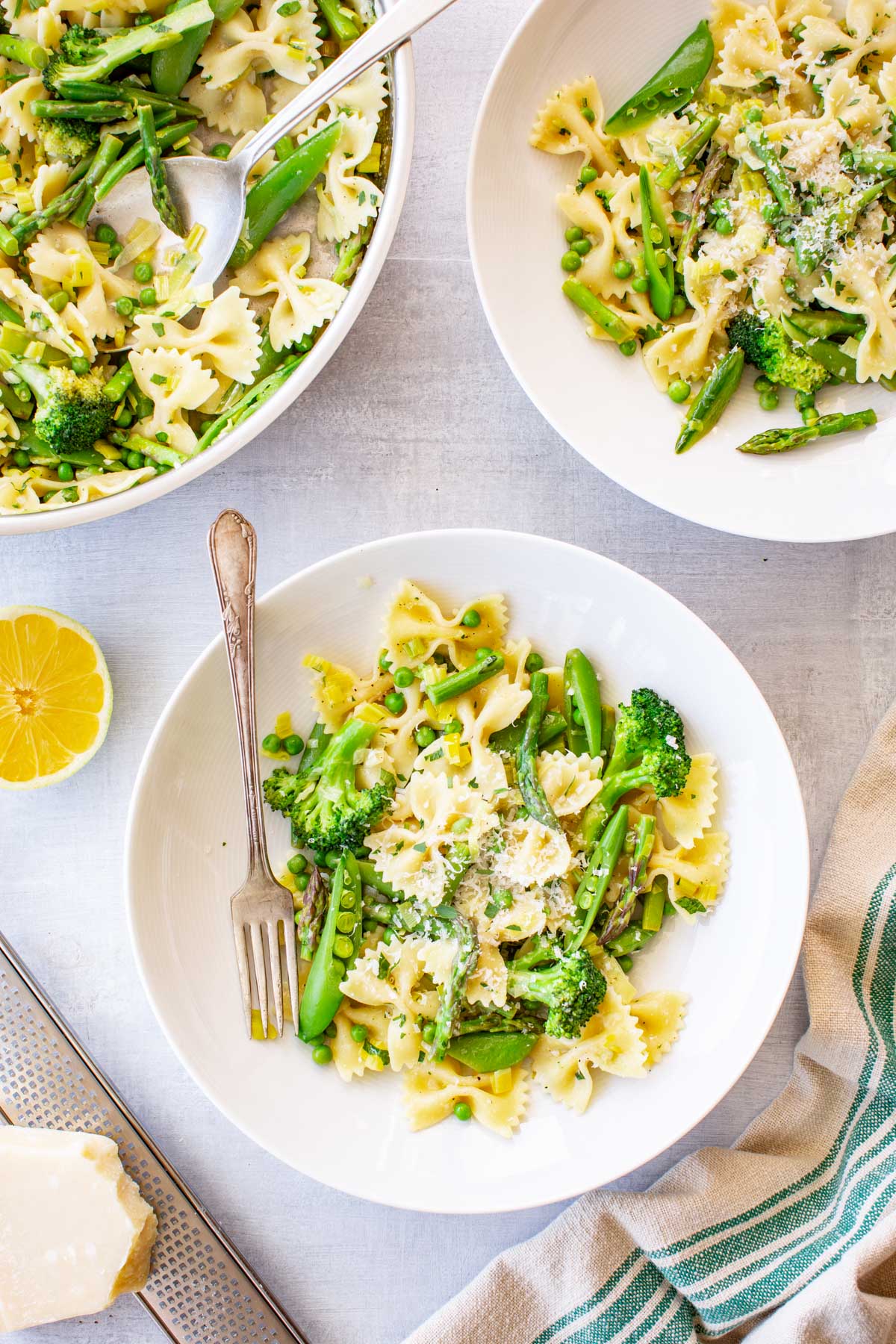
Best Vegetables for Pasta Primavera
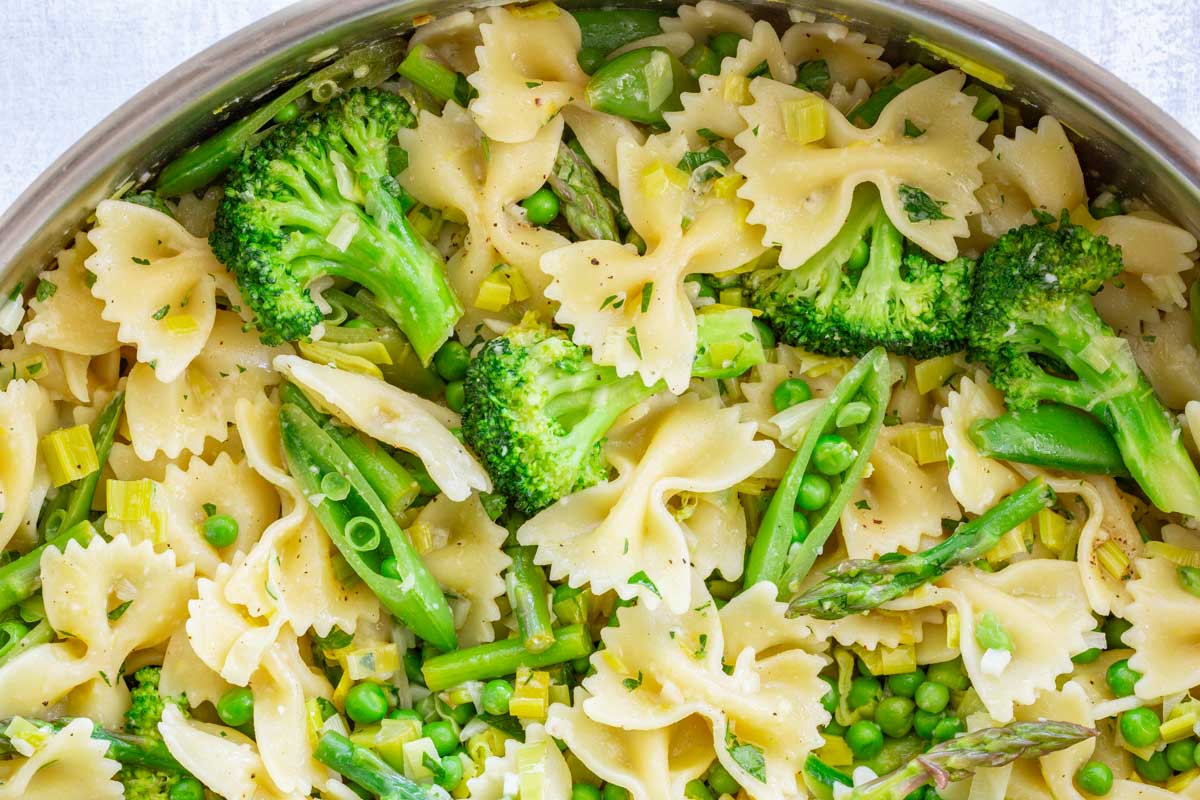
I went with a mix of leeks, asparagus, broccoli, English peas, and snap peas. Any of these could easily be omitted or substituted if you prefer, but I think it's best to stay within the season.
Artichokes, fennel, fava beans, broccolini, spinach, baby kale, snow peas, ramps, spring onions, and radishes would all work really well. You can apply this same pairing logic to other recipes, like my spring vegetable risotto, not just with pasta.
I finish the dish with fresh parsley, but other soft herbs like mint, chives, tarragon, chervil, or even basil would be great too.
The sauce is kept light with olive oil, butter, garlic, white wine, lemon, and Parmigiano Reggiano cheese, just enough to coat the pasta and vegetables without overpowering them.
It's bright, simple, and lets the vegetables stay front and center.
Veggie Cooking Tips
The best way to cook the vegetables perfectly is to quickly blanch them in the same boiling salted water that you'll use to cook the pasta.
Broccoli takes the longest to cook, so I drop it in for about 30 seconds, but only 15-20 seconds for the asparagus and snap peas. This quick cook time ensures they stay nice and bright green and perfectly tender-crisp in the final dish.
I don't shock them in ice water, mainly because I'm lazy, but also because they're going right into the pan and it's not really needed.
For the peas, I opt for the frozen variety since they're so much easier and always nice and sweet. Try to find petite or baby peas if you can since they're a bit sweeter.
Defrost them first, but no need to blanch these, since they only need a minute to heat through in the pan as they get tossed with the pasta.
Once you try this recipe, it will be your go-to spring pasta all season long!
Want more spring vegetable pasta recipes? Try this simple pasta e piselli, this seasonal shaved asparagus and ramp pesto pasta or an easy pasta con broccoli.
Why This Pasta Primavera Recipe Works
- It's a truly seasonal pasta primavera made with only green spring veggies.
- Comes together in under 40 minutes for an easy weeknight dinner.
- It's light and healthy, while still being delicious and satisfying.
- The vegetables are blanched until bright green and tender-crisp in the same water as the pasta, saving time and dishes.
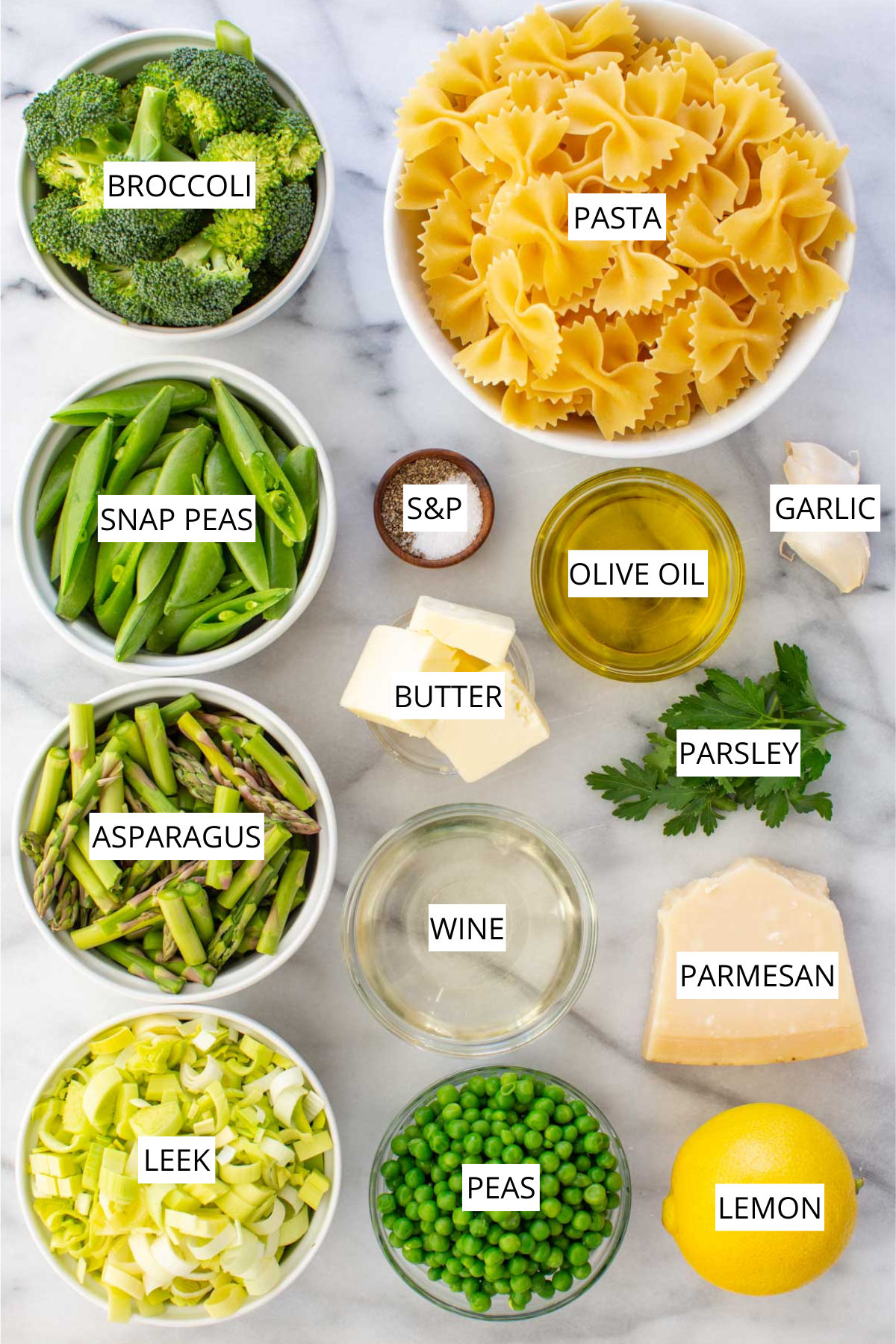
Primavera Pasta Ingredients
Pasta - I recommend using any short pasta shape like farfalle, rigatoni, orecchiette or cavatappi since they are similar in size to the vegetables. Look for pasta that's made with 100% semolina, slow-dried and bronze-die extruded. Learn how to select high-quality Italian dried pastas in my guide.
Vegetables - I used leek, broccoli, asparagus, snap peas and frozen English petit peas. You can substitute one or more of these with other seasonal spring veggies of your choice.
Olive oil and butter - Olive oil is used to sauté leeks and garlic to form the base of the sauce, while butter is added at the end to toss with the pasta until glossy.
Wine - Use any unoaked neutral white wine, like pinot grigio or sauvignon blanc.
Lemon - Both juice and zest are added for brightness. Never use bottled lemon juice!
Parmesan - Parmigiano Reggiano adds a creamy texture and a salty, nutty and sweet flavor that really complements the vegetables. You can always replace it with other Italian cheeses like Pecorino Romano or Grana Padano.
*Find the full ingredient list in the recipe card below!
Helpful Equipment
- Large pot
- Slotted spoon
- Clean tea towel
- Large skillet
- Cheese grater or Microplane
How to Make Pasta Primavera with Spring Vegetables
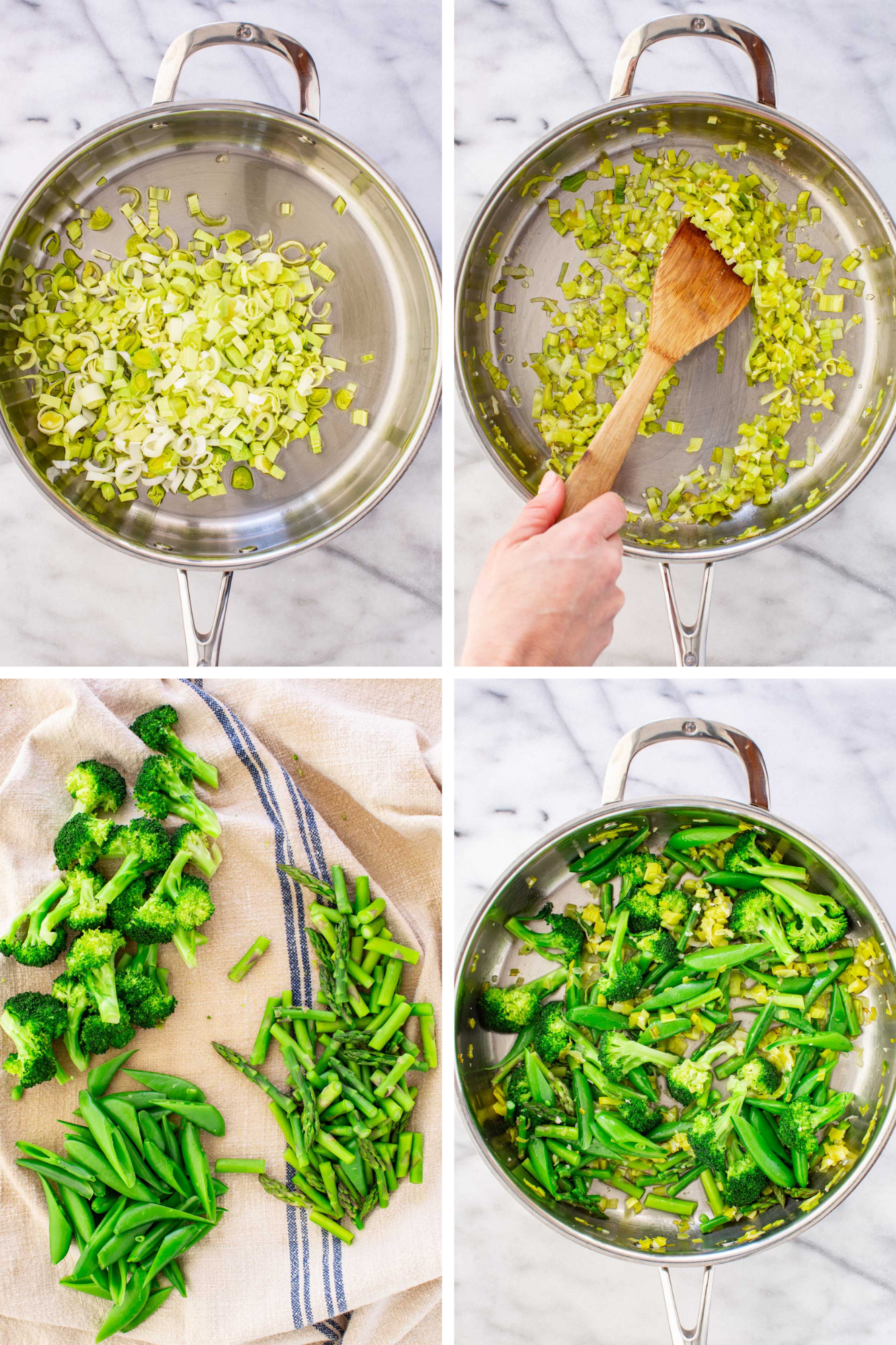
- Bring a large pot of water to a boil and season generously with salt.
- Add the broccoli to the pot and cook for 30 seconds, then use a slotted spoon to remove and drain on a clean tea towel.
- Repeat with the asparagus and snap peas, but cook them for no more than 15-20 seconds.
- Add the pasta to the boiling water and cook until just shy of al dente according to the package instructions. Be sure to reserve some of the cooking water.
Pro Tip: Cooking the pasta in the same water as the vegetables saves on time and dishes, and allows the pasta to absorb some of the nutrients from the veggies.
- Heat the olive oil in a large skillet over medium heat. Add the sliced leeks with a pinch of salt and cook, stirring frequently, until soft and just starting to turn translucent, about 4 minutes.
- Add the garlic and cook for about 30 seconds or until fragrant, then pour in the white wine and let it simmer for about 1 minute to cook off the alcohol.
- Add the broccoli, asparagus, and snap peas to the pan and toss to combine.
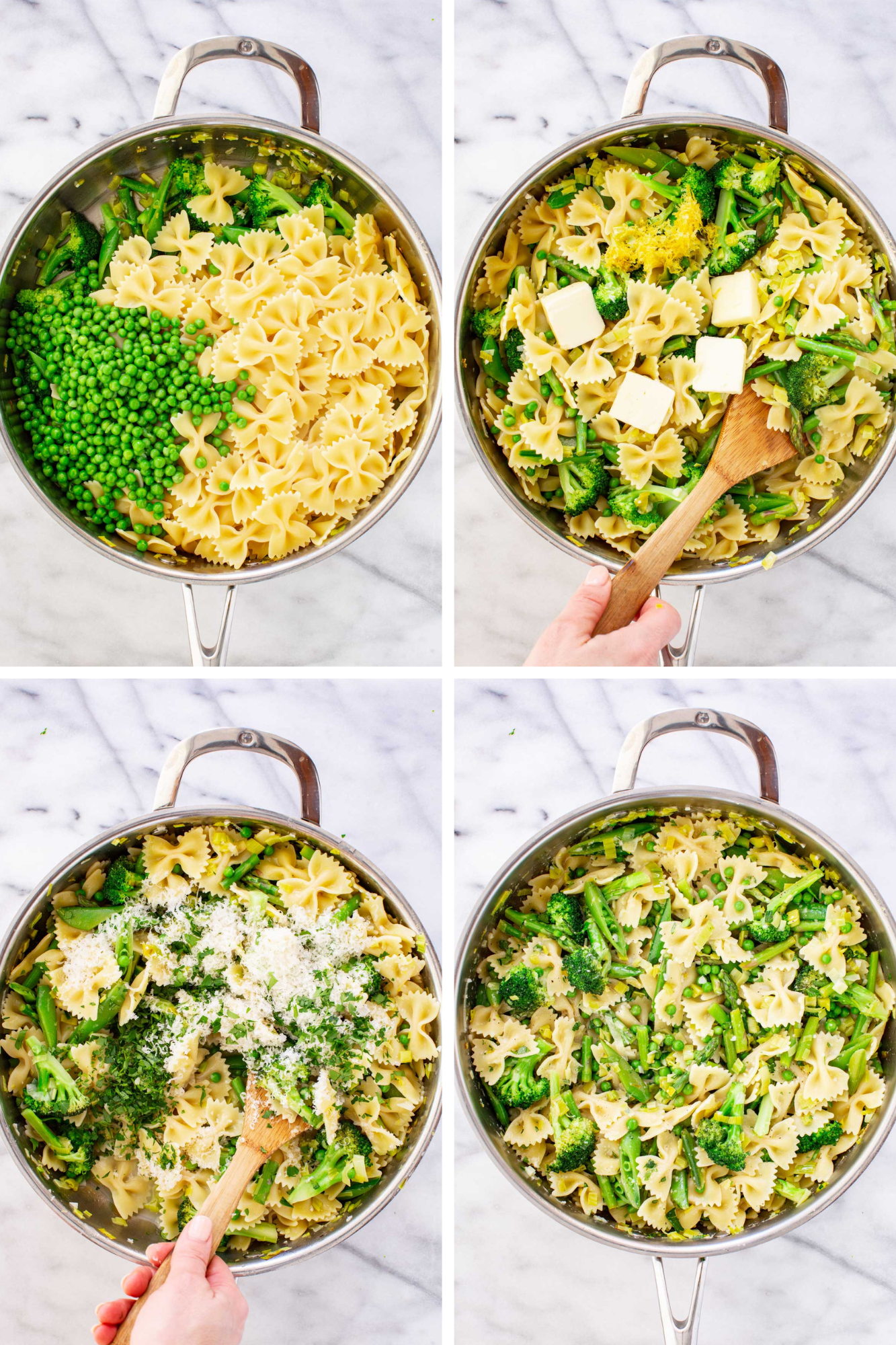
- When the pasta is ready, transfer it to the pan along with the defrosted peas and about ½ cup of reserved pasta water.
- Toss everything together over medium heat, then add the butter, lemon zest, and lemon juice. Toss vigorously until the butter melts and emulsifies with the pasta water.
- Add the grated Parmigiano Reggiano and half of the parsley, then continue tossing until the pasta becomes glossy and well coated. Add a splash of more pasta water if needed to loosen the sauce.
Pro Tip: Turn the heat to low or remove the skillet from the stove when adding cheese to avoid it splitting or seizing.
- Taste and adjust seasoning with salt, black pepper, and additional lemon juice if needed.
- Serve immediately with the remaining parsley and extra Parmigiano Reggiano on top.
Tips for the Best Pasta Primavera
- Clean the leeks really well between all layers before cutting. They can be very sandy.
- Defrost the peas before adding so they can be instantly incorporated towards the end of the cooking process. Otherwise, they will cool everything down and make it harder to bring the sauce together.
- Cut all of the vegetables roughly the same size so they cook evenly and distribute well throughout the pasta.
- If the pasta looks dry, add small splashes of pasta water while tossing until the sauce becomes glossy and lightly coats the pasta.
- Don't overcook the veggies, they only need a few seconds in the boiling water. They will continue cooking when being tossed with the pasta and sauce so it's important to follow the recommended cooking times.
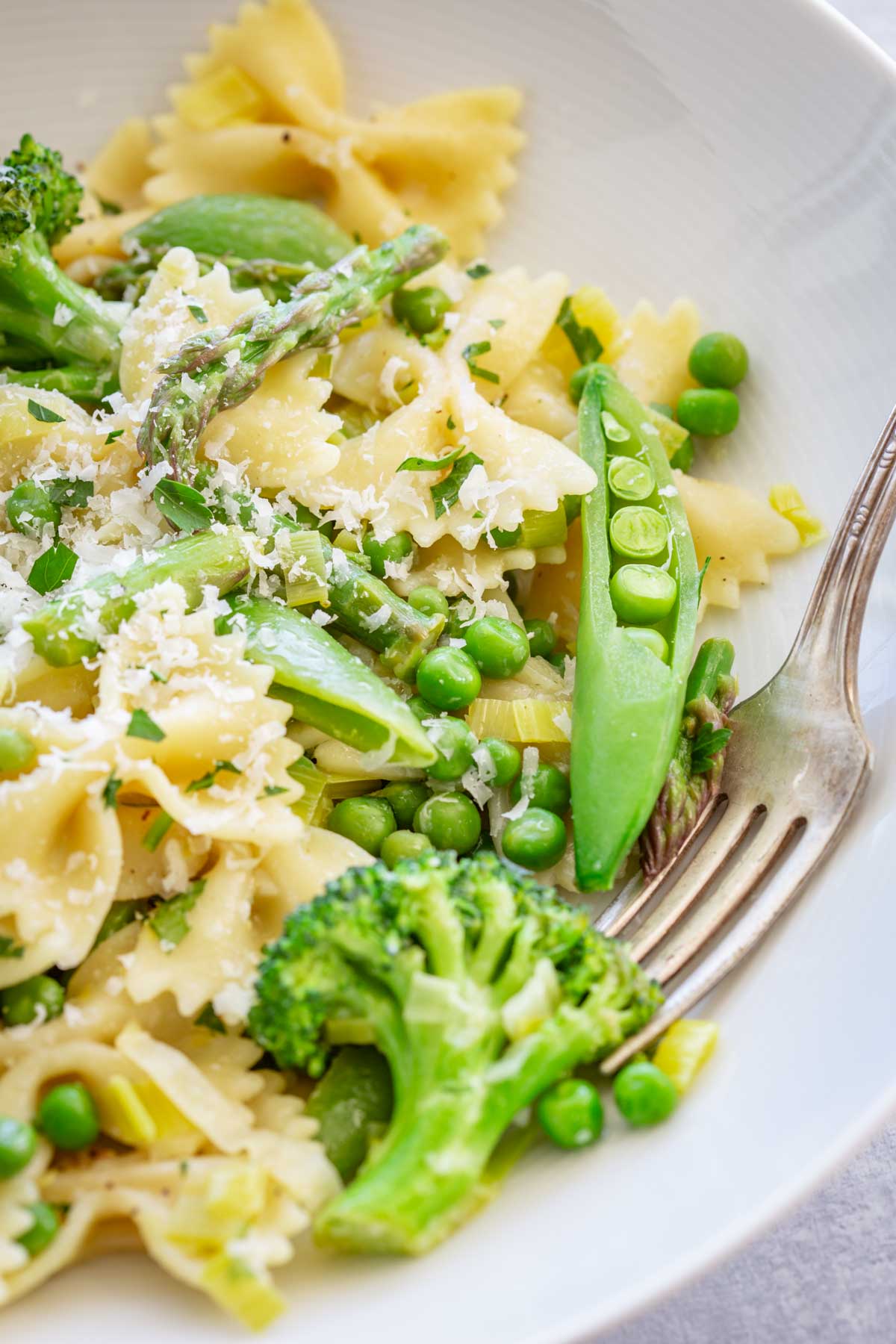
Primavera Pasta Variations and Substitutions
- Substitute leeks with scallions or spring onions for a stronger flavor.
- Replace asparagus, broccoli or snap peas with artichokes, fennel, fava beans, broccolini, spinach, baby kale, snow peas, ramps, or radishes.
- Finish the dish with other soft herbs instead of parsley, like mint, chives, tarragon, chervil, basil, or a mix.
- For a richer finish, add a few spoonfuls of crème fraîche into the sauce along with the butter. The tangy, light profile of crème fraîche perfectly complements the other flavors!
- Use Pecorino Romano, Grana Padano, or even caciocavallo or asiago instead of Parmigiano for a slightly different flavor.
What to Serve with this Recipe For Pasta Primavera
This recipe doesn't really need sides for a nice weeknight dinner, but a hunk of chewy homemade focaccia or any crusty bread is ideal for mopping up the sauce.
I usually serve it with a simple no fuss salad like this easy arugula salad, a spring shaved asparagus salad with Pecorino, or a basic mixed greens with homemade croutons and a classic vinaigrette.
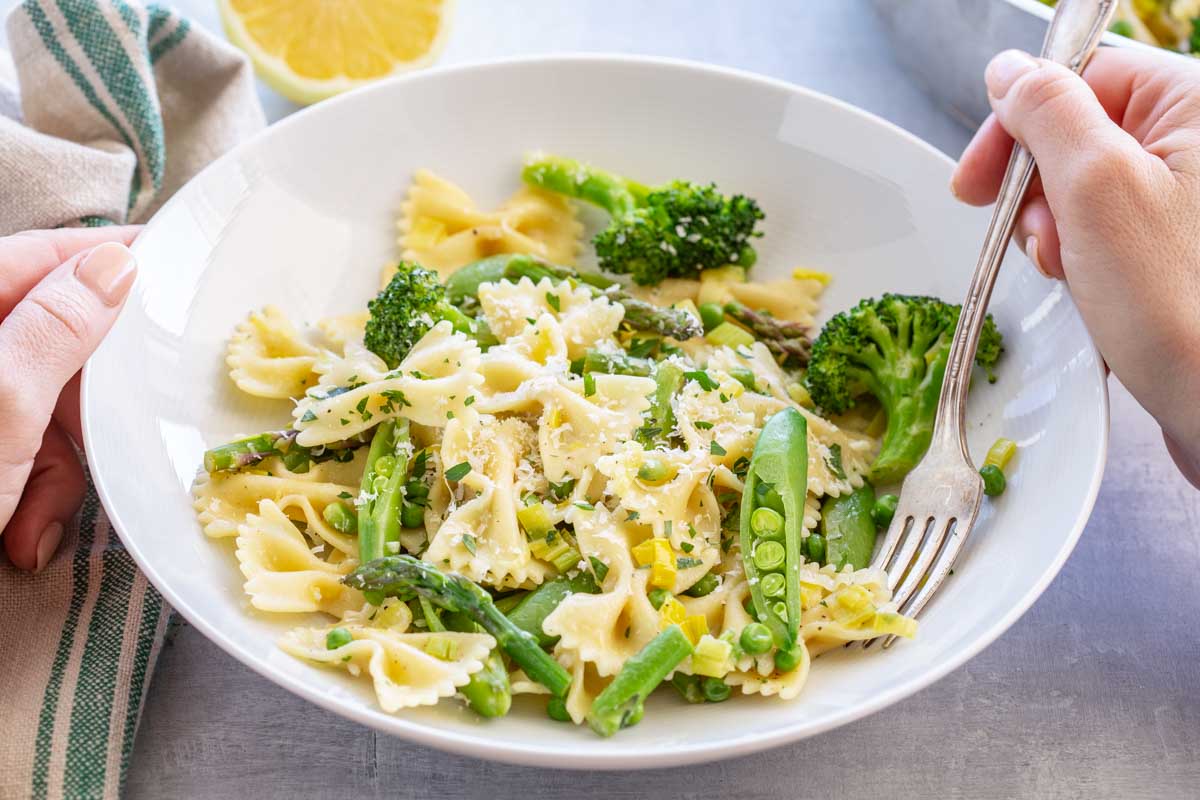
Storing Leftover Primavera Pasta
Pasta should always be cooked and served right away for the best texture. If you have leftovers, store them in an airtight container in the refrigerator for up to 3 days. Reheat gently in a skillet over medium heat with a splash of water to loosen the sauce.
Primavera Pasta FAQs
Not typically, since it usually includes butter, cream or cheese. To make this recipe vegan, replace butter with extra olive oil or use vegan butter instead and replace the parmesan with nutritional yeast.
This recipe is served hot, but is also great served at room temperature or cold, especially if you have leftovers.
No. Pasta primavera, as Americans know it today, is an old-school Italian American recipe that became popular in New York City in the 1970s. However, pasta tossed with spring vegetables is something widely eaten in Italy when in season.
No, this is not recommended. Both the pasta and the vegetables will lose their optimal texture after being thawed and reheated.
Did you LOVE this recipe? Please leave a star ⭐️ rating and comment and tag your creations @ColeyCooks on Instagram!
Want to Save This Recipe?
Enter your email & I'll send it to your inbox.
By submitting this form, you consent to receive emails from Coley Cooks.
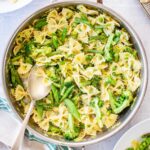
Pasta Primavera with Asparagus, Broccoli and Peas
Ingredients
- kosher salt
- 2 cups broccoli florets about ½ lb
- ½ lb asparagus woody ends removed, cut into 2 inch pieces (about 1 ½ cups)
- 1 cup snap peas halved on a bias
- 12 ounces short pasta such as farfalle, rigatoni, orecchiette or cavatappi
- 3 tablespoons extra virgin olive oil
- 1 leek large size, white and light green parts only, very thinly sliced
- 2 garlic cloves very finely minced
- ½ cup dry white wine
- 1 cup frozen peas defrosted
- 3 tablespoons unsalted butter
- 1 lemon zested and juiced
- ½ cup Parmigiano Reggiano finely grated, plus more for serving
- freshly cracked black pepper
- ¼ cup flat leaf parsley finely chopped
Instructions
- Bring a large pot of water to a boil and season generously with salt.kosher salt
- Add the broccoli to the pot and cook for 30 seconds, then use a slotted spoon to remove and drain on a clean tea towel.2 cups broccoli florets
- Repeat with the asparagus and snap peas, but cook them for no more than 15-20 seconds.½ lb asparagus, 1 cup snap peas
- Add the pasta to the boiling water and cook until just shy of al dente according to the package instructions. Be sure to reserve some of the cooking water.12 ounces short pasta
- Heat the olive oil in a large skillet over medium heat. Add the sliced leeks with a pinch of salt and cook, stirring frequently, until soft and just starting to turn translucent, about 4 minutes.3 tablespoons extra virgin olive oil, 1 leek
- Add the garlic and cook for about 30 seconds or until fragrant, then pour in the white wine and let it simmer for about 1 minute to cook off the alcohol.2 garlic cloves, ½ cup dry white wine
- Add the broccoli, asparagus, and snap peas to the pan and toss to combine.
- When the pasta is ready, transfer it to the pan along with the defrosted peas and about ½ cup of reserved pasta water.1 cup frozen peas
- Toss everything together over medium heat, then add the butter, lemon zest, and lemon juice. Toss vigorously until the butter melts and emulsifies with the pasta water.3 tablespoons unsalted butter, 1 lemon
- Add the grated Parmigiano Reggiano and half of the parsley, then continue tossing until the pasta becomes glossy and well coated. Add a splash of more pasta water if needed to loosen the sauce.½ cup Parmigiano Reggiano, ¼ cup flat leaf parsley
- Taste and adjust seasoning with salt, black pepper, and additional lemon juice if needed.freshly cracked black pepper
- Serve immediately with the remaining parsley and extra Parmigiano Reggiano on top.
Notes
- Clean the leeks really well between all layers before cutting. They can be very sandy.
- Defrost the peas before adding so they can be instantly incorporated towards the end of the cooking process. Otherwise, they will cool everything down and make it harder to bring the sauce together.
- Cut all of the vegetables roughly the same size so they cook evenly and distribute well throughout the pasta.
- Cooking the pasta in the same water as the vegetables saves on time and dishes, and allows the pasta to absorb some of the nutrients from the veggies.
- If the pasta looks dry, add small splashes of pasta water while tossing until the sauce becomes glossy and lightly coats the pasta.
- Don't overcook the veggies, they only need a few seconds in the boiling water. They will continue cooking when being tossed with the pasta and sauce so it's important to follow the recommended cooking times.
- Turn the heat to low or remove the skillet from the stove when adding cheese to avoid it splitting or seizing.