10+ Best Pesto Recipes
This collection of pesto recipes ranges from classic Italian basil pesto to fresh, seasonal twists made with herbs, vegetables and more. Whether you're making homemade pesto for pasta, seafood or sandwiches, these versatile sauces are also perfect for making ahead and stashing in the freezer for later.
This post may contain affiliate links.
When most people think of pesto, they picture pesto Genovese, the classic basil and pine nut sauce from Liguria. But pesto isn't one specific recipe.
The word pesto comes from the Italian verb pestare, meaning "to pound" or "crush," referring to the traditional method of making it with a mortar and pestle.
Throughout Italy, you'll find regional pestos made with different combinations of herbs, nuts, cheese, vegetables and olive oil.
In Sicily, pesto alla Trapanese combines tomatoes, almonds, basil and Pecorino, while pistachios are used throughout the island to make a rich, nutty pesto that's different from the Genovese version common in northern Italy.
Once you understand the basic idea of how pesto is made, it's easy to mix it up with all kinds of ingredients, from spinach and arugula to garlic scapes, ramps and other seasonal herbs and vegetables.
That's one of the things I love most about pesto. It's endlessly adaptable and one of the best ways to use whatever is fresh and in season.
How to Keep Pesto Bright Green
If you want pesto with a really vibrant green color, blanching the basil first makes all the difference.
Give it a quick dip in heavily salted boiling water for about 10 seconds, then immediately shock it in ice water to stop the cooking and lock in that bright green color. Make sure to dry it well before using.
Once pesto is made, try to keep air from touching the surface. Exposure to oxygen causes the herbs to turn brown, so if you're not using it right away, drizzle a thin layer of olive oil over the surface or press plastic wrap directly against the pesto.
It's a simple little trick that helps preserve both the fresh flavor and beautiful green color!
Classic Italian Pesto Recipes
There's a lot more to Italian pesto than basil and pine nuts! From Liguria down to Sicily, you'll find different versions made with the ingredients that grow best in each region. These classic recipes are a great place to start if you want to explore pesto beyond the familiar Genovese version.
Classic Basil Pesto
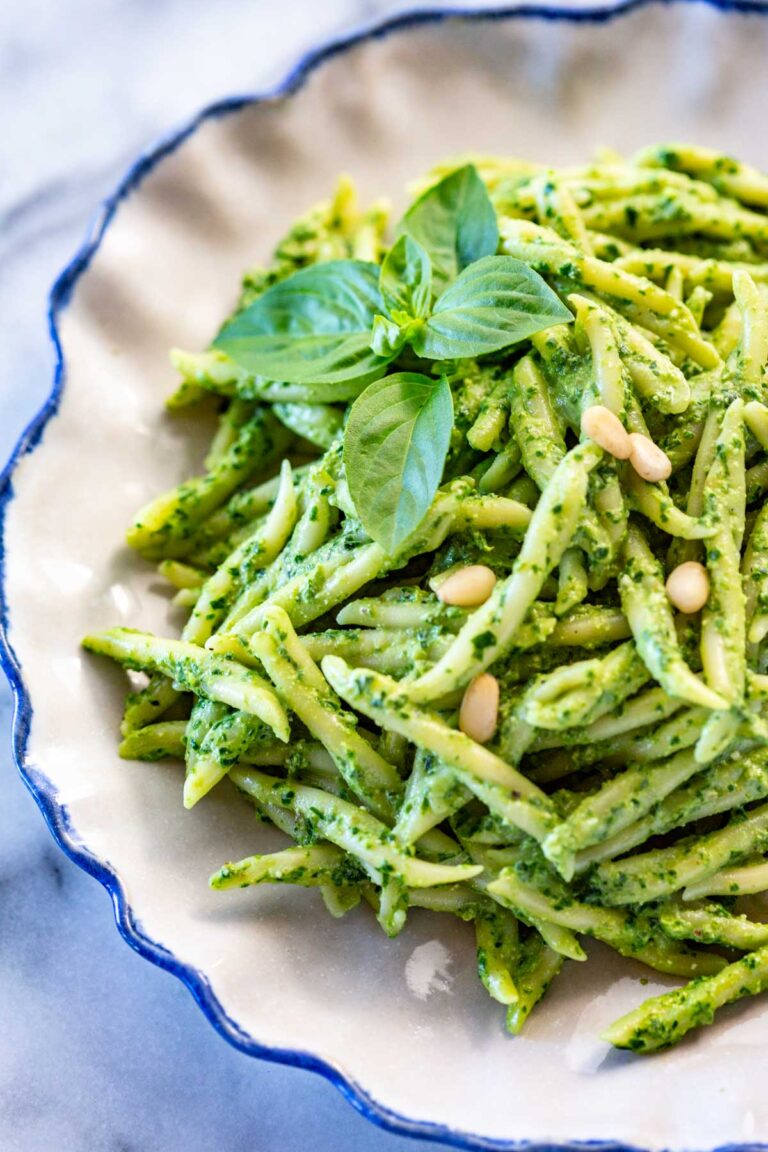
Classic pesto Genovese is made with fresh basil, pine nuts, garlic, Parmigiano Reggiano, and plenty of good extra virgin olive oil. It comes together in just 5 minutes and is perfect for tossing with pasta, spreading on sandwiches, or spooning over grilled meats and vegetables.
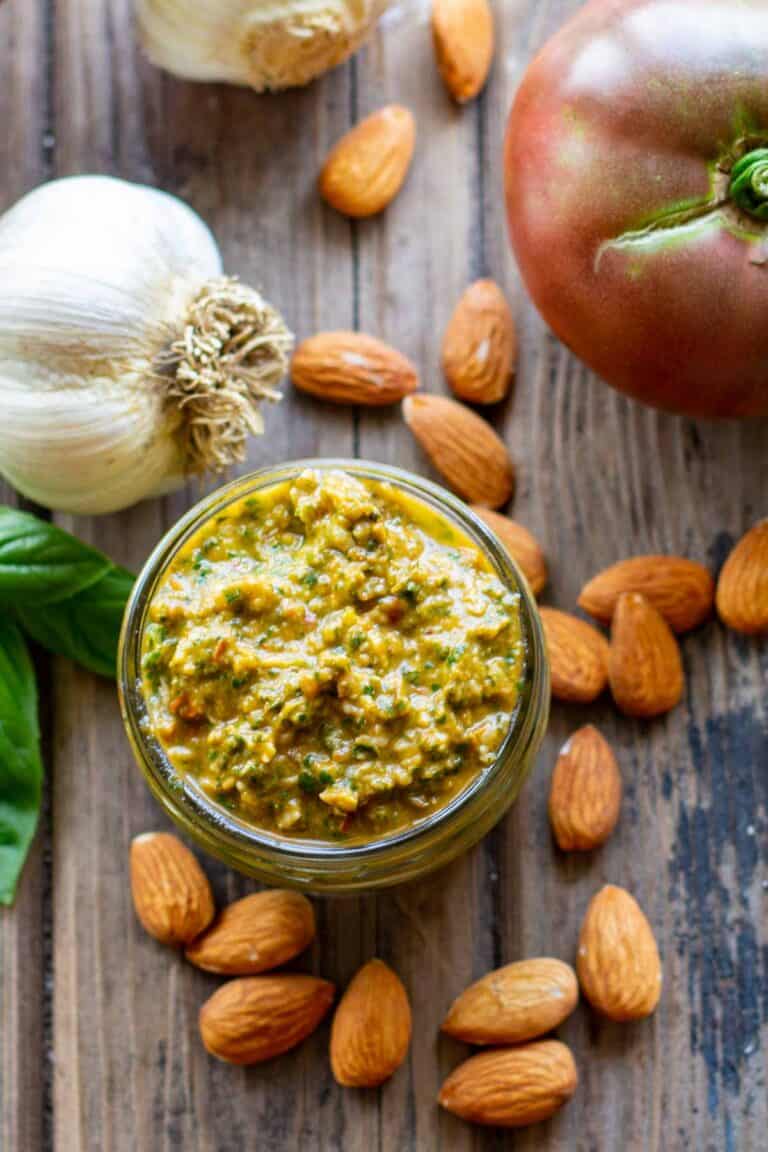
Sicilian Pesto alla Trapanese
This pesto is especially close to my heart since my grandfather's family came from Trapani, where it originated. It's made with ripe tomatoes, fresh basil, almonds, and Pecorino for a pesto that's lighter and tangier than the Genovese version, and absolutely perfect tossed with pasta or smeared on crusty bread.

Sicilian Pistachio Pesto
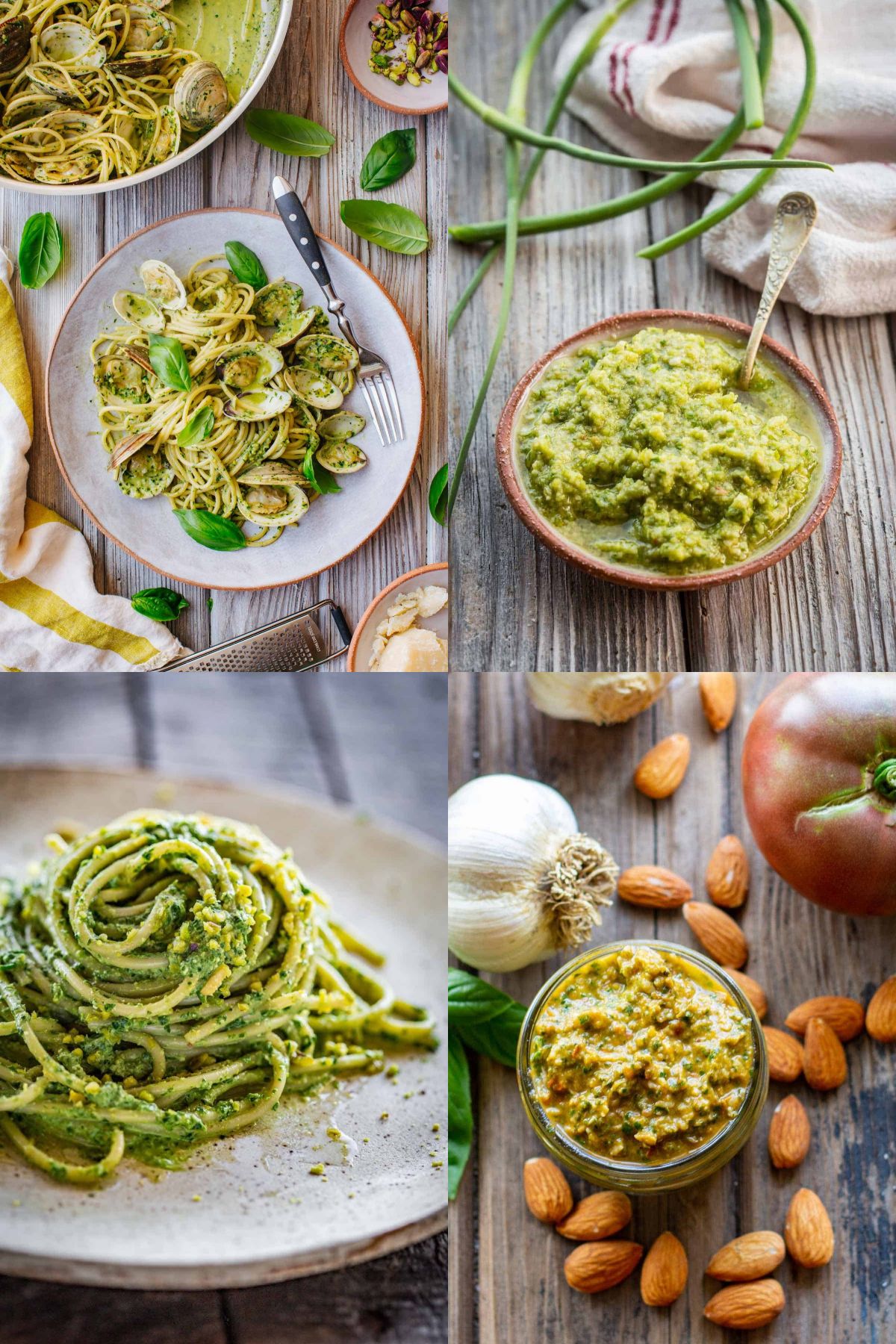
Inspired by the pistachio pesto I couldn't stop eating on a trip to Sicily, this version swaps the usual pine nuts for fresh, crunchy pistachios. It's nutty, salty, packed with fresh basil, and so good tossed with pasta, spread on focaccia, or spooned over simply cooked seafood.
Vegetable & Herb Pesto Recipes
Basil may get all the attention, but you can turn all kinds of fresh vegetables, herbs, and greens into an incredible pesto. It's one of my favorite ways to make the most of what's growing in the garden or lingering in the fridge. Once you get the basic technique down, the possibilities are endless!

Spicy Long Hot Pesto
If you like a little heat, this spicy long hot pepper pesto is such a fun twist. Roasted long hots add a smoky, fiery kick, while sweet almonds, fresh basil, and Pecorino Romano balance everything out. Toss it with pasta, spoon it over grilled meat or seafood, or do what I do and slather it on an Italian sandwich.

Garlic Scape Pesto
Garlic scapes only show up for a few short weeks, and I wait for them every year just so I can make this pesto. They have a fresh, mild garlicky flavor that gets blended with toasted pine nuts, Parmigiano, lemon, and good olive oil for a bright, punchy sauce that's a true early summer treat.
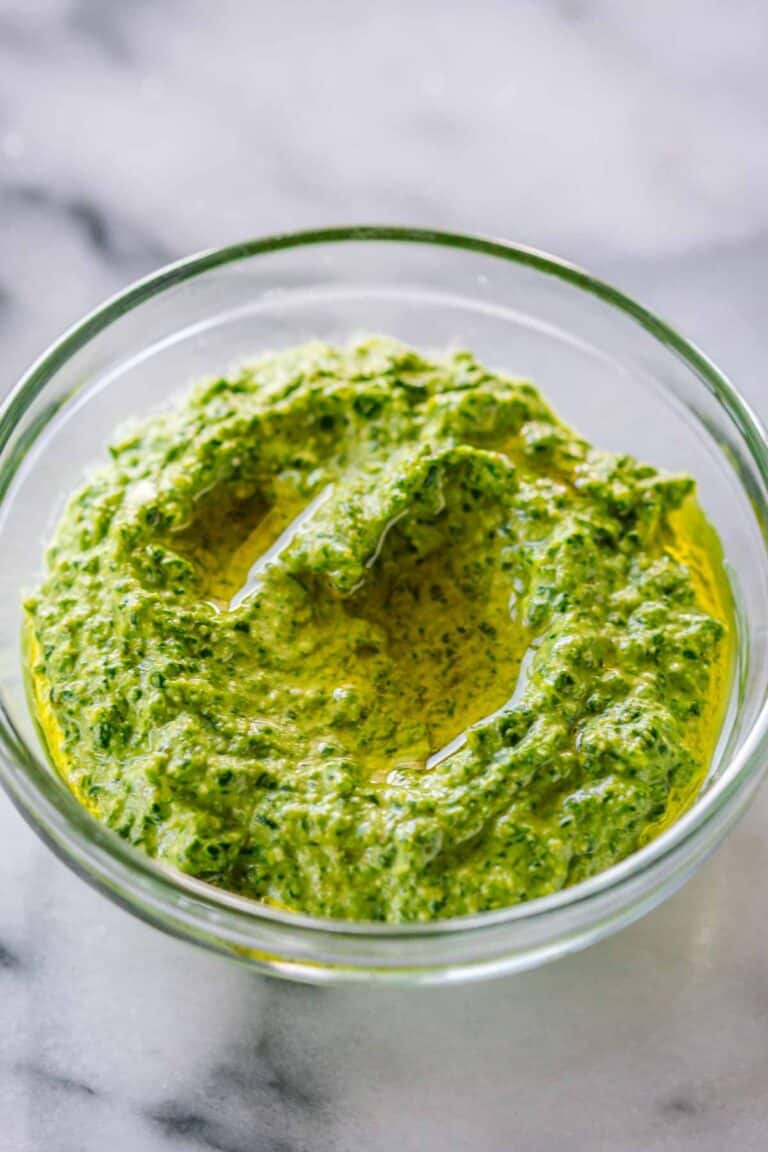
Spinach Walnut Pesto
Don't let the spinach fool you, this pesto is every bit as rich and satisfying as the classic. Buttery toasted walnuts give it an extra creamy texture, while fresh lemon keeps things bright, and the whole thing blends up in less than 10 minutes.
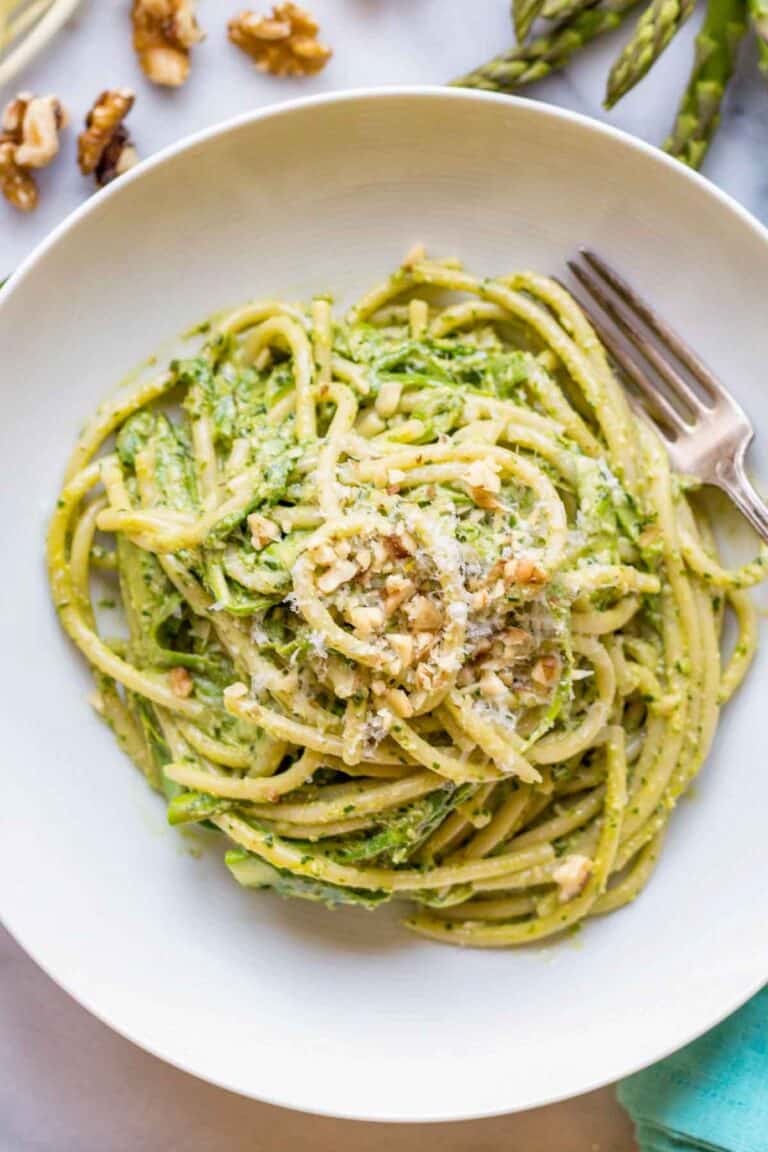
Ramp Pesto Pasta
If you're lucky enough to spot ramps at the farmers market, grab them while you can and make this pasta! Their punchy, garlicky flavor makes an incredible pesto, while sweet shaved asparagus and fresh lemon balance everything out for an easy spring dinner that's ready in under 30 minutes.
Meals Made with Pesto
Don't limit pesto to a bowl of pasta! It's one of my favorite secret weapons for turning simple ingredients into something really delicious. These easy meals put pesto to work in all kinds of ways, making it one of the most useful sauces to keep in your back pocket.
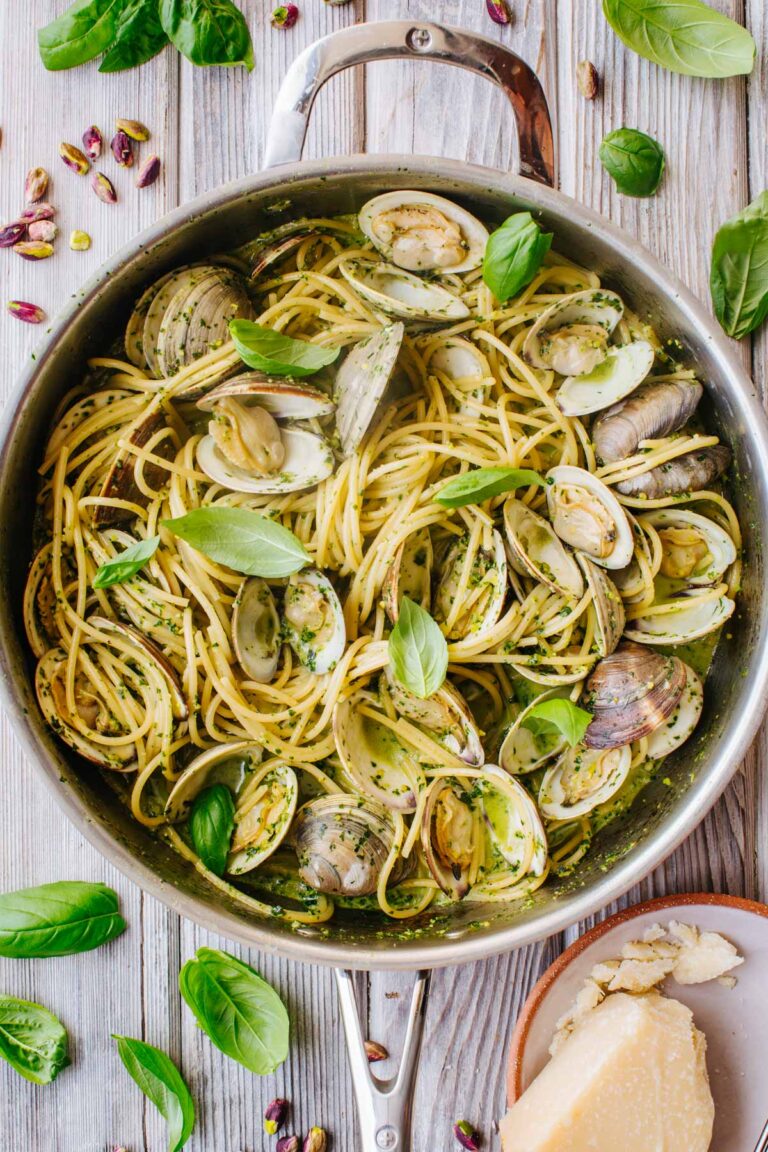
Pistachio Pesto Pasta And Clams
Pistachio pesto and spaghetti alle vongole might not be an obvious pairing, but trust me, they are incredible together! The rich, nutty pesto mellows out the briny clams, while a splash of white wine and cream ties everything together into one seriously special pasta.

Ricotta Pesto Pasta
This is one of those recipes I reach for again and again when I need dinner fast. Ricotta and pesto come together with a splash of pasta water to make an incredibly creamy, flavorful sauce, and with just three main ingredients and 15 minutes, sometimes less really is more in the kitchen.

Baked Fish with Arugula Pesto
This is one of my favorite spring dinners because everything cooks on one sheet pan and the pesto does all the heavy lifting. The peppery arugula pesto is fresh, pungent, and perfect spooned over juicy baked fish and caramelized spring vegetables, with plenty of lemon to wake everything up.
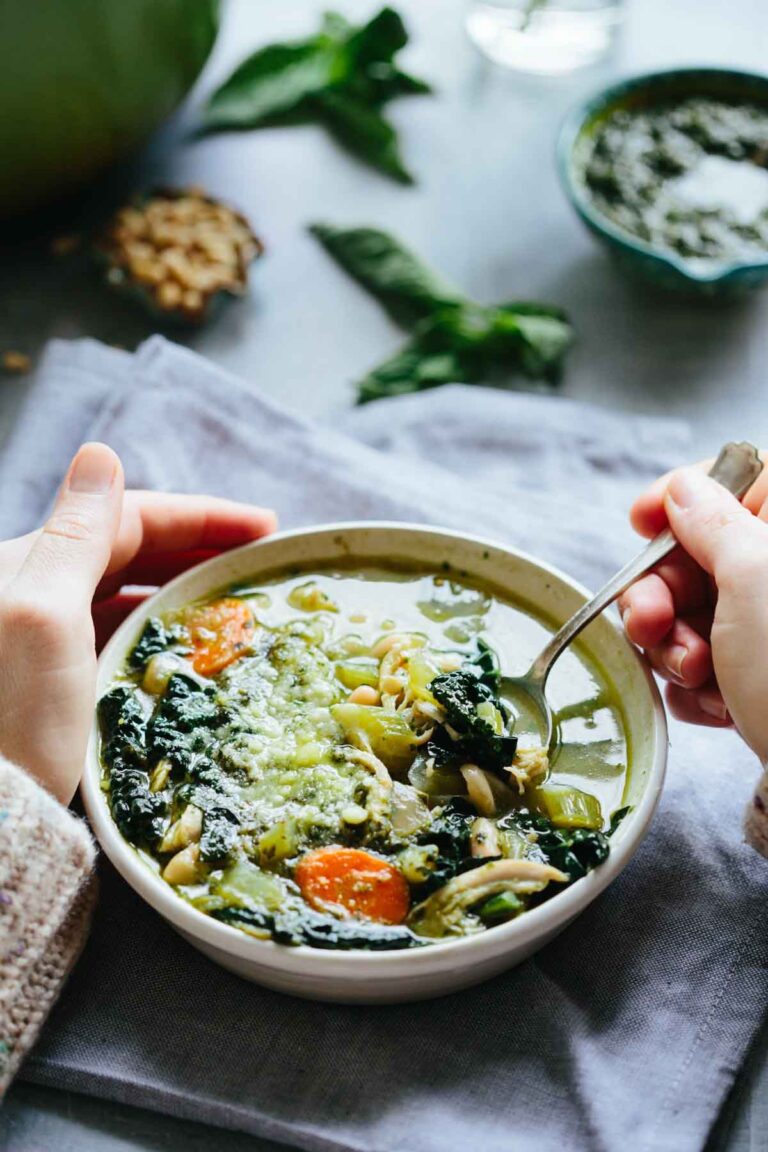
Pesto Chicken Kale Soup
This is the first soup I make when summer starts winding down! Tender chicken, creamy white beans, and hearty kale make it satisfying, but the swirl of fresh pesto and squeeze of lemon keep it bright and fresh. Even better, it comes together in just 30 minutes and works with just about any pesto you have on hand.
Tips for Making the Best Pesto
- Start with the best ingredients. Pesto is simple, so there's nowhere for mediocre ingredients to hide. Use fresh herbs and vegetables, good-quality extra virgin olive oil, freshly grated Italian cheese, and fresh nuts for the best flavor.
- Toast the nuts to bring out their natural oils and give the pesto a deeper, nuttier flavor. Toast your nuts very gently and don't let them get too dark or it will cause your pesto to be bitter. Make sure they're completely cool before blending them with fresh herbs.
- Pesto should have some texture, not a completely smooth puree. Pulse the ingredients just until everything is finely chopped, then stream in the olive oil until it reaches the consistency you like.
- Always grate your own cheese. Freshly grated Parmigiano Reggiano or Pecorino Romano has much better flavor and incorporates more smoothly than the pre-grated stuff.
- Italian cheeses can be pretty salty, so blend everything together first, then taste and adjust the salt as needed.
Ways to Use Homemade Pesto
Pasta might be the obvious choice, but there are so many ways to use homemade pesto. I love it spooned over grilled fish, shrimp, chicken, or steak, or tossed with grilled vegetables for an easy summer side.
Add a dollop on top of grilled eggplant, whisk it into a homemade vinaigrette for a simple salad, or drizzle it over a fresh Caprese salad or these grilled eggplant Caprese stacks for an extra punch of flavor.
Pesto is also one of my favorite ways to dress up a sandwich. Slather it onto an Italian roll with a crispy chicken cutlet, melted fresh mozzarella, and spicy roasted long hot peppers or roasted red peppers, or use it on burgers, panini and wraps.
It's also incredible spooned onto pizza made with Neapolitan pizza dough in place of tomato sauce.
For an easy appetizer, spread stracciatella cheese onto homemade crostini and top it with thinly sliced prosciutto and a little pesto.
It's worth keeping around because just a spoonful can make something simple taste so much better!
How to Store and Freeze Pesto
Store leftover pesto in an airtight container in the refrigerator for up to 5 days. Pour a thin layer of olive oil over the top to help prevent oxidation and preserve the color and flavor.
I love making big batches of pesto to freeze for later!
Freeze it in ice cube trays, small jars, or freezer-safe containers with a little room for expansion. Once frozen solid, transfer the frozen portions to a zip-top freezer bag. That way you can pull out exactly what you need.
Pesto FAQs
Absolutely! You can make pesto with all kinds of fresh herbs, leafy greens, and vegetables. Spinach, arugula, ramps, garlic scapes, parsley and even peppers are all fair game.
Parmigiano Reggiano is my go-to for most pesto recipes because it has a rich, nutty flavor without being too sharp. Pecorino Romano is saltier and more assertive, and I especially love it in Sicilian pestos. Whichever you choose, use the good stuff and grate it fresh. It really does make a difference.
Pine nuts are traditional in pesto Genovese, but they're definitely not your only option. Walnuts, pistachios, almonds, cashews and pecans all make fantastic pesto and each brings something a little different to the table. You can also use pumpkin seeds or sunflower seeds for a nut-free version.
Pesto can turn bitter if the garlic is too strong, the nuts are over-toasted, or the olive oil has a particularly bitter flavor. Over-processing can also make the flavors more harsh. Start with fresh, high-quality ingredients, toast the nuts just until fragrant, and pulse the pesto only as much as needed. If it still tastes bitter, a little extra cheese or a squeeze of lemon can help balance it out.