The Best Fresh Tuna Recipes
Fresh tuna is an incredibly simple protein to cook when you start with a great piece of fish. These fresh tuna recipes range from perfectly seared tuna steaks to elegant raw preparations and hearty salads, along with my best chef tips for choosing, preparing and cooking fresh tuna with confidence.
This post may contain affiliate links.
How to Choose the Best Fresh Tuna
Look for sustainably sourced tuna with firm, smooth flesh and a vibrant red or deep pink color, depending on the variety. It should smell clean and fresh like the ocean. The quality of the fish will make all the difference.
You don't always need to buy tuna that was caught the same day. High-quality frozen tuna from a reputable source can be just as delicious. Here's what to know before you buy.
Bluefin vs Yellowfin vs Albacore Tuna
There are several different species of tuna, but bluefin, yellowfin (also called ahi) and albacore are the ones you're most likely to find.
Bluefin is prized for its rich, buttery texture and high fat content, making it a favorite for sushi, sashimi, crudo and tartare.
Yellowfin has a firmer texture and a clean, meaty flavor that makes it incredibly versatile. It's my go-to for grilled and seared tuna steaks, but it's also delicious served raw.
Albacore is lighter in color with a milder flavor and works well both cooked and raw.
How to Tell if Tuna Is Fresh
Freshness is everything. Look for tuna with smooth, firm flesh and a dark red or deep pink color, depending on the variety. It should smell clean and fresh like the ocean, never fishy.
Avoid tuna that's dull, gray, brown or has a slimy or mushy texture. These are signs the fish is past its prime. If you're buying tuna to eat raw, it's especially important to purchase it from a reputable fish market or seafood counter that handles fish properly.
Don't be afraid to ask your fishmonger questions, either. A good seafood counter should be happy to tell you where the tuna came from, when it arrived and how it should be prepared.
Frozen vs Fresh Tuna
Don't overlook frozen tuna. In many cases, high-quality frozen tuna is every bit as good as fresh. In fact, much of the premium tuna sold at seafood counters was previously frozen shortly after it was caught to preserve its quality.
The most important thing is to choose sustainably sourced tuna from a reputable fish market or supplier. If you're using frozen tuna, thaw it slowly in the refrigerator overnight and keep it well chilled until you're ready to prepare it.
Some frozen tuna is treated with carbon monoxide before freezing to preserve its bright color. This is problematic because it can disguise poor quality and spoilage, making the fish appear fresher and better than it is.
For this reason, CO treated fish is actually banned in many countries, including the EU and Japan. To avoid buying carbon monoxide treated tuna, look for labels indicating the fish was "never gassed," "CO-free," or "super-frozen".
What does Sushi Grade mean?
Despite how common the term is, "sushi-grade" isn't an official or regulated designation. Instead, it's a label used by fish markets and suppliers to indicate that the fish is high quality and intended to be eaten raw.
Look for fish that's been handled properly, kept very cold and has a clean smell, firm texture and vibrant color.
I always recommend using the freshest, highest quality tuna you can find, whether it's labeled sushi-grade or sashimi-grade. If you have any doubts, ask your fishmonger if the tuna is suitable for eating raw. A reputable seafood counter should be able to answer that question with confidence.
In my opinion, high-quality tuna is at its absolute best when served rare.
For seared tuna, I like to cook it over very high heat for just 30 to 60 seconds per side. This creates a beautifully caramelized crust while keeping the center cool, buttery, and tender, just like you'd find at a great sushi restaurant. The cooked portion should only extend about ¼ inch into the fish from each side.
Of course, if you prefer your tuna more well done, you can absolutely cook it longer. Just keep in mind that tuna becomes drier and firmer the more it's cooked, so I recommend removing the fish from the heat when it's no more than medium-well and the carryover cooking will cook it all the way through.
The Best Fresh Tuna Recipes
Fresh tuna is one of the most versatile fish you can cook. Whether you prefer it seared, sliced paper-thin, or served completely raw, these recipes celebrate its clean, buttery flavor with simple preparations that let the fish shine.
Grilled Tuna Steaks
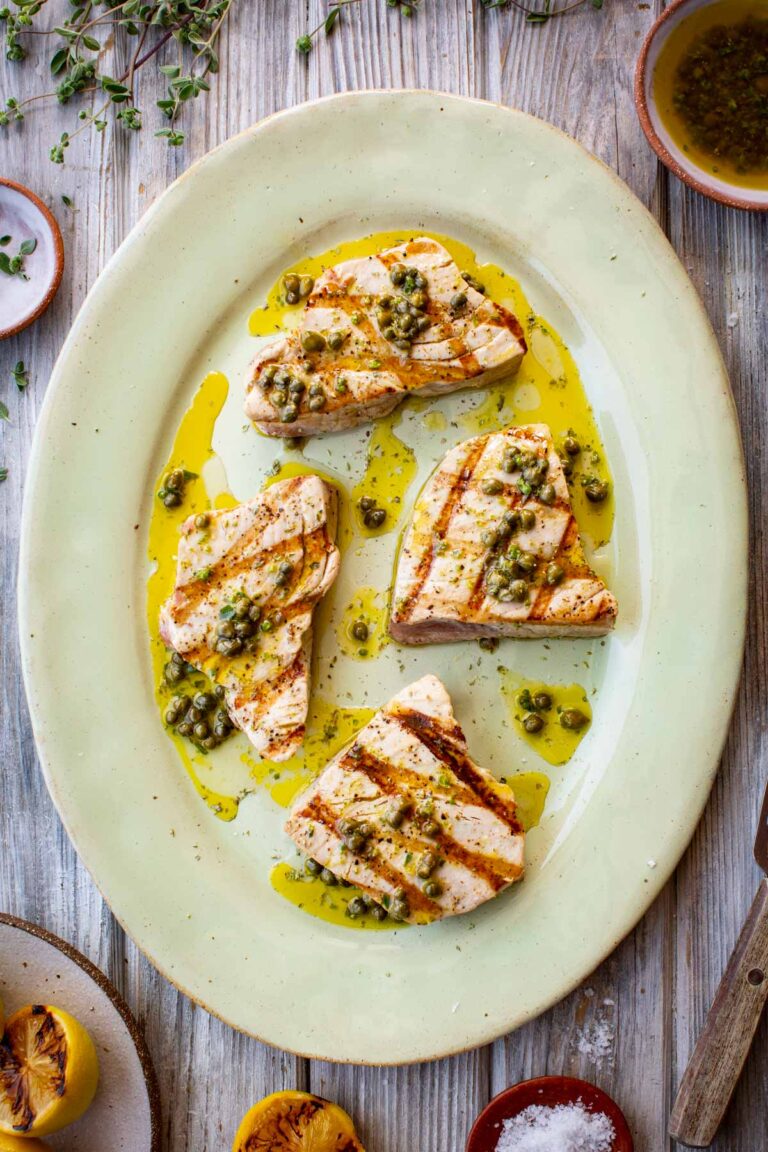
Fresh tuna doesn't need much when it's cooked right! These grilled tuna steaks are charred on the outside and buttery and rare in the center, then finished with a dead simple Sicilian-inspired lemon caper sauce. Best of all, they're ready in just 15 minutes.

Seared Tuna Steaks
Mastering perfectly seared tuna is easier than you think, and this foolproof technique delivers restaurant-quality results every time. A quick sear over high heat creates a beautifully caramelized crust while keeping the center buttery, tender, and perfectly rare.

Tuna Tartare
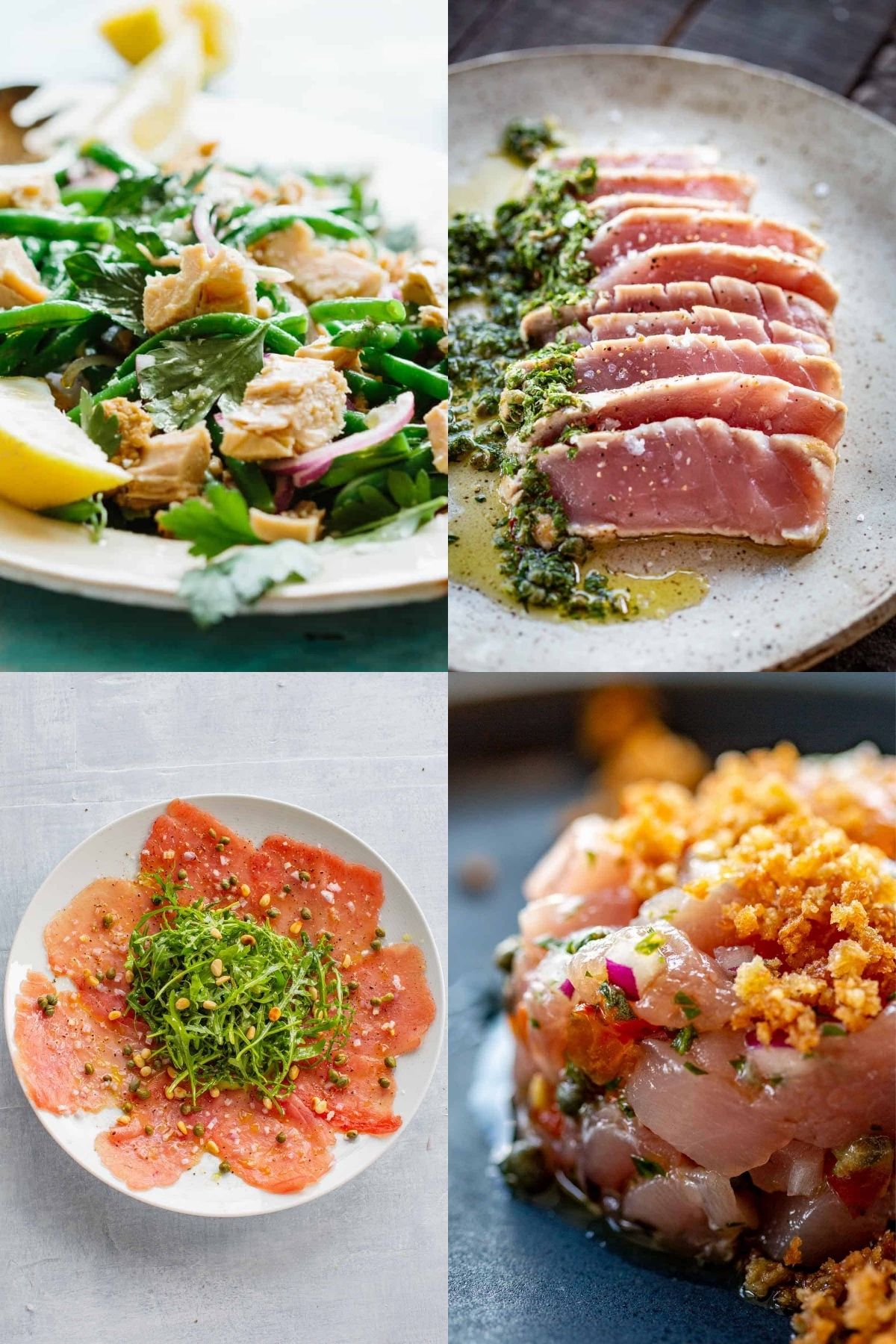
This Italian-inspired tuna tartare celebrates the clean, buttery flavor of fresh sushi-grade tuna with bright lemon, tomatoes, capers, and olive oil. A shower of crispy garlic breadcrumbs adds the perfect crunch, making this elegant appetizer every bit as impressive as it is easy to prepare.
Grilled Tuna Nicoise Salad
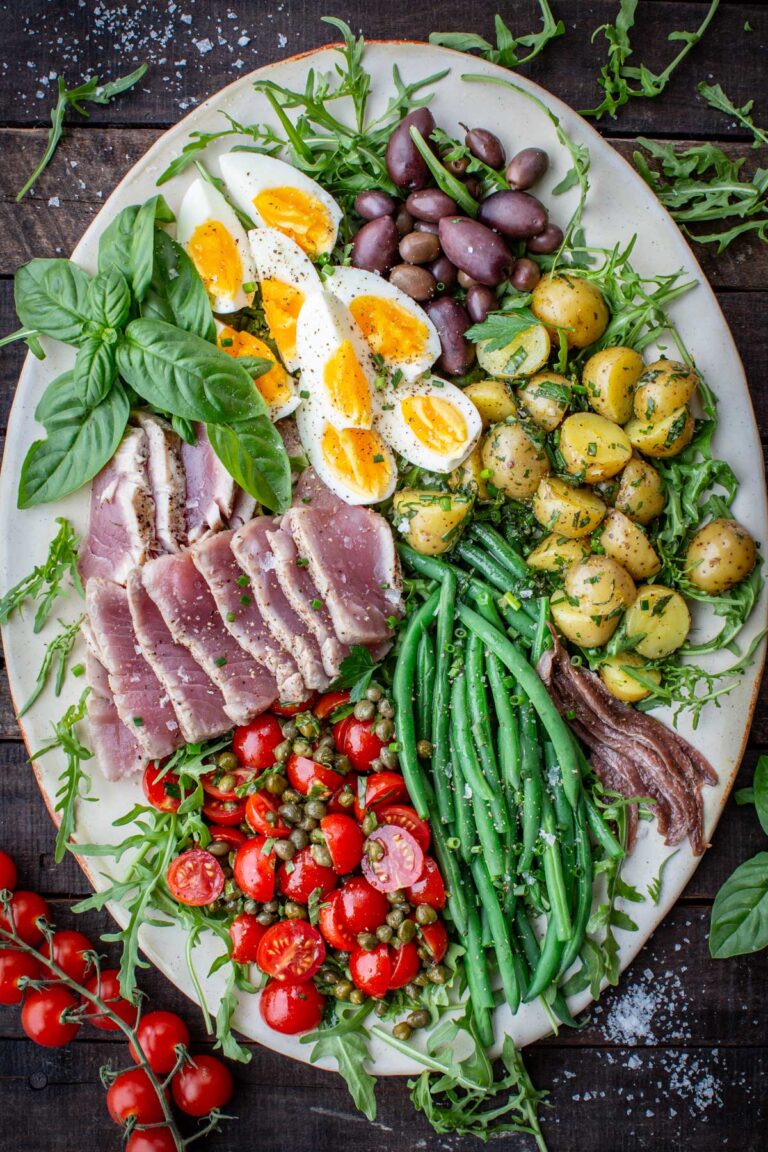
A perfectly seared tuna steak transforms the classic French Niçoise salad into a hearty, satisfying meal. Tender potatoes, crisp green beans, juicy tomatoes, jammy eggs, olives, capers, and plenty of fresh herbs come together in a colorful salad that's packed with flavor in every bite.
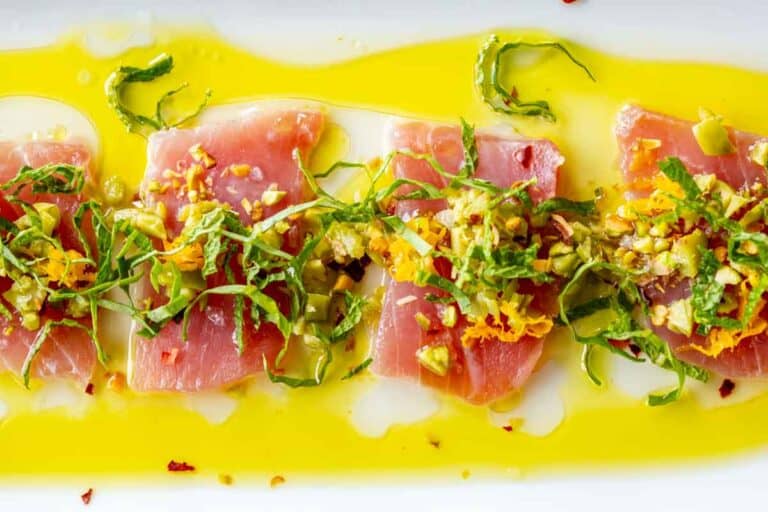
Sicilian Tuna Crudo
Inspired by the bright, bold flavors of Sicily, this tuna crudo is one of the simplest and most elegant ways to enjoy fresh raw tuna. Thin slices are finished with lemon, Castelvetrano olives, pistachios, fresh basil, flaky sea salt, and plenty of great olive oil for a light appetizer that lets the quality of the fish shine.
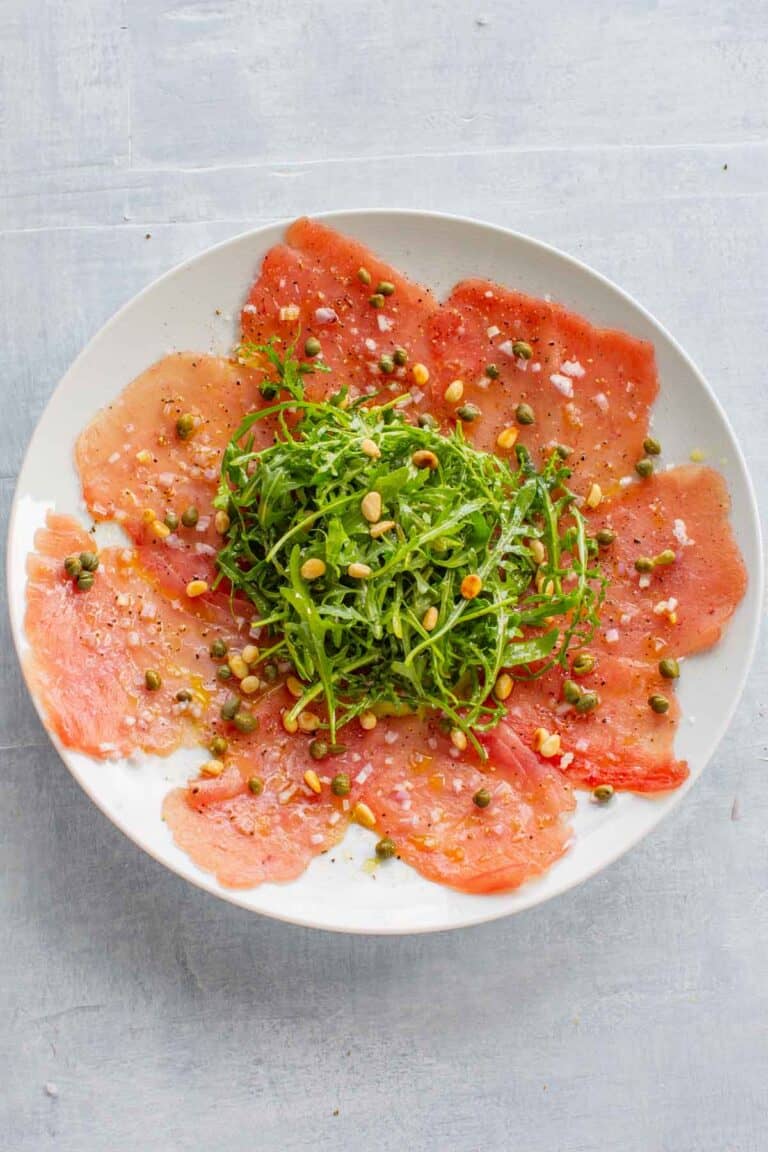
Classic Tuna Carpaccio
This classic Italian tuna carpaccio is one of my favorite ways to showcase incredibly fresh tuna. Paper-thin slices are dressed simply with lemon, extra virgin olive oil, capers, pine nuts, and peppery arugula, creating an elegant appetizer that lets the buttery texture and delicate flavor of the fish take center stage.
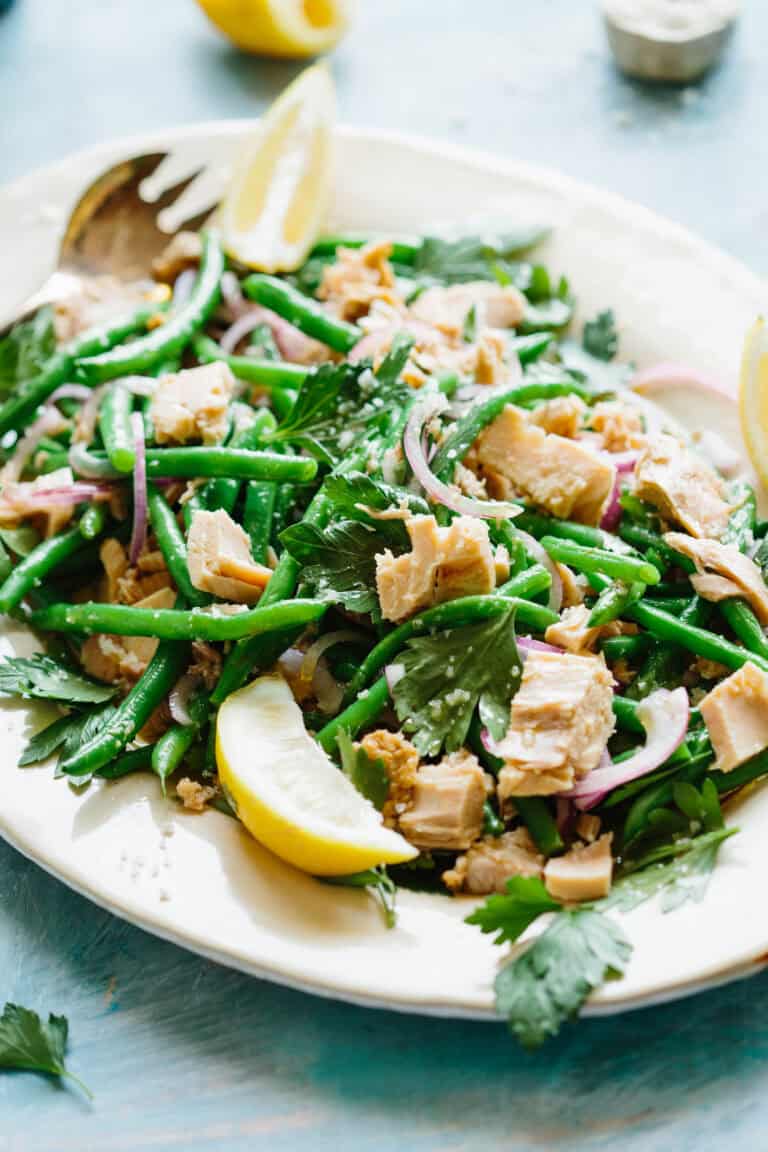
Italian Tuna Green Bean Salad
This simple Italian tuna and green bean salad proves that a handful of quality ingredients is all you need for a delicious meal. Make it with fresh tuna, leftover tuna or good quality oil-packed tuna Crisp green beans, lemon, and good olive oil make it the perfect light lunch, easy dinner or summer side.
Chef Tips for Cooking Tuna
- Buy the best quality tuna you can find. Look for sustainably sourced tuna with firm flesh, a vibrant color and a clean, fresh smell.
- If you're serving tuna raw or searing it rare, keep it refrigerated until just before cooking. For crudo, carpaccio, and tartare, pop it in the freezer for 30 to 60 minutes before slicing to firm it up.
- A sharp knife makes clean slices without tearing the delicate flesh, especially for raw preparations.
- When searing tuna, a very hot pan creates that beautiful caramelized crust while keeping the center rare and buttery. It only needs about 30 to 60 seconds per side.
- Tuna is best when it's still rare in the center. Cooking it too long can make it dry and firm instead of tender and silky.
- If you're making crudo, carpaccio, or tartare, add the salt and citrus right before serving so they don't begin to cure the fish.
What to Serve with Fresh Tuna
Fresh tuna has a rich, meaty texture that pairs well with bright, fresh flavors and simple sides. I love serving it with crisp salads, seasonal vegetables, or roasted fingerling potatoes, to let the tuna remain the star of the plate.
For an Italian-inspired meal, pair tuna with a simple arugula salad, roasted vegetables or crusty homemade focaccia.
Fresh herb sauces like Italian salsa verde or Sicilian salmoriglio also complement tuna beautifully without overpowering its delicate flavor.
For raw preparations like crudo, carpaccio, and tartare, I like to keep things simple. A few good accompaniments, like crusty bread or homemade crostini, marinated olives, homemade basil oil, fresh vegetables, or a crisp salad, are all you need to turn it into a beautiful meal.