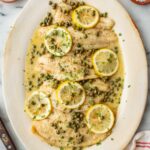
Easy Fish Piccata Recipe
This easy fish piccata is a restaurant-worthy weeknight dinner that can be on your table in only 20 minutes! Delicate fish fillets are lightly pan-seared until golden, then finished in a bright, buttery, lemon, white wine, and caper sauce that conveniently comes together right in the same pan. It’s a quick and delicious way to elevate a simple fish dinner!
Servings: 4
Calories: 450kcal
Ingredients
- 1 ½ pounds flaky white fish fillets like flounder, sole, branzino, grouper or sea bass
- ½ cup all purpose flour
- 1 teaspoon kosher salt
- ½ teaspoon black pepper freshly ground
- 3 tablespoons extra virgin olive oil plus more as needed
- 1 clove garlic smashed
- 4 tablespoons butter unsalted, divided
- ½ cup dry white wine
- ¼ cup lemon juice freshly squeezed
- ½ lemon very thinly sliced into rounds
- 3 tablespoons capers drained
- ¼ cup fresh parsley chopped
Instructions
- Pat the fish dry with paper towels. Cut larger fillets into smaller pieces if needed.1 ½ pounds flaky white fish fillets
- In a shallow dish, combine the flour, salt and pepper. Lightly dredge the fish and shake off excess flour.½ cup all purpose flour, 1 teaspoon kosher salt, ½ teaspoon black pepper
- Heat the olive oil and 1 tablespoon butter in a large skillet over medium heat.3 tablespoons extra virgin olive oil, 4 tablespoons butter
- Add the fish and cook until lightly golden and just cooked through, about 2 to 3 minutes per side. Transfer to a plate, then repeat with the remaining fillets. Cover to keep warm while you make the pan sauce.
- Add the white wine and garlic clove to the skillet and scrape up any browned bits. Simmer for about 2-3 minutes to burn off the alcohol and reduce slightly.1 clove garlic, ½ cup dry white wine
- Stir in the lemon juice, lemon slices, and capers, then simmer for another 1-2 minutes. Remove the garlic clove, then taste and adjust the seasoning as needed.¼ cup lemon juice, ½ lemon, 3 tablespoons capers
- Whisk in the remaining butter over low heat until the sauce becomes glossy. Stir in the parsley, then pour the sauce over the fish.¼ cup fresh parsley
Notes
- I don’t return the fish to the pan like I do with other proteins, like chicken, since it’s so delicate. Unless your fish is very firm, it can easily fall apart at this step. It can also easily overcook, so I just keep it warm on a plate, then pour the hot sauce over the top right before serving.
- This recipe works with any variety of fish, only you’ll need to adjust the cooking time based on the thickness.
- Make sure you pat the fish very dry before dredging, especially if it was frozen and defrosted.
- You can tell if the fish is done if it flakes easily with a fork. You can also try poking a skewer or toothpick gently into the thickest part of the flesh. If it goes through with no resistance, it's fully cooked. If there's resistance, it needs another minute or two.
- If needed, you can keep the fish warm in a 200°F oven, covered, for up to 30 minutes, but no more, or it can overcook and dry out.
- Make sure your butter is cold and added gradually over very low heat. This is what helps the sauce stay smooth instead of separating.
- If the sauce becomes too sharp from the lemon, whisk in a little bit of water plus a small additional knob of butter.
Nutrition
Calories: 450kcal | Carbohydrates: 16g | Protein: 36g | Fat: 25g | Saturated Fat: 10g | Polyunsaturated Fat: 2g | Monounsaturated Fat: 11g | Trans Fat: 0.5g | Cholesterol: 115mg | Sodium: 842mg | Potassium: 619mg | Fiber: 1g | Sugar: 1g | Vitamin A: 679IU | Vitamin C: 19mg | Calcium: 40mg | Iron: 2mg
