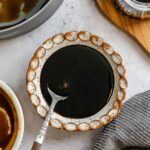
Balsamic Reduction (No Sugar Added)
This is the easiest, most straightforward method to make a delicious and syrupy homemade balsamic reduction. With no added sugars or thickeners, it is a delicious and affordable substitute for high-end, traditional aged balsamic vinegar. It lasts for months in the fridge and can be used on everything from roasted veggies and meats to even fresh fruit and desserts!
Calories: 224kcal
Ingredients
- 1 cup balsamic vinegar
Instructions
- Pour the balsamic vinegar into a wide, small saucepan and place over medium heat.
- Bring to a gentle simmer, then immediately reduce the heat to medium-low so it stays at a slow, steady simmer. You should see small bubbles, not a rapid boil.
- Let it reduce, stirring occasionally, until the volume is reduced by about half and the liquid begins to look slightly syrupy, about 10 minutes.
- As it gets close, reduce the heat to low and stir more frequently. The bubbles will become slower, and the liquid will look thicker and more glossy. To test, dip a spoon into the reduction and let it drip off. If it coats the back of the spoon but still drips, it’s ready. If it runs right off and leaves nothing behind, it needs another minute or two.
- Remove from the heat while it still looks thinner than your ideal final consistency.
- Let cool completely before using. It will thicken significantly as it cools into a smooth, syrupy glaze.
Notes
- If your reduction is too thick once it has cooled, gently rewarm and whisk a teaspoon of water at a time until you reach your desired consistency. If it’s too thin, simmer for another minute or two.
- The reduction will always look thinner in the pan than it will when finished. If it looks perfect while hot, it will likely be too thick once cooled. Aim for a loose syrup in the pan, not a thick glaze.
- Keep the heat low and never let it boil aggressively. Lower the heat as it reduces and stay nearby for the final few minutes to prevent it from over-reducing or burning.
- If you prefer a sweeter, more syrupy glaze, add 1-2 teaspoons of honey or sugar at the beginning. Keep the heat low and watch carefully, as added sugar increases the risk of caramelizing or scorching.
Nutrition
Calories: 224kcal | Carbohydrates: 43g | Protein: 1g | Sodium: 59mg | Potassium: 286mg | Sugar: 38g | Calcium: 69mg | Iron: 2mg
