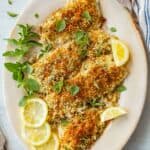
Easy Baked Flounder Oreganata
This quick and easy recipe for baked flounder oreganata is a classic Italian dish that's surprisingly simple to prepare at home. Delicate flounder fillets get topped with lemony, garlic-infused breadcrumbs for a restaurant quality seafood dinner that's as perfect for weeknights as it is for special occasions.
Servings: 4 servings
Calories: 869kcal
Ingredients
- ⅔ cup Panko breadcrumbs
- 1 clove garlic finely minced or grated
- ½ cup parmesan cheese
- 1 tablespoon fresh parsley finely chopped
- 1 tablespoon fresh oregano finely chopped, or 1 teaspoon dried oregano
- 1 teaspoon lemon zest from about half a medium lemon
- ½ teaspoon kosher salt plus more for seasoning the fish *see note
- Freshly cracked black pepper to taste
- ¼ cup plus 1 tablespoon olive oil divided
- 4 -6 oz flounder fillets
- ½ cup dry white wine
- 2 tablespoons fresh lemon juice
- Lemon wedges for serving
Instructions
- Preheat the oven to 425℉. In a large mixing bowl, add the panko breadcrumbs and grated garlic, then use a fork or your fingers to work the garlic into the breadcrumbs until it's evenly distributed.
- Add the grated parmesan cheese, lemon zest, oregano, parsley, ¾ teaspoon salt and pepper to taste, then drizzle in ¼ cup olive oil and mix to combine.
- Drizzle the remaining 1 tablespoon of olive oil in a 9x13 inch baking dish, then place the flounder fillets in a single layer, season on both sides with salt and pepper, then pour white wine and lemon juice over the top.
- Spoon the breadcrumb mixture over each fish fillet and use your fingers to gently press to adhere.
- Bake for about 10 minutes, depending on thickness, or until the flounder is just barely cooked through, then turn on the broiler. Keep a careful watch and rotate the pan as needed to help the breadcrumbs get golden brown and crisp.
- Serve the flounder immediately with extra lemon wedges on the side.
Notes
- Make sure your fish is exceptionally fresh. It should look firm, moist, and should easily spring back when pressed. Always purchase from a reputable source.
- I use the brand Diamond Crystal Kosher salt, which is less salty than other brands. Always adjust the seasoning to your taste.
- Run your fingers along the sides of the fish fillets to look for any pin bones and remove them with tweezers prior to cooking. Even fish that's labeled as boneless can sometimes have a hidden bone or two.
- Don't overcrowd the baking dish. If the fish fillets are overlapping, use a large rimmed baking sheet or transfer them into two baking dishes instead.
- Place thinner fillets in the middle of the pan and larger, thicker fillets on the outside so they cook evenly.
- If your oven has a convection setting, turn it on to achieve the crispiest topping.
- The cooking time will ultimately depend on the thickness of your flounder fillets. Use a skewer or fork to poke the center of the largest fillet to test for doneness. If the fish is cooked, it will press in easily, if there is any resistance, it needs more time. But be careful not to overcook - flounder will turn mushy if it cooks for too long.
Nutrition
Calories: 869kcal | Carbohydrates: 10g | Protein: 118g | Fat: 35g | Saturated Fat: 8g | Polyunsaturated Fat: 5g | Monounsaturated Fat: 16g | Trans Fat: 0.1g | Cholesterol: 414mg | Sodium: 1296mg | Potassium: 1525mg | Fiber: 1g | Sugar: 1g | Vitamin A: 501IU | Vitamin C: 5mg | Calcium: 382mg | Iron: 3mg
